



Influencer
Aba Asante On Rebuilding After Virality And Turning Gen Z Storytelling Into A Business

At 16, Aba Asante uploaded a TikTok that she still describes as “so foolish,” a simple lip-sync filmed in her bedroom. The video went on to collect nearly 200 million views. What followed was not a straight ascent, but a series of pauses, recalibrations, and decisions that now define her approach to the creator economy.
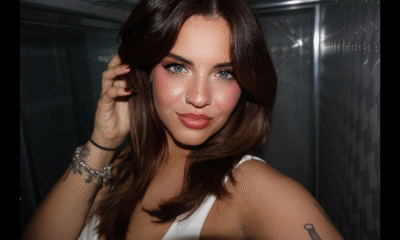
Today, at 22 and based in New York City, Aba reaches more than 6.5 million followers across platforms. Her content spans POV storytelling, beauty routines, and lifestyle commentary, delivered with a comedic timing that feels instinctive rather than manufactured. Yet the business behind that presence is carefully structured, shaped by formal training in marketing and business management, and by hard-earned lessons about burnout, audience trust, and longevity.
“I started right when TikTok started becoming popular,” she says. “I’ve always been interested in the creative side of things.” The rise of TikTok became her first real entry point into online creativity, a space she immediately recognized as an outlet for her energy and focus.
Growing Up Creative
Aba grew up in Indiana in a first-generation Ghanaian American household, where expectations around education and stability carried weight. Creativity was not discouraged, but it was not yet understood as a career path.
“Art was my favorite class,” she says. “I hated math and science.” Aba had been diagnosed with ADHD at a young age, something she credits with shaping how she connects to creative work. Making videos, editing them, and watching the response unfold gave her a sense of momentum and fulfillment.
At first, the work felt intuitive rather than strategic. “When I started, I had no idea that you could make money in it,” she says. It was not until she began earning income at 17 that her parents’ skepticism softened. “That’s when they started to pour into me, and I didn’t have to hide posting from them.”

Stepping Away at the Peak
Just as her platform gained scale, Aba stepped back. After graduating high school, she moved to Boston alone to attend college, double-majoring in marketing and business management while also playing collegiate volleyball.
The demands quickly compounded. “I had, like, no time,” she says. “I get overwhelmed very easily, and I always want to do something to my full potential.”
She stopped posting for nearly two years. In hindsight, she sees the decision as both necessary and costly. “Looking back, it took me much longer to rebuild the trust with my audience again,” she says. When she returned, her following hovered around 6.4 million. Regaining momentum required patience. “People coming back and being like, wait, who is this? The last time they saw me, I looked completely different.”
Still, the break changed how she approached the work. “The second time I came around, I had intention,” she says. “I took every strategy and information I learned from my business classes, and I just applied it to my own brand.”

Rebuilding With Strategy and Intention
Aba’s return to content creation was not impulsive. She describes weeks of uncertainty, weighing whether to pursue brand-side work or recommit fully to her own platform. “My faith means a lot to me,” she says.
The turning point came when a manager reached out to sign her. “I feel like that was my final sign that I should fully just pour into this.”
What followed was a period of intensive rebuilding. She invested her own money into lighting, backdrops, and products. She tracked trends daily, saved audio, studied hashtags, and analyzed posting patterns. “At this point, I wasn’t on any PR list,” she says. “I spent a lot of money investing in myself.”
Her page today reflects that recalibration. The content remains playful and expressive, yet the infrastructure is deliberate. “Think of this job as a 9-to-5,” she says. “Clocking in at 9 and clocking out at 5.” That mindset extends to audience engagement, which she treats as essential rather than optional.

Vulnerability as a Business Choice
Aba films makeup routines while talking openly about breakups, self-doubt, and daily frustrations. She aims to set a tone that feels conversational, almost intimate, a quality her Gen Z audience gravitates toward.
“I want to feel close to the creator that I’m watching,” she says. “I want to know about their life. I want to feel included.”
That transparency is not without risk, though. “Some would probably say that I should be more cautious with how open I am,” she says. The influencer draws boundaries selectively, avoiding detailed discussions of finances and remaining careful about how others are represented in her stories.
Still, she believes vulnerability builds trust. “Seeing a creator that you know has flaws and can still talk about them brings the viewer comfort.”
Her audience is predominantly young and female, a demographic she understands instinctively. “They’re mostly Gen Z,” she says. “They’re just like me.” While she closely monitors analytics, she has reached a point where she trusts her instincts. “Not every single video is going to do well,” she says. “The baseline is that I just want to be happy with what I have on my page.”

Turning Creativity Into a Business
Brand partnerships now form a core part of Aba’s business, but she remains selective. She has worked with companies including YouTube, Netflix, Target, Tubi, Sephora, and Hollister.
What determines whether a deal feels right often comes down to creative freedom. “I want brands to reach out to me because they gravitate towards my creativity and content,” she says.
She describes her sponsored content as an extension of her organic work. “Every normal organic video looks the same as an advertisement,” she says, “except the advertisement is more refined.” Early missteps taught her the importance of preparation. “Always try to put your best foot forward from the very beginning,” she says, recalling reshoots caused by overlooked brief details.
Her approach now emphasizes long-term relationships over one-off deals. She reviews scripts carefully, sometimes printed out to avoid mistakes, especially when filming outside her home. “You always want to leave a super good first impression,” she says.
Giving Back While Moving Forward
Beyond brand work, Aba uses her platform to support causes that matter to her. She donates to the JQ Foundation, which helps students from Ghana access education in the United States, a cause tied closely to her family’s own journey. She has also expressed interest in supporting mental health initiatives, particularly those focused on women and people of color with ADHD.
Personally, she describes this year as a period of recalibration. It is her first full year in New York, her first time living alone, and her first stretch without school dictating her schedule.
Professionally, she sees herself expanding beyond content creation. “I definitely see myself as a business owner,” she says. Acting, commercial modeling, and launching her own venture all sit within her long-term vision.
For now, the focus remains on consistency, trust, and showing up. “If you don’t try something fully for six months, you didn’t really try,” she says.
Photo credit: Petros Kouiouris
Checkout Our Latest Podcast