The long-running argument over whether audio or video is the future of podcasting has ended, not with a winner, but because the premise was wrong from the start. That is the central finding of Acast‘s third annual Podcast Pulse report, “Made for the Moment,” which surveyed 4,300 respondents, including monthly podcast listeners, aged 16 to 64 across 13 markets in August 2026 with research partner Differentology, alongside a companion survey of 136 marketers in the U.S., the UK, and Australia conducted with Attest.
Rather than picking a format, the report finds, audiences pick a context, and podcasting fits into that context however it needs to. Acast maps consumer behavior across four moments it defines as “Companion,” “Settled,” “Scroll,” and “Live,” and argues that brands buying podcasting as a single format rather than as a whole are missing large swaths of the audience.
Audiences Don’t Choose a Format, They Choose a Moment
The data behind that argument shows just how thoroughly format has blurred. 88% of respondents now consume both audio and video podcasts, up from 78% in 2025, and the share who split their time evenly between the two formats rose to 38% from 27%. Nearly two-thirds of respondents said they have started a podcast in one format and finished it in another, and of those, 75% switched apps or platforms mid-story to do it, most often citing convenience or growing interest in the episode.
What determines the format isn’t preference so much as circumstance. Audio leads in the morning, claiming a 40% share of consumption against video’s 25%. Clips take over the lunch hour, at 29% share versus audio’s 26% and video’s 24%. Video dominates the evening, with 53% share as screens come back into the picture. Genre follows the same logic: advice and self-help content indexes at 382 while people exercise, and news and politics content indexes at 254 while people scroll, both relative to each genre’s average share across all activities.
Four Moments, Four Different Jobs
Acast’s four-moment framework assigns each context a distinct mindset and a distinct commercial opportunity, rather than treating them as interchangeable inventory.
Companion, defined as present, personal, and one-to-one, covers moments like driving, exercising, or doing chores, where audio wins because a screen can’t follow. Despite having no link, thumbnail, or product on screen, 81% of audio-only podcast listeners reported taking some action as a result, including searching for something a host mentioned (34%) or making a purchase (25%).
Settled, described as relaxed, visual, and often shared, is where video podcasts behave like appointment viewing: 53% of video consumption happens in the evening, and 33% of viewers watch with other people often or almost daily. Video podcast ads made 48% of viewers more likely to remember the brand and 44% more likely to consider it.
Scroll, the fast and low-commitment moment, functions as podcasting’s discovery engine. 51% of respondents said they hear about new shows through social clips, more than through friends and family (40%) or the podcast app itself (32%), and 63% of clip viewers go on to consume the full podcast.
Live, the excited and communal moment, is where fan investment peaks. In the U.S., live podcast event attendance climbed to 36% of listeners in 2026 from 20% in 2024, an 80% increase, and attendees spent an average of $268 per event across tickets, travel, food, drink, and merchandise.
Why Buying the Whole Ecosystem Outperforms Buying One Format
The report’s brand-facing argument rests on what happens when a message moves across these moments rather than repeating within just one. 29% of respondents said they take the most notice of a brand when it appears across both audio and video podcasts, and another 29% said the same for podcasts paired with social clips, compared with 25% for repetition confined to a single audio show. A separate Acast exposure study found that sequencing video first, followed by audio, produced a 30% lift in brand favorability and a 51% lift in likelihood to use, against a control group.
That cross-format effect extends to trust. Podcasters saw trust in their brand and product recommendations climb to 42% in 2026 from 33% in 2025, a gain that widened the gap over journalists (31%), YouTubers (29%), social media influencers (25%) and celebrities (25%), all of which held flat or declined. Acast also reports that podcast audiences don’t stay inside the podcast: 88% follow podcast creators somewhere beyond the show itself, most commonly on YouTube (58%) and Instagram (45%).
Taken together, the report’s argument is that a podcast buy structured around a single format captures only one moment in a fan’s relationship with a creator. A buy structured around the full ecosystem, spanning audio, video, clips, and live experiences, reaches the same fan repeatedly across contexts that competing platforms cannot follow them into.
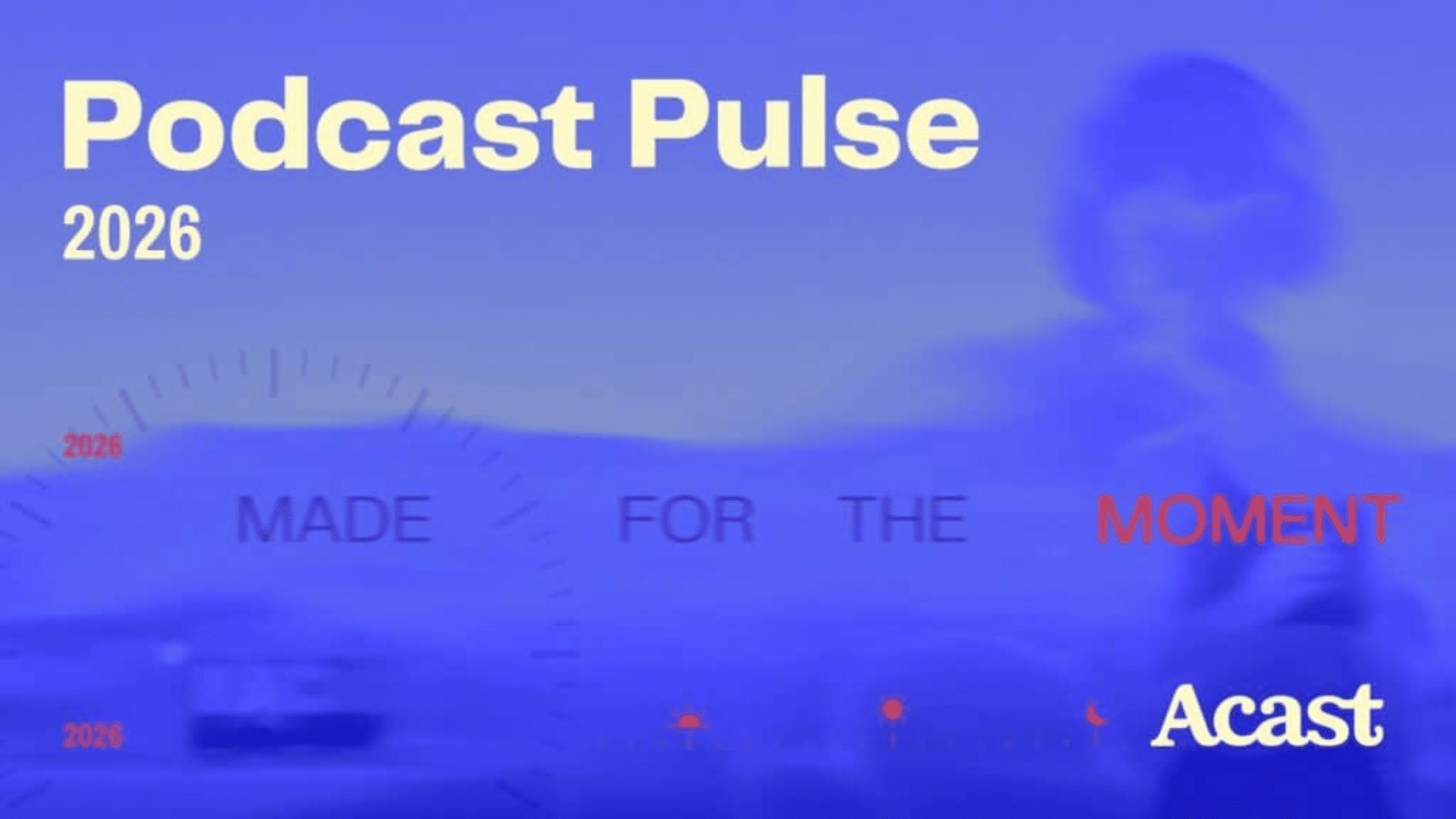
Image source: Acast The full report is available here
Dragomir is a Serbian freelance blog writer and translator. He is passionate about covering insightful stories and exploring topics such as influencer marketing, the creator economy, technology, business, and cyber fraud.













The long-running argument over whether audio or video is the future of podcasting has ended, not with a winner, but because the premise was wrong from the start. That is the central finding of Acast‘s third annual Podcast Pulse report, “Made for the Moment,” which surveyed 4,300 respondents, including monthly podcast listeners, aged 16 to 64 across 13 markets in August 2026 with research partner Differentology, alongside a companion survey of 136 marketers in the U.S., the UK, and Australia conducted with Attest.
Rather than picking a format, the report finds, audiences pick a context, and podcasting fits into that context however it needs to. Acast maps consumer behavior across four moments it defines as “Companion,” “Settled,” “Scroll,” and “Live,” and argues that brands buying podcasting as a single format rather than as a whole are missing large swaths of the audience.
Audiences Don’t Choose a Format, They Choose a Moment
The data behind that argument shows just how thoroughly format has blurred. 88% of respondents now consume both audio and video podcasts, up from 78% in 2025, and the share who split their time evenly between the two formats rose to 38% from 27%. Nearly two-thirds of respondents said they have started a podcast in one format and finished it in another, and of those, 75% switched apps or platforms mid-story to do it, most often citing convenience or growing interest in the episode.
What determines the format isn’t preference so much as circumstance. Audio leads in the morning, claiming a 40% share of consumption against video’s 25%. Clips take over the lunch hour, at 29% share versus audio’s 26% and video’s 24%. Video dominates the evening, with 53% share as screens come back into the picture. Genre follows the same logic: advice and self-help content indexes at 382 while people exercise, and news and politics content indexes at 254 while people scroll, both relative to each genre’s average share across all activities.
Four Moments, Four Different Jobs
Acast’s four-moment framework assigns each context a distinct mindset and a distinct commercial opportunity, rather than treating them as interchangeable inventory.
Companion, defined as present, personal, and one-to-one, covers moments like driving, exercising, or doing chores, where audio wins because a screen can’t follow. Despite having no link, thumbnail, or product on screen, 81% of audio-only podcast listeners reported taking some action as a result, including searching for something a host mentioned (34%) or making a purchase (25%).
Settled, described as relaxed, visual, and often shared, is where video podcasts behave like appointment viewing: 53% of video consumption happens in the evening, and 33% of viewers watch with other people often or almost daily. Video podcast ads made 48% of viewers more likely to remember the brand and 44% more likely to consider it.
Scroll, the fast and low-commitment moment, functions as podcasting’s discovery engine. 51% of respondents said they hear about new shows through social clips, more than through friends and family (40%) or the podcast app itself (32%), and 63% of clip viewers go on to consume the full podcast.
Live, the excited and communal moment, is where fan investment peaks. In the U.S., live podcast event attendance climbed to 36% of listeners in 2026 from 20% in 2024, an 80% increase, and attendees spent an average of $268 per event across tickets, travel, food, drink, and merchandise.
Why Buying the Whole Ecosystem Outperforms Buying One Format
The report’s brand-facing argument rests on what happens when a message moves across these moments rather than repeating within just one. 29% of respondents said they take the most notice of a brand when it appears across both audio and video podcasts, and another 29% said the same for podcasts paired with social clips, compared with 25% for repetition confined to a single audio show. A separate Acast exposure study found that sequencing video first, followed by audio, produced a 30% lift in brand favorability and a 51% lift in likelihood to use, against a control group.
That cross-format effect extends to trust. Podcasters saw trust in their brand and product recommendations climb to 42% in 2026 from 33% in 2025, a gain that widened the gap over journalists (31%), YouTubers (29%), social media influencers (25%) and celebrities (25%), all of which held flat or declined. Acast also reports that podcast audiences don’t stay inside the podcast: 88% follow podcast creators somewhere beyond the show itself, most commonly on YouTube (58%) and Instagram (45%).
Taken together, the report’s argument is that a podcast buy structured around a single format captures only one moment in a fan’s relationship with a creator. A buy structured around the full ecosystem, spanning audio, video, clips, and live experiences, reaches the same fan repeatedly across contexts that competing platforms cannot follow them into.
Image source: Acast
The full report is available here
Subscribe to Our Newsletter
Check Out Our Podcast