






Influencer
Inside Chorus, The Nonprofit Civic Creators Built Because Nobody Else Would

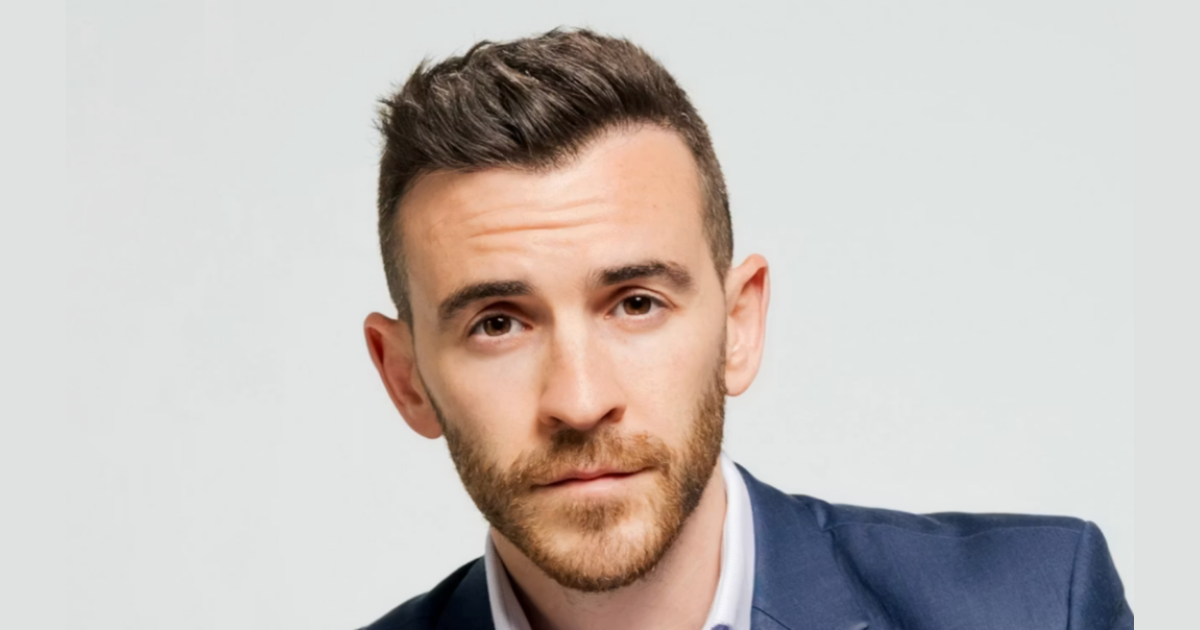
For most of the decade Brian Tyler Cohen spent building one of the most-watched independent political channels in the United States, he had no editor, no research department, and no one to call when a story was moving faster than he could verify it. That experience is now the curriculum of Chorus, the nonprofit creator incubator he co-founded in December 2024 to give the next generation of civic creators what he never had.
A former actor-turned-political creator, Brian started making content online in 2018 and has since gained more than 7.7 million followers across YouTube, Instagram, TikTok, X, and other platforms. His podcast, “No Lie with Brian Tyler Cohen,” was the first podcast on which former U.S. President Joe Biden ever appeared.
As President of Chorus, Brian oversees a program that recruits, trains, and supports digital creators committed to covering news and public policy, providing stipends, editorial training, analytics briefings, and peer networks. Two cohorts in, the program has collectively added more than 36 million followers to its creators’ platforms.
“We’re building what’s needed to meet this moment in the media landscape that actually exists right now,” Brian says. “One where creators are already functioning as sources of news, context, and civic education for millions of people, whether the old institutions are ready to accept that or not.”
The Decade That Made Chorus Necessary
Brian started from zero. His first interviews came from cold emailing dozens of people until one responded. “When I first started almost 10 years ago, the first interviews I did were because I cold emailed dozens of people before even one person would get back to me,” he says. “I was fortunate that a few people said yes, let me interview them, and it snowballed from there.”
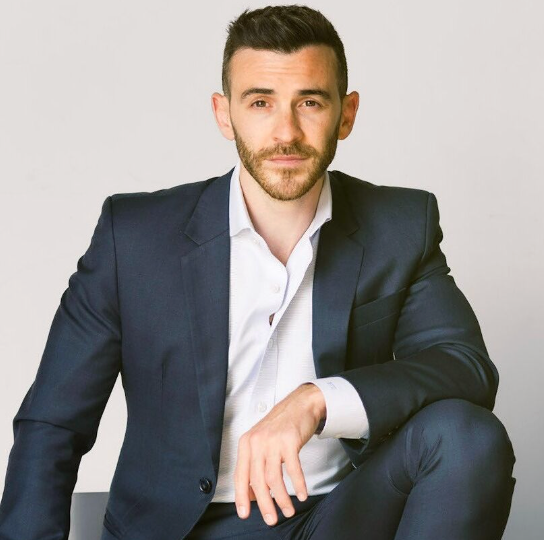
The process of building without infrastructure had a consequence he did not anticipate. As the channel grew, the nature of what people were doing with his content changed. “People were relying on my channel to understand elections, policy, and Supreme Court decisions, and that’s a different thing entirely than what I thought I was doing when I started. That shift changed how I thought about everything,” he says.
What that experience made visible was a gap. Millions of people were getting their civic information from independent creators who had no research departments, no editors, and no colleagues to pressure-test their framing. “Millions of people are relying on creators like me to help them understand what’s happening in the world, and it’s a huge responsibility many of us are navigating without real support,” Brian says.
According to a 2025 Pew Research Center survey, one in five U.S. adults regularly gets news from influencers, and 54% of them cite help understanding civic issues and current events as a major reason for doing so. A separate 2024 Pew analysis found that 77% of news influencers in their sample had no current or past affiliation with a news organization.
The Election That Forced the Question
The 2024 election served as the concrete breaking point for Brian and the creators who would co-found Chorus with him.
“The progressive ecosystem was leaning on mainstream media at exactly the moment audiences had already moved on from it,” he says. He had been watching the asymmetry in the media for quite some time. “You look at conservative creator networks, and they’ve been organized and well-funded for years. A lot of us had been out there on our own trying to figure out how to use our platforms to support democracy, and we had nothing like that. Zero infrastructure.”
The gap extended to the basics. No interview-booking support. No rapid-response briefings. No institutional backup for navigating a breaking news cycle responsibly. “Creators doing serious civic content can’t operate alone,” Brian says. “We’re the primary news source for millions of Americans, but we don’t have research departments, editors, or colleagues to pressure-test framing.”
The observation sharpened into a plan. “The question stopped being ‘Why doesn’t this exist’ and started being ‘What’s the first thing I can actually do to build it?'” After six months of conversations with creators, nonprofit architects, and organizational advisors, Chorus launched in December 2024.
Grad School, Not an Accelerator
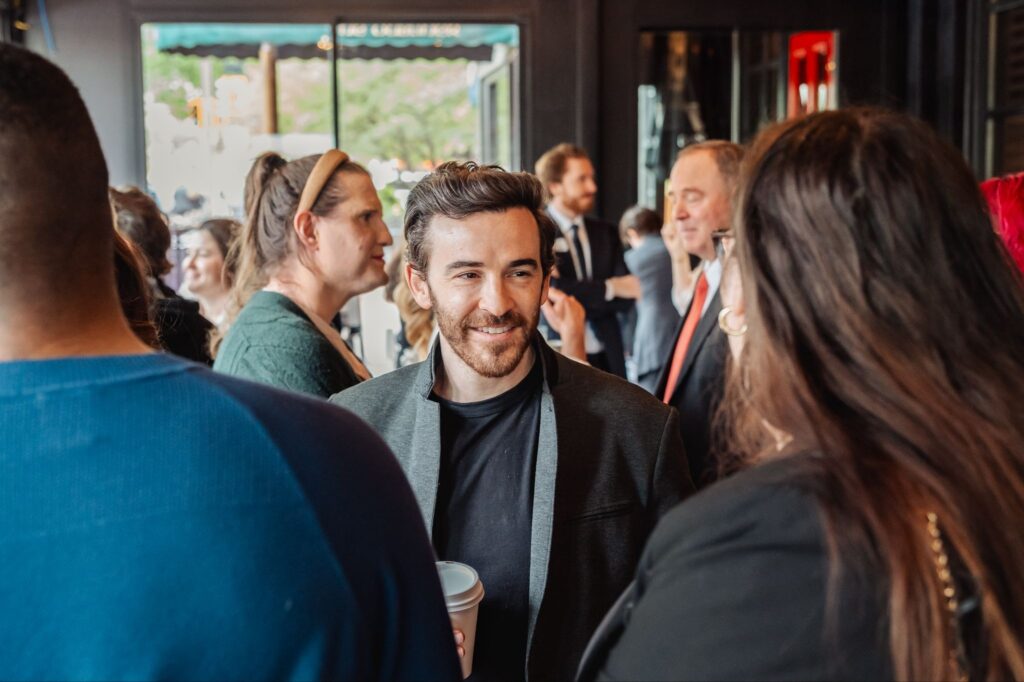
Brian describes the Chorus experience as “sort of like grad school for creators.” Accepted cohort members receive daily briefings on trending topics, individualized performance analytics, weekly editorial training, press access, mentorship, and stipends that treat their time as having professional value.
The application process was designed to cut against platform culture’s usual hierarchies. “In the first round, names and identifying information are removed entirely,” Brian explains. “We’re looking at how thoughtful they are about their audiences and their strategy, in their own words.” Follower counts enter the evaluation later. “Blind evaluations keep the focus on the work, not the follower count or who someone knows.”
The demand has exceeded the program’s current capacity. According to Brian, the first cohort drew several hundred applications for 75 spots. The second drew 700 to 800, accepting 95. More than 400 applicants now sit on a waitlist. “We’d be able to scale this program dramatically with additional resources,” he says.
One early assumption required correction. “We had to learn that a huge part of our impact was happening through creator-to-creator collaboration, not just the formal programming we’d been so focused on building,” Brian says.
The program now runs weekly virtual community gatherings alongside peer mentorship groups. The analytics infrastructure came from asking creators directly what they needed. “Creators were making decisions completely blind, no real feedback loop,” he says. Overperformance scores are individualized. “Those overperforming scores are all individualized, so we’re comparing you to your previous average, not to the biggest accounts in the cohort,” Brian explains.
What Two Cohorts Have Proven
The first cohort generated 7.9 billion views and 10.5 million new followers over six months, driven in part by a 66% increase in monthly content volume, Brian shares. The second cohort added 4 million followers in its first month, suggesting the pattern held across different cohort compositions and news cycles.
The clearest individual case study may be JC Frias, a Texas-based creator whose work addresses a shortage Brian identifies as real: the relative absence of English-language Latino voices covering Latino issues. Since joining Chorus, Frias grew his audience by 67%, adding 139,000 followers in four months.
“It’s been really cool for me to be connected to folks like JC, who are doing really important work with a focus that’s different from mine, and to see what we can all build together,” Brian says.
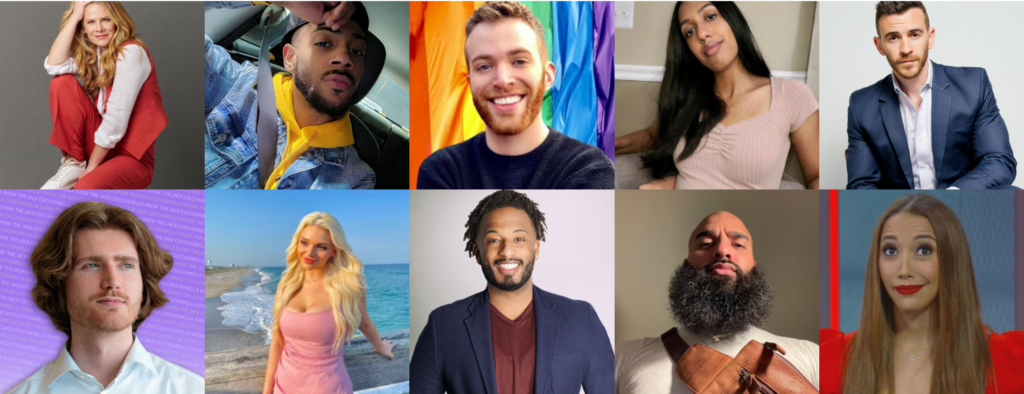
Photo: Chorus Founders
The Limits of What Can Be Taught
Chorus was built to solve structural problems. Brian is direct about what no program can supply.
“The one thing creators have to bring to Chorus is an audience they’ve actually built a real relationship with. And genuine curiosity about the world. We can give you access and training. We cannot give you the instinct for what your audience needs, or the discipline to keep showing up,” he says.
On the question of creative independence inside a mission-driven organization, Brian’s position is pragmatic. Chorus imposes no specific content requirements on participants. “Getting in the middle of that is not helpful, and can be counter-productive,” he says. The program focuses instead on giving creators more capacity to do the work they are already doing.
Sustainable reach, Brian argues, is not an analytics problem. “The creators who stay effective in this work long-term are the ones their audiences actually trust. And that trust is something you build slowly, by posting great, credible content and being consistent about it.”
Scaling without the infrastructure to maintain quality compounds the challenge. “It’s not just about getting bigger, it’s about staying good while you’re getting bigger, and those two things can work against each other if you don’t have the right support around you,” he says.
An Information Ecosystem Built by the People Shaping It
The metric Brian watches most closely does not appear on any platform dashboard. “The signal I really pay attention to is whether alumni come back to our daily briefings and raise their hand to mentor the next cohort. When that happens, we know we gave them something that stuck,” he says.
That cycle, Brian believes, is what a durable information ecosystem actually looks like: independent creators with real audience relationships, resourced and supported, filling the space traditional media is leaving behind. “Right now, we’re in a moment where the information ecosystem is genuinely up for grabs, and what replaces the old gatekeepers is still being decided.”
The program Brian would have wanted a decade ago now has two cohorts of graduates, a waitlist of 400, and a mission he states in terms well beyond platform growth.
“I want the United States to be a strong, thriving democracy that Chorus helped ensure exists,” he says. “A healthier information ecosystem is built by the people who are actually shaping public conversation.”
Subscribe to Our Newsletter
Check Out Our Podcast