





Talent Collectives
‘The Impact List’ Shows Brands Are Missing Creators Below the Top Tier, Says FiveTwoNine’s Becky Owen

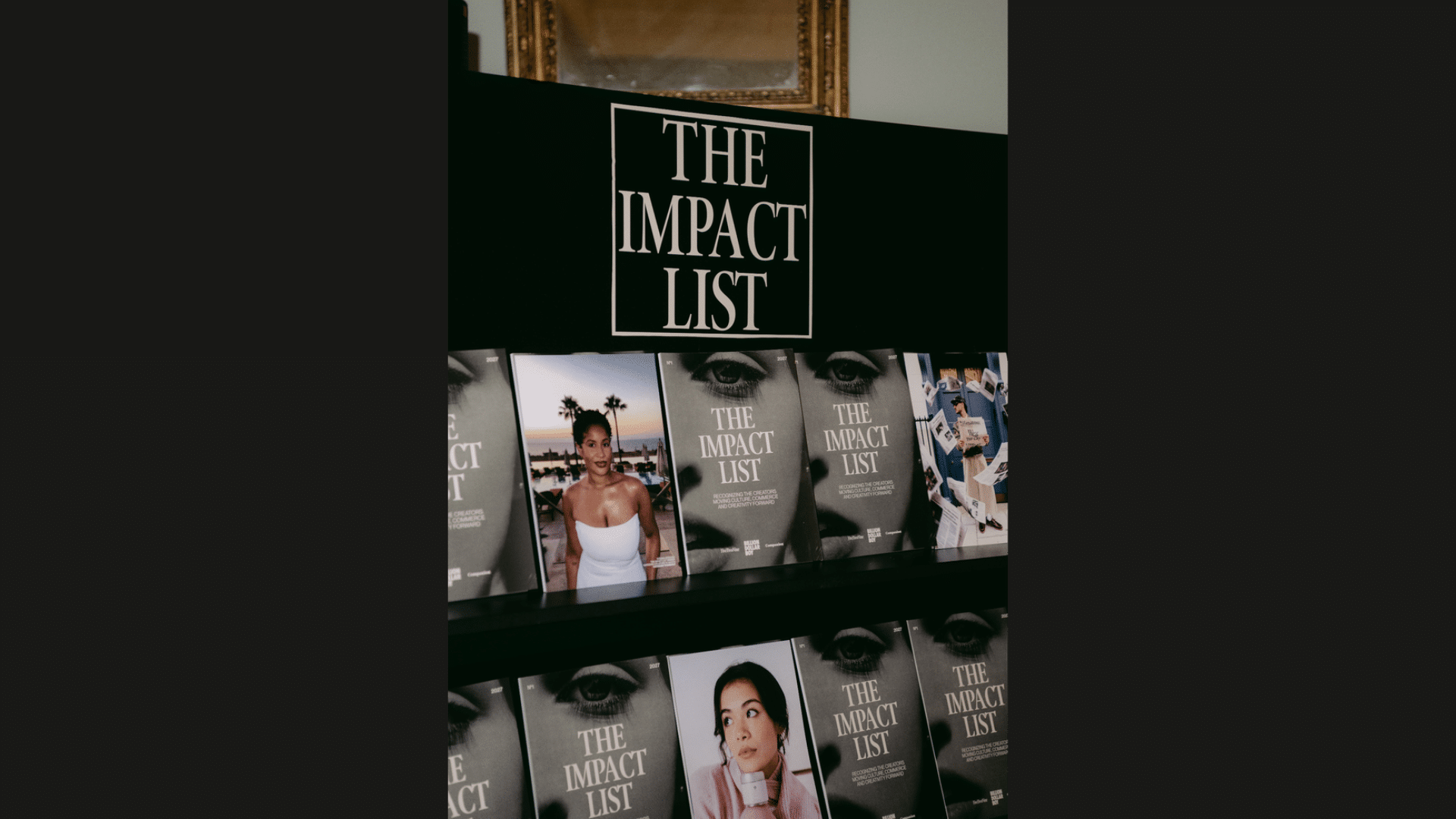
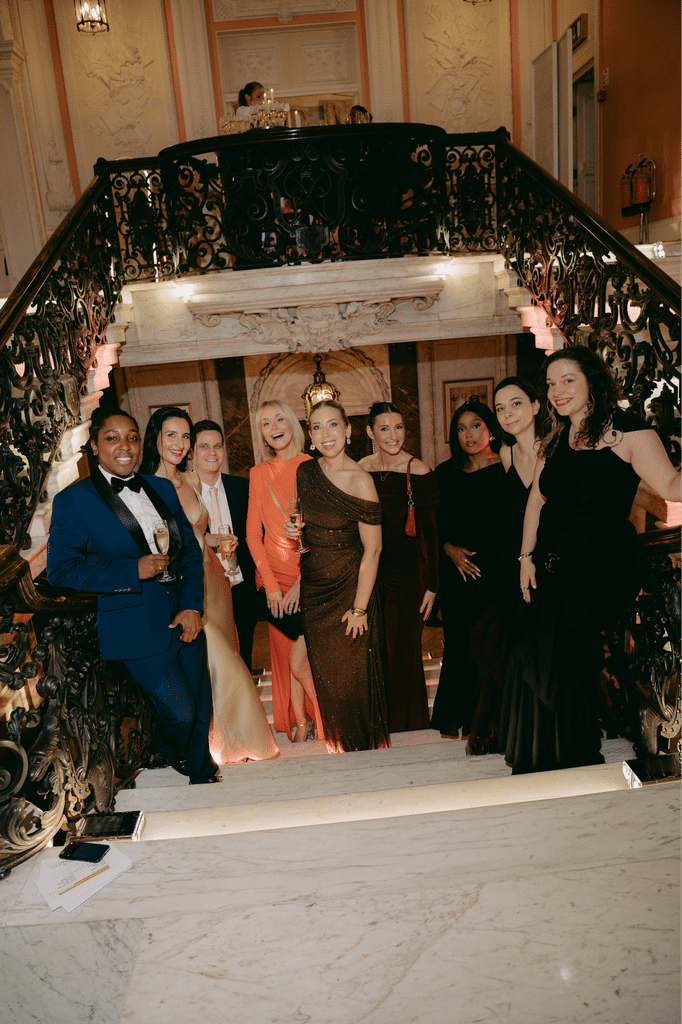
When the teams behind Billion Dollar Boy and FiveTwoNine searched existing rankings of top creators, the results kept returning MrBeast. Their response was “The Impact List,” a first-edition award that drew more than 600 applications for 60 places and judged creators on the impact of their work, with audience numbers as one input. At its New York gala, brands approached winners they had never come across and asked how to hire them.
Those requests were the point for Becky Owen, who founded FiveTwoNine and serves as group CMO of Billion Dollar Boy. “The mission was to surface impactful creators that aren’t maybe getting the opportunities they deserve,” she says.
FiveTwoNine, the creator community and research platform Becky launched in London in 2024, fronted the call for entries because creators already see it as a place to build long-term careers. “If it were Billion Dollar Boy, it might be misread as, ‘Oh, I’m applying for a brand partnership or to be on their roster,’” Becky explains. Billion Dollar Boy, a creator marketing agency founded in 2014, brought in brands, platforms and press, while Companion, the group’s AI platform, vetted every winner’s channels with a due diligence tool called “Safe Match.”
Brand attendance outran the plan. Becky counts about 70 brands and platforms at the galas, including P&G, L’Oréal, Mastercard, Google and TikTok, and says the London event, planned for 120 guests, drew 185. That turnout traced back to how the list was conceived.
The List Sampled the Middle of the Creator Economy
The idea began with Billion Dollar Boy Marketing Director Nick Cerami and FiveTwoNine Global Brand Lead Polina Tutik, who wanted to celebrate a different type of creator. “If you’ve got a bell curve, this is the Creator Economy. What if we did a cross section of the middle of the bell curve, who would fall out?” Becky says.
Sixty gave enough range to be representative, in Becky’s account, and the galas were built around introductions between winners and the brands, platforms and thought leaders in the room. “The majority of the ceremony was the interaction and the connection, not the sitting down and watching,” she says.
Nominations widened the net further. Ben West, whose “Reasons to Stay” mental health project earned him the “Changemakers” standout distinction, was nominated by someone else rather than applying himself. “Ben didn’t see us in his feed, but someone who has been touched by his work did,” Becky says. An open call alone would have missed him, illustrating the discovery problem brands describe at the scale of one creator. The wider net also left the team sorting hundreds of entries without leaning on follower counts.
Impact Scores Mixed Data With Judgment
Companion’s data made a numbers-only ranking possible, and the team weighed one built on growth, engagement, follower totals, and media value before dropping it. “The Creator Economy is not a channel. It is people telling stories that we just want to hear,” Becky says.
The alternative was manual. The list’s intake far exceeded the 103 entries for FiveTwoNine’s first Creator Fund and the almost 400 for last year’s round. Four team members reviewed every application before each shortlisted entry went to four judges from a 22-person jury.
Every category carried its own criteria. One score sheet Becky shared listed a consistent publishing schedule, original formats, positive audience growth and engagement, and clear potential for long-term success. Judges’ written comments broke ties. “It was our best way to try and create a measure that felt fair but also allowed for heart and soul to come into it,” Becky says.
The design keeps performance data in the score while leaving room for the craft, mission, or community a number misses. The hardest calls came where the label “creator” itself was in question.
Distinct Voices Beat Copy-and-Repeat Formats
“Creator Entrepreneurs” was the toughest test. The team settled on a rule that applicants had to be creators first, launching a business off the community or insight their content built. In unclear cases, judges checked whether someone shared their passions or mainly posted product updates, and whether their personal story matched the business story in size. “We debated back and forth some, like, is that a true creator or is that a business owner that just likes posting on Instagram?” Becky says.
The same standard screened out imitation in every category. Creators repeating a model others had already proven did not get through, according to Becky. “It was the ones that felt very unique. By watching their content, you got their identity, their vision,” she says.
It also reshaped one category. “Creators to Watch” became global after the U.S. shortlist came in weaker than the UK’s, partly because the call was harder to hear there, Becky says, and the team chose not to fill five U.S. places for symmetry. “You want to create systems, but you don’t want the systems to reduce the power of what you’re doing,” she says.
The screen doubles as her advice to creators. Becky warns against becoming what she calls a “career creator,” someone who copies proven formats, and sees AI tools that optimize thumbnails pushing content toward sameness. “You become interchangeable, and if you want to build a long-term career in this space, you’ve got to find your uniqueness and invest in developing it,” she says. Those distinct voices were what brands said they could not find on their own.
Brands Read the List as a Scouting Report
Download figures backed the gala anecdotes. The magazine passed 100 downloads within an hour and, in under a month, became the group’s most downloaded release, tripling every previous benchmark, according to Becky. She ties the demand to saturation and competition, which push brands toward distinct, long-term partners not yet signed up as ambassadors elsewhere. “Finding new emerging talent is very exciting for brands,” she says.
For brands, the list worked as a vetted shortlist of talent they might not otherwise have discovered, with Companion’s checks already done. Creators report, anecdotally, that gala introductions have produced brand connections they would not otherwise have had, Becky says. Many also arrived with résumés brands would recognize.
Applicants Point to a More Professional Creator Class
Several winners came to content after leaving conventional careers. Hannah Ngakane, a “Creators to Watch” winner, began posting after overcoming cancer changed her outlook, and Jerry Zeng, a U.S. “Changemakers” winner, turned to content after losing his job as a product designer. “We’re seeing the Creator Economy increasingly be full of people that understand KPIs, corporate language, timelines,” Becky says.
Early in her career, she recalls, a gaming creator turned down a 9 a.m. call time on a “Star Wars” shoot after a late night. She describes the clash between corporate teams and creators who had never worked in an office as one of the biggest tension points of that era, and sees shared language as a route to professionalization.
The applications showed other patterns. “Creator Entrepreneurs” applicants were 90% female, and nine of ten winners were women. Becky cites research putting female-founded businesses at 2% of overall investment. “The Creator Economy is meaningful because women don’t have to wait or be rejected when traditional funding or opportunities are denied to them,” she says. “Community Builders,” by contrast, drew many men, which Becky notes alongside wider talk of loneliness without assigning a cause.
Becky Wants Brands to Bet Before the Breakthrough
Professional fluency has not removed the need for support. The group is gathering the winners in January, in person at its Holborn space in London and likely hybrid in the U.S., where winners are spread across the country. Past sessions have covered tax, IP law and investment, and this one starts by asking winners what they need. A second edition is already planned, with clearer definitions for categories such as “Brand Partners,” which drew the fewest submissions at first.
Billion Dollar Boy is about to release data on brands hiring outside their usual categories because the creators they rely on have become too expensive or too contested. Becky’s answer, the same one the list makes, is to back talent before the numbers prove it. Her team recently sent a creator with 4,000 followers to Adobe MAX in Miami, not the profile Adobe would typically send, by Becky’s account.
“Invest in a creator that’s not quite there, and you can help them grow, because the partnership that you can build is insane,” she says.
“The Impact List” in its entirety is available here.
Subscribe to Our Newsletter
Check Out Our Podcast