





Influencer
The Creator Who Treats Honesty as Infrastructure: Carly Weinstein’s Mental Health Media Play

For over a decade, Carly Weinstein has been telling the internet things most people only say to their therapists. That instinct, which began as a teenage blog processing a gymnastics injury and body image anxiety, has grown into a multi-platform media business with 840,000 followers, a podcast, a master’s degree in social work, and a nonprofit on the horizon.
She did not get there by niching down.
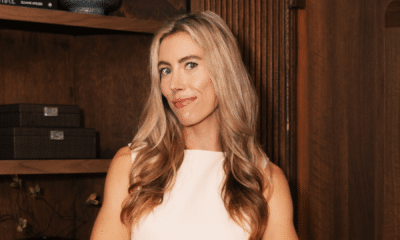
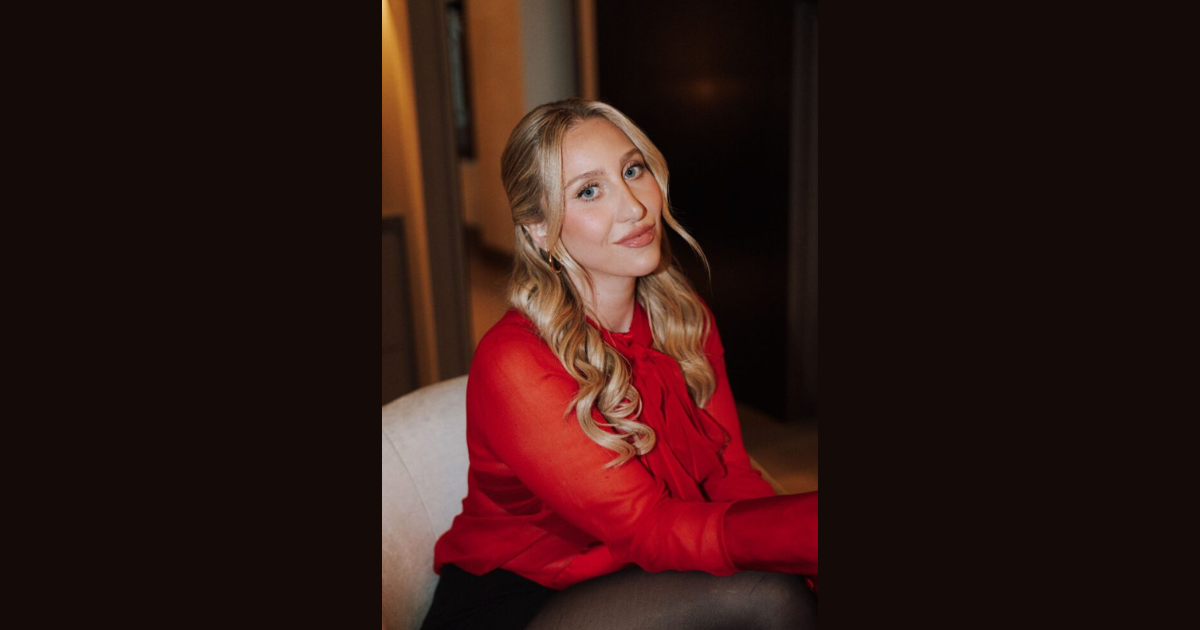
Carly, 29, is a New York City-based content creator, podcast host, and graduate student at Fordham University’s Master of Social Work (MSW) program. Her platforms, split across TikTok and Instagram, document young adult life with uncommon candor: body image, anxiety, disordered eating recovery, relationships, and the unglamorous texture of your twenties in public. Her podcast, “REAL with Carly Weinstein,” recently launched “The Expert Series,” a structured run of episodes featuring licensed mental health professionals. In April 2026, she went viral after openly discussing her use of compounded GLP-1 medication, drawing coverage from People, Us Weekly, and ABC News.
She describes her role simply: “I’m a full-time influencer, but I really like to call myself an ‘Internet big sister,’ a mental health advocate.”
The brands she has worked with, among them Revlon, Olay, Victoria’s Secret, Revolve, and Abercrombie, reflect the fashion and beauty content that runs alongside her more personal work. But Carly is clear about which half of her business she is building toward, and which half she is building with.
A Blog Before It Was a Brand
Carly started posting in 2013, when the audience was essentially zero and the motivation was entirely personal. She had torn her anterior cruciate ligament as a competitive gymnast and lost the sport that had been her emotional outlet. A blog filled the void.
“Back then, it was kind of a personal diary for me,” she says. “I needed a different creative outlet, especially to talk about my injury and the body image issues that I was dealing with when I was that age and just my anxiety and all the other things.”
The vulnerability that would later become her brand proposition felt, at the time, less like strategy than reflex. The pivot from curated to candid came when TikTok arrived. She had spent her college years on Instagram, editing photos heavily, whitening backgrounds, applying filters. The following did not come.
“All of those years of me curating, I wasn’t successful, and then I finally stopped, and that’s when things started moving,” she says. “If something feels too forced in business, it probably is. When there’s this underlying love or passion or purpose behind what you do, that comes through to people.”
What the Internet Decides For You
Viral moments in the Creator Economy arrive with labels attached. When a bikini photo spread widely, Carly found herself positioned as a body positivity creator, a category she had not chosen.
“I’ve posted videos, being like, ‘I feel really confident and really good in my body today.’ And then all of a sudden, ‘Oh, you’re body positive, so you can’t do anything that strays away from that,’” she says. “It puts you in a box as a creator without even wanting to be there or knowing.”
Her response has been to resist the niche consolidation logic that dominates current creator strategy. “If I niched down, maybe I’d have an even bigger following,” she says. “But it’s just not true to me. We are all such versatile individuals, and I want people to see all the different aspects of me.”
Only in the past year has she begun treating her own relationship to social media as something requiring active management. “I realized how deeply it was actually affecting my mood and how much I was allowing it to affect my mood,” she says. “Now, I feel like I just have the awareness, which is the first step.”
The GLP-1 Disclosure and the Cost of Speaking
The decision to discuss her GLP-1 use publicly was the most recent test of a principle Carly has held since she began posting: that silence is its own form of inauthenticity. She went on the medication, then off it, before saying anything, and the period of quiet was deliberate.
“When your body is changing, you’re going on a new medication, I knew that I couldn’t speak about it off the bat because it was something that I needed to go through,” she says. “I wanted that to be for me and my family to deal with.”
The decision to speak, when it came, followed the same calculation that drives most of her disclosure choices. “My followers are investing in me, investing their time. They’ve bought products from me,” she says. “I want to be honest with them and talk about my struggles.” She is equally clear about what stays private. “For your sanity, you have to keep some things private,” she says. The filter is not about image management. It is about timing.
‘The Expert Series’ as Infrastructure, Not Content
“The Expert Series” was designed around a logic closer to research methodology than programming. Carly sequenced different professional disciplines across episodes, mapping each to a distinct mental health topic to avoid repetition.
“I wanted experts to all have their own lanes,” she says. “I wanted each person to feel like they had their moment.”
Critically, the series was not monetized. “We went into that with a strategy of, like, it was almost like an experiment,” she says. “Let’s see which episodes are performing best. Let’s see what people are clicking on and what people are benefiting from to show us what we can do in the future.”
The data is intended to inform the nonprofit she plans to launch in 2027, focused on expanding access to mental health resources for uninsured and underinsured populations. “I have the research of comments, DMs, likes, and views. Those are research,” she says. “But I really wanted to break it down by topic, by level of access, and see what people actually need, even by age and by demographic.”
What Brands Don’t Understand About the Mental Health Space
Carly examines brand profiles before engaging with any partnership, looking not just at stated ethos but at the other creators they work with. “I want to know if I align with those creators as well,” she says. “Who do they associate with, so that I can really make a decision that I’m aligning with them on all fronts.”
She has turned down deals that did not meet that bar. Early in her career, she did not. “In the beginning with influencers, you’re so excited about these deals. You’re going to take it because it’s exciting and new,” she says. “But I’m in a position now where I want to be picky. It’s not worth it for one brand deal to ruin the trust of the people who have been following me.”
Her critique of how brands approach mental health content as a category is pointed. “They try to copy and paste a lot, and nothing is cut and dry,” she says. “Everything is so individualized.”
Her prescription is counterintuitive for an industry fixated on reach. “Choose fewer creators and cater to the few that you are working with more,” she says. “Maybe choosing one ambassador who doesn’t have the biggest following but has a really beautiful niche or a really beautiful story. I think that could be really beneficial for brands and take their vision even farther.”
The Nonprofit, the Degree, and the Long Game
The through line connecting Carly’s blog, her viral moments, her podcast experiment, and her MSW program is the same impulse that has driven her since she was a teenager processing an injury online: that sharing a real story is more useful than performing a polished one.
The nonprofit, targeted for 2027, is where that belief is supposed to produce something structural. Graduate work at Fordham feeds directly into the planning, connecting her with professors who have built nonprofits, while “The Expert Series” generates the audience data that will shape the model. Brands, she says, will play a major role in its funding, though she declines to elaborate.
She considers what the version of herself that started posting in 2013 would make of where things stand now, and the answer lands somewhere more personal than the business.
“The part I think I would be shocked about is how comfortable I am with myself online,” she says. “Going through disordered eating recovery and gaining weight and putting myself out there, unedited, raw, unfiltered, no makeup. I think I would be like, you’re really doing that, and you feel comfortable and beautiful doing that.”
Photo credit: Mackenzie Williams
Subscribe to Our Newsletter
Check Out Our Podcast