







Technology
The Cirqle Bets the Real Automation in Creator Marketing Is Budget Decisions, Not Busywork

The Cirqle opened a private beta this spring for its agentic platform, built to run influencer campaigns end to end: sourcing creators, writing briefs, negotiating rates. But Chief Strategy Officer Ernst Rustenhoven says the busywork was never the real prize. The goal is to automate the decision of which creator gets the next dollar of creative budget and ad spend.
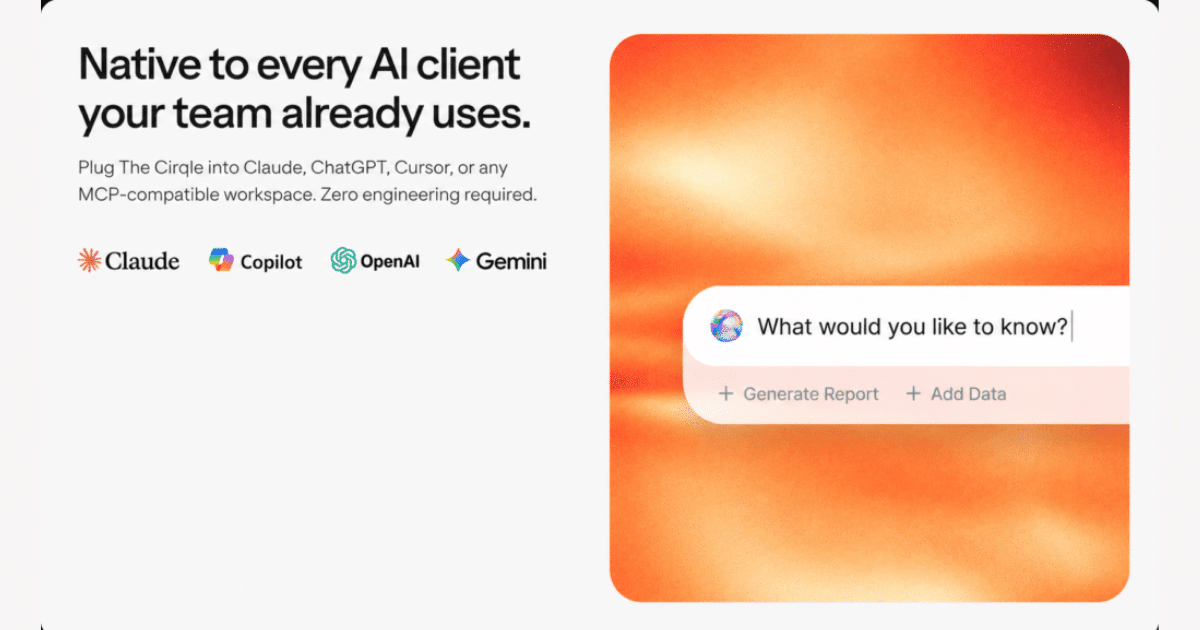
In late May, The Cirqle launched The Cirqle MCP, enabling brands to use agents that run those workflows, plus campaign planning, performance forecasting, and budget reallocation, through natural language prompts inside Claude, ChatGPT, Gemini, or Copilot. The release builds on a platform that Steven Lammertink founded in February 2015 in the Netherlands, which he has described as the world’s first conversion-driven Influencer Marketing platform and that has since grown into a system used by brands including Lookfantastic, About You, Lyma Life, and Loop Earplugs.
Ernst, who joined The Cirqle in January 2026 after a career spanning investment banking, venture investing, and being CEO of a DTC brand himself, frames the launch as a shift in what gets automated. “For a decade, the job of the Influencer Marketer has been a tedious manual effort,” he says. “Campaigns would cost weeks, sometimes even months. That is now over.”
Mat Jenkins, The Cirqle’s Director of Frontend Engineering, is responsible for building the connector that makes that possible. Together, the two describe a platform built around the idea that the real value in Creator Marketing was never the mechanics of running campaigns. It was deciding where marketing budgets should be allocated.
Follower Count Barely Correlates With Return
Across 350,000 creators and posts in its network, Ernst says The Cirqle found that the relationship between follower count and return is close to zero. “The link between follower count and return is statistically a rounding error,” he says.
The company points to client results it has published as evidence. Secret Sales reached a 16.8x return on ad spend, and Lookfantastic hit 11x, both without concentrating budget on the biggest names in their categories. About You, the company says, cut its cost per acquisition by 49% using the same approach.
Ernst compares the industry’s reliance on follower count to how home buyers once priced houses by square footage alone. The number is visible before a brand spends a dollar, requires no setup, and lets a marketer feel they did their homework, he says, even when it measures the wrong thing. The more useful signals, he argues, have stayed hidden behind platform walled gardens, expensive to compute until now.
Fit, Not Reach, Is What Predicts Conversion
What replaces follower count, according to Ernst, is a three-part alignment: the creator matches the brand, the creator’s audience matches the product, and the content resonates with that audience. He calls it fit.
Two metrics signal whether that fit exists before a campaign launches: a reach rate above 20%, meaning more than a fifth of a creator’s followers actually see a given post, paired with an engagement rate above 3%. “If both are realized, you’re usually looking at a creator who converts, whatever their follower count,” he says.
The economics behind that claim are specific, according to The Cirqle’s data. Brands the company considers leaders acquire customers at roughly 27% of their average order value, while underperforming brands pay close to eight times that figure for the same outcome. Leaders reach a Return on Ad Spend (RoAS) as high as 19x, against a median of around 6x for most brands. Micro-creators whose audiences fit a product, Ernst adds, regularly outperform mega-creators whose audiences do not.
Brands Now Query Claude Instead of Opening a Dashboard
The MCP, short for Model Context Protocol, is the open standard behind the shift. Mat describes the setup as built to be frictionless: brands authenticate through their existing Cirqle login using single sign-on, then connect through whichever AI client their team already uses.
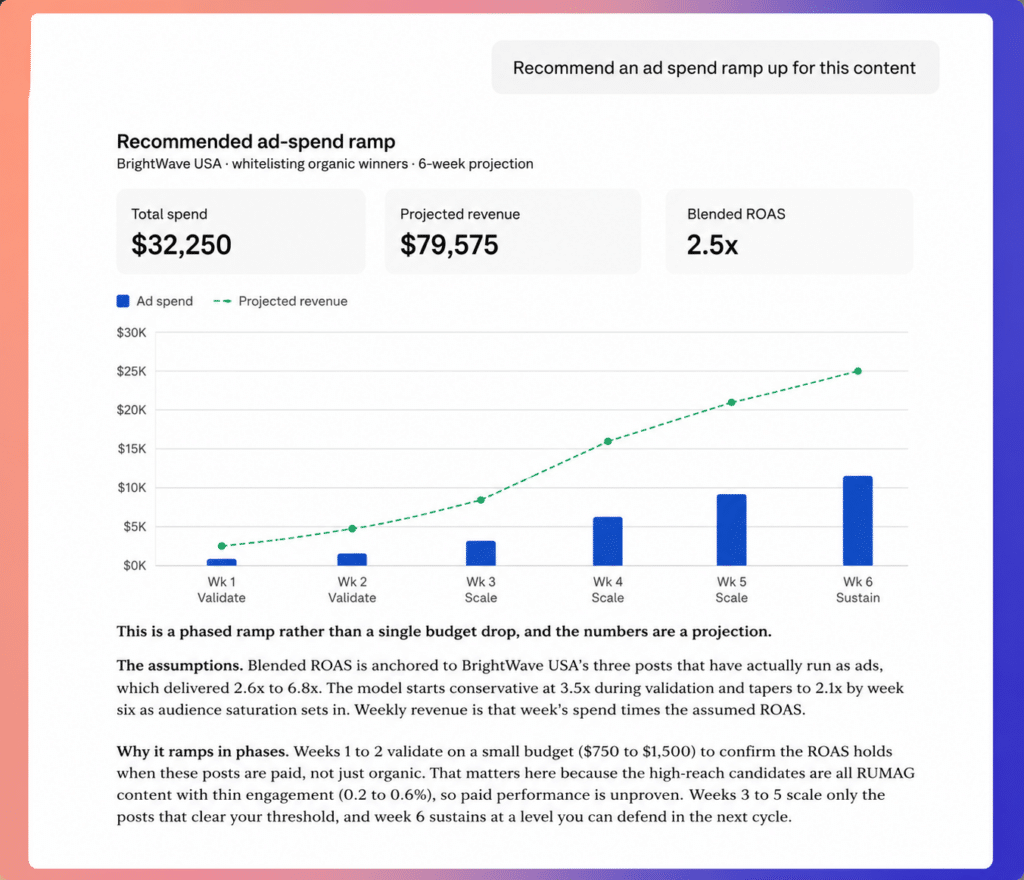
“Brands and agencies use our connectors and integrations page and directly authenticate with their existing Cirqle login,” he says. “SSO keeps the connection secure with no keys to hand around.”
Once connected, the agent already knows which brand and campaign a user is working on, removing the need to re-explain context each session. A prompt such as finding 15 creators for a $10,000 budget that can beat a target return used to take a strategist days of list building and spreadsheet work, Mat says. Now, a single query cross-references a creator’s profile, the campaign brief, historical performance, and rate history to return recommendations in under a minute.

The system pulls from data sources brands already use, including Meta and TikTok ads managers, Shopify, and attribution tools such as Northbeam and Impact.com. The Cirqle says an initial beta cohort queried the MCP more than 50,000 times before the broader release, a figure that, like the company’s performance claims, comes from The Cirqle itself.
Three Calls the Agent Is Not Allowed to Make
For all the automation, Mat says three decisions stay with a person regardless of how reliable the underlying data gets: spending above a set threshold, final creator selection on a major commitment, and content approval. “Human-in-the-loop is non-negotiable for paid amplification, content approval, and final rate-and-contract sending,” he says, describing it as the most consistent feedback from the platform’s power users.
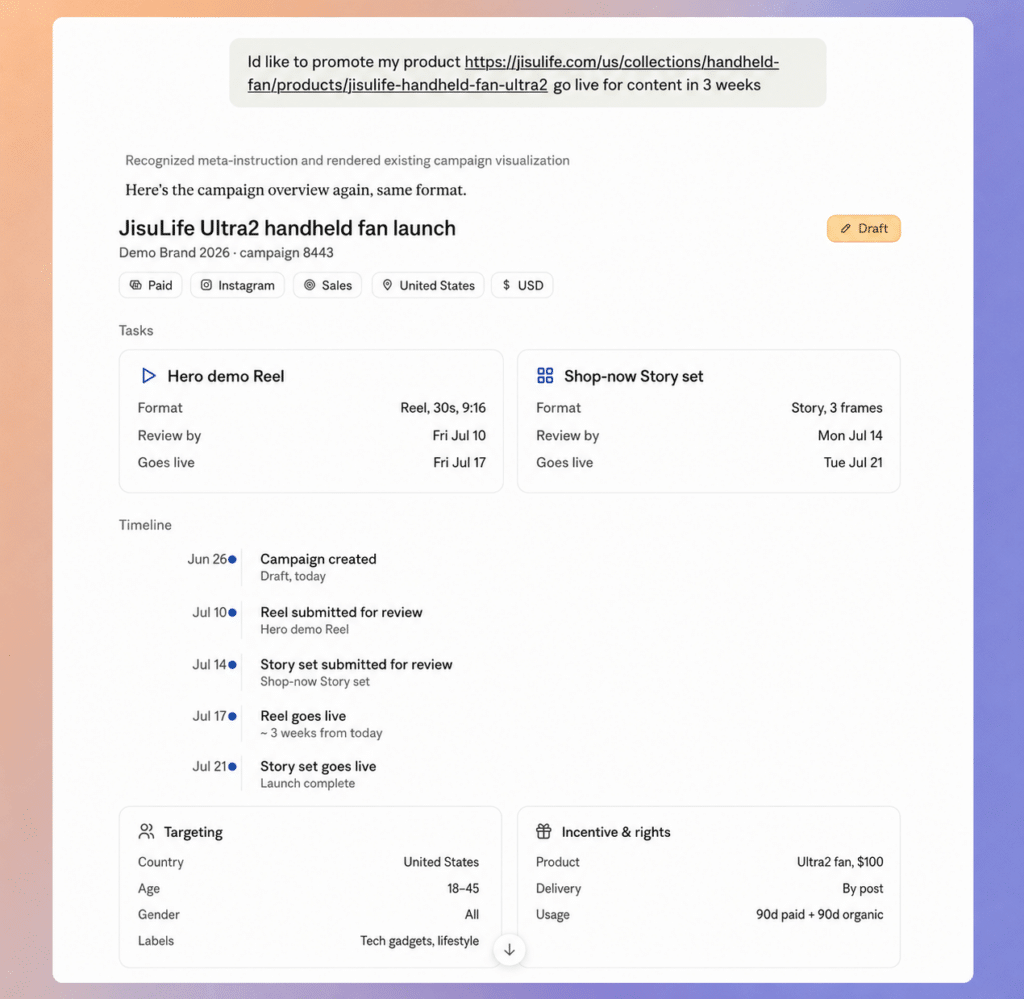
For regulated categories such as healthcare brands, he adds, the final human check is a compliance requirement rather than a preference. The agent queues those high-stakes actions for sign-off instead of executing them automatically.

Ernst ties that caution to attribution. Handing the funnel to an agent before attribution is solid, he warns, means the system will pour budget into whatever the flawed data calls a winner, faster than a person could. “Bad attribution plus automation amplifies your mistakes,” he says. His advice to brands considering agentic creator marketing is to fix attribution first, then automate.
Manual Brands Are Falling Behind on Every Metric at Once
Ernst argues that the difference between brands that adopt agentic tools and those still running campaigns from spreadsheets will widen rather than hold steady. Each campaign run through the MCP sharpens the next brief, creator shortlist, and creative selection, he says, while manual operators repeat the same follower-count shortlists and the same misallocated budget.

He frames the cost in concrete terms. Brands running campaigns manually, he argues, are not modestly behind. They are paying several times the cost per acquisition for the same result, every cycle, because the lag compounds across multiple metrics simultaneously rather than just one.
That dynamic, Ernst predicts, will push the broader creator marketing stack toward consolidation. Brands currently stitch together a discovery tool, a CRM, a contracts platform, an ads manager, and spreadsheets, he says. He expects that to collapse into fewer, deeper platforms built around whoever owns first-party creator and performance data and an agent that can use the information in a practical way.
The Job Shifts From Doing the Work to Designing It
Mat describes the build as staged. The first version could only read campaign and creator data. The version shipped this spring can act by sending messages, building briefs, and assembling shortlists inside guardrails. The next stage, he says, ties workflows together so an agent can run a daily campaign health check or adjust paid spend automatically within limits a marketer sets in advance.
That progression, both executives argue, changes what a marketing job looks like rather than eliminating it. Strategy, setting the boundaries within which an agent operates, and defining what counts as a good result remain human calls. Ernst adds that pricing creators on performance rather than follower count should also change who gets paid on the creator side, rewarding the converters the industry has historically overlooked.
“You go from being the person doing the work,” Mat says, “to being the person who designs the thing that does the work and signs off on it.”
Subscribe to Our Newsletter
Check Out Our Podcast