






Agency
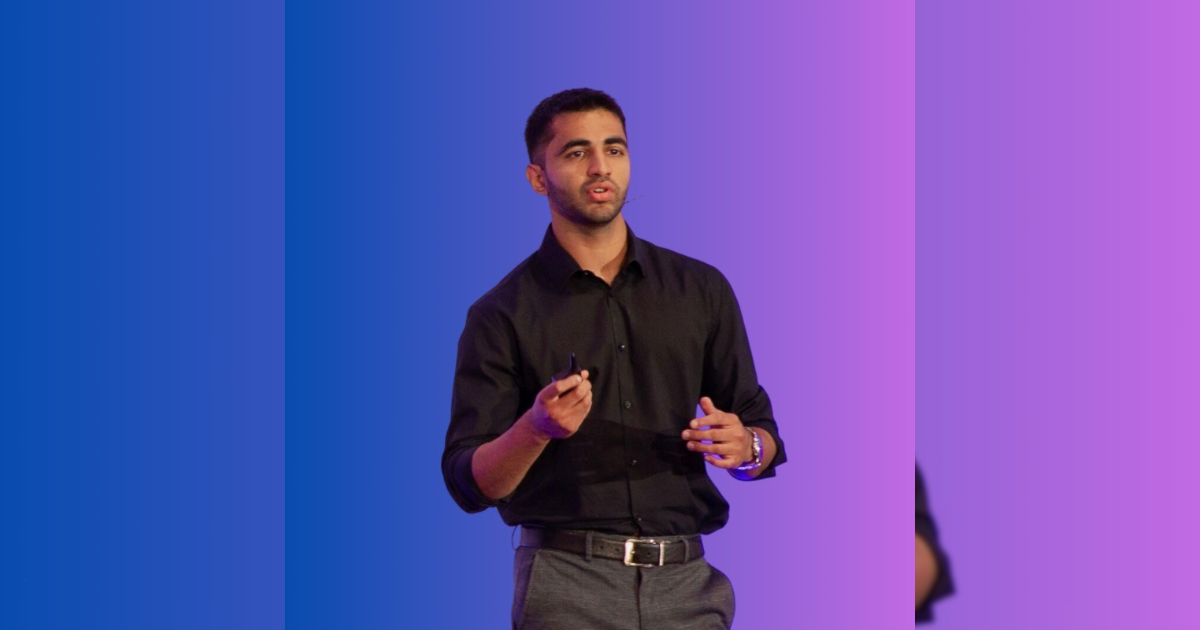
Sambhav Chadha Breaks Down Augmentum Media’s Playbook For Health & Wellness Brands

Augmentum Media was born out of a frustration familiar to anyone scrolling through social media: influencer marketing that looks polished but feels hollow. The UK-based agency, founded in 2021 by Sambhav Chadha and his co-founder Aditya Mahapatra while they were still teenagers, set out to rebuild trust between wellness brands and their audiences.
“At 18, I realized how much our health journeys were being dictated by Instagram and TikTok influencers,” Sambhav says. “But a lot of it was very fake, inauthentic. We wanted to change that.”
That conviction emerged from Sambhav’s time in Scotland’s junior cricket setup, where he saw firsthand how health and fitness choices were increasingly influenced online. “It’s much easier to sell a lipstick than a supplement,” he explains. “In health and wellness, where trust is everything, brands were partnering with influencers who didn’t even use their products. That was damaging for consumers.”
Today, Augmentum Media helps wellness brands replace fleeting endorsements with credible advocacy. Its client roster includes Lululemon, Nestlé, Cetaphil, Huel, Fabletics, Fussy, and The Turmeric Co. Every campaign begins with relationship-first influencer seeding: sending products to creators “no strings attached.”
“The goal isn’t content volume,” Sambhav says. “It’s finding who genuinely likes the product before we amplify them further.”
Tailoring the Funnel: Startups vs. Established Brands
Augmentum’s portfolio spans from early-stage startups to household names. “The smaller the company, the more performance-focused they have to be,” Sambhav says. “The bigger the company, influencer work tends to be more brand- and trust-led.”
For mid-market wellness companies (its core clientele), the agency often blends performance-driven influencer campaigns with community-based advocacy programs. While global corporations may commission celebrity-level partnerships or large-scale seeding, younger brands seek measurable returns. “We’ll run performance-led strategies like whitelisting, partnership ads, and paid influencer programs for smaller clients,” Sambhav says.
The difference lies not just in budget, but in goal orientation. As Sambhav notes, startups want to prove that influencer marketing can drive sales efficiently. Established players look to deepen customer loyalty and reinforce brand ethos through trusted voices.
The Affiliate Engine
Augmentum’s core offering is its affiliate-led influencer programs, the entry point from which the agency scaled into full-service campaigns. “Around 60% of our work is affiliate-led,” Sambhav says. “On any given month, we reach out to 500 to 5,000 influencers per client, seed them products, build relationships, and then convert 15% to 25% of them into affiliates.”
In exchange for free products, those creators produce two to four pieces of content per month, complete with discount codes and affiliate links. The model, Sambhav adds, “works incredibly well as full-funnel support, building brand equity, generating creatives for Meta, and driving direct performance.”
One standout case is Fussy, a UK sustainable deodorant brand that approached Augmentum in early 2024. “They were a mid-seven-figure company, but struggled to seed more than 25 influencers per month with their limited team,” Sambhav shares. “Within three months, we were sending out 250 to 300 seeds a month and converting around 75 to 80 into affiliates.”
The results highlighted the power of systemized influencer operations. Within months, the campaign generated more than 10,000 new customers through affiliate links and discount codes, while producing more than 10,000 pieces of reusable content that could be repurposed across both paid and organic channels. In total, the initiative delivered more than 17 million impressions at a sub-$10 CPM (Cost per Mille) and achieved a return on ad spend exceeding 5x, demonstrating how a structured affiliate model can drive both performance and brand equity simultaneously.
“It’s what we started with before becoming a full-stack influencer agency,” Sambhav says. “But even today, affiliates remain the heartbeat of our campaigns.”
Bridging Affiliate and Paid Strategies
As Augmentum grew, the biggest challenge wasn’t scaling, but integration. “It’s less about building the strategy and more about understanding how all the pieces fit together coherently,” Sambhav says.
The agency now uses affiliate data to inform paid influencer selection, whitelisting, and performance optimization, ensuring that no content or creator relationships exist in isolation.
Efficiency, Sambhav emphasizes, comes down to process. “Everything is downstream from the influencers you choose,” he notes. “Pick the wrong influencers and nothing else matters.” Augmentum invests heavily in vetting and first-party data collection, tracking creator performance by metrics such as frequency of Instagram Stories, which Sambhav identifies as a leading indicator of engagement and sales conversion.
He also highlights the importance of systems: “Influencer marketing can be very labor-intensive. Saving your team time is a huge driver of scale.”
Lululemon: Scaling Trust at the Top of the Funnel
While Fussy reflects the affiliate foundation, Augmentum’s collaboration with Lululemon shows how the agency operates at the enterprise level.
“We ran a hybrid model of partial seeding and partial briefed gifting,” Sambhav says. “We hit a ridiculously low CPM (sub-$3) on millions of impressions and filled a gap in scale within the nano and micro-influencer space.”
For Lululemon, the strategy addressed a bandwidth issue rather than a brand awareness problem. “They already had reach,” Sambhav notes. “They needed a way to activate hundreds of smaller creators to sustain that reach efficiently.”
He describes the result as a campaign that balanced cost-effectiveness with authentic content, mirroring the same relationship-first model that had powered Augmentum’s smaller accounts.
Competing Beyond Meta and Google
A growing number of wellness brands, Sambhav reveals, come to Augmentum because they are too reliant on Meta and Google ads. “The average brand we work with is incredibly dependent on paid social,” he says. “CPMs are up 48.5% year over year. Meta’s algorithm is getting shakier by the month.”
To reduce that dependency, Augmentum positions influencer marketing as both a diversification and performance lever. “If a client is struggling with Meta’s creative pipeline, we’ll work with creators to secure usage rights and repurpose that content,” Sambhav explains. “If Meta CPMs and CACs are too high, we’ll design influencer strategies that lower overall acquisition costs.”
According to the young founder, this approach reframes influencer marketing not as an awareness channel, but as a creative and cost-reduction engine that directly supports the efficiency of paid media.
Leading Creators, Not Just Managing Them
Although Augmentum doesn’t operate a talent management division, the agency actively coaches creators through newsletters, competitions, and performance feedback, especially within its affiliate programs.
“For Fussy, we have around 1,700 affiliates,” Sambhav says. “Every month, we send newsletters teaching them how to create content around new launches. It keeps them engaged and activated longer than the average affiliate.”
When briefing creators, Sambhav insists on collaboration. “A bad briefing process is just sending a creator what you want and expecting them to do it,” he says. “It should be a conversation. The best brands say, ‘You know your audience best. What do you recommend?’ That’s how you turn a short-term ad into a long-term partnership.”
Growing a Company He’d Want to Work For
Despite Augmentum’s client list, Sambhav remains conscious of the learning curve that comes with being a young entrepreneur. “I’ve never worked in another company, let alone another agency,” he says. “So, we’ve had to lean on advisors and peers a lot, especially leading teams that are 10 or 15 years older than me.”
He believes that inexperience also works to their advantage. “Because we haven’t worked elsewhere, we haven’t picked up bad habits or toxic workplace traits,” he says. “We’re building the kind of company I’d want to work in.”
Augmentum’s growth to date has been fueled by referrals; roughly 60% to 70% of new clients come through word of mouth. “Last year we spent about roughly $300 on marketing,” Sambhav says with a laugh. “If I could redo one thing, I’d invest in marketing earlier.”
U.S. Expansion and the AI Reckoning
Over the next year, Augmentum plans to expand more aggressively into the U.S. market, where health and wellness startups continue to outpace traditional CPG growth. Currently, the agency’s client base is roughly 60% UK and 25% U.S., a ratio Sambhav intends to flip by the end of 2026.
Sambhav is also watching the rise of AI-generated influencers, which he sees as both a challenge and validation of Augmentum’s authenticity-first ethos. “There’s a certain model of very inauthentic influencer marketing that will lose all value,” he notes. “An AI creator can replicate a 30-second video, but not a three to twelve-month relationship with an audience.”
Ultimately, Sambhav’s vision for the next five years is “to be known as the influencer partner for health and wellness,” he says. “It’s an industry I’ll never see myself leaving. It combines two of my biggest passions: creators and wellbeing.”
Subscribe to Our Newsletter
Check Out Our Podcast