





Influencer
Influencer Darla Bundus On Why She Decided To Slow Down, Sell Less, And Protect Audience Trust

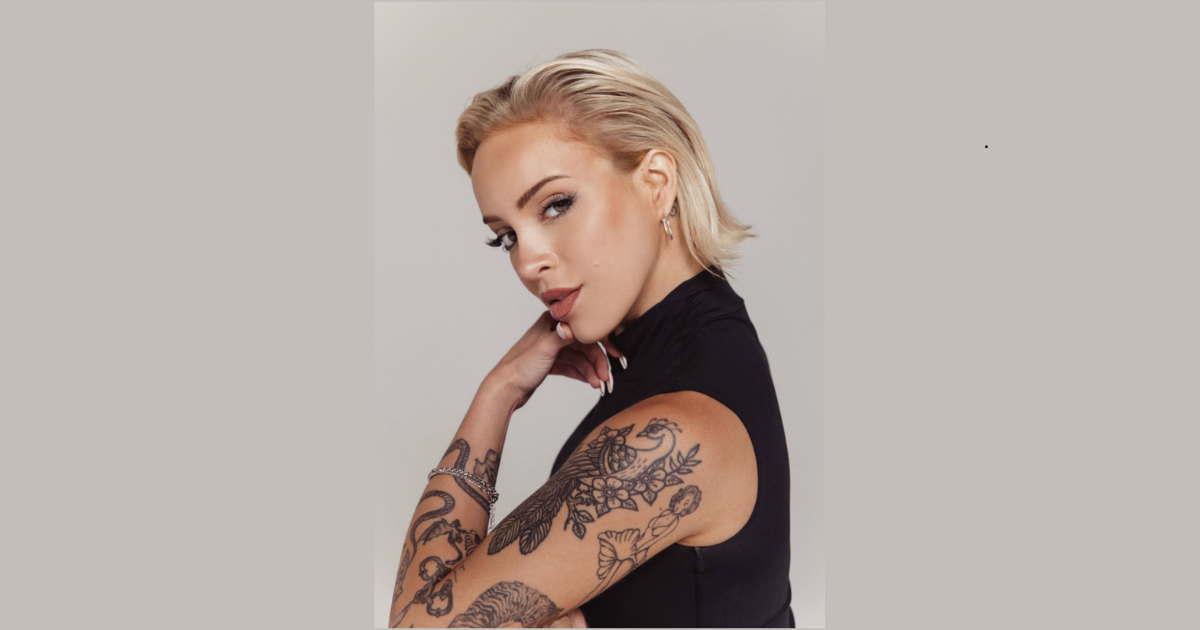
Darla Bundus has reached a stage in her career as a creator where growth is no longer the primary metric guiding her decisions. With more than nine million followers across Instagram, TikTok, YouTube, and Snapchat, she has already experienced the velocity, visibility, and pressure that come with large-scale attention. What defines her current chapter is not expansion for its own sake, but a deliberate narrowing: fewer brand deals, fewer posts driven by momentum alone, and more control over how her audience engages with her work.
That restraint is intentional. Darla has built her audience on comedy, cosplay, and candid conversations about mental health and body image, but she has also been unusually transparent about the mechanics behind those moments. Rather than treating honesty as a confessional device, she approaches it as a structural force that shapes how trust forms and how sustainable a creator’s business can be over time.
Choosing Trust Over Volume
Darla says she rarely takes brand deals, a choice that stands out in an economy where monetization is often framed as a necessary next step once scale is achieved. Her resistance is not ideological. It is practical.
“I rarely ever [take brand deals] because I do not want to be a creator that is now just like a living advertisement,” she says.
For Darla, the calculation centers on audience perception. Years of watching creators transition from relatable figures into highly polished marketing vehicles have shaped her view of what erodes trust. “I can name probably 50 of my ex-favorite creators whose entire page is just, ‘Let’s use this makeup. This makeup is so good. Look at these designer shoes I got. You can get yours, too,’” she says. “I don’t want that.”
Rather than chasing every monetization opportunity, she limits partnerships to those that align with how she shows up online. The trade-off is immediate revenue for long-term credibility. It is a bet that an audience built on consistency and candor will be more durable than one trained to expect constant promotion.
Transparency as Infrastructure
Darla’s openness about cosmetic procedures, body image, and mental health has often been framed externally as vulnerability. She sees it differently. Transparency, in her view, reduces distortion. It sets clearer expectations and reduces the pressure from a comparison culture.
“A lot of the changes that I’ve opted for are big decisions,” she says. “They’re expensive, they’re risky, they’re dangerous in some people’s minds.” Her goal is not to normalize impulsive choices, but to explain them with context. “It’s also not something to take lightly. It’s not like going in, getting a pedicure.”
That distinction matters for how audiences interpret what they see. Darla describes transparency as a way to remove mystery from highly curated online images, particularly for young women. By naming the inputs behind the outcome, she reduces the gap between perception and reality.
“I want to break the stigma that it’s not as scary as you think it is,” she says. “But it’s also not something to take lightly.”
This approach has shaped how her community interacts with her content. Rather than positioning herself above her audience, Darla emphasizes proximity and shared experience.
“I don’t ever want to have people see me as being above or below,” she says. “I want us all to be equal and us all to bond over the same thing.”
Audience Fatigue and the Limits of Commercialization
Darla’s skepticism toward aggressive monetization is rooted in what she observes from her audience and from broader creator marketing. She believes viewers are increasingly aware of how influence is monetized, and that awareness changes how content lands.
“I think people are also tired of creators that ‘sell out,’” she says. The influencer points to a familiar arc: creators who begin with everyday, relatable content and quickly shift into brand-heavy programming once representation and visibility increase.
“I used to be a person for the people, and now I’m a vessel for brands and companies to use to advertise a product to further somebody else’s wealth,” she says. The shift, she notes, is often abrupt enough that audiences feel replaced rather than included.
Darla is careful not to moralize the choice. Her concern is the downstream effect on trust and engagement. When monetization becomes the dominant signal, the relationship between creator and audience changes. Relatability turns transactional.
“I want to giggle. I want to laugh. I want to cry sometimes,” she says, describing the content she seeks out herself. “I want wholesome videos. I want more dogs.”
Slowing Down After Scale
After years of hyper-consistent posting, Darla has intentionally reduced her output. Notifications are off across platforms. Content is no longer extracted from every experience.
“I was on my phone for probably 16 hours out of the day for three years straight,” she says. “And then I realized, like, ‘What have I done? I’m not living my life.’”
The shift reflects a broader reassessment of what success looks like after virality. Darla describes a period where attention itself became intoxicating. “I was so drunk on numbers and on attention,” she says. “I needed to see what people were saying about me all the time.”
That mindset has changed. “I care less,” she says plainly. The change is not about disengagement, but about boundaries. She deliberately checks platforms, posts with intention, and resists turning every moment into content. “I want to fully experience what is going on in front of me instead of turning it into content,” she says.
Platform Strategy Without Dependence
Algorithm volatility has reinforced Darla’s desire to avoid overreliance on any single platform. Posting the same video across TikTok and Instagram often yields notably different results, a reminder that performance is rarely predictable.
“There’s really no rhyme or reason to things at all,” she says. Instead of chasing optimization, she emphasizes patience and consistency. “I say that there’s no such thing as platform dependency. It’s just how consistent you are going to be and how patient you are going to be with it.”
Instagram currently feels most useful for businesses, particularly for commerce and discovery. YouTube, meanwhile, represents opportunity rather than familiarity. Darla is within reach of one million subscribers and sees long-form video as a space to explore commentary and educational formats that short-form does not support.
“I already can monetize, and I just need to take advantage of that,” she says. The hesitation is less about capability than about clarity. “I have so many ideas, and I just don’t know where to start.”
Creative Range Without Compression
Darla has repeatedly resisted pressure to define herself by a single format or aesthetic. Comedy remains central, but it exists alongside cosplay, commentary, and emerging acting projects. That range has occasionally complicated how audiences perceive her.
“When I enter a room, people are automatically going to have a preconceived idea of what I’m like before I even open my mouth,” she says. Early in her career, Darla says she was often infantilized. More recently, she reports being sexualized. Both dynamics, she notes, obscure competence.
“You’re a lot smarter than you look,” she says, recounting a phrase she hears frequently.
Darla’s response has been to lean further into authorship. Writing, in particular, has become a focus for 2026. “I really want to water – and see grow – the fact that I can be a really good writer,” she says. “Not a lot of people give credit to writers, point blank.”
Building Toward Longevity
In the near term, Darla is focused on expanding her acting portfolio through short films, modeling, and low-stakes projects that allow experimentation. “I want the bar to be in hell,” she says, describing her preference for starting small and building upward.
She is also recalibrating her relationship with ambition. Past temptations to chase proximity to fame have lost their pull. “Here’s something shiny. Here’s some shiny keys in front of my face,” she says, reflecting on moments when access and status felt seductive. “At the end of the day, that is not what will fulfill you.”
What fulfillment looks like now is quieter and more internal.
“I would much rather spend my time and energy with my friends who have been by my side since I started,” she says.
A Different Measure of Success
Darla does not frame her current choices as definitive answers for other creators. They are simply the result of her own experiences. After years of testing scale, saturation, and speed, she is prioritizing sustainability.
Her goals for the coming years are not framed around follower counts or brand alignment. “I hope to have traveled more,” she says. “I hope to have a better relationship with myself and with my body. And I hope to decrease my stress.”
The future remains intentionally open-ended. “I genuinely could not tell you where I’ll be,” she says. What is clear is the direction. She is building a career that values trust as an asset, treats transparency as infrastructure, and resists the pressure to monetize every moment.
“I hope that I have hope for the future,” she says.
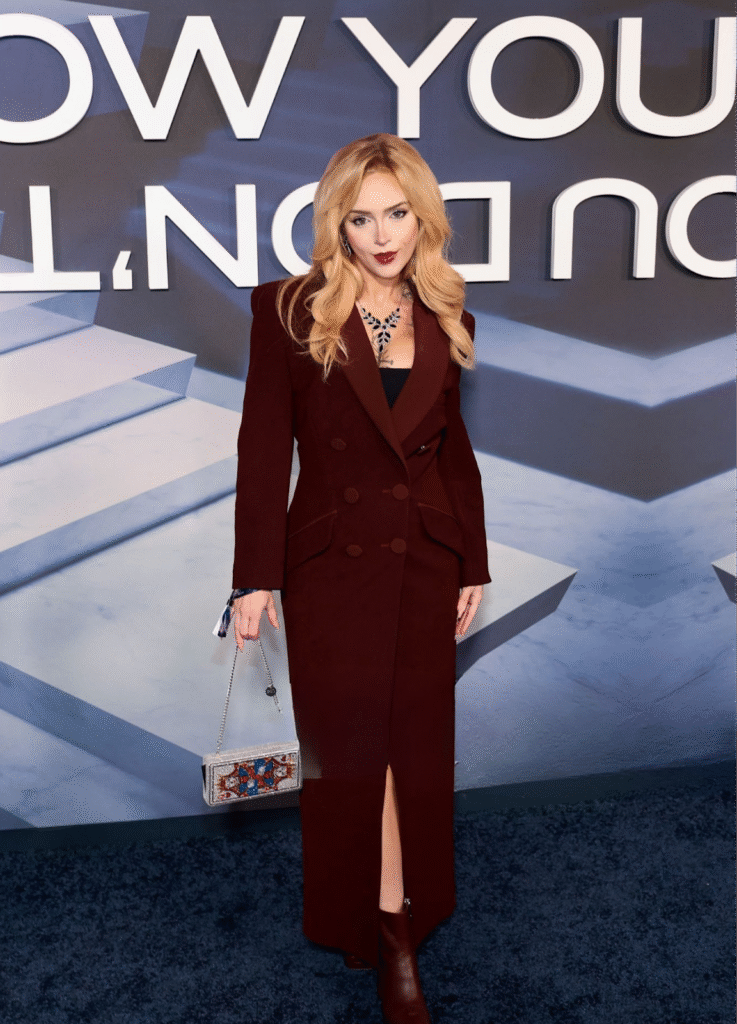
Photo source: Arsenic Agency
Subscribe to Our Newsletter
Check Out Our Podcast