






Tech
Hummingbirds CEO Emily Steele Is Using Grocery Receipts to Solve Creator Attribution at Retail

Can a creator with a few thousand followers drive a stranger into a grocery store? Emily Steele, co-founder and CEO of Hummingbirds, has spent four years building the infrastructure to answer it.
Emily launched Hummingbirds in 2022 out of a marketing agency she ran in Des Moines, Iowa. The initial premise was grounded in a practical observation: word-of-mouth is the most effective form of product discovery, but nobody had built a platform to activate it locally, at a specific shelf, in the specific neighborhood where a product was sold. Early experiments sending local creators into Hy-Vee and Target stores to post about products generated enough commercial signal to raise capital and expand. The company has since raised over $13 million in funding.
“Almost all software for creators has been designed for e-commerce and Amazon and direct-to-consumer,” Emily says. “I want to be the company that really got local retail, contextual, near you. We’re building the company that rewards creators and shoppers for sharing and shopping at retail.”
Hummingbirds now operates in 78 cities nationwide, with a creator base that has tripled to more than 50,000 over the past 18 months. More than 280 brands, including Graza, Recess, Ritual, and Goodles, run campaigns through the platform. The company’s expansion into the Northeast, capped by a New York City launch in May, completes its national footprint and coincides with what Emily describes as the most notable product update in the company’s history.
One Vertical Beats 18
For most of Hummingbirds’ early history, the platform served a wide range of brand categories. Tourism companies, restaurants, small businesses, and CPG (Consumer Packaged Goods) brands all ran campaigns on it. Emily recalls pitching investors with a roster of 18 different verticals, framing the diversity as a feature. Creators genuinely appreciated the variety. The problem surfaced on the sales side.
“You get on a sales call with a tourism brand, and the things they want are very different than a small business at a restaurant,” she says.
The decision to go all-in on CPG came from a pattern Emily kept encountering across hundreds of brand conversations. Feedback from consumer packaged goods companies was qualitatively different from every other vertical. “They were like, ‘We needed this yesterday,” she says. “‘There’s never been this available. We’ve been asking for this solution, and no one’s come up with it.’”
Concentrating the business on one category simplified everything from messaging to product roadmap. “It’s been a real unlock for us as a company,” Emily says. Every decision now maps back to a single question: can a creator in a specific city drive a specific product off a specific shelf?
The Attribution Problem Creator Marketing Has Never Solved at Retail
The sharper positioning revealed a structural problem that even Hummingbirds had not yet addressed. Influencer campaigns built for e-commerce produce click-through data, add-to-cart signals, and conversion metrics. Creator campaigns tied to physical retail have never had an equivalent measurement layer, and that absence is what makes finance teams skeptical.
“When the CFO is like, ‘Tell me how this creator spend attributes to velocity at shelf, that’s where it breaks,’” Emily says.
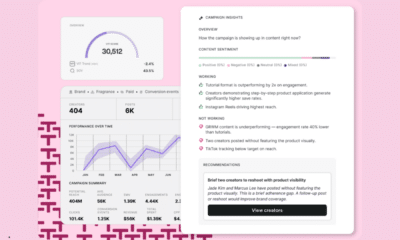
The company’s response is a receipt-based attribution system it calls “Offers,” currently in beta with 20 brand partners. The mechanics are straightforward: a brand sets up a cash-back offer on a product at a specific retailer. A creator shares that link through any channel, a social post, a newsletter, a text message, or directly with their community. When a follower buys the product in-store and uploads their receipt, they receive the cash back, and the creator earns a commission on each redemption.

“We’re basically playing the affiliate game, the creator storefront, but at retail,” Emily says. “No one has done a storefront for creators at retail before.”
She draws a direct comparison to platforms like LTK and points to the category those platforms cannot reach. “Your cheese, your milk, your pizza, your eggs, you’re probably not going to buy those e-commerce,” she says. “Creators have never been able to earn from that.”
Target recently announced its own creator programs, but Emily observes that they remain structured around online affiliate links, which capture only a fraction of CPG purchases made digitally. According to the U.S. Census Bureau’s “Quarterly Retail E-Commerce Sales” report, 83% of grocery and CPG transactions still occur in physical stores.
The Northeast Was Always the Last Market
The decision to push into the Northeast was demand-driven. According to Hummingbirds, 44.6% of inbound brand inquiries had specifically requested coverage in the region, drawn by its retail density and higher per-capita CPG spending in specialty and premium food categories. New York City generated more creator waitlist interest than any single market the company has entered, surpassing Los Angeles by more than 50%.
Emily frames the New York launch as a planned endpoint to the city-expansion phase rather than another incremental addition. The West Coast rollout was timed to Expo West. The Northeast push was anchored to the product launch. “New York is kind of the last hurrah as we close out the city opening motion,” she says.
For the brands driving that demand, the expansion was about retailer alignment. CPG companies already distributed into Wegmans or other Northeast-specific chains needed creator presence in those geographies and had no tool to build it. “They were like, we need to move product, we need to build brand awareness in these geographies, we want to work with creators, we don’t have the right team to go find them on our own,” Emily says.
Operationally, opening a new market has become a repeatable exercise. Hummingbirds uses a dedicated recruiter to identify an initial cohort of creators in each city, activates targeted Instagram advertising in that geography, and draws on waitlists built over time. “Because of the brand reputation, we have a waitlist of creators that have told us, when you open New York, let us know,” Emily says. “Then they tell their friends.”
Nano Creators Have No Platform. Hummingbirds Is Building One.
Hummingbirds does not pursue macro influencers. Its creator base consists of what Emily calls everyday creators, people with 500 to 5,000 followers whose value comes from proximity rather than reach. They live in the same neighborhoods as the consumers a brand wants to activate.
“Someone with 2,000 followers can work with Graza Olive Oil,” Emily says. “They can add that to their portfolio to grow as a creator, and that builds credibility.” The platform consolidates creator outreach, contracting, and content management in one place, saving lean marketing teams an estimated 21 hours per campaign.
In-store content produced by everyday creators also reads differently from managed brand placements. When a creator documents exactly where a product sits on the shelf, explaining it is stocked near the yogurt rather than the cheese, they are performing a contextual discovery function that no produced asset replicates.
“Some brands really do have to educate via creators on where the product is,” Emily notes, “because as a consumer you might not think to look in that section of the store.”

Brands Treating Creator Campaigns as a Standalone Strategy Are Missing It
Despite the growth, Emily is direct about where brands misapply the channel. The most common mistake is treating creator activation as a primary lever rather than one element in a larger campaign. “Brands that are like, ‘We want creators to do all the heavy lifting, they’re missing it,’” she says. “Getting the word out is a multi-channel, multi-threaded effort. Creators are one of them.”
She points to in-store demos, coupons, and trial programs as necessary complements, and estimates that converting a first-time CPG buyer now requires roughly 12 consumer touch points. The brands performing best at retail treat Hummingbirds as one input in a broader mix, not the entire strategy.
“The brands that are really winning understand this, and aren’t just saying Hummingbirds is the way we’re going to do it,” she says. “We’re like, ‘What else are you going to do?’”
Closing the Loop on Retail
Five years from now, Emily wants Hummingbirds to be recognized as the infrastructure layer that connects creator-driven discovery to measurable in-store performance, a category that did not exist when she founded the company.
The receipt-based offers product is the clearest expression of that ambition. To validate it at scale, Hummingbirds needs to demonstrate that creator-driven shares reliably lead to documented in-store purchases and that CPG brands will treat that attribution data with the same weight they give e-commerce conversion metrics. That is the commercial test that matters.
“Creator-powered discovery can lead to in-store velocity,” Emily says. “Creators are the ones driving in-store behavior in a way that has never been proven before. We’re finally proving movement at the shelf.”
Subscribe to Our Newsletter
Check Out Our Podcast