





Tech
How MOGL’s New Offering Turns Athlete Social Accounts Into Measurable Ad Channels

MOGL, an Athlete Influencer Marketing platform, launched Athlete Paid Social last month, an offering that enables brands to run ad campaigns through athletes’ Instagram and TikTok handles rather than a brand’s own account. The first campaign built on it, for athlete platform ProStyl Sports, produced ad clicks at roughly a quarter of the industry’s average cost.
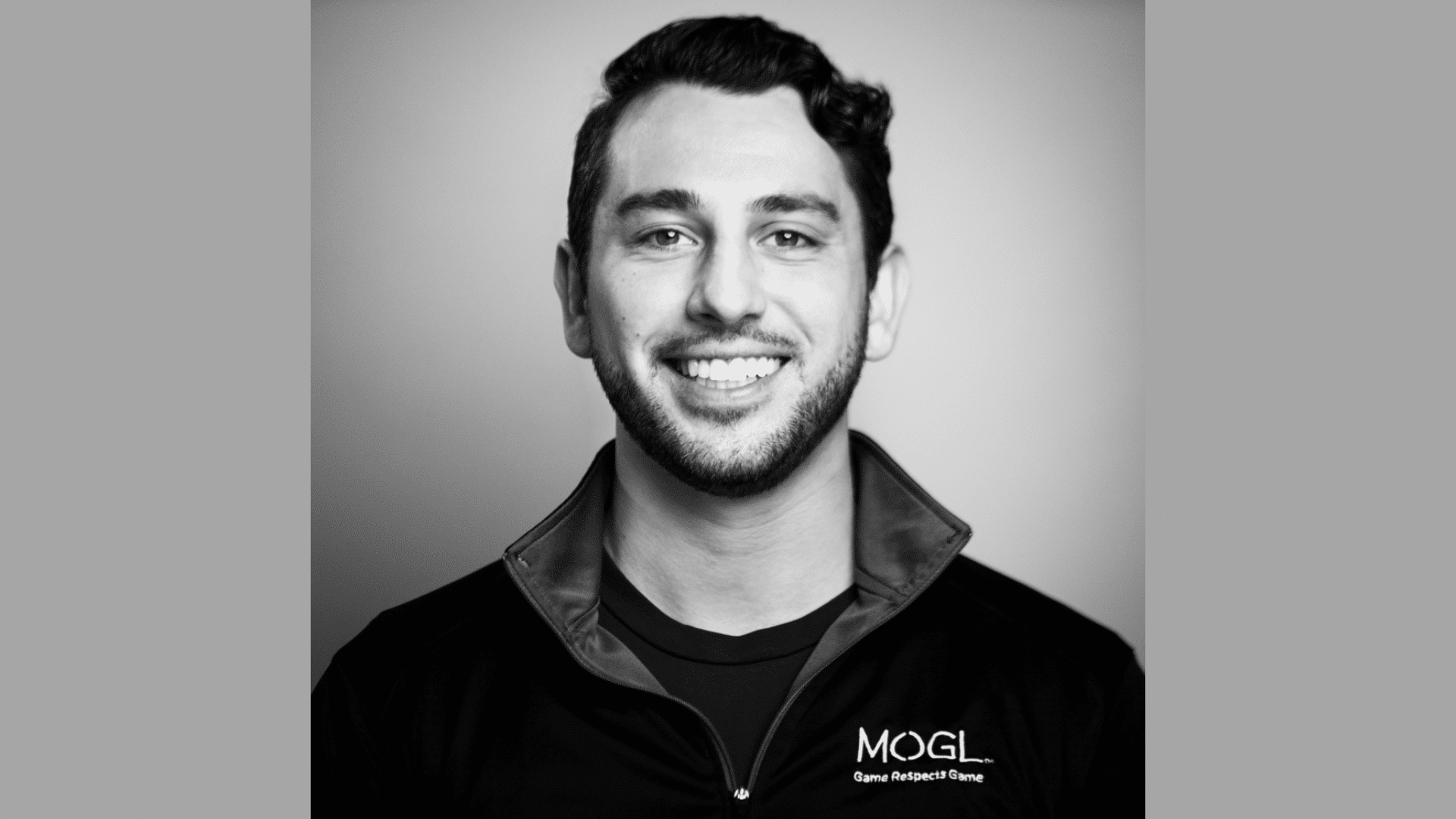
That result reflects years of work by Ayden Syal, who founded MOGL in 2019, anticipating the NCAA’s coming name, image, and likeness (NIL) rule changes, and took the platform to market commercially in July 2021. A former Morgan Stanley analyst who has since been named to the Sports Business Journal New Voices Under 30, Ayden built MOGL in New York to facilitate the Influencer Marketing process between brands and athletes by automating search, discovery, content creation, fulfillment, and paid amplification.
Athlete Paid Social, MOGL’s newest product, answers a specific need for brands: changing athlete marketing to behave like a channel that can be bought, targeted and measured like any other media buy.
“People often think of athletes just as sponsorship vehicles, which is not the case whatsoever,” Ayden says. “These athlete social handles are distribution channels.”
ProStyl Sports founder and CEO Derrick Love became the offering’s test case. His platform, launched in late 2024, now spans more than 800 sports categories and lets athletes build a following, compete on leaderboards and get paid regardless of school, sport or follower count.
“Those platforms extract value from the athlete without giving them anything back,” Derrick says of mainstream social apps like YouTube, Instagram and TikTok, which he argues were not built with athlete performance in mind.
Paid Social Got More Expensive While Getting Less Precise
Ayden traces MOGL’s newest product back to what has happened to ordinary paid social. “Paid social is really becoming more expensive,” he says. “Platforms are charging much higher fees and giving advertisers significantly less targeting, measurement, and differentiation capability.”
Part of that, he says, comes down to more advertisers competing for the same inventory. Part of it comes down to privacy rules that have made it harder to reach a specific audience repeatedly and at scale. The result, in Ayden’s account, is that cost per thousand impressions and cost per click have both climbed, often without a matching improvement in whether that spend actually reaches the right customer.
“Ultimately, those CPMs and CPCs that you’re generating may not be within your desired audience and target customer,” he says. That is the problem MOGL is selling against: the issue is not a lack of access to social platforms, but the rising price of reaching the right person on them.
Athletes Are Being Sold As Sponsorships, Not As Media
Ayden argues that most brands still treat athlete deals as an occasional nice-to-have rather than a repeatable, performance-driven line item. “That’s really what our mission at MOGL is to change,” he says.
Legacy providers and agencies, in his view, compound the problem by charging a high upfront fee while providing little visibility into what a campaign actually delivers.
Derrick reaches a similar conclusion from the other side of the market. He says sports-specific platforms such as Hudl, ESPN and Overtime focus narrowly on broadcast, fitness tracking or a single sport, and none combine the competition mechanics, open monetization and community voting that ProStyl Sports built its product around. “We looked at competition first, not content first,” he says. “How can we help the athlete win, not just post?”
Both describe the same disconnect in the market from opposite sides. Neither general platforms nor niche sports apps, in their telling, convert athlete attention into pay for the athlete or a measurable return for the brand paying to reach that audience.
Athlete-Made Content Beat The Brand’s Own Video
The ProStyl Sports campaign ran on Meta and tested two versions of creative against each other through the same athlete handles. In one, MOGL ran ProStyl’s own branded video through athlete accounts using influencer whitelisting, a technique that makes an ad appear in a feed as an athlete’s own post while it is served and targeted like any other ad. In the other, an athlete produced original content promoting ProStyl Sports, which MOGL then boosted in the same way.
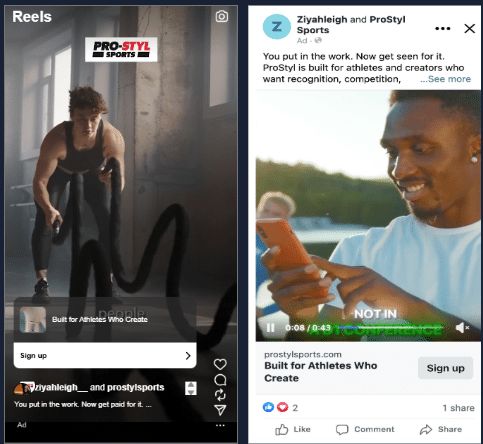
According to the campaign’s results, the branded creative delivered a $0.36 cost per click against a $1.50 industry average, with a 2.46% click-through rate compared with a 0.46% benchmark. The athlete-made version performed better still, at $0.26 per click, a meaningful improvement over branded content running through the same accounts. MOGL layered interest-based and geographic lookalike audiences on top of both versions to narrow the targeting further.
Ayden says the campaign held its average ad frequency at 1.9, meaning most people who saw it were shown the ad no more than twice. Frequency is often pushed higher to inflate impressions and lower reported costs, he says, so holding it under two while producing those numbers suggests the clicks reflect real interest in the product rather than repeated exposure.
Why ProStyl Moved Away From a Views-Based Marketing Approach
ProStyl Sports’ move toward performance-focused paid media came after a previous marketing campaign highlighted the limitations of a views-based approach. The company had worked with another marketing partner that promised 10 million views over three months for a set fee, but Derrick says the campaign generated less than 5% of that target.
“They didn’t even reach 5% of those 10 million views,” he says. “It was a very generic approach.”
Derrick contrasts that with MOGL’s targeting, which he says produced a usable asset within about a week of signing. He reports that the whitelisted branded ad has topped 100,000 views in the 55 days since its April 25 launch, while the athlete-produced content on Instagram has topped 221,000 views as of late June.
He also says ProStyl Sports has seen monthly active users rise more than 1,000% and page views climb more than 400% since the campaign began, though he did not disclose the baseline traffic those percentages are measured against. The reported numbers have already changed how Derrick describes the partnership and where ProStyl plans to spend. “This has just been the best partner that we’ve had, the single best partner that we’ve had,” he says. “Paid media is the way that we’re going to continue to go. We’re going to increase what we’re doing.”
A Narrow Audience, And An Ad Labeled As One
Derrick credits some of the campaign’s performance to resisting the urge to broaden ProStyl’s target audience. The platform’s core users are competitive athletes and aspiring sports creators between 16 and 34, a group he says skews 60% to 70% male, with a fast-growing female segment. “Brands that try to be everything to everyone, I really think that would be a major mistake,” he says.
MOGL also automates the disclosure side of the ads. Every post the platform runs carries a paid partnership label, and the company automates the disclosures required by the NCAA and each athlete’s school alongside standard platform ad rules.
Ayden’s rationale is that pairing clear disclosure with narrow, relevant targeting, rather than broad reach, is what keeps paid amplification from reading as noise to the audience it’s meant for.
MOGL Is Betting The Category Moves From Sponsorship To Media Buy
MOGL launched commercially in 2021 on what Ayden calls a build-it-and-they-will-come assumption, betting that brands would want to work with athletes once the mechanism existed. What the company learned, he says, is that providing a way to connect with athletes was not enough on its own. Brands needed an ROI they could point to, which is what pushed MOGL toward AI-driven matching, campaign automation, and now Athlete Paid Social.
Ayden argues the bigger opportunity extends past sports brands entirely, to any company trying to reach younger consumers who do not respond well to conventional ads. He frames waiting as the real risk. “The opportunity cost of waiting is potentially significant wasted investment,” he says, pointing to how quickly AI tools now let competitors build something similar.
For Derrick, the case is simpler and closer to home. “I’m still surprised at how quickly this has happened,” he says of ProStyl’s traffic growth since the campaign began.
Subscribe to Our Newsletter
Check Out Our Podcast