Tech
G&B Digital Management Is Paying College Creators Because Mentorship Alone Won’t Level the Field

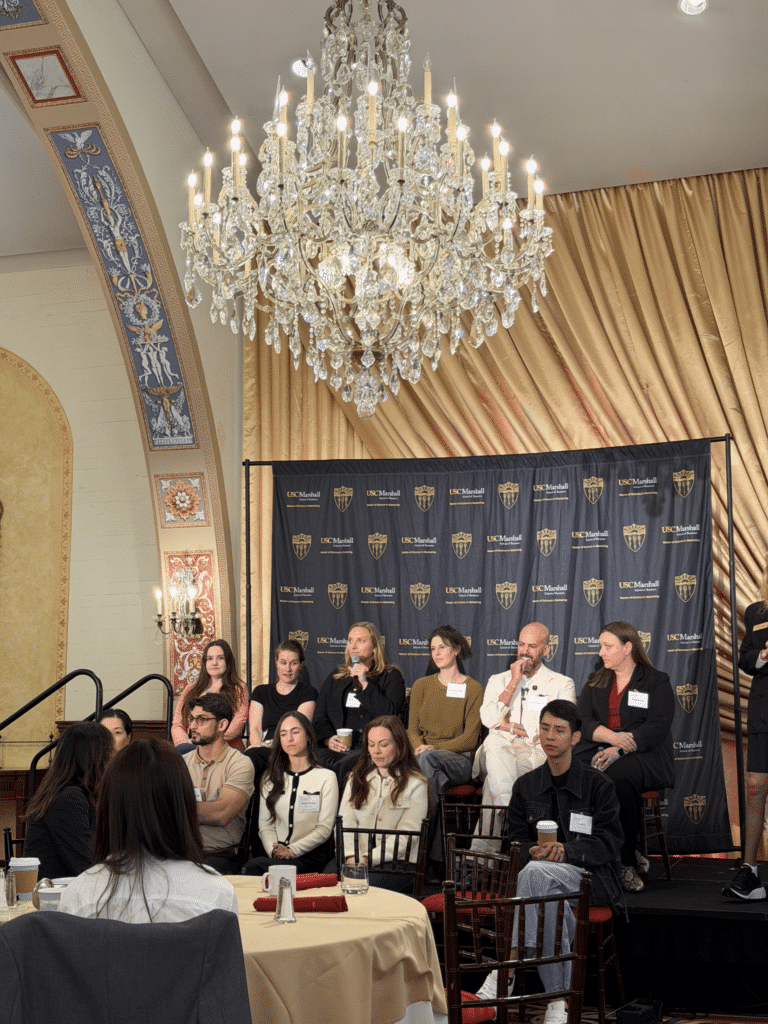
G&B Digital Management and College of Influence awarded $1,000 each to five college creators this spring, selecting finalists based on advocacy focus and niche specificity rather than follower counts. The inaugural College Creator Micro-Grant, which launched after brands declined to co-fund the concept a year earlier, pairs direct funding with a three-session mentorship curriculum built around one premise: information alone does not level the playing field.
Kyle Hjelmeseth, founder and CEO of G&B Digital Management, started the company in Los Angeles in 2015 and has spent the decade since building it into a firm managing more than 120 creators and facilitating more than $100 million in brand partnerships. The Inc. 5000-listed agency also operates College of Influence, the education platform Kyle launched in 2019 that has since reached more than 8,000 professionals and delivered more than 400 educational experiences. It was that work, not the talent management side, that made the need for the grant visible.
During campus visits and speaking engagements with California colleges, Kyle and his team encountered a consistent finding: students with genuine ambitions to build creator careers had almost no formal instruction in the field they wanted to enter.
“They don’t have any clue of what’s going on in creator or influencer marketing, because at the college level, it’s not being taught,” he says.
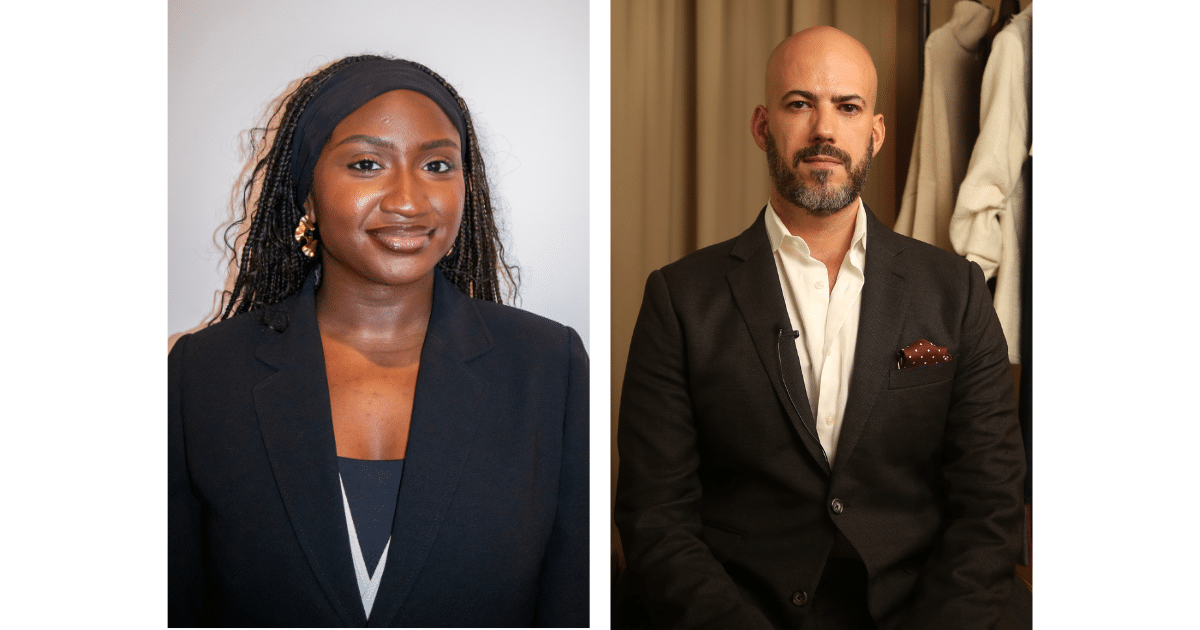
Kofoworola “Kofo” Jolaoso, G&B’s Social Media and Content Strategist, helped design and run the program, seeing it as a way to act on that observation earlier in the career arc than College of Influence’s professional programming typically could.
When Brands Said No, G&B Funded It Anyway
The program did not launch on its first attempt. When Kyle and Kofo developed the grant’s structure in 2025, they approached brands and agencies about co-funding it. None committed.
“They just didn’t think it was something that should be paid attention to yet,” Kyle says. The team paused the project and relaunched it in 2026 as a G&B-funded initiative, without external partners.
Kyle intends for that to change. He frames next year’s edition as an open challenge to the industry. “I’d really put the challenge out there to brands and agency partners to lock arms with us and create more opportunity for this particular population,” he says. “Let’s put the money and the mentorship on the table and work together.”
The timing reflects G&B’s reading of where the Creator Economy stands. Kyle argues that 2026 marks a shift: questions about whether Influencer Marketing delivers commercial results have largely been settled, and attention is turning toward who builds durable careers within it.

The Case Against Courses
When Kyle launched College of Influence in 2019, its education was free. During the pandemic, the team briefly experimented with a paid course model before stepping back. That experience sharpened how he thinks about what creator education can and cannot accomplish on its own.
“For me, it makes me laugh, the amount of people that are out there selling courses and digital downloads,” he says. “You have to be such a particular type of person to take that $99 course and actually do something with it. Most of it comes from the individual versus whatever PDF they received.”
The micro-grant was designed as a structural response to that limitation. Each finalist receives $1,000, intended to remove practical barriers to creation, and three 45-minute mentorship sessions with G&B team members.
The first session is with Joey Gagliardi, College of Influence’s Director of Education, who works with each creator to map out a content series and develop a coherent brand strategy. “As far as I know, Joey is the only director of education inside of a talent management firm that was built for creators,” Kyle notes. The second session pairs each creator with a G&B talent manager matched by content focus, covering how brands evaluate creators and what kinds of partnerships to pursue. The third is with Kyle directly.
“When somebody comes to meet me at this level, I’m going to give them more of the philosophy: how do you think about this in the grand scheme of things?” he says. “I can give them a much broader perspective that has time behind it.”
Gen Z Already Understands What Many CMOs Don’t
The five finalists, Brookelynn Fenderson, Aarushi Khanna, Gianna Desdune, Ziyu Gao, and Amiri Johnson, were evaluated on the clarity of their vision, the specificity of their content focus, and how they planned to use the funding. Follower count was not a factor.
What surprised Kofo was not how the applicants differed from each other but what they shared. “A lot of them are like, ‘I don’t want to just post what’s going to go viral. I want to really build a long-lasting brand and a long-lasting community,'” she says. “We’re already past phase one. They understand it’s not about posting a bunch of viral videos.”
Kyle frames that observation as a generational corrective on a lesson that has taken over a decade to penetrate marketing leadership. “Virality is a fleeting moment,” he says. “And I still don’t know that CMOs and CEOs have quite realized it.”
The selection also prioritized equity and niche depth, with particular attention to Black and Brown creators and those working in underrepresented content areas. Aarushi, who creates content around menstrual equity and runs in-person educational events, emerged as a clear example of the program’s logic. “She’s already creating great content for an underserved community. That made her an obvious winner in my mind,” Kyle says.
Ziyu, who covers the film industry, described her goal as making exclusive elements of the space accessible to her audience. Amiri, simultaneously running two businesses, wanted to show the normalcy of college life alongside his entrepreneurial work.
Kofo noted that none of the finalists resembled G&B’s existing talent roster. “I don’t see any mini versions of our talent,” she says. “And I think that really speaks to the G&B perspective of the unique story that everyone has to tell.”
The Validation Problem
One dimension of early creator careers that the grant was built to address is harder to quantify than equipment costs. Kyle describes it as endemic to how most people enter the space.
“Creators are making content in their room or by themselves,” he says. “And it’s a very lonely endeavor.” The public nature of early failure compounds the problem. “Your wins and your fails are so public,” Kofo says. “That’s something that derails a lot of people from even getting into the content space.”
Skepticism from family and friends creates an additional layer. Kyle recalls how long it took for those closest to him to recognize creator careers as legitimate. “It was constant pooh-poohing until Chanel brought us to the south of France on an influencer trip,” he says of his wife, G&B’s first talent, and how her mother’s perception shifted. He sees the same dynamic playing out for today’s applicants.
What mentorship addresses, in his view, is less about information than direction. The applicants needed to lay out their ideas and plans and “have somebody edify that,” Kyle says. “Yes, you’re going in the right direction. Keep going.”
A Pipeline, Not a Promise
G&B considered guaranteeing a management contract to at least one finalist before deciding against it. “We want to really get to know these people and see what they’re capable of,” Kyle says.
The company does not lock existing clients into long-term contracts, and the same philosophy governs the grant. Standout participants may eventually be offered representation, but the program is not structured around that outcome.
For Kofo, the longer-term value lies in community. “We’re a very community-based company,” she says. “I have no doubt that each of these students is going to become part of our G&B community.”
Kyle sees the grant as one piece of a broader infrastructure argument. The company manages micro-influencers who, in his description, earn disproportionate revenue per follower through niche specialization. College of Influence runs professional programming across industries. A proprietary data study drawing on a decade of G&B management records is in development with a research partner. The common thread is an industry still in the process of building the institutional scaffolding it needs.
“This is the next generation of human storytellers on the digital frontier,” Kyle says. “We thought we could really do a lot with the creativity coming out of this generation.”
Subscribe to Our Newsletter
Check Out Our Podcast