





Talent Collectives
Enhance Management’s Bronagh Quinn Is Betting Irish Creators Can Win by Staying Selective

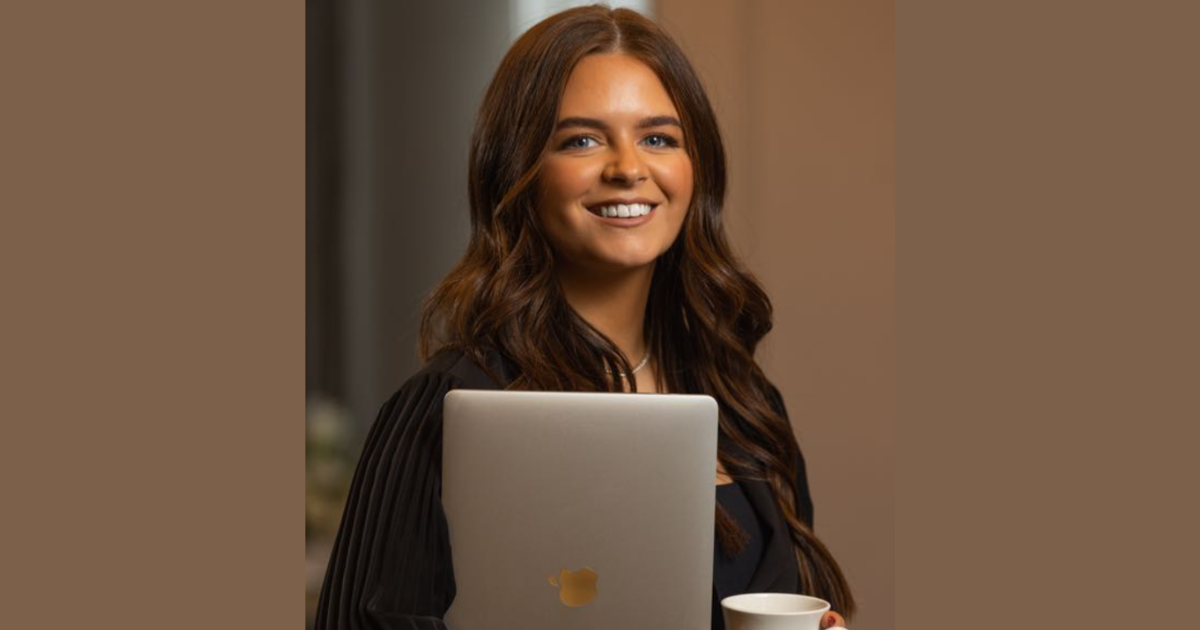
When Bronagh Quinn left her job at a Dublin PR agency in December 2022, she gave two weeks’ notice, bought a domain, made an Instagram account, and told two creators she was starting her own firm. Both came with her.
That two-week sprint became Enhance Management, a boutique talent management agency based in Dundalk, County Louth, that now manages 16 Irish lifestyle creators with a team of three. Nearly four years in, Bronagh says the agency’s growth has depended less on chasing every brand brief than on knowing when creators should turn work down.
“If you want to grow and you want to work with your star brand, you really need to refuse along the way to get to that stage,” Bronagh says.
From PR Intern to Talent Manager
Bronagh graduated from Dundalk Institute of Technology with a degree in event management during the COVID pandemic, which effectively shut down the career she had planned. She landed an internship at a Dublin PR agency, where she split her time between influencer outreach and a local food delivery app. The combination gave her an unusually clear read on how Irish agencies were handling creator talent.
The pattern she identified was consistent: campaigns ran as one-offs, and creators were cycled through and forgotten.
“We’d only work with them on one campaign and then just move on,” Bronagh recalls. “We never really got to know the person, see what they wanted to do, where they wanted to actually be in a few years.”
One assignment changed her trajectory. The agency tasked her with identifying TikTok creators who could make an impact as COVID restrictions lifted. Among those she signed was Ciara Ryan, who had roughly 500 followers at the time. Ryan is still on Enhance’s roster today, now approaching 300,000 TikTok followers.
“That was when I realized I was doing something correctly and I loved doing what I was doing,” Bronagh says.
Boutique by Design
Enhance operates on what Bronagh describes as a one-in, one-out model. The roster sits at 16 creators, held intentionally at that number, all broadly lifestyle-focused but with distinct individual niches: gym instructors, full-time professionals, foodies, and travelers.
New signings go through a three-month evaluation: the first month covers outreach, the second should yield early collaborations, and by the third month, the agency has enough data to make a decision.
Bronagh also watches prospective creators for as long as six months before approaching them, studying engagement patterns and content performance. The question she asks is not just whether a creator is growing, but whether Enhance can accelerate that growth.
“There’s no point to me taking somebody on that potentially is growing themselves, but I need to be there to guide them and grow them in a better aspect,” she says.
That selectivity is also a staffing philosophy. Bronagh’s colleague Orla, who has a child, manages creators whose content centers on parenting, a category Bronagh says she cannot speak to credibly. The team is intentionally matched to the roster, not just to headcount requirements.
Why Saying No Is the Strategy
Central to Enhance’s pitch to brands and creators alike is the idea that strategic refusal drives long-term performance. Bronagh argues that creators who accept every incoming deal dilute their relationship with their audience, and that Irish audiences in particular are quick to detect inauthenticity.
“I love when a creator says no to a brand,” she says. “It makes me feel like they are authentic. They do want to work with their audience and show their audience that they do use a brand religiously.”
That philosophy has a practical counterpart in how Enhance now approaches campaign work. Rather than waiting for brand briefs and matching talent to them, Bronagh increasingly brings concept-led proposals to brands directly. Creators develop their own ideas for how they would work with a product, and the agency packages those into pitches. Irish brands, she notes, have become receptive to the format.
“The traditional style of briefing is kind of going downhill,” Bronagh says. “A lot more brands are taking in the concepts because it’s more authentic.”
She points to a recent campaign that creator Emma Neill developed for Dove antiperspirant as an example. Neill’s concept was initially opaque to Bronagh when described verbally. When the content was produced, it performed. The agency also pushes back on platform mismatches: when a brand insisted on a voiceover approach for an Instagram placement with a younger creator, Bronagh argued for music-only execution instead. The brand resisted. Bronagh held.
“It performed 10 times better,” she says. “So I do think having that trust is very important.”
The Irish Market’s Specific Advantage
Ireland’s Creator Economy sits behind the UK and the U.S. in terms of infrastructure, brand pool size, and the development of monetization tools like creator funds or native commerce features. That lag, Bronagh argues, preserves something more valuable: authenticity.
“A lot of people trust an Irish person,” she says. “Where sometimes you find creators in the U.S. and the UK can be very salesy, an Irish creator could be talking about something and then go into an ad.”
That cultural register, she contends, is one reason brands are increasingly looking toward Irish micro-influencers. Enhance made a deliberate decision early on to prioritize engagement rate over follower count when signing creators, a position Bronagh now offers as direct advice to brands she works with.
“We’re not just going for that follower number. We’re actually going for the engagement number,” Bronagh says. “Micro-influencers have that lower rate but have that better performance.”
She also notes that the brand side of the equation has shifted in the past year. Strict 10-page briefs specifying camera angles and timing have largely given way to brands accepting creator-directed concepts. Traditional Irish companies, including food and local clothing brands, are entering the influencer space for the first time.
Building Up, Not Just Signing Big
Bronagh’s long-term roadmap for Enhance is anchored in where the agency started. Ciara came to the firm with 500 followers, and that origin is something Bronagh says she doesn’t want to lose as Enhance grows.
“I want it to be names that come from the 500 followers, from the 150 followers,” she says. “We don’t just take that big name. We’re taking the creator from their lower follower numbers and then building them up to the bigger ones.”
Expansion into the UK is on the roadmap, alongside growing the team so the roster can scale without the agency losing its communication standards. But Bronagh also acknowledges the internal reckoning she had to make before any of that was possible: learning to delegate.
For the first three years, she treated Enhance as a one-person operation emotionally, even as it grew. Burnout arrived in year three. She began business coaching, restructured her mornings around gym sessions and walks, and drew clearer lines between work and personal time.
“You nearly forget about yourself,” Bronagh says. “You need to remember you’re the driver behind this. So if you fall sick or you burn out, there’s nobody driving the car on.”
Getting comfortable handing off responsibility, she notes, was the most consequential decision she made for the business.
“Since then,” Bronagh says, “it’s the best thing I’ve ever done.”
Subscribe to Our Newsletter
Check Out Our Podcast