





Talent Collectives
Creators 4 Mental Health Puts Data Behind The Creator Economy’s Most Overlooked Crisis

Nearly one in ten content creators report experiencing suicidal thoughts connected to their work, almost double the incidence rate among U.S. adults overall. Nearly 90% say they have no access to specialized mental-health support tailored to the realities of content creation. And fewer than one in three participate in any kind of creator community that offers emotional or career support.
Those findings sit at the center of a new benchmark study released by Creators 4 Mental Health in partnership with Lupiani Insights & Strategies and sponsored by Opus, BeReal, Statusphere, and Social Currant, one of the most comprehensive quantitative and qualitative examinations of creator mental health to date.
Based on surveys of 542 North American creators and in-depth interviews with creators and talent managers, the report reframes mental health not as a personal shortcoming, but as a structural issue embedded in the creator economy itself.
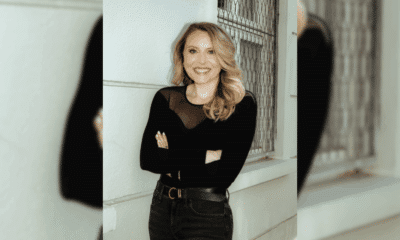
“We finally have data that shows this isn’t about individual resilience,” says Shira Lazar, founder of Creators 4 Mental Health. “It’s about systems that extract value without providing support.”
A Workforce Under Pressure With Little Safety Net
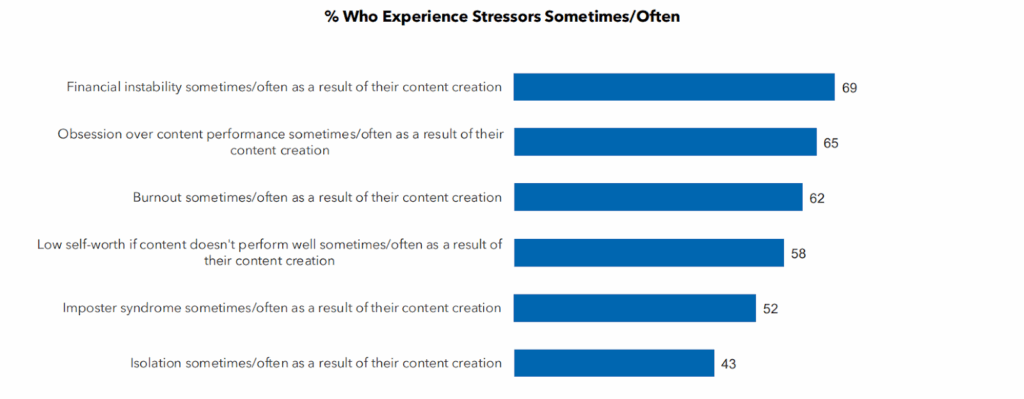
The research paints a picture of an industry built on volatility. According to the study, 69% of creators report financial instability, 65% report obsessing over content performance, and 62% report experiencing burnout as a direct result of their work. These pressures intensify with tenure: creators who have been publishing for five years or more report higher rates of anxiety, depression, burnout, and imposter syndrome than newer entrants.
Algorithmic volatility sits at the core of many stressors. In qualitative interviews, creators described sudden drops in reach, income, and visibility with no explanation, often triggering spirals of self-doubt. “There’s no warning,” one creator told researchers. “One day your views drop by 80%, and you’re left wondering what you did wrong.”
Despite these conditions, the majority of creators operate without the protections associated with traditional employment. Only 6% report having a manager or agent who is emotionally supportive; 3% have access to therapy stipends; and just 2% say their representation has mental health training. In effect, creators function as independent businesses without HR departments, healthcare benefits, or consistent income floors.
Suicidal Ideation at Nearly Double the National Average
The most sobering data point appears early in the report: 10% of creators surveyed say they have experienced suicidal thoughts connected to their work, compared with 5.5% among U.S. adults, based on National Institutes of Health benchmarks.
That statistic cuts across follower size and revenue level, undermining the assumption that scale or success inoculates creators against harm. The research shows that higher-reach creators often face additional stressors, including censorship concerns, brand mistrust, and a greater sense that their relationships with platforms and partners are transactional rather than supportive.
“These numbers should stop the industry in its tracks,” Shira says. “If this were any other workforce, we wouldn’t accept it as normal.”
Metrics, Unpaid Labor, and the Emotional Cost of Visibility
Creators with poorer emotional well-being scores share several behavioral patterns: frequent analytics checking, often multiple times per day, and more than 21 hours per week of unpaid labor, including pitching, editing, and administrative work. The report links both behaviors to increased burnout and diminished well-being.
At the same time, creators report meaningful fulfillment from their work. A majority say content creation contributes to creative growth, purpose, autonomy, and self-expression. The contradiction is central to the problem Creators 4 Mental Health is trying to solve.
“This is not an industry full of people who hate what they do,” Shira says. “It’s an industry where people care deeply, but the structure doesn’t support that care.”
Brands and Platforms as Mental-Health Stakeholders
The study devotes significant attention to the role brands and platforms play in shaping creator stress. On average, creators engage in five paid brand partnerships per month, most of them one-off or short-term. Nearly half describe their relationships with brands as transactional, and only about one in three says they fully trust their primary brand partner.
Common pain points include underpayment, delayed payments, scope creep, and lack of long-term collaboration, all of which correlate with poorer emotional well-being scores. For Shira, these are not isolated deal-making issues but contributors to chronic stress.
“When income is unpredictable, everything else becomes harder,” she says. “You can’t rest, you can’t plan, and you can’t get help.”
Trust in platforms fares no better. Only about 20% of creators say they completely trust the platform they use most, with trust declining as audience size increases. Frequent algorithm changes, lack of transparency, and the inability to reach a human representative rank among the top frustrations.
What Creators Say They Actually Need
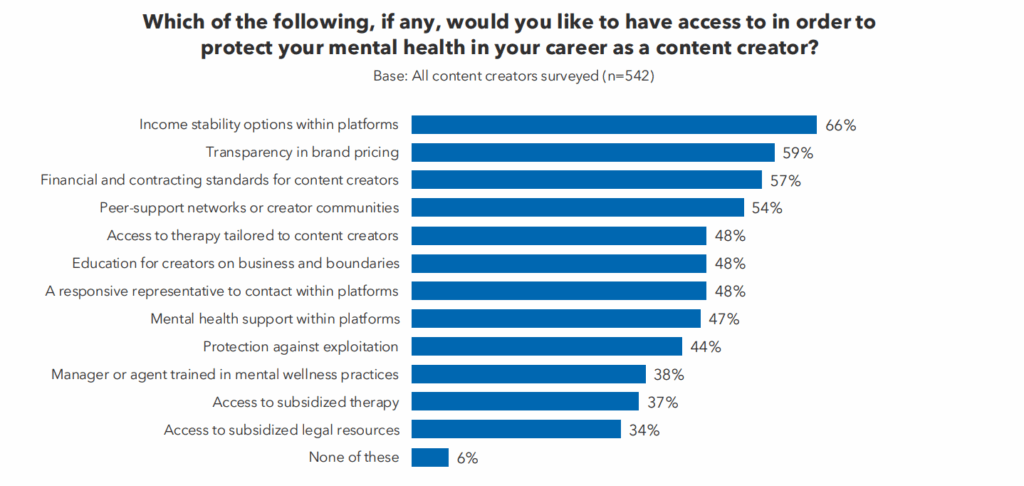
Rather than focusing solely on individual coping strategies, the report asked creators what structural solutions would meaningfully improve their mental health. The top responses point squarely at industry reform:
- Income stability options within platforms (66%)
- Transparent brand pricing (59%)
- Financial and contracting standards (57%)
- Peer-support networks and creator communities (54%)
- Access to therapy tailored to creators (48%)
Importantly, creators express a strong interest in these resources even when they are not currently available, suggesting demand, not apathy, is the limiting factor.
“The data shows creators would use support if it existed and if they knew where to find it,” Shira says. “That’s a design failure, not a motivation problem.”
From Research to Infrastructure
Creators 4 Mental Health positions the study as a foundation, not an endpoint. The organization is building what Shira describes as creator-specific mental-health infrastructure, informed directly by the findings.
Current and planned initiatives include more events in major cities around the world, Creator Care, a sliding-scale therapy program for creators in California; a creator mental health toolkit, resources, and training for representation; and an industry pledgeShira is also working with academic advisors and policymakers to translate research into long-term protections, including a proposed Creator Bill of Rights.
Unlike wellness campaigns that focus on awareness alone, Creators 4 Mental Health aims to operate as a connective layer between creators, platforms, brands, and institutions.
“If creators are a labor force – and they are – then they deserve systems that reflect that reality,” Shira says.
Why the Data Changes the Conversation
Mental health has long been discussed anecdotally within the creator economy, according to Shira. Her company’s report, on the other hand, offers scale, methodological rigor, and direct linkage between mental well-being and industry practices.
By quantifying stressors tied to algorithms, brand relationships, unpaid labor, and income volatility, the research reframes mental health as an economic and governance issue. It also challenges platforms and brands to see themselves as stakeholders in creator sustainability.
“The creator economy has matured faster than the systems around it,” Shira says. “This data gives us a chance to catch up … responsibly.”
As the sector continues to grow, Creators 4 Mental Health argues that ignoring these findings is no longer an option and is irresponsible. The numbers, Shira says, speak for themselves.
“We can’t build a future on burnout,” she says. “And now we have proof.”
Image credits: Creators 4 Mental Health & Lupiani Insights & Strategies
The full study is available here
Checkout Our Latest Podcast