American charitable giving reaches record highs in total dollars, yet fewer people contribute to nonprofits even as aggregate donations grow. Tiltify‘s “2025 Giving Season Report,” based on surveys of 1,000 donors and 1,000 creators conducted in October 2025, reveals a philanthropic field in transition.
Participation Gap Widens Despite Record Totals
U.S. charitable giving totaled $592.5 billion in 2024, yet fewer than half of American households now report making charitable contributions annually. The surveys show 32% of donors plan to give less during the current holiday season, while 56% expect to maintain their giving levels and 12% plan to increase donations.
Baby Boomers show the most pronounced decline, with more than a quarter reducing their giving in the past five years. Generation X demonstrates similar patterns, with most respondents reporting no change since before the pandemic. Personal financial strain emerges as the primary reason cited for decreased giving among older generations.
Digital-First Giving Accelerates Among Younger Donors
Generation Z donors demonstrate markedly different behavior. The survey finds 67% of Gen Z respondents increased their giving since the pandemic, despite controlling just 6-7% of U.S. household wealth. Nearly one-third of Gen Z donors report contributing through creator-led charity fundraisers, compared to rates 31 times lower among Boomers.
The data shows 31% of Gen Z donors give between $50 and $249 annually, a range that remains consistent across older generations. Gen Z respondents are twice as likely as Boomers to make recurring monthly donations, indicating a preference for sustained giving patterns.
When asked about creator influence, 85% of Gen Z and 77% of Millennials say they would likely donate if prompted by their favorite creator, compared to 57% of Gen X and 34% of Boomers.
Campaign Frequency Drives Results
Tiltify platform data shows average campaign totals rose 46% between 2024 and 2025. Among surveyed creators, 44% report increased fundraising totals over the past year, with nearly 1 in 5 experiencing growth exceeding 50%.
The research identifies campaign frequency as the strongest behavioral predictor of fundraising success, with a correlation coefficient of 0.64. Creators who host three or more campaigns annually report donor retention rates 36% higher than those running single events.
Audience engagement ranks as the second-strongest predictor, with a coefficient of 0.59. The survey data reveals that creators with smaller, highly engaged communities achieve donor conversion rates of 5-10%, compared to 1-2% among creators with large but passive followings.
Transparency Features Correlate with Higher Totals
Campaigns using live dashboards, visible donation tracking, and progress tools raise approximately 41% more than campaigns without these features. The survey shows 49% of donors cite “proof that the money reached the cause” as the factor most likely to encourage donations to creator-led campaigns.
Cause alignment also influences outcomes – creators whose charitable causes align closely with their content themes report substantially higher fundraising totals. The research assigns a correlation coefficient of 0.52 to cause alignment and fundraising success.
Collaborative campaigns outperform solo efforts across multiple metrics. The report shows that creators who team up or co-stream benefit from combined communities and reinforced energy, leading to stronger fundraising momentum and higher engagement and confidence scores compared with solo campaigners.
Generational Divide on Giving Methods
The survey reveals 88% of Americans believe creator-led fundraising might or will become more common than traditional methods within five years. This conviction varies by age: 67% of Gen Z and 66% of Millennials say creator-led approaches will definitely or probably surpass traditional methods, compared to 43% of Gen X and 24% of Boomers.
Sixty percent of surveyed creators expect to increase their fundraising activity in 2026, while only 6% plan to decrease or stop. This 10-to-1 ratio suggests sustained momentum in the creator fundraising sector.
Platform behavior shows Gen Z gives to creator charity streams at rates significantly higher than traditional formats. The data indicates 33% of Gen Z say they are likely to donate to a creator’s charity stream during the holiday season, while 8% say they are likely to donate to a television telethon.
Tax Policy Changes May Accelerate Shift
Nearly 70% of survey respondents were unaware that starting in 2026, taxpayers can deduct up to $1,000 for charitable cash donations without itemizing. When informed of this change, 65% say it will probably or definitely encourage increased donations.
Notable individual creator campaigns demonstrate the scale of this fundraising model. MrBeast’s recent Tiltify campaign raised $40 million, while Jacksepticeye’s cumulative efforts total $30 million, and Ryan Trahan’s campaigns generated $11 million. Among all surveyed creators, 28% have raised over $10,000 in a single campaign, and 14% have raised over $50,000.
The research documents creators hosting multiple annual campaigns raising substantially higher totals, while retaining donors more effectively. Two-thirds of creators report their audiences show higher engagement during charity campaigns than during standard content, with frequent campaigners achieving nearly double the donor conversion rates of one-time fundraisers.
Karina loves writing about the influencer marketing space and an area she is passionate about. She considers her faith and family to be most important to her. If she isn’t spending time with her friends and family, you can almost always find her around her sweet pug.




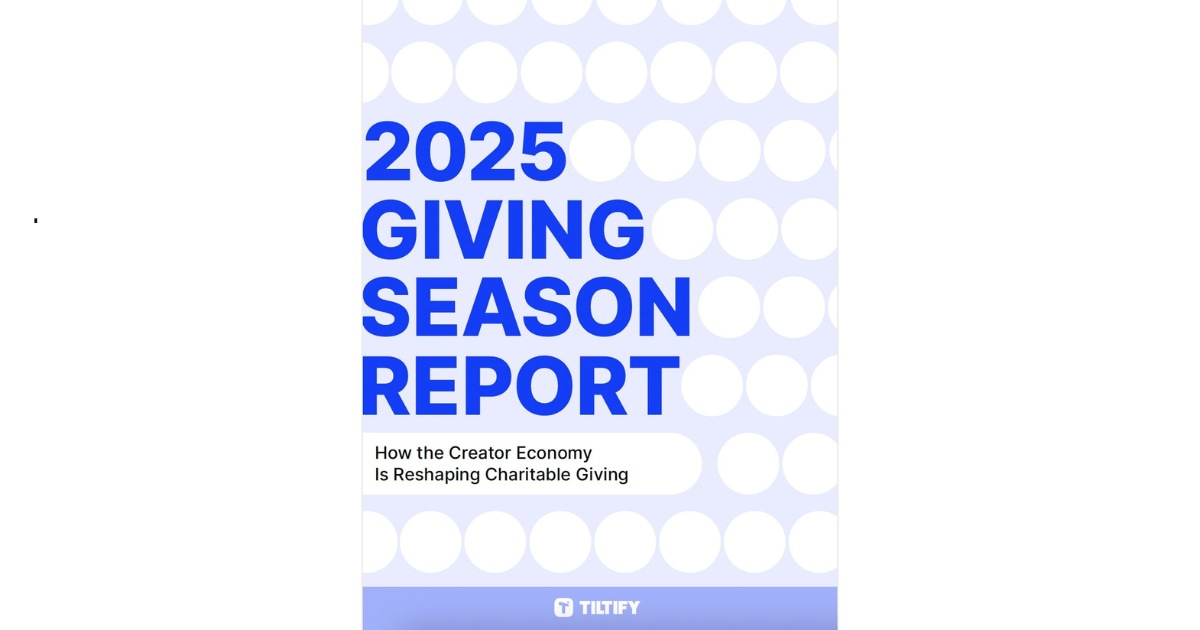









American charitable giving reaches record highs in total dollars, yet fewer people contribute to nonprofits even as aggregate donations grow. Tiltify‘s “2025 Giving Season Report,” based on surveys of 1,000 donors and 1,000 creators conducted in October 2025, reveals a philanthropic field in transition.
Participation Gap Widens Despite Record Totals
U.S. charitable giving totaled $592.5 billion in 2024, yet fewer than half of American households now report making charitable contributions annually. The surveys show 32% of donors plan to give less during the current holiday season, while 56% expect to maintain their giving levels and 12% plan to increase donations.
Baby Boomers show the most pronounced decline, with more than a quarter reducing their giving in the past five years. Generation X demonstrates similar patterns, with most respondents reporting no change since before the pandemic. Personal financial strain emerges as the primary reason cited for decreased giving among older generations.
Digital-First Giving Accelerates Among Younger Donors
Generation Z donors demonstrate markedly different behavior. The survey finds 67% of Gen Z respondents increased their giving since the pandemic, despite controlling just 6-7% of U.S. household wealth. Nearly one-third of Gen Z donors report contributing through creator-led charity fundraisers, compared to rates 31 times lower among Boomers.
The data shows 31% of Gen Z donors give between $50 and $249 annually, a range that remains consistent across older generations. Gen Z respondents are twice as likely as Boomers to make recurring monthly donations, indicating a preference for sustained giving patterns.
When asked about creator influence, 85% of Gen Z and 77% of Millennials say they would likely donate if prompted by their favorite creator, compared to 57% of Gen X and 34% of Boomers.
Campaign Frequency Drives Results
Tiltify platform data shows average campaign totals rose 46% between 2024 and 2025. Among surveyed creators, 44% report increased fundraising totals over the past year, with nearly 1 in 5 experiencing growth exceeding 50%.
The research identifies campaign frequency as the strongest behavioral predictor of fundraising success, with a correlation coefficient of 0.64. Creators who host three or more campaigns annually report donor retention rates 36% higher than those running single events.
Audience engagement ranks as the second-strongest predictor, with a coefficient of 0.59. The survey data reveals that creators with smaller, highly engaged communities achieve donor conversion rates of 5-10%, compared to 1-2% among creators with large but passive followings.
Transparency Features Correlate with Higher Totals
Campaigns using live dashboards, visible donation tracking, and progress tools raise approximately 41% more than campaigns without these features. The survey shows 49% of donors cite “proof that the money reached the cause” as the factor most likely to encourage donations to creator-led campaigns.
Cause alignment also influences outcomes – creators whose charitable causes align closely with their content themes report substantially higher fundraising totals. The research assigns a correlation coefficient of 0.52 to cause alignment and fundraising success.
Collaborative campaigns outperform solo efforts across multiple metrics. The report shows that creators who team up or co-stream benefit from combined communities and reinforced energy, leading to stronger fundraising momentum and higher engagement and confidence scores compared with solo campaigners.
Generational Divide on Giving Methods
The survey reveals 88% of Americans believe creator-led fundraising might or will become more common than traditional methods within five years. This conviction varies by age: 67% of Gen Z and 66% of Millennials say creator-led approaches will definitely or probably surpass traditional methods, compared to 43% of Gen X and 24% of Boomers.
Sixty percent of surveyed creators expect to increase their fundraising activity in 2026, while only 6% plan to decrease or stop. This 10-to-1 ratio suggests sustained momentum in the creator fundraising sector.
Platform behavior shows Gen Z gives to creator charity streams at rates significantly higher than traditional formats. The data indicates 33% of Gen Z say they are likely to donate to a creator’s charity stream during the holiday season, while 8% say they are likely to donate to a television telethon.
Tax Policy Changes May Accelerate Shift
Nearly 70% of survey respondents were unaware that starting in 2026, taxpayers can deduct up to $1,000 for charitable cash donations without itemizing. When informed of this change, 65% say it will probably or definitely encourage increased donations.
Notable individual creator campaigns demonstrate the scale of this fundraising model. MrBeast’s recent Tiltify campaign raised $40 million, while Jacksepticeye’s cumulative efforts total $30 million, and Ryan Trahan’s campaigns generated $11 million. Among all surveyed creators, 28% have raised over $10,000 in a single campaign, and 14% have raised over $50,000.
The research documents creators hosting multiple annual campaigns raising substantially higher totals, while retaining donors more effectively. Two-thirds of creators report their audiences show higher engagement during charity campaigns than during standard content, with frequent campaigners achieving nearly double the donor conversion rates of one-time fundraisers.
Image credit: Tiltify
Get the full report here
Subscribe to Our Newsletter
Check Out Our Podcast