Podcasting has spent a decade building its own institutions. Bryan Barletta thinks it’s time those institutions start serving a bigger world.
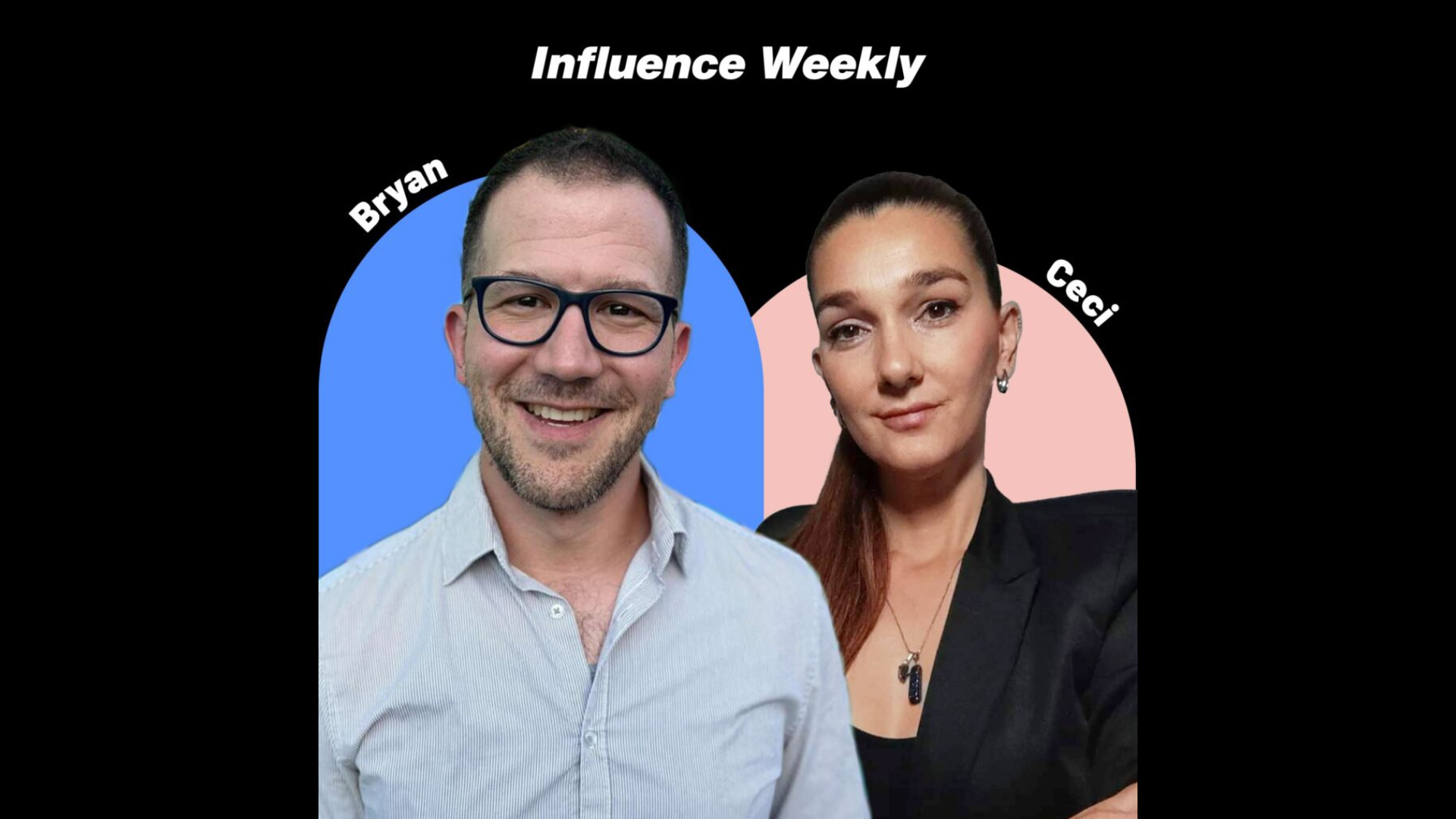
Bryan, partner at Sounds Profitable and President of Podcast Movement, sat down with Net Influencer Senior Editor Ceci Carloni to discuss the merger of the industry’s two leading trade organizations, what that consolidation signals about podcasting’s maturation, and where he’s taking the combined entity next.
Barletta spent years at Megaphone and Barometric before founding Sounds Profitable in 2020. He now oversees a global trade association with more than 200 partners, six newsletters a week, and an events footprint that includes Cannes Lions, South by Southwest, and Advertising Week Europe.
1. Podcasting Has Reinvented Itself Every Two Years Since 2016
The industry Bryan entered in 2020 barely resembles the one that exists today.
“In the last 10 years, podcasting every two years at a minimum has been a different industry,” he said. Dynamic ad insertion kicked off in 2016. Spotify entered in 2018. COVID reshaped everything in 2020. YouTube escalated in 2022. By 2024, the conversation had shifted again.
What’s different now is the absence of stigma. “It’s not embarrassing to talk about podcasting,” Bryan said. The medium is no longer treated as a hobby or a side project. But he’s careful not to declare victory. Research from Sounds Profitable still shows how easy it is for male creators to build male audiences, and how hard it remains to correct that imbalance.
The bigger shift, in Bryan’s view, is structural. “Podcasting simply signals that it is a creator-first world,” he said. The model, where rights holders choose distribution, monetization, and community on their own terms, has been tried before in other industries. In podcasting, it’s finally sticking.
2. The Word ‘Podcaster’ and the Word ‘Influencer’ Now Mean the Same Thing
Bryan doesn’t draw a hard line between podcasting and the broader Creator Economy. He thinks the people who do are protecting revenue models, not describing reality.
“There’s almost no difference when the audience is talking about their favorite podcaster or their favorite influencer,” he said. “I think they mean the same thing.”
His working definition of podcasting is narrow on format, broad on ownership. Podcasting is audience-driven, on-demand, audio-forward, and creator-owned. That’s it. Whether a listener watches someone on Netflix or plays a feed through a podcast app, the relationship between creator and audience follows the same logic.
The people fighting over definitions, he argues, are the ones whose business models depend on keeping categories separate. For everyone else, the walls have already come down.
3. Sounds Profitable Was Built to Explain What the Industry Couldn’t Explain About Itself
When Bryan started Sounds Profitable in September 2020, the immediate problem was misinformation. Senior people at major podcast companies were making claims about targeting capabilities that weren’t accurate.
“They’d be like, ‘Yeah, we can target the difference between male and female in a household,’” he said. “And I’d be like, ‘Well, not really.’”
COVID created the conditions for the newsletter to spread. Everyone was home. Everyone had time. Money was entering the space. Bryan started writing weekly breakdowns of ad tech concepts, translating complex mechanics for operators who needed to bring in larger advertisers. It became daily. Then it became research. Then events. Then a full trade association with a flat $500 monthly membership model, no equity, no board seats, and no contracts required.
The price point was intentional. “I found that it was a number that most people who had a company credit card could put on their expenses each month,” he said. Six years later, it hasn’t changed.
4. The Acquisition Happened Because Podcast Movement Was Running Out of Reasons to Exist
By early 2025, Bryan was asking himself a question he suspected others were asking, too: What does Podcast Movement offer that no other event does?
New entrants were multiplying fast. Scalable, from former EMARKETER and The Information journalists, launched its own event. The Publish Press has its own. The Podcast Show London was entering its fifth year. On Air Fest was winning on creativity. “I looked around and said, ‘Podcast Movement is the reason why the podcast-specific ones got off the ground,’” he said. “But why one more event where we all talk to ourselves?”
The inflection point came at the Chicago Podcast Movement event in March 2025. Sounds Profitable had been buying increasingly large rooms from the organizers, and at one point, it felt like their section had more attendees than the rest of the show. Bryan called the Podcast Movement team and proposed a merger. They agreed and announced it before the August event. Co-founder Dan Franks and the original Podcast Movement team moved into a separate events company called “Event Movement.”
Bryan now runs both organizations under a combined structure, with an expanded remit and the financial backing to take larger bets.
5. SXSW Cost Half a Million Dollars. They Did It Anyway.
The clearest signal of what the merger unlocked was South by Southwest (SXSW) 2026. Bryan describes the decision as the biggest risk the company has ever taken.
Instead of running a standalone event with ticket revenue and sponsorships, the team embedded inside a shortened, seven-day version of South by Southwest went all-sponsorship and eliminated ticket sales entirely. “We threw away, honestly, half a million dollars in revenue,” he said. “Which is what ticket sales tended to be for that previous event.”
The logic was strategic. Podcasting needed to show up inside larger-than-podcasting spaces with the full weight of the industry behind it. “We are at the center of all these things, and there are so many bigger people that are going to try and take these pieces from us,” Bryan said. “We have to show up big, and we have to take massive risks.”
The event succeeded, according to Bryan, who describes it as validation, not just of the event itself, but of the model: collective investment, industry-wide presence, and content made by and for the community rather than shaped by what a sales team can move.
6. The One Structural Fix Bryan Would Make: Align Creators Around Content Ownership
If Bryan could change one thing about the industry’s architecture, it wouldn’t be measurement, and it wouldn’t be download counting. It would be ownership infrastructure.
Apple’s HLS video implementation for podcasts, he argues, points toward a future where creators control a single source of truth for their content and distribute it to every platform from that source. “There’s no reason Spotify can’t adopt this model. There’s no reason YouTube can’t,” he said. “How many places does Sony have to upload the ‘Spider-Man’ movie?”
The problem isn’t technical. It’s alignment. Bryan wants the industry to rally around the principle that creators own their content and should determine where it lives and how it reaches audiences. Everything else, measurement improvements, ad revenue growth, and platform negotiation follows from that foundation.
7. New York Is Next. And the Goal Is to Stop Podcasting from Talking to Itself.
In September 2026, Sounds Profitable and Podcast Movement are taking over Terminal 5, a 2,000-person concert venue in Manhattan, for an entire week.
The structure runs across three distinct events. Monday and Tuesday are the Sounds Profitable Business Summit: 600 attendees, 200 of them buyers recruited collectively by partners, with content funded by $2,000 tickets and available on demand after the event at no cost. The middle day is still being finalized, with the IAB Podcast Upfront running alongside. Thursday and Friday are the creator-facing days of the Podcast Movement conference, priced at $199 for both days, with 1,000 attendees across five stages.
Bryan notes that the goal isn’t to run a better podcast conference. It’s to bring the Creator Economy and the podcast industry into the same room and blur the line between them. “We are going to have to invite bigger people in,” he said. “And some of those people are companies, and some of those people are individuals.”
The question for the industry isn’t whether podcasting can sustain itself. That’s been settled. The question is whether it can stop consolidating around its own community long enough to claim the larger cultural and commercial space it’s already earned.
Listen to the full conversation on “The Big Three” podcast.
Dragomir is a Serbian freelance blog writer and translator. He is passionate about covering insightful stories and exploring topics such as influencer marketing, the creator economy, technology, business, and cyber fraud.













Podcasting has spent a decade building its own institutions. Bryan Barletta thinks it’s time those institutions start serving a bigger world.
Bryan, partner at Sounds Profitable and President of Podcast Movement, sat down with Net Influencer Senior Editor Ceci Carloni to discuss the merger of the industry’s two leading trade organizations, what that consolidation signals about podcasting’s maturation, and where he’s taking the combined entity next.
Barletta spent years at Megaphone and Barometric before founding Sounds Profitable in 2020. He now oversees a global trade association with more than 200 partners, six newsletters a week, and an events footprint that includes Cannes Lions, South by Southwest, and Advertising Week Europe.
1. Podcasting Has Reinvented Itself Every Two Years Since 2016
The industry Bryan entered in 2020 barely resembles the one that exists today.
“In the last 10 years, podcasting every two years at a minimum has been a different industry,” he said. Dynamic ad insertion kicked off in 2016. Spotify entered in 2018. COVID reshaped everything in 2020. YouTube escalated in 2022. By 2024, the conversation had shifted again.
What’s different now is the absence of stigma. “It’s not embarrassing to talk about podcasting,” Bryan said. The medium is no longer treated as a hobby or a side project. But he’s careful not to declare victory. Research from Sounds Profitable still shows how easy it is for male creators to build male audiences, and how hard it remains to correct that imbalance.
The bigger shift, in Bryan’s view, is structural. “Podcasting simply signals that it is a creator-first world,” he said. The model, where rights holders choose distribution, monetization, and community on their own terms, has been tried before in other industries. In podcasting, it’s finally sticking.
2. The Word ‘Podcaster’ and the Word ‘Influencer’ Now Mean the Same Thing
Bryan doesn’t draw a hard line between podcasting and the broader Creator Economy. He thinks the people who do are protecting revenue models, not describing reality.
“There’s almost no difference when the audience is talking about their favorite podcaster or their favorite influencer,” he said. “I think they mean the same thing.”
His working definition of podcasting is narrow on format, broad on ownership. Podcasting is audience-driven, on-demand, audio-forward, and creator-owned. That’s it. Whether a listener watches someone on Netflix or plays a feed through a podcast app, the relationship between creator and audience follows the same logic.
The people fighting over definitions, he argues, are the ones whose business models depend on keeping categories separate. For everyone else, the walls have already come down.
3. Sounds Profitable Was Built to Explain What the Industry Couldn’t Explain About Itself
When Bryan started Sounds Profitable in September 2020, the immediate problem was misinformation. Senior people at major podcast companies were making claims about targeting capabilities that weren’t accurate.
“They’d be like, ‘Yeah, we can target the difference between male and female in a household,’” he said. “And I’d be like, ‘Well, not really.’”
COVID created the conditions for the newsletter to spread. Everyone was home. Everyone had time. Money was entering the space. Bryan started writing weekly breakdowns of ad tech concepts, translating complex mechanics for operators who needed to bring in larger advertisers. It became daily. Then it became research. Then events. Then a full trade association with a flat $500 monthly membership model, no equity, no board seats, and no contracts required.
The price point was intentional. “I found that it was a number that most people who had a company credit card could put on their expenses each month,” he said. Six years later, it hasn’t changed.
4. The Acquisition Happened Because Podcast Movement Was Running Out of Reasons to Exist
By early 2025, Bryan was asking himself a question he suspected others were asking, too: What does Podcast Movement offer that no other event does?
New entrants were multiplying fast. Scalable, from former EMARKETER and The Information journalists, launched its own event. The Publish Press has its own. The Podcast Show London was entering its fifth year. On Air Fest was winning on creativity. “I looked around and said, ‘Podcast Movement is the reason why the podcast-specific ones got off the ground,’” he said. “But why one more event where we all talk to ourselves?”
The inflection point came at the Chicago Podcast Movement event in March 2025. Sounds Profitable had been buying increasingly large rooms from the organizers, and at one point, it felt like their section had more attendees than the rest of the show. Bryan called the Podcast Movement team and proposed a merger. They agreed and announced it before the August event. Co-founder Dan Franks and the original Podcast Movement team moved into a separate events company called “Event Movement.”
Bryan now runs both organizations under a combined structure, with an expanded remit and the financial backing to take larger bets.
5. SXSW Cost Half a Million Dollars. They Did It Anyway.
The clearest signal of what the merger unlocked was South by Southwest (SXSW) 2026. Bryan describes the decision as the biggest risk the company has ever taken.
Instead of running a standalone event with ticket revenue and sponsorships, the team embedded inside a shortened, seven-day version of South by Southwest went all-sponsorship and eliminated ticket sales entirely. “We threw away, honestly, half a million dollars in revenue,” he said. “Which is what ticket sales tended to be for that previous event.”
The logic was strategic. Podcasting needed to show up inside larger-than-podcasting spaces with the full weight of the industry behind it. “We are at the center of all these things, and there are so many bigger people that are going to try and take these pieces from us,” Bryan said. “We have to show up big, and we have to take massive risks.”
The event succeeded, according to Bryan, who describes it as validation, not just of the event itself, but of the model: collective investment, industry-wide presence, and content made by and for the community rather than shaped by what a sales team can move.
6. The One Structural Fix Bryan Would Make: Align Creators Around Content Ownership
If Bryan could change one thing about the industry’s architecture, it wouldn’t be measurement, and it wouldn’t be download counting. It would be ownership infrastructure.
Apple’s HLS video implementation for podcasts, he argues, points toward a future where creators control a single source of truth for their content and distribute it to every platform from that source. “There’s no reason Spotify can’t adopt this model. There’s no reason YouTube can’t,” he said. “How many places does Sony have to upload the ‘Spider-Man’ movie?”
The problem isn’t technical. It’s alignment. Bryan wants the industry to rally around the principle that creators own their content and should determine where it lives and how it reaches audiences. Everything else, measurement improvements, ad revenue growth, and platform negotiation follows from that foundation.
7. New York Is Next. And the Goal Is to Stop Podcasting from Talking to Itself.
In September 2026, Sounds Profitable and Podcast Movement are taking over Terminal 5, a 2,000-person concert venue in Manhattan, for an entire week.
The structure runs across three distinct events. Monday and Tuesday are the Sounds Profitable Business Summit: 600 attendees, 200 of them buyers recruited collectively by partners, with content funded by $2,000 tickets and available on demand after the event at no cost. The middle day is still being finalized, with the IAB Podcast Upfront running alongside. Thursday and Friday are the creator-facing days of the Podcast Movement conference, priced at $199 for both days, with 1,000 attendees across five stages.
Bryan notes that the goal isn’t to run a better podcast conference. It’s to bring the Creator Economy and the podcast industry into the same room and blur the line between them. “We are going to have to invite bigger people in,” he said. “And some of those people are companies, and some of those people are individuals.”
The question for the industry isn’t whether podcasting can sustain itself. That’s been settled. The question is whether it can stop consolidating around its own community long enough to claim the larger cultural and commercial space it’s already earned.
Listen to the full conversation on “The Big Three” podcast.
Subscribe to Our Newsletter
Check Out Our Podcast