




Technology
Brands Are Reporting on a Fraction of Their Video Data. Plot Raised $14M to Fix That

The most influential brand content on social video right now is content brands cannot see. Existing social listening tools largely depend on tags, captions, and direct mentions to track how consumers talk about products. Most video content does not work that way.
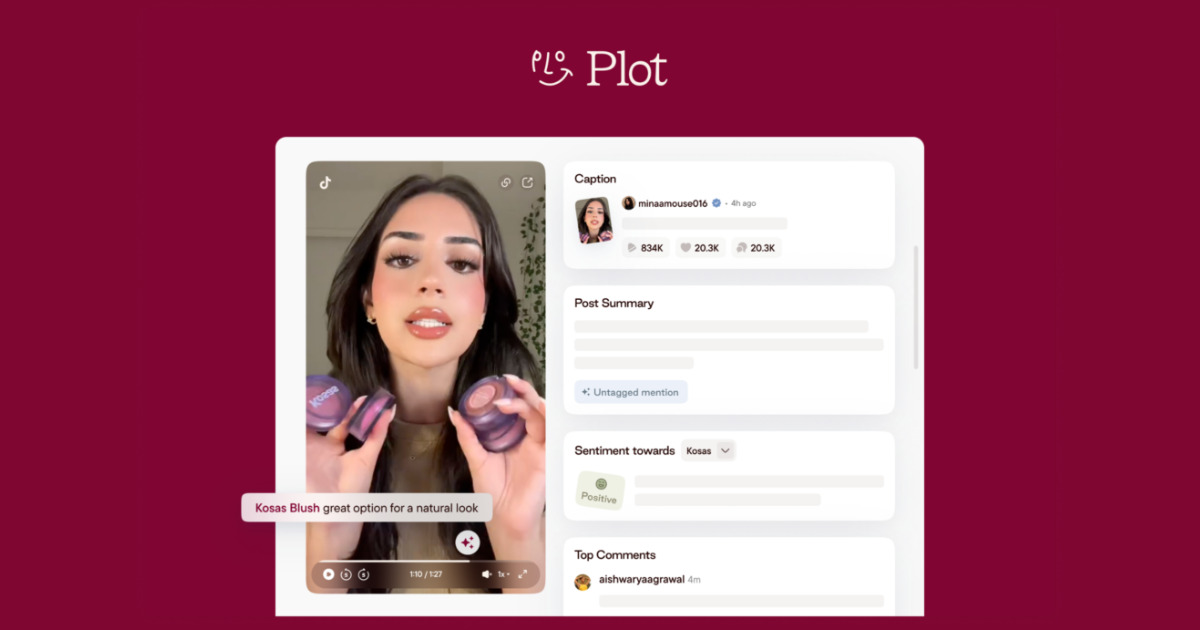
Plot, the New York-based video intelligence platform co-founded by former Apple brand marketer Megan Duong, was built around that gap. The company analyzes social video without requiring a brand tag, capturing organic mentions, product appearances, creator activity, audio, and sentiment that standard dashboards can miss.

Plot announced $10 million in new funding in early June, bringing its total raised to $14 million. The round was co-led by XYZ Venture Capital and Mischief Ventures. Since launching its video intelligence platform in 2024, the company reports its annual recurring revenue has grown 3.8 times year over year, with 132% net revenue retention and customers including PepsiCo, Fenty Beauty, Visa, and Benefit Cosmetics.
The scale of the problem is structural. Video now accounts for 76% of all mobile data traffic, yet the dominant social listening platforms were built for an earlier internet, when brand presence lived more visibly in captions, keywords, and tags. A creator who holds a product on camera without tagging the brand, or discusses it mid-video without attribution, can generate nothing in a standard dashboard.
“There are two types of founders,” Megan says. “Founders who start with the technology and then try to find a market for it. And then there are people who can anticipate what people want to build because they’ve been in their shoes. That’s me.”
18 Months of Infrastructure Before a Feature Shipped
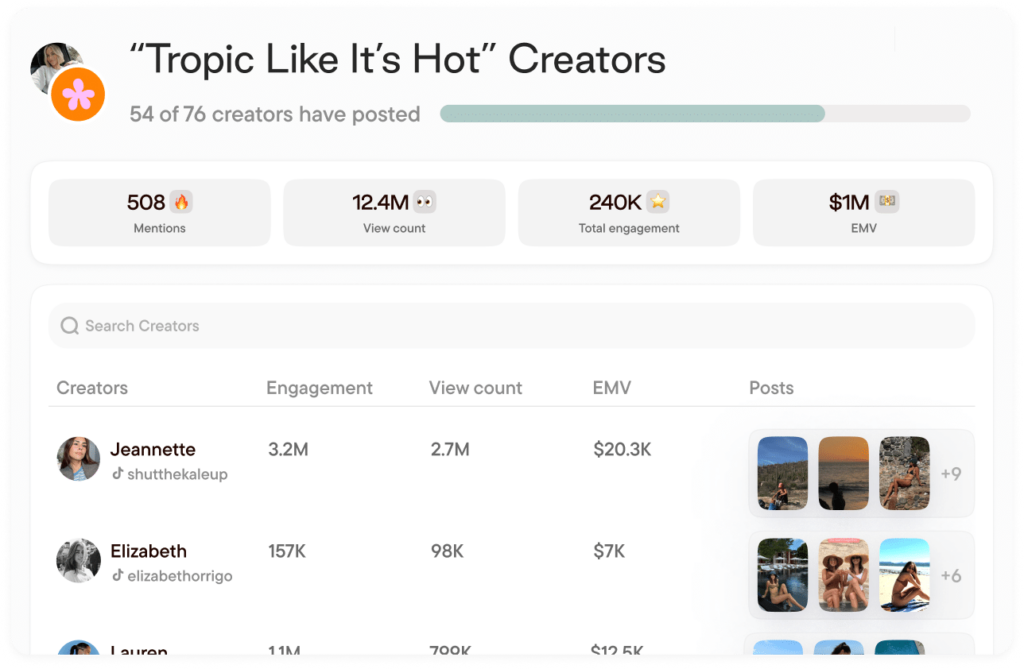
In a case Megan discusses, Plot pulled analysis for a specific brand client and found 76% of video content featuring that brand was untagged, with only 24% visible to existing tools. For marketing teams spending millions on influencer programs and gifting campaigns, performance reporting has always been built on a fraction of the real picture.
“When you’re spending millions of dollars on influencer campaigns and events, and you can’t track any of the data, you are reporting on essentially bad data,” Megan says. “Everyone’s basically reporting things out of assumptions versus real quantitative data. And that’s really dangerous.”
Plot’s response was to start at the problem’s root. Before shipping a single product feature, Megan and her co-founder spent roughly 18 months building a video intelligence layer that reads full video context without requiring a brand tag: products on screen, brands in frame, audio, sentiment, and creator history.
The decision came directly from operating as the user. “I was reacting to my own problems that I had experienced while running an agency,” she says. “My job was to run analytics, do influencer gifting, and see who the community is, and I had no insight into that. So I found the white space to build it.”
The infrastructure’s impact is measurable. Benefit Cosmetics reported a 30% to 50% lift in tracked UGC after onboarding to Plot, including content that had never been detected because it contained no brand tag. CAVA reported a 3x increase in captured brand content.
Sourcing the Creator Who Never Sent a Rate Card
Plot’s creator sourcing product, launching in the second quarter of 2026, is where the video intelligence infrastructure produces its most distinct commercial application. Rather than matching brands with creators by category, as most influencer platforms do, it processes open-ended prompts and surfaces results based on what creators have actually said or shown on video.
Megan’s working example: a brand launching a curly hair product that wants to find creators with naturally curly hair. “It doesn’t make sense for me to send curly hair products to beauty influencers if they don’t have naturally curly hair,” she says. The platform can also identify creators who have organically used a specific product in prior content, surfacing a signal no category database can generate.
“A brand can partner with small creators at scale, knowing they’re actually brand loyalists who authentically use their product,” Megan says. “You could have a thousand followers and hit 20 million likes. Imagine being able to unlock that.”
Vetting adds a further layer: brands can screen creators for prior crisis content, negative brand commentary, or competitor endorsements before committing to a deal.
Why Plot’s AI Agents Require Human Approval
Plot’s forthcoming agentic layer will automate creator outreach at scale, enabling brands to contact thousands of creators simultaneously rather than the 50 at a time typical of manual workflows. Megan is explicit about where human oversight remains mandatory.

“I don’t think any agentic tool yet should be just going rogue and operating on its own,” she says. “Everything goes through approval before anything gets pushed out. Any sort of outreach from a big brand name is a reputational risk.”
She describes a recent demo with a marketing leader who opened by calling herself an AI skeptic. By the end, Megan recalls, the response was that the platform made sense because it addressed operational efficiency without touching creative judgment. The distinction matters to her.
“Marketing professionals want things that enhance them from an efficiency point of view, not necessarily replacing creativity,” she says. “Most of the tech world is trying to replace the creativity part. We’re asking: how do we actually help you with your work from a scale perspective?”
The Fake UGC Problem Brands Are Not Watching
The most unexpected application of Plot’s monitoring capabilities, according to Megan, involves coordinated synthetic content. Through enterprise client work, she describes observing networks of small brands deploying AI-generated video to spread misinformation about legacy competitors while directing consumers toward affiliate products.
“We’re seeing small brands spreading information about a brand we know, saying they’re carcinogenic,” she says. “And what we find is they’re actually pushing for their own product. It clearly looks fake. It’s clearly a smear campaign.”
Because synthetic content rarely tags the brand being targeted, standard listening tools cannot detect it. Plot’s untagged monitoring layer, she argues, can identify coordinated patterns across video volume before the misinformation spreads.
Her broader view on AI-generated UGC is skeptical. “I think the consumer will get more and more allergic to fake UGC, and it actually ruins the reputation of the brand,” she says. “If you’re trying to sell a skin product and the person isn’t even real, how do I trust that person actually had acne and it improved their skin?”
The Super Fan as the Next Marketing Strategy
The $10 million raise will fund the expansion of Plot’s agentic suite across creator sourcing, campaign tracking, and deep research: an AI analyst mode that runs comprehensive reporting across millions of videos in response to a single query. Megan frames the longer-term ambition less around product features than around a shift in how brands think about community.
“Super fans, community-led activations,” she says when asked what separates the brands with the strongest strategies in five years from those operating as most do today. “I really don’t think it matters how many followers you have anymore. What matters is how you activate your super fans at scale.”
Megan points to Plot itself as evidence for that thesis. The company added enterprise clients entirely through inbound demand, without paid acquisition, an approach Megan built by reversing what frustrated her most as a software buyer at Apple.
“We grew 100% by community, all inbound, no ads,” she says.
The mission, in her framing, is as much professional as commercial. Social media and community teams remain undervalued inside many organizations despite their direct insight into culture and consumer behavior.
“For some brands, it’s still considered like an intern job,” Megan says. “If I can provide the tools that enable them to be successful and show their success, I am doing my job right.”
Subscribe to Our Newsletter
Check Out Our Podcast