



Agency
Alyssa Izquierdo on Building a Creator Agency Around the Contracts Nobody Else Was Reading

When Alyssa Izquierdo worked the brand side of Influencer Marketing, she noticed something that bothered her enough to quit. Creators, particularly those from underrepresented communities, were being handed 30-page contracts with terms like “in perpetuity” and “usage rights” and were expected to just sign. Nobody was explaining what any of it meant.
“The educational gap is what’s really been important to me for the last few years,” she says.
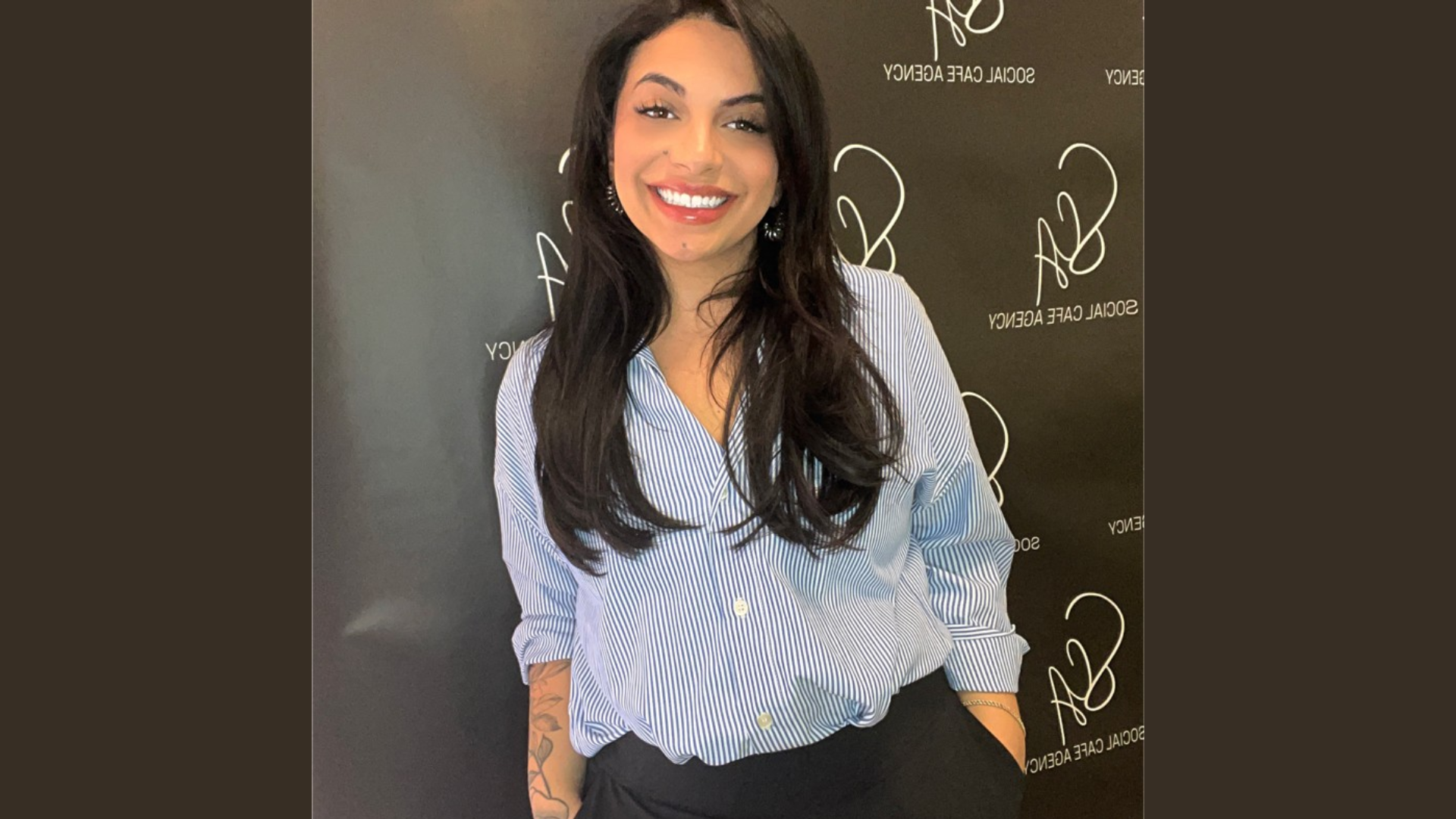
In October 2019, Alyssa launched Social Cafe Agency in Los Angeles, a boutique talent management firm representing women of color, primarily Latina and Black creators, across platforms such as TikTok and Instagram.
Running a team of five, soon to be six, Alyssa operates without outside investors and without the infrastructure of a major agency. What the firm does have is a specific and deliberate identity: an all-women leadership team serving an all-women creator roster, with a mandate to close the knowledge and pay gaps she watched widen during her time at Fashion Nova and PrettyLittleThing.
“We’re not just here to be transactional,” she says. “We get you the best value at the end of the day.”
How Three Brand Jobs Became One Agency
Alyssa’s path into the Creator Economy started in journalism. After graduating from Columbia College Chicago with a degree in broadcast journalism, she moved to LA in 2016 and took the first available role that resembled media work: influencer outreach at Fashion Nova.
“That’s where I pretty much learned everything about influencers,” she says. “I was able to get my own roster, meet celebrity talent, and really learn how to negotiate.”
She moved to PrettyLittleThing, where she helped build the brand’s U.S. team from 4 to 10 before deciding in 2019 that she was done working for anyone else. Her first instinct was to launch a creative agency. The operational load proved heavier than anticipated. When the former creators she had managed began asking if she would represent them independently, she pivoted to management. Then TikTok took off and COVID hit, and what had started as an experiment became a business.
By January 2020, she had a solid roster. By 2021, a pregnancy forced her to hire help. She brought on an assistant who shared her vision. Five years later, that assistant manages her own talent roster at Social Cafe.
The Moment Everything Changed
For years, Social Cafe grew steadily but quietly. Then in 2024, one of its clients went viral.
Jools Lebron, the creator behind the “very demure, very mindful” trend that swept the internet, was already on Social Cafe’s roster when the moment hit. Alyssa had been working with her since 2022. “A lot of people were trying to figure out who was going to represent her and fight for her,” she says. “In the background, I was already representing her.”
The exposure created a wave. Social Cafe’s visibility jumped, its LinkedIn inquiries surged, and the agency built relationships it might not otherwise have, including with Verizon, GLAAD, and ADWEEK. Alyssa flew to Italy, while pregnant, after Jools received an invitation to the Bottega Veneta show during Milan Fashion Week.
The experience illustrated something Alyssa argues is a core truth about talent management: long-term relationships produce better outcomes than opportunistic ones. “If you really like that creator as much as they say they do in the beginning, then you would want to work with them long-term,” she says.
Follower Count Is the Wrong Scorecard
Social Cafe signs creators that most agencies would pass on.
“We have creators with like 10k [followers] who make almost six figures,” Alyssa says. The figure challenges a persistent assumption that creator value scales linearly with audience size.
What she looks for instead is a combination of brand alignment, content quality, and the ability to actually sell. When scouting, she asks herself a straightforward question: “Do I enjoy watching them, and can they sell it to me, and am I going to buy it from them?”
That selectivity extends to which brands creators take deals with. Alyssa describes a talent on her roster who declined a campaign from L’Oréal, one of the world’s most recognizable beauty brands, because she had never personally used the product. “She’s like, ‘No, I won’t do it,'” she says. “Having that as a creator, to execute that way and make sure it’s going to perform well for them and not only for the brand, is what helps drive sales and trust with the audience.”
Alyssa frames it not as ROI, but return on relationship. One of her creators has worked with the same press-on nail brand monthly for four to five months. The creator wears the product in her organic content, too. That consistency, she argues, is where brand investment actually compounds.
The Contract Problem Nobody Fixes
The gap Alyssa identified while working on the brand side has not closed. Creators, especially those newer to paid partnerships, are still signing contracts without understanding what they are agreeing to.
“We scout creators all the time, and a lot of them see these contracts they sign, and that’s kind of it,” she says. “Even if they’ve had work experience, this world is still really new to a lot of up-and-coming creators.”
Social Cafe’s response is hands-on and ongoing. The agency reviews all contracts for terms such as in-perpetuity licensing, extended usage rights, and compressed payment windows before creators ever receive a counter-signature request. Beyond deal review, Alyssa has structured quarterly meetings with outside experts. In late 2024, the agency brought in a financial advisor to speak with its talent about retirement planning, investment basics, and tax preparation.
The program is expanding. Alyssa is building a formal educational offering within the agency, partly in partnership with a women-owned business, that would serve micro-creators not yet ready for full management, with a four-week foundational course covering how the industry actually works.
“I want to grow out our educational program and build out the team to assist better,” she says.
What Brands Still Get Wrong
The most common failure Alyssa sees from brand partners is not a budget problem. It is a trust problem.
In her view, brands overload creators with required talking points, try to compress excessive product detail into 30 to 45-second videos, and then are puzzled when the content underperforms. “It just doesn’t give them freedom with their audience to sound like they’re on FaceTime,” she says.
The trend she is most encouraged by is brands handing over a brief and stepping back. “My favorite campaigns are when we can just let the creator be the creator,” she says. Her least favorite involves long, bullet-pointed dos and don’ts that leave no room for personality.
The same philosophy shapes how she coaches organic content strategy. Audiences are not looking for polished brand presentations, Alyssa argues. They want access. “People just want to be nosy and know what you do on a day-to-day,” she says. “They want to know what’s in your house, what you eat, what your kid eats.”
She also pushes back on the expectation that creators can guarantee view thresholds. Structuring deals around performance contingencies, where a creator earns more if they hit 100,000 views, creates friction for both parties. “It’s really hard to guarantee anything for an ad,” she says. “We don’t know how things are going to look out, especially with TikTok.”
Payment Terms Are Breaking Small Agencies
If creative briefing is Influencer Marketing’s visible friction point, payment terms are its quieter one. Alyssa is direct about the toll extended net payment windows are taking on boutique operations.
Net-60 is now common. Net-90 is not unusual. Social Cafe was once offered net-120 on a deal worth less than $10,000. They passed. “That’s a whole quarter we have to wait for a payment,” she says. “And it wasn’t even a huge payment.”
The issue extends beyond cash flow. Alyssa notes that some agencies and brands that work with creator managers have declared bankruptcy mid-campaign, leaving talent unpaid and with no structural recourse.
“We can only send so many emails demanding payment,” she says. Without an industry-wide minimum standard, she sees little changing soon. “Unless something is more structured within Influencer Marketing, where net 30 is like the longest you can do, we’re just going to keep seeing this.”
Building What Comes Next
Alyssa is preparing to step back from day-to-day talent management, deepen the team, and formalize Social Cafe’s educational programming.
She is also watching consolidation begin to pick up. “I think bigger agencies are going to be acquiring smaller boutique agencies to build their teams and their rosters,” she says, a trend she views as both a competitive pressure and an eventual opportunity.
She expects micro creators to continue gaining ground. “In the next five years, we’re going to see a lot more micro creators taking over,” she says. “Micro to macro versus the creators who are in the millions. That’s already happening.”
“You just don’t know when something is going to happen for you,” Alyssa says. “That’s why we have them stay consistent.”