Brands are spending on creators without planning for them like media. Gregory Curtis Jr., Director of Brand Marketing at Empower Ocean Media Group, believes that’s where they keep getting the Creator Economy wrong.
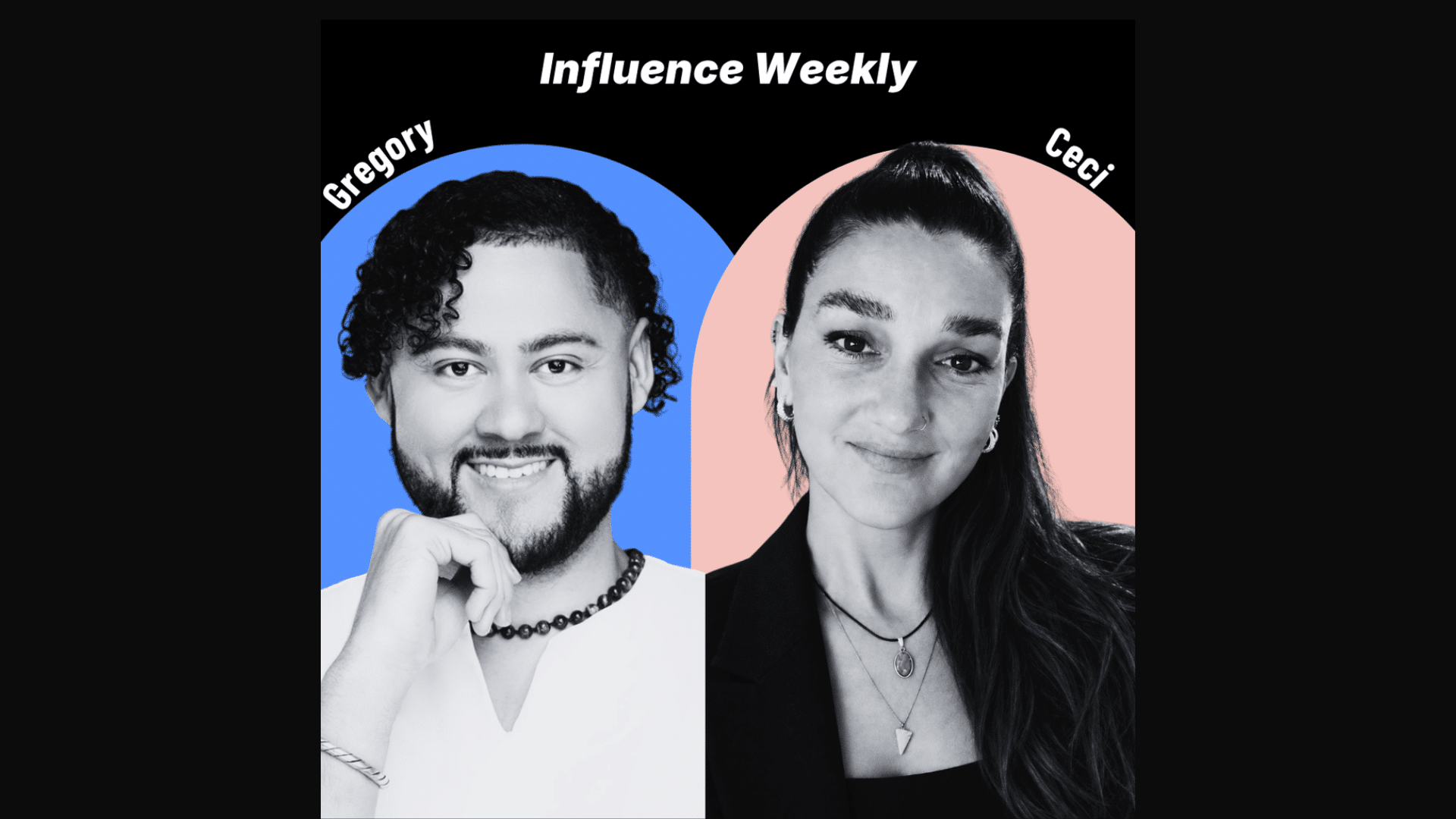
Gregory sat down with Net Influencer Senior Editor Ceci Carloni to explain how brands consistently misuse the Creator Economy and what a real media plan looks like when it is built correctly. Gregory has nearly 15 years in strategic sales and marketing, including campaigns for JD Sports that he says earned industry recognition.
The conversation covered the shift from follower count to interest-based reach, the four-layer creator media framework Gregory applies with CMOs, and why the Creator Economy budget belongs with the media agency.
1. Platforms Moved to Recommendations, and Follower Count Stopped Mattering the Way It Did
The shift started with the algorithm, and it changes how every other metric should be read.
“Every post now must actually have a name and a story to win that attention for people who don’t follow the creator,” Gregory said. Platforms no longer prioritize subscription feeds. They surface content based on interest. A creator with 10,000 followers can reach a far larger audience on the right content day.
Gregory calls what’s emerged the “interest economy.” Niche creators win the best-fit audiences because the platform matches content to what users are interested in, not to who subscribed. “If you’re into gardening and that’s all that you do… you’re likely going to discover me in your FYP channel,” he said.
The metric this displaces is the follower count. In Gregory’s framing, a follower count is like the number of televisions in a market. Neither tells you who watched.
2. A 10,000-Follower Account with 10% Engagement Wins Against 100,000 with 1%, Every Time
Ceci put a specific test case to Gregory: 10,000 followers and 10% engagement against 100,000 followers and 1%.
He did not hesitate. “I would pick the ten thousand follower account each and every single time,” he said. “It’s verified reach.”
Gregory adds a cost argument on top of the engagement case. Content assets from nano and micro creators are cheaper to license for paid media amplification. “The cost of a MrBeast… their content media assets are gonna cost so much money that it will eat your media dollar budgets fast,” he said. Multiple smaller creators also produce more assets, which prevents the ad fatigue that sets in when a brand runs one piece of content until the algorithm stops surfacing it.
3. Major Brands Are Treating the Creator Economy Like a PR Tactic, and It’s Costing Them
Gregory does not ease into the central diagnosis.
“A lot of major CPG brands are treating the Creator Economy like a PR tactic,” he said. “It is not a PR tactic.”
His proposed fix is structural. Drop the follower counts from the pitch deck and replace them with a media plan. “I wouldn’t show headshot and follow accounts,” he said. “I would show it as a media plan with reach, effective CPM, audience fit, projected results.”
“We as marketers are not treating creators like media assets, and that’s exactly what they are,” Gregory added.
He argues the Creator Economy budget should sit with the media agency, not the PR or social team, because a media buyer’s framework is the only structure that captures the full value of a creator partnership.
4. A Beautiful Feed Is a Production Value, Not Proof of an Audience
Gregory described an account that stopped him: 22,000 followers, polished photography, clean video execution. He passed.
“A good-looking feed is a production value; it’s not proof of an actual lived audience,” he said.
Running the data told a different story. The audience credibility score came back at 60%, which Gregory reads as evidence of significant bot activity. Gregory also flagged geographic mismatches between creators’ audiences and brands’ target markets as another concern. His firm applies a hard floor before making any recommendation: 80% audience credibility, minimum.
When clients present their own influencer picks, Gregory checks each one against those criteria and surfaces the findings. “You said you want to have conversations with people between the ages of 18 and 24,” he said. “The average person for this is 36 and 44.” He sometimes allows clients to override his recommendations for one or two creators, but only after the red flags have been communicated to everyone involved.
5. The Four-Layer Creator Media Plan Most Brands Are Only Half-Running
Gregory applies a consistent framework across campaigns, and in his view most brands are executing one or two of the four layers at most.
The tentpole layer anchors the plan around key cultural moments and events, while the always-on layer maintains brand presence between those peaks. The conversion layer connects creator activity to measurable outcomes such as promo codes and affiliate links. The amplification layer introduces paid media, placed behind the creator assets that perform best. Empower’s JD Sports campaign offers one example of the tentpole approach: Gregory noted that the campaign earned industry recognition and featured creators at events including ComplexCon.
“I need to have tentpoles that I can leverage creators around, always-on creators, conversion creators, and then that amplification layer,” Gregory said, adding that the framework converts creator spend into something a CMO can defend to the CFO.
6. Celebrity Influencers Are the Cherry, Not the Foundation of a Creator Campaign
Gregory does not dismiss celebrity influencers. He places them precisely.
“We look at them as not the pinnacle, the one be-all, but more so as like that nice cherry on top of a beautiful dessert,” he said. A Kai Cenat or a MrBeast still carries value when the budget allows, but leading the strategy with a single large creator and treating smaller ones as secondary gets the order backward.
His preferred allocation is roughly 15 micro and mid-tier creators, one or two larger names, and one mega-influencer if the budget supports it. The smaller creators handle niche conversations and community credibility. The larger names provide scale and brand association. Together, according to Gregory, they build a more cohesive narrative across the full media budget.
For many brands, he argues, the mega-influencer is optional. “You may not need to participate in working with the mega influencers. You’re probably going to get a better ROI always by focusing on the nano, the micro influencer.”
7. Microdramas Are the Signal CMOs Should Start Watching
Series-based content is becoming Gregory’s clearest marker for which creators will hold attention in the interest economy.
“The best creators from here on out are going to be the ones that center themselves within the interest economy, and they are creating series-based content,” he said.
Microdramas, short narrative video content designed as a continuing series, are the format he sees at the leading edge. Gregory noted that Empower Ocean Media Group’s CEO, Ashlee Clarke, has direct relationships with production houses and Hollywood talent agencies working in this format, and is building those connections into the agency’s platform strategy.
“Microdramas are a smoke signal,” he said, “to CMOs to know that the kind of creators they need to be working with are developing series-based and episodic content at every level.”
For brand marketers, the implication is a shift in selection criteria. Creators building episodic content develop deeper audience relationships, appear in recommendations more consistently, and give brands a repeating entry point for integration. The interest economy rewards consistency, and selecting for it now is a media decision.
Conclusion
The argument Greg makes throughout the conversation is that the tools to look past follower count already exist. The brands not using them are falling behind in ways that only become visible when a smaller, niche campaign outperforms the one built around a big name.
The question is how long CMOs treat the Creator Economy as a social line item before the organizations already running it as a structured media channel make that a competitive liability.
Cecilia Carloni, Interview Manager at Influence Weekly and writer for NetInfluencer. Coming from beautiful Argentina, Ceci has spent years chatting with big names in the influencer world, making friends and learning insider info along the way. When she’s not deep in interviews or writing, she's enjoying life with her two daughters. Ceci’s stories give a peek behind the curtain of influencer life, sharing the real and interesting tales from her many conversations with movers and shakers in the space.












Brands are spending on creators without planning for them like media. Gregory Curtis Jr., Director of Brand Marketing at Empower Ocean Media Group, believes that’s where they keep getting the Creator Economy wrong.
Gregory sat down with Net Influencer Senior Editor Ceci Carloni to explain how brands consistently misuse the Creator Economy and what a real media plan looks like when it is built correctly. Gregory has nearly 15 years in strategic sales and marketing, including campaigns for JD Sports that he says earned industry recognition.
The conversation covered the shift from follower count to interest-based reach, the four-layer creator media framework Gregory applies with CMOs, and why the Creator Economy budget belongs with the media agency.
1. Platforms Moved to Recommendations, and Follower Count Stopped Mattering the Way It Did
The shift started with the algorithm, and it changes how every other metric should be read.
“Every post now must actually have a name and a story to win that attention for people who don’t follow the creator,” Gregory said. Platforms no longer prioritize subscription feeds. They surface content based on interest. A creator with 10,000 followers can reach a far larger audience on the right content day.
Gregory calls what’s emerged the “interest economy.” Niche creators win the best-fit audiences because the platform matches content to what users are interested in, not to who subscribed. “If you’re into gardening and that’s all that you do… you’re likely going to discover me in your FYP channel,” he said.
The metric this displaces is the follower count. In Gregory’s framing, a follower count is like the number of televisions in a market. Neither tells you who watched.
2. A 10,000-Follower Account with 10% Engagement Wins Against 100,000 with 1%, Every Time
Ceci put a specific test case to Gregory: 10,000 followers and 10% engagement against 100,000 followers and 1%.
He did not hesitate. “I would pick the ten thousand follower account each and every single time,” he said. “It’s verified reach.”
Gregory adds a cost argument on top of the engagement case. Content assets from nano and micro creators are cheaper to license for paid media amplification. “The cost of a MrBeast… their content media assets are gonna cost so much money that it will eat your media dollar budgets fast,” he said. Multiple smaller creators also produce more assets, which prevents the ad fatigue that sets in when a brand runs one piece of content until the algorithm stops surfacing it.
3. Major Brands Are Treating the Creator Economy Like a PR Tactic, and It’s Costing Them
Gregory does not ease into the central diagnosis.
“A lot of major CPG brands are treating the Creator Economy like a PR tactic,” he said. “It is not a PR tactic.”
His proposed fix is structural. Drop the follower counts from the pitch deck and replace them with a media plan. “I wouldn’t show headshot and follow accounts,” he said. “I would show it as a media plan with reach, effective CPM, audience fit, projected results.”
“We as marketers are not treating creators like media assets, and that’s exactly what they are,” Gregory added.
He argues the Creator Economy budget should sit with the media agency, not the PR or social team, because a media buyer’s framework is the only structure that captures the full value of a creator partnership.
4. A Beautiful Feed Is a Production Value, Not Proof of an Audience
Gregory described an account that stopped him: 22,000 followers, polished photography, clean video execution. He passed.
“A good-looking feed is a production value; it’s not proof of an actual lived audience,” he said.
Running the data told a different story. The audience credibility score came back at 60%, which Gregory reads as evidence of significant bot activity. Gregory also flagged geographic mismatches between creators’ audiences and brands’ target markets as another concern. His firm applies a hard floor before making any recommendation: 80% audience credibility, minimum.
When clients present their own influencer picks, Gregory checks each one against those criteria and surfaces the findings. “You said you want to have conversations with people between the ages of 18 and 24,” he said. “The average person for this is 36 and 44.” He sometimes allows clients to override his recommendations for one or two creators, but only after the red flags have been communicated to everyone involved.
5. The Four-Layer Creator Media Plan Most Brands Are Only Half-Running
Gregory applies a consistent framework across campaigns, and in his view most brands are executing one or two of the four layers at most.
The tentpole layer anchors the plan around key cultural moments and events, while the always-on layer maintains brand presence between those peaks. The conversion layer connects creator activity to measurable outcomes such as promo codes and affiliate links. The amplification layer introduces paid media, placed behind the creator assets that perform best. Empower’s JD Sports campaign offers one example of the tentpole approach: Gregory noted that the campaign earned industry recognition and featured creators at events including ComplexCon.
“I need to have tentpoles that I can leverage creators around, always-on creators, conversion creators, and then that amplification layer,” Gregory said, adding that the framework converts creator spend into something a CMO can defend to the CFO.
6. Celebrity Influencers Are the Cherry, Not the Foundation of a Creator Campaign
Gregory does not dismiss celebrity influencers. He places them precisely.
“We look at them as not the pinnacle, the one be-all, but more so as like that nice cherry on top of a beautiful dessert,” he said. A Kai Cenat or a MrBeast still carries value when the budget allows, but leading the strategy with a single large creator and treating smaller ones as secondary gets the order backward.
His preferred allocation is roughly 15 micro and mid-tier creators, one or two larger names, and one mega-influencer if the budget supports it. The smaller creators handle niche conversations and community credibility. The larger names provide scale and brand association. Together, according to Gregory, they build a more cohesive narrative across the full media budget.
For many brands, he argues, the mega-influencer is optional. “You may not need to participate in working with the mega influencers. You’re probably going to get a better ROI always by focusing on the nano, the micro influencer.”
7. Microdramas Are the Signal CMOs Should Start Watching
Series-based content is becoming Gregory’s clearest marker for which creators will hold attention in the interest economy.
“The best creators from here on out are going to be the ones that center themselves within the interest economy, and they are creating series-based content,” he said.
Microdramas, short narrative video content designed as a continuing series, are the format he sees at the leading edge. Gregory noted that Empower Ocean Media Group’s CEO, Ashlee Clarke, has direct relationships with production houses and Hollywood talent agencies working in this format, and is building those connections into the agency’s platform strategy.
“Microdramas are a smoke signal,” he said, “to CMOs to know that the kind of creators they need to be working with are developing series-based and episodic content at every level.”
For brand marketers, the implication is a shift in selection criteria. Creators building episodic content develop deeper audience relationships, appear in recommendations more consistently, and give brands a repeating entry point for integration. The interest economy rewards consistency, and selecting for it now is a media decision.
Conclusion
The argument Greg makes throughout the conversation is that the tools to look past follower count already exist. The brands not using them are falling behind in ways that only become visible when a smaller, niche campaign outperforms the one built around a big name.
The question is how long CMOs treat the Creator Economy as a social line item before the organizations already running it as a structured media channel make that a competitive liability.
Listen to the full conversation on “The Big Three” podcast.
Subscribe to Our Newsletter
Check Out Our Podcast