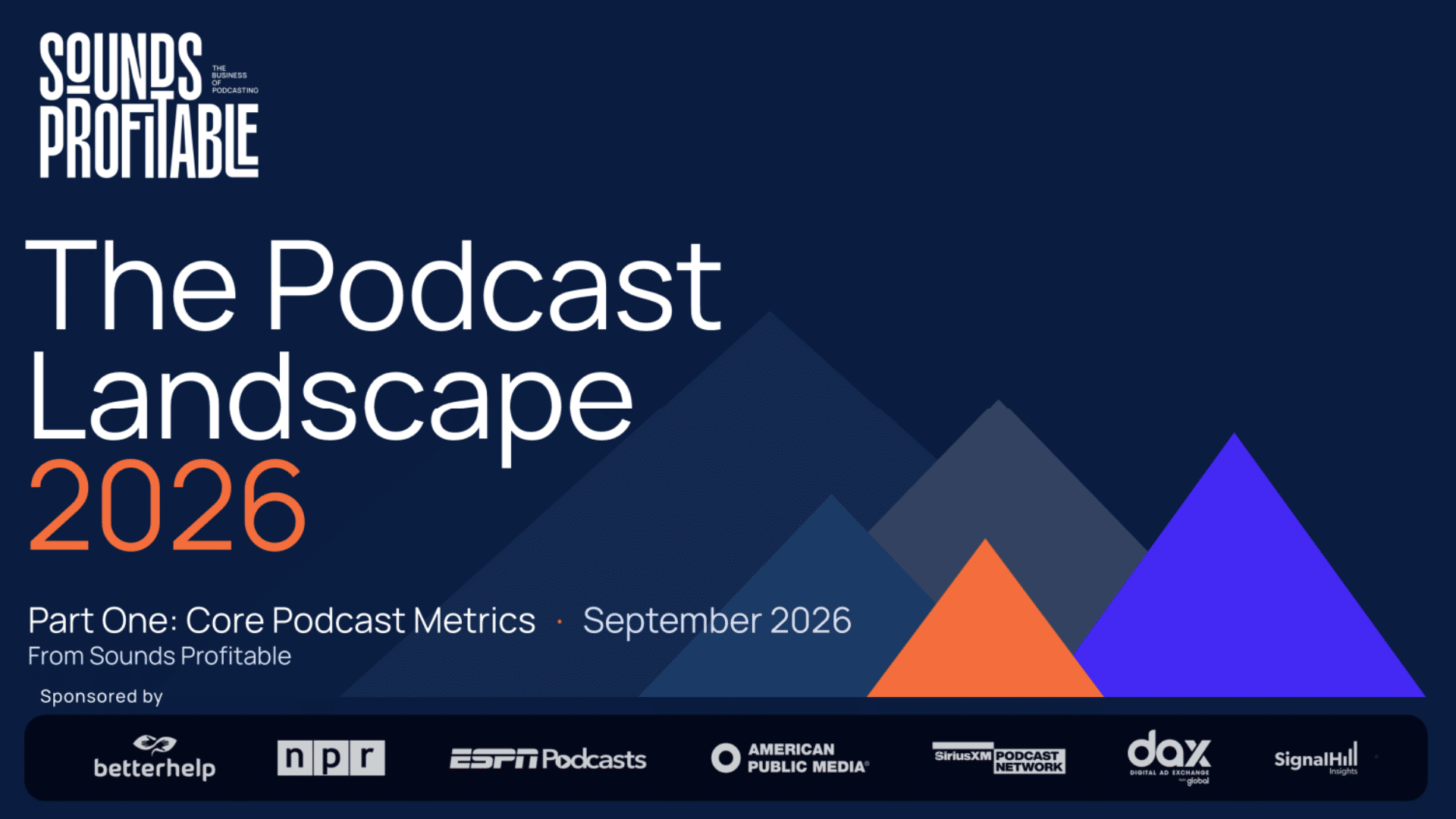
Netflix has become the third most-named platform for podcast consumption in the U.S. just one year after adding podcasts to its service, trailing only YouTube and Spotify and already ahead of Apple Podcasts, according to Sounds Profitable’s “The Podcast Landscape 2026” report, produced with Signal Hill Insights.
The report, based on a survey of 5,473 U.S. adults conducted in August 2026 and weighted to Census targets, found that 63% of podcast consumers named YouTube as a platform they used for podcasts in the past 12 months, followed by Spotify at 33% and Netflix at 21%. Apple Podcasts came in fifth at 15%, behind YouTube Music’s 17%.
When all YouTube-owned properties are combined, that figure rises to 68%. The question was new to the 2026 wave, so no year-over-year comparison is available for it specifically, but the finding sits inside a broader pattern: podcast-native apps continued to lose ground as the primary way people consume the medium.
Native Apps Fall to 15% Share
Asked which single platform they use most for podcasts, 15% of consumers named a podcast-native app, Apple Podcasts, Pocket Casts, Overcast, Podcast Addict, Spreaker, TuneIn, NPR, SoundCloud, or a podcast’s own website, down from 19% in 2025. Apple Podcasts alone fell from 11% to 8% as the most-used platform.
YouTube held steady as the top choice at 40%, while Spotify slipped slightly from 18% to 17%. Netflix captured 5% as a most-used platform in its debut year. Sounds Profitable noted that the 2026 survey added Netflix, Tubi, Apple TV, and HBO Max as response options, which mechanically dilutes the other choices somewhat.
Reach Holds Steady at 74%
Overall reach was essentially unchanged from the prior two years: 74% of U.S. adults have ever consumed a podcast, consistent with 75% in 2025 and 74% in 2024. Monthly consumption rose slightly to 55% from 54%, and weekly consumption rose to 39% from 38%. Familiarity with the term “podcast” itself declined from 96% to 93% of U.S. adults.
Video’s Growth Is Concentrated at the Top of the Distribution
The share of podcast consumers who watched a video podcast in the past week rose to 44%, up from 40% in 2025. But total time spent with podcasts among weekly consumers fell: mean weekly hours dropped from 6.3 to 5.7, even as the median held flat at 4.0 hours in both years.
Sounds Profitable attributed the gap to a shrinking share of consumers logging very long listening weeks; those reporting 16 or more hours fell from 9% to 6%, a decline the report says appears across every tenure group rather than being explained by an influx of newer consumers. Mean hours among consumers who did not watch video in the past week held flat at 4.8, while mean hours among those who did watch video fell from 6.9 to 5.9, suggesting the decline concentrates in video consumption specifically rather than audio listening.
Smart TVs Are the Only Device Gaining Share
Smartphones remained the dominant device for podcast consumption at 57% of ever-consumers, down slightly from 59% in 2025. Smart TV was the only device category gaining share across the three most recent waves, rising from 8% in 2024 to 9% in 2025 to 12% in 2026, while desktop or laptop fell from 16% to 13% over the same period. Among consumers who use more than one app for podcasts on a smart TV, YouTube led at 71%, down from 76% a year earlier, while Netflix rose to 12% from 10%.
Other Findings
More than a third of podcast consumers (34%) started consuming within the past year, up from 28% in 2025. Co-consumption also rose, with 40% of consumers at least occasionally listening or watching with other people, compared with 37% in 2025. The typical monthly consumer regularly follows two to three shows, and 71% of limited-series consumers said they look for a replacement series once one finishes, down from 75%. Monthly-plus consumers skew younger, more diverse, and higher-income than the overall adult population, with the 65-and-over segment remaining underrepresented relative to its share of U.S. adults.
Sounds Profitable describes the report as the first in a series on podcasting in 2026, with upcoming installments covering super-spenders, AI, the role of clips, and politics and podcasting.
Image source: Sounds Profitable The full report can be found here
Dragomir is a Serbian freelance blog writer and translator. He is passionate about covering insightful stories and exploring topics such as influencer marketing, the creator economy, technology, business, and cyber fraud.
















Netflix has become the third most-named platform for podcast consumption in the U.S. just one year after adding podcasts to its service, trailing only YouTube and Spotify and already ahead of Apple Podcasts, according to Sounds Profitable’s “The Podcast Landscape 2026” report, produced with Signal Hill Insights.
The report, based on a survey of 5,473 U.S. adults conducted in August 2026 and weighted to Census targets, found that 63% of podcast consumers named YouTube as a platform they used for podcasts in the past 12 months, followed by Spotify at 33% and Netflix at 21%. Apple Podcasts came in fifth at 15%, behind YouTube Music’s 17%.
When all YouTube-owned properties are combined, that figure rises to 68%. The question was new to the 2026 wave, so no year-over-year comparison is available for it specifically, but the finding sits inside a broader pattern: podcast-native apps continued to lose ground as the primary way people consume the medium.
Native Apps Fall to 15% Share
Asked which single platform they use most for podcasts, 15% of consumers named a podcast-native app, Apple Podcasts, Pocket Casts, Overcast, Podcast Addict, Spreaker, TuneIn, NPR, SoundCloud, or a podcast’s own website, down from 19% in 2025. Apple Podcasts alone fell from 11% to 8% as the most-used platform.
YouTube held steady as the top choice at 40%, while Spotify slipped slightly from 18% to 17%. Netflix captured 5% as a most-used platform in its debut year. Sounds Profitable noted that the 2026 survey added Netflix, Tubi, Apple TV, and HBO Max as response options, which mechanically dilutes the other choices somewhat.
Reach Holds Steady at 74%
Overall reach was essentially unchanged from the prior two years: 74% of U.S. adults have ever consumed a podcast, consistent with 75% in 2025 and 74% in 2024. Monthly consumption rose slightly to 55% from 54%, and weekly consumption rose to 39% from 38%. Familiarity with the term “podcast” itself declined from 96% to 93% of U.S. adults.
Video’s Growth Is Concentrated at the Top of the Distribution
The share of podcast consumers who watched a video podcast in the past week rose to 44%, up from 40% in 2025. But total time spent with podcasts among weekly consumers fell: mean weekly hours dropped from 6.3 to 5.7, even as the median held flat at 4.0 hours in both years.
Sounds Profitable attributed the gap to a shrinking share of consumers logging very long listening weeks; those reporting 16 or more hours fell from 9% to 6%, a decline the report says appears across every tenure group rather than being explained by an influx of newer consumers. Mean hours among consumers who did not watch video in the past week held flat at 4.8, while mean hours among those who did watch video fell from 6.9 to 5.9, suggesting the decline concentrates in video consumption specifically rather than audio listening.
Smart TVs Are the Only Device Gaining Share
Smartphones remained the dominant device for podcast consumption at 57% of ever-consumers, down slightly from 59% in 2025. Smart TV was the only device category gaining share across the three most recent waves, rising from 8% in 2024 to 9% in 2025 to 12% in 2026, while desktop or laptop fell from 16% to 13% over the same period. Among consumers who use more than one app for podcasts on a smart TV, YouTube led at 71%, down from 76% a year earlier, while Netflix rose to 12% from 10%.
Other Findings
More than a third of podcast consumers (34%) started consuming within the past year, up from 28% in 2025. Co-consumption also rose, with 40% of consumers at least occasionally listening or watching with other people, compared with 37% in 2025. The typical monthly consumer regularly follows two to three shows, and 71% of limited-series consumers said they look for a replacement series once one finishes, down from 75%. Monthly-plus consumers skew younger, more diverse, and higher-income than the overall adult population, with the 65-and-over segment remaining underrepresented relative to its share of U.S. adults.
Sounds Profitable describes the report as the first in a series on podcasting in 2026, with upcoming installments covering super-spenders, AI, the role of clips, and politics and podcasting.
Image source: Sounds Profitable
The full report can be found here
Subscribe to Our Newsletter
Check Out Our Podcast