






Technology
Favikon’s AI Agent Favy Arrives in Claude and ChatGPT, Backed by Proprietary Creator Data

Favikon, a Paris-based creator intelligence platform, has launched Favikon MCP, bringing its AI agent Favy into Claude and ChatGPT and making creator discovery, campaign management, and competitive intelligence accessible without opening the Favikon interface. Sarthak Ahuja, who leads the company’s go-to-market strategy, says the agent will not run campaigns autonomously; it needs to be guided.
The MCP integration is designed to meet marketers where they already are, not redirect them. “Most companies are today adopting workflows that have started to live in ChatGPT and Claude,” Sarthak explains. “If it can connect to Favikon, basically all their influencer and social media operations become connected.” He notes that Favikon made an internal call to remove friction from the workflow, but leave final decisions on creator selection, pricing, and strategy with the marketer.
Both features draw on the same foundation: a proprietary scoring system that converts qualitative creator signals into structured numerical data. Comment quality, engagement patterns, follower behavior, and indicators of purchased reach are evaluated across millions of profiles, producing a continuously updated database that Sarthak, more than two and a half years into his time at the company, argues no general-purpose chatbot can replicate.
Clients including Unilever, Eleven Labs, and Publicis Groupe have built use cases on that infrastructure ranging from campaign discovery to employee advocacy, while Favy’s primary target remains the marketing manager at a startup running creator programs without a dedicated team.
Open-Web AI Has a Creator-Data Credibility Problem
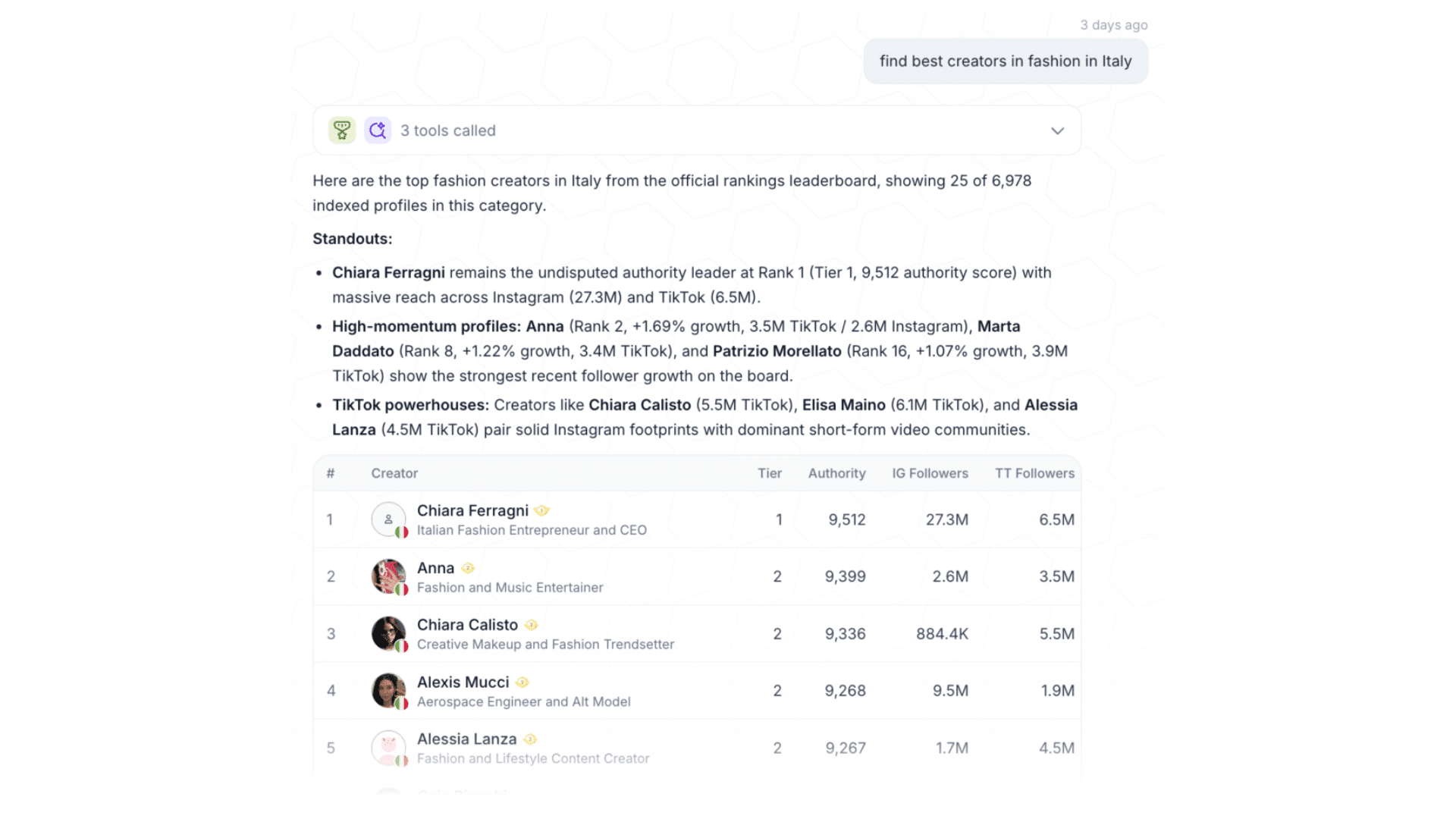
Sarthak’s case against relying on general-purpose chatbots for creator research is structural. Ask Claude or ChatGPT to identify top creators in a niche, and the results draw on articles and rankings published by agencies, vendors, and media outlets, each with different editorial standards and commercial motivations. “There’s no structured database behind it,” he says. Ranking one creator above another in that environment is more a function of who has written about them than how they actually perform.

Favikon’s scoring system builds that structure instead. The platform evaluates creator accounts not just on follower count and engagement rate, but on comment quality, reply behavior, posting consistency, and indicators of purchased reach. “We try to turn everything qualitative into a number,” Sarthak explains. That conversion allows the platform to make performance comparisons that a generic chatbot cannot, drawing on proprietary, continuously updated data rather than what happens to be indexed on the open web.
Forbes, according to Sarthak, has used Favikon for its own creator ranking work, a use case the platform did not specifically design for.
Favikon Draws a Line Where AI Stops and Marketers Begin
While many AI tools in Influencer Marketing have built their pitch around automation, Sarthak’s position is narrower. “If I were to lie to you, I would say it will run their Influencer Marketing on autopilot,” he says of Favy. “But if I had to be honest, it will easily take off hours of work from their plate, especially the most frustrating part of switching tabs.”
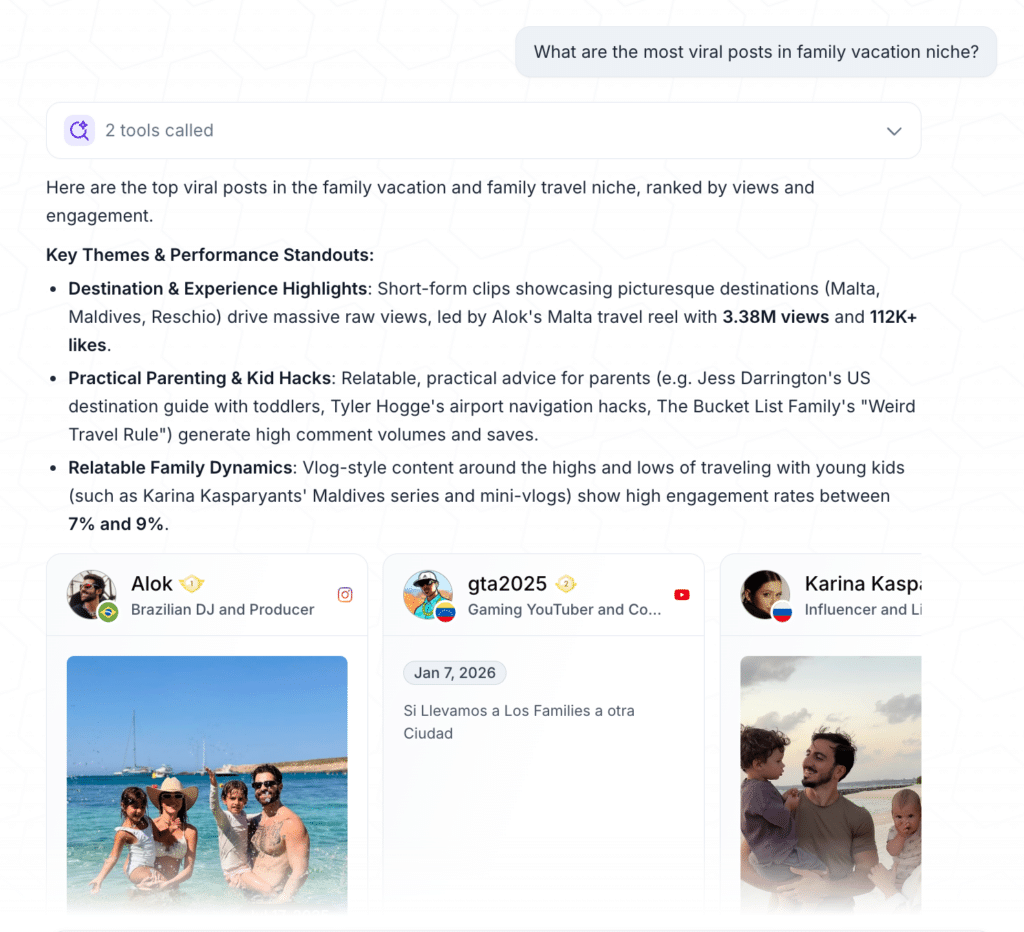
Sarthak describes himself as equally an AI enthusiast and an AI skeptic, and says Favikon made an internal decision not to claim automation capabilities the product cannot deliver. The areas where Favy does assist include aggregating creator communications from multiple inboxes into a single interface, automating profile scoring so marketers do not have to review each account manually, and surfacing suggested pricing benchmarks based on performance data. These are the parts of the job he describes as the work marketers know they should be doing, but skip when time runs out.
“Any mistake in Influencer Marketing could be very costly,” Sarthak says. “We are not giving Favy the autonomy to negotiate or pay out creators on its own. The final decision always rests with the marketer.” His position is to use AI where it measurably removes tedium, not where it would require the platform to overstate what the data can reliably support.
Scoring Creator Credibility When Engagement Signals Are Blurring
As AI-generated comments and replies become more common across social platforms, Sarthak believes the difference between a low-effort human reaction and a bot-generated one narrows in ways that no single data point can cleanly resolve.
Favikon’s approach is to avoid labeling creators as genuine or fraudulent based on any individual signal. Instead, the platform aggregates scoring across a creator’s comprehensive engagement history and presents a composite number. “Rather than trying to tell marketers ‘work with this creator or not,’ we say, ‘Here is the data; we turn that into intelligence. Now you use your own intelligence,'” Sarthak says. A score of 76, for example, communicates a pattern across posting and engagement history without declaring a definitive verdict.
Favikon positions itself as a data layer rather than a decision-maker, and that positioning holds even when the underlying data is ambiguous. The limits of what any scoring system can assert with confidence are real, Sarthak acknowledges, and presenting certainty the data cannot support is, in his view, the category’s most common mistake.
The B2B Case That Influencer Marketing Has Not Figured Out
The portion of the Influencer Marketing market Favikon focuses on most heavily is one where Sarthak says the most work is being done incorrectly. Ecommerce brands, in his reading, have established through years of practice that Influencer Marketing works and built the playbooks to run it. The B2B technology side has not reached the same level of proof or adoption.
“The problem on the B2B tech, apps, and games side is that not a lot of people know that Influencer Marketing works amazingly here if you do it right,” he says. That framing shapes Favy’s primary target user: a marketing manager at a startup who needs to run influencer programs without a dedicated team. “I don’t have a head of influencer or a head of partnerships,” Sarthak says, describing the profile in terms that match his own situation at Favikon. “Favy comes in and takes a lot of operational work off my plate.”
Enterprise-scale clients surface a different set of requirements. Unilever’s use of Favikon for employee advocacy required building data infrastructure capable of handling a corporate database at a scale the platform had not previously managed. Compliance certifications, single sign-on, General Data Protection Regulation requirements, and penetration testing became standard expectations at that size, and Sarthak says the platform has been accelerating to meet them.
Rankings Drove Recognition. The Scoring Engine Is the Bet.
Favikon’s creator rankings, the lists that surface top performers by platform and category, account for roughly 40% of company revenue and remain its most recognizable product in the Influencer Marketing market. They have also produced the misconception Sarthak finds himself correcting at the start of most sales conversations.
“A lot of people perceive that Favikon is a creator rankings platform,” he says. The rankings feature has not been actively developed in more than a year, yet it continues to grow on its own momentum. New prospects frequently arrive already familiar with Favikon’s creator lists, which shortens initial conversations while requiring a reframe of what the rest of the platform actually does.
What the company is building toward is a product suite grounded in the scoring layer beneath those rankings: discovery and vetting through Favy, campaign management, and, in early 2027, ecommerce integrations through a planned Shopify connection that will extend the platform into affiliate and live commerce workflows.
“You still have to use your skills; you still have to negotiate,” Sarthak says. “We are not going to make your Influencer Marketing run on autopilot.”
Subscribe to Our Newsletter
Check Out Our Podcast