







Tech
SonicOrigin Is Embedding Creator Rights Into Digital Content to Govern AI Training

What does a creator actually control once a file leaves their hands? For Marc Gray, CEO of SonicOrigin, the answer depends entirely on what was embedded in the file before it did.
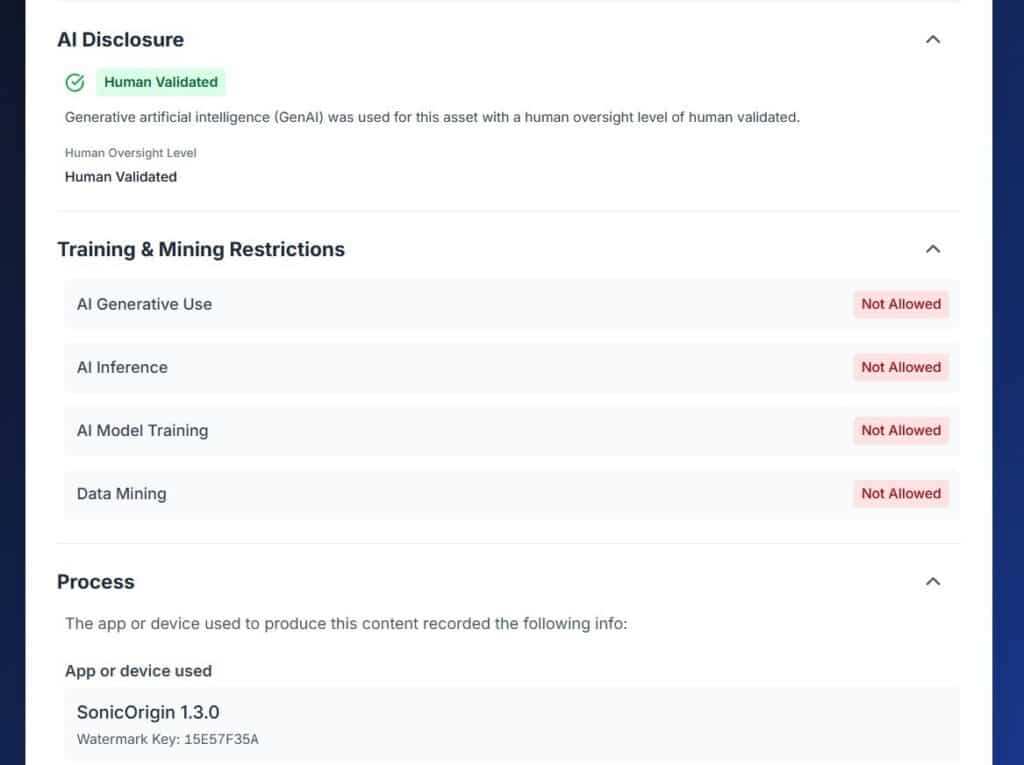
West Hollywood-based SonicOrigin, founded in 2017, embeds a unique identifier directly inside digital media that persists through compression, clipping, re-encoding, and stem separation. The identifier connects back to a registry capturing ownership, licensing terms, and AI-training preferences.
“Think of it like a passport for digital content, so that a consumer is able to see how something was made, who made it, and whether it has been manipulated,” Marc says.
Marc arrived at SonicOrigin as an investor rather than a technical founder, stepping in after encountering musicians trying to protect their rights with inadequate tools. He also serves as co-chair of the C2PA Audio Task Force, which works on audio-specific specifications for content provenance, and as a World Intellectual Property Organization expert technical advisor. SonicOrigin’s current clients are primarily major studios, record labels, and advertisers, with access for independent creators described as the next phase. A partnership with Entertainment Oxygen for independent film workflows represents one early proof point in that expansion.
A Label Problem That Started With Artists
The music industry’s reckoning over AI-generated content is, in Marc’s account, a story about institutional incentive. For years, creators bore most of the exposure from unauthorized use but lacked the leverage to push platforms or labels to act. That changed when AI training reached the labels themselves.
“For anything to be adopted, it needs to change from the top down,” Marc says. “If you can’t get Meta or Google or TikTok to make those changes, it’s dead in the water.”
The pattern holds across media categories. Marc notes that the adult content industry faced synthetic imagery problems 15 years ago. Music followed, with AI capable of cloning an artist’s voice or generating a song in seconds. Film, television, news, and advertising are working through the same exposure now. Music has moved furthest toward a technical response, with AI detection being implemented at the distributor level and provenance metadata attached to content before it reaches streaming platforms.
The Watermark That Survives Any Transformation
Earlier digital watermarking systems ran into a problem. Signals placed in the inaudible frequency range of an audio file disappeared when streaming platforms introduced MP3 compression. Signals robust enough to survive compression were audible, making them commercially unworkable for rights holders who would not accept perceptible artifacts on finished recordings.
“For streaming, they compressed the file to an MP3, and that means you lose a lot of those frequencies,” Marc explains. Once the inaudible range was no longer available, the signal had to move, and anything durable enough to withstand re-encoding became detectable to human ears.
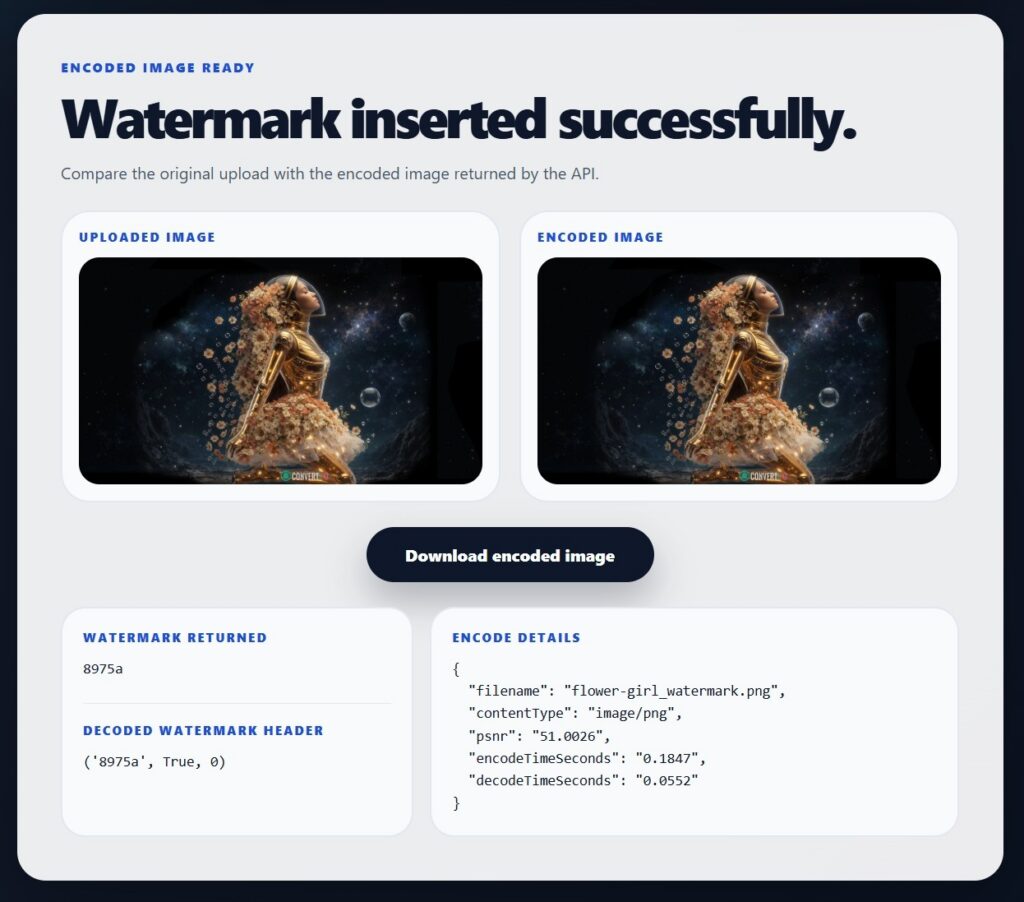
SonicOrigin embeds the signal in the audible range at a level Marc says is imperceptible but structurally durable. “It doesn’t matter if you take a 1.5-second clip; it doesn’t matter if you speed it up, slow it down. If you separate it into stems, you will never lose it,” he says. “Think of it as embedding DNA into that piece of content.” The technology operates as an API within the client’s existing ecosystem, fully automated. Marc describes implementation for rights holders as a click of a button, with no changes to production workflow required.
From Opt-Out to Licensing: How the Registry Works
The recently adopted EU AI Act requires general-purpose AI model providers to respect rights reservations made under EU copyright law, and SonicOrigin has built its product around that framework. Under SonicOrigin’s implementation, each piece of content receives an ISCC (International Standard Content Code), which Marc says is linked to a registry. Rights holders can specify consent to training, opt out entirely, or opt out except under commercial terms they define.
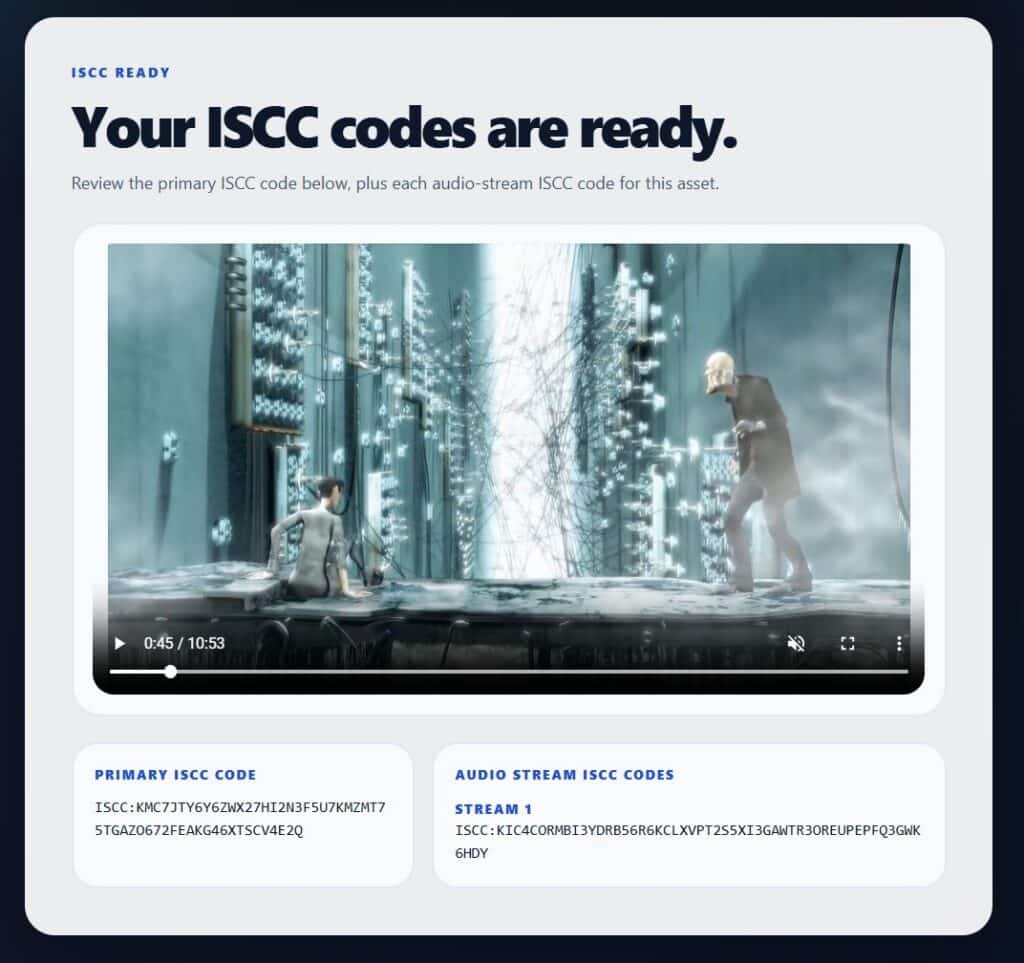
Marc frames the third option as a revenue mechanism, not a compliance checkbox. A rights holder can specify that AI companies may train on their content for a set fee per file over a defined period. The identifier embedded in the content functions, he says, as a signpost to that registry, analogous to a vehicle registration number linking to ownership and insurance records.
For independent filmmakers distributing through platforms like CineLot, the process is automated: after upload, SonicOrigin watermarks the content and registers it, making it traceable as it moves across platforms. For monitoring, SonicOrigin partners with Vobile, a content monitoring firm. Enforcement of non-compliance remains untested: “My job is to give the owner the evidence,” Marc says. “We’re not the police.”
Wait-and-See Remains the Default
Adoption of provenance technology across the media industry has been slow, according to Marc, who attributes that largely to fragmented ownership of the problem. Brands look to advertisers to act. Advertisers look to platforms. Within large organizations, Marc notes, adjacent teams handling overlapping exposure often operate without awareness of each other.
“There’s a level of watch and wait. People are wondering who’s going to solve the problem for them,” Marc says.
One counterintuitive exception: Chinese platforms. China’s cultural export push into markets like South Korea, which imposes strict AI disclosure requirements, has forced Chinese content producers to engage with provenance standards ahead of their Western counterparts. “They now want to go into markets with strict laws, and they are taking the initiative,” Marc says. That competitive dynamic, he adds, may accelerate adoption among Western media companies targeting the same markets more effectively than regulatory deadlines alone can.
Verified Human Content as the Next Scarce Asset
Marc’s longer-range argument is economic. As AI-generated media scales across distribution channels, content that can be verified as human-made will, he believes, command a commercial premium that unverified content cannot. “Human-created content that you can verify as human will carry far greater value,” Marc says.
He draws a comparison to how premium television content is already distributed. Rather than being universally available, it requires specific platform subscriptions, giving rights holders more control over terms and pricing. Marc expects creators to gain similar leverage as provenance infrastructure matures, though whether that takes the form of exclusive platform arrangements or direct licensing with consumers, he says, is still open.
SonicOrigin’s positioning aims to be the verification layer that makes those arrangements credible. “We want to be known as the gold standard. Not the cheapest, not the free one, but the absolute gold standard,” Marc says. “If someone says this has been verified by SonicOrigin, then someone can trust that.”
Protecting at Source Before the Content Escapes
Marc’s preferred approach, expanding through media verticals one at a time, has been overtaken by events. AI has created simultaneous demand for provenance infrastructure across music, film, advertising, and user-generated content, and SonicOrigin is building across those sectors in parallel. The near-term roadmap includes extending access to independent creators and smaller rights holders.
For any creator or rights holder considering when to engage with provenance tools, Marc’s position is about timing. “The minute that you release your content into the wild, it’s ten times harder to control it,” he says. “Whereas if you watermark your content, protect it at source, it’s always going to be with that piece of content.”
Subscribe to Our Newsletter
Check Out Our Podcast