



Strategy
Bryan Barletta on Rebuilding Podcast Movement Around Creators, Buyers, and the Economics Between Them

Podcast advertising remains what Bryan Barletta calls “an island” in media buyers’ planning infrastructure, a channel that accumulates audience, but doesn’t integrate cleanly into the data models buyers use to justify spend. As President of Podcast Movement and partner at the podcasting trade association Sounds Profitable, he is redesigning the industry’s flagship conference around a single goal: getting the buyers who have stayed out of the room into it.
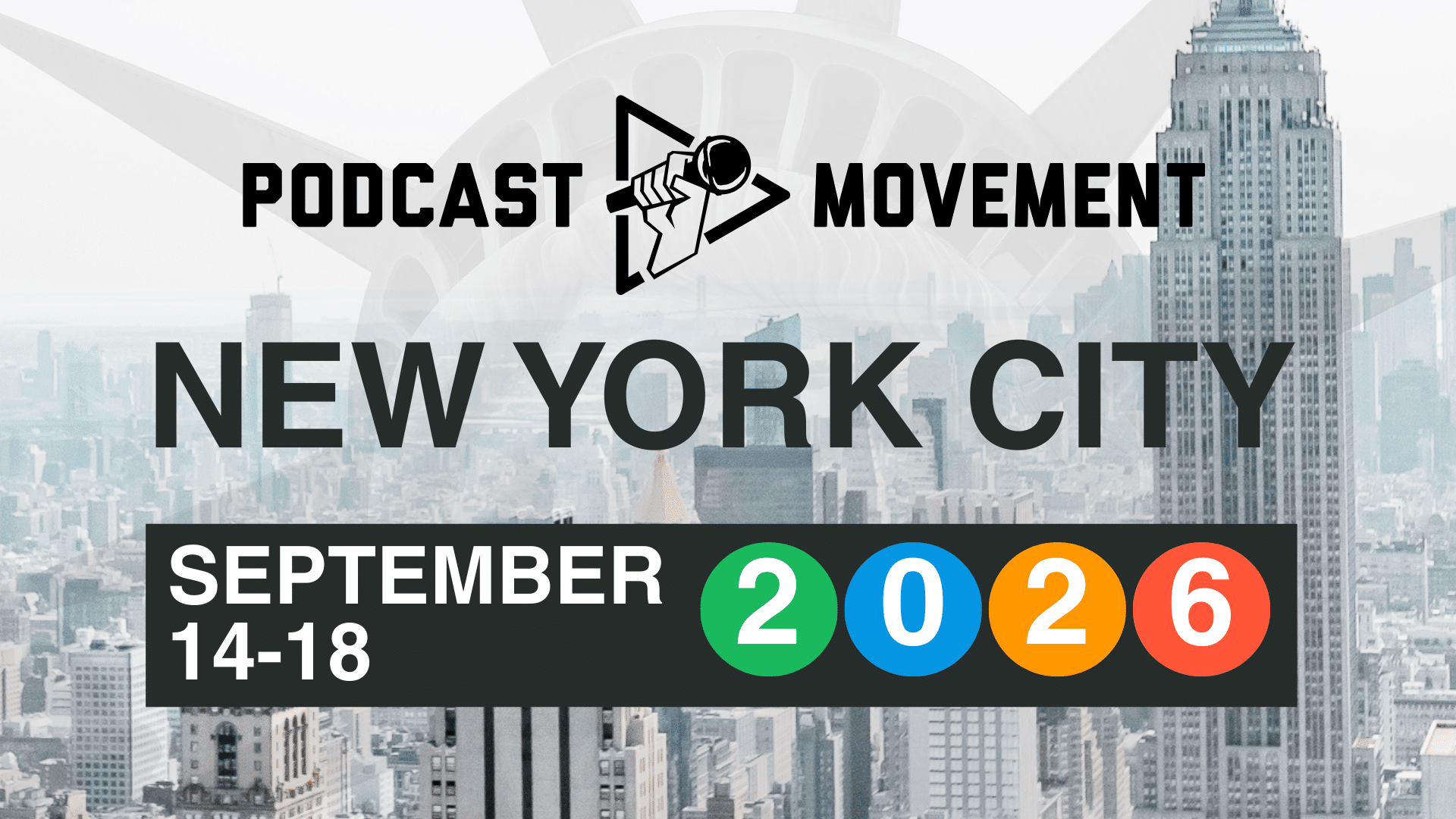
Bryan has spent six years running Sounds Profitable, a Portland, Oregon-based trade association he founded in 2020 after stints in podcast ad technology at companies including Megaphone. When Podcast Movement, the sector’s longest-running annual conference, came under Sounds Profitable’s leadership, Bryan took the presidency and began rebuilding the event nearly from the ground up. The restructured program runs September 14-18 at Terminal 5 in New York City, the first time Podcast Movement has held its flagship gathering there.
“We are not an events company,” Bryan says. “We inherited events that needed a refresh, and we have the opportunity to do right by it. We get to break it all down and build it into something new.”
Those swings were made easier by how the transition was structured. The acquisition carried no earn-out tied to personal financial targets, which Bryan says gave his team latitude that most acquired companies don’t get. By late August, more than 175 buyers from brands, agencies, and holding companies had confirmed for the Business Summit at no charge, a total Bryan believes may exceed the buyer count at any dedicated podcast industry event to date.
A Five-Day Program Built Around Three Separate Audiences
Bryan’s central decision is dividing Podcast Movement into three distinct experiences over five days. Monday and Tuesday are reserved for the Sounds Profitable Business Summit, a premium event limited to Sounds Profitable’s 220 partners. Thursday and Friday are Podcast Movement proper: two days of sessions and networking aimed at working creators. Wednesday serves as a midweek pause aligned with the IAB Upfronts, followed by an after-party at Terminal 5 featuring a live recording of “Hangin’ with Dr. Z” with comedians Sam Morril, Dave Hill, and Caitlin Peluffo.
The reason for the separation, Bryan explains, is that the two audiences need fundamentally different things from an industry event, and mixing them has historically served neither well. “I think it’s important to make clear to the creators that while there may be brands coming around on Thursday and Friday, the intent is peers,” he says. “On Monday, Tuesday, the intent is brands and revenue and connection.”
The Business Summit runs ten-minute rapid-fire sessions, two one-hour content blocks, and substantial time set aside for direct networking. Podcast Movement, by contrast, features 84 community-selected sessions plus four keynotes across five stages. The keynote lineup includes Sounds Profitable’s “2026 Consumer Study” presented by partner Tom Webster, a SiriusXM session with creator MrBallen on building multi-platform brands, a two-host examination of what podcasting means in 2026 with Arielle Nissenblatt and Lauren Passell, and a YouTube presentation on expanding podcasters’ platform reach.
Making Buyers Free Is the Conference’s Core Argument
The pricing structure makes the strategy explicit. Buyers from brands, agencies, and holding companies attend the Business Summit at no charge, a subsidy built into the $2,000 ticket that Sounds Profitable’s partners pay. Sounds Profitable’s partner membership is priced at $500 per month, putting the Business Summit ticket at roughly four months of that cost. “It made it possible for us to make it free for them for the entire week,” Bryan says.
At $199 for two days, Podcast Movement is priced to lower barriers for working creators. “I believe we are the cheapest event per day for the professional podcast industry for that ticket,” Bryan says.
The cross-subsidy is grounded in Bryan’s reading of where the industry’s constraint sits. Podcast buys don’t slot neatly into the media mix models buyers use to evaluate their broader portfolios; the data comes back differently and doesn’t map onto the measurement infrastructure they already have. Making attendance free for buyers is, in his framing, a way to address that translational problem rather than advocate for more spend.
“Telling buyers they should be spending more is a really rude thing to say,” Bryan acknowledges. “Those buyers have to put a lot of risk out there.”
800 Submissions, and the Contract Bryan Chose to Break
Eight hundred panel submissions arrived for 84 slots, from more than 500 unique submitters. The first portion of sessions was determined by popular vote, a model Bryan compares to SXSW; submitters were given tools to promote their submissions, and the community ranked them. The remainder went to a nine-person committee, which reviewed surviving submissions above a minimum vote threshold. Sessions with only a handful of votes were not advanced regardless of who submitted them.
“If somebody only got three votes, I don’t think the committee should be reviewing it,” Bryan says. “There are three people on this call. That’s three votes right there.”
The harder decision predated the public vote entirely. Six companies held contractual guarantees of a panel slot, written into their Sounds Profitable partnership agreements before the new selection process was designed. “I emailed them and said I have to violate our contract,” he recalls. “I can’t actually sell this to you. I promised everyone I wouldn’t.” He offered each a 25% reduction in their contract value, putting close to $100,000 in committed revenue at risk. Most of the companies agreed to let the guaranteed panel go.
Molly DeMellier, who oversees communications for the event, says the community selection process surfaced voices and ideas she hadn’t encountered in her five years attending Podcast Movement. Sessions on narrative storytelling for kids and anime-focused content are on the schedule. “They’re new ideas, and they’re new people,” she says. “We’re trying to bring new ideas to the space.”
New York Anchors the Event Where the Budget Decisions Get Made
The major holding companies and brands Sounds Profitable wants to draw into the Business Summit are concentrated in and around New York, and the city is reachable from Chicago without a cross-country trip. Previous Podcast Movement editions moved to a different city each year, which Bryan says made it difficult for buyers to treat the event as a standing annual calendar commitment. “If it changes location every year, they can’t really anchor around that,” he says.
Hosting at Terminal 5 eliminates the mandatory room blocks and food-and-beverage minimums that Bryan says most attendees overlook as costs. Those savings hold ticket prices down. The event will return to New York next year.
The Business Summit is designed for roughly 400-500 attendees against a venue capacity of 600; Podcast Movement targets a thousand. Bryan treats those ceilings as features rather than constraints. “Some aspects of what we do can simply be, ‘That’s as big as it can get,'” he says. “Let’s just keep making it better and making sure it stays full.”
Real Success Means Being Ready Before Summer Next Year
On what success looks like after September, Bryan says, “A big win for us would be to break even financially.” He describes first-year profitability as a “pipe dream” and says the team would absorb a loss to establish the right model.
His real benchmark is operational. “Can we get things more solid even one month earlier next year?” he asks. The goal is to have a schedule published and ticket sales open by May or June 2027, before the summer event calendar crowds out attention. If that happens, he says, the September launch will have been a success regardless of how the final attendance numbers land.
Bryan acknowledges that ticket sales are running slightly below initial projections and expects the first year to require some re-earning of trust from an industry that needed to see the rebuilt event before committing. Six years of Sounds Profitable’s credibility is the foundation he drew on to ask for patience. “You’ve trusted me this far, and I’ve done right by the space,” he says. “Give me a little bit of trust.”
Podcast Movement takes place September 17-18 at Terminal 5 in New York City. Tickets are available here.
Subscribe to Our Newsletter
Check Out Our Podcast