


Agency
Viral Nation’s Mathew Micheli: Data, Not Platforms, Is What Protects Creators Now

Mathew Micheli came off a VidCon panel on the state of the Creator Economy with a blunt diagnosis: brands, creators and agencies are about to start competing on data instead of content. The platforms defining a creator’s career today, the Viral Nation co-CEO suggests, will not be the ones doing it in five years.
Mathew co-founded Viral Nation in 2014 with Joe Gagliese, a high school friend, after the pair ran a wholesale liquidation business together in their early twenties. What began as one of the first agencies built around YouTube talent is now a Toronto-based company spanning marketing, talent representation, media and AI-driven technology. Viral Nation works with tens of thousands of creators, represents hundreds of exclusive talent across YouTube, TikTok, Instagram and Twitch, and counts Meta, Amazon, Apple, Walmart, Google and The Coca-Cola Company among its clients.
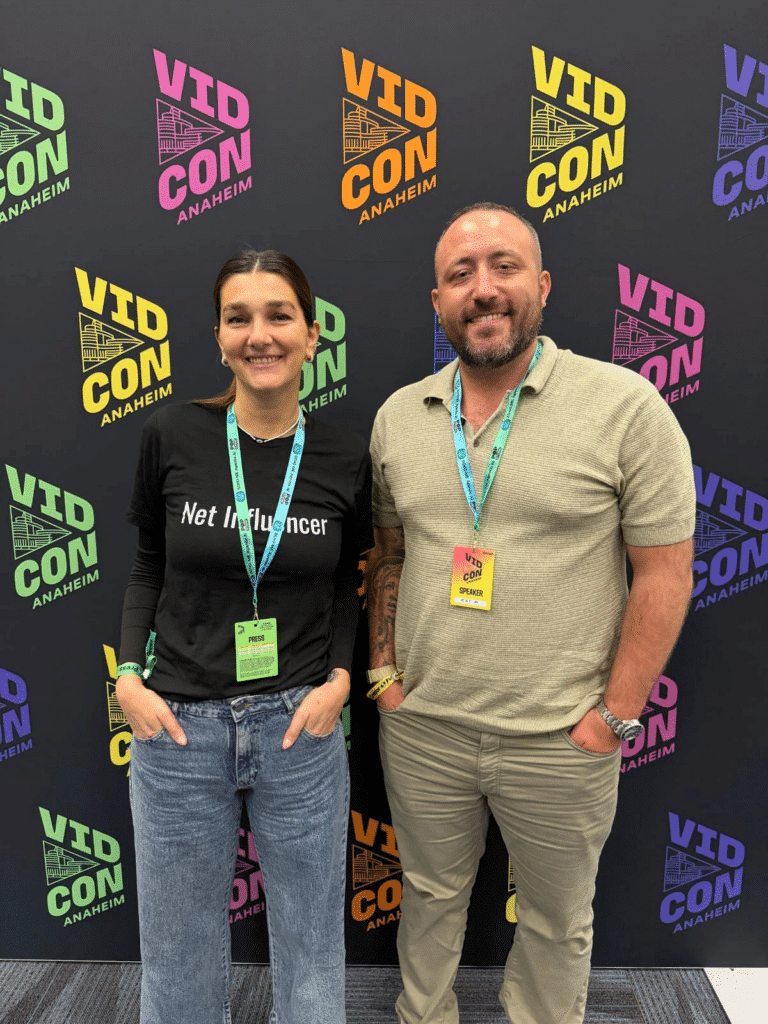
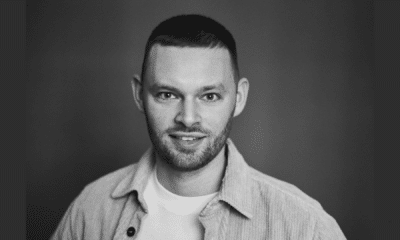
Photo: Mathew Micheli and Ceci Carloni, Net Influencer’s Senior Editor, at VidCon Anaheim 2026
Mathew, who oversees the company’s global operations, finance and technology strategy, sat on an industry panel at VidCon Anaheim, the conference’s 15th edition, where the conversation turned to where the Creator Economy is headed next. He cites analyst forecasts that put the market’s current size at roughly $250 billion, a figure in line with estimates from Goldman Sachs and Grand View Research, with some projections topping $1.2 trillion by the early 2030s.
“The state of the economy is fantastic,” he says. “Anyone in the industry, any creator, should be very excited about what that future looks like for them.”
What concerns him is what the industry is competing on to capture that growth. “Data is the moat,” Mathew says. “It’s the future of how AI is going to be successful for creators, brands, and agencies. The data that’s provided to your AI and your AI agents is the most important thing.”
Vine Disappeared in Months. Facebook Did Worse.
Mathew’s emphasis on owning data rather than renting it traces back to two collapses he has lived through, both well before AI became the industry’s preoccupation.
The first was Vine. “It happened in a matter of months,” Mathew says. “I’ve never seen anything like it.” Creators who had built entire followings on the app had to migrate to new platforms almost overnight, with no warning and no roadmap for what came next.
The second, Mathew says, gets discussed far less. Around 2017 or 2018, by his recollection, Facebook overhauled the algorithm that ranked and surfaced content, a change that wiped out a thriving affiliate marketing economy built on creators moving articles to outside websites.
“There were a ton of people who were essentially making money off Facebook through articles pushing to websites,” he says. “Some creators were making hundreds of thousands of dollars a week, buying highly expensive cars, houses they couldn’t afford. And overnight it just completely went away.”
He continues, “People do not talk about it, but it was one of the biggest shifts I’ve ever seen.” The lesson he draws from both moments is consistent: an advantage built entirely on someone else’s platform can disappear on someone else’s timeline, not the creator’s, and not the agency’s.
The Moat Is Data, Not Content
That history is what Mathew means when he calls data the industry’s moat. Viral Nation already holds dozens of petabytes of creator and audience data, according to Mathew, and he expects that infrastructure to grow tenfold within two to three years.
“Data is an informational mechanism that AI really needs,” he says. “The best application we see is how we can help brands determine which creators to work with, what those creators should do, what’s performing and why it’s performing.” He describes the eventual result as among the most effective forms of advertising the industry has produced.
That same logic extends to how Mathew talks about AI’s role for individual creators, not just the brands paying for their time. “Everyone should have an agent,” he says, meaning a tool that understands a creator’s own performance data well enough to suggest what to make next.
In his view, the biggest obstacle creators face is not skill but ideation. “Some of the best things that we ever do are give creators thought starters of what they should do for that brand,” he says. “They might be highly creative, but they don’t have ideas coming out of their mind every second, every day.”
Brand Deals Are Creators’ Most Important Content
Mathew’s other VidCon session, on brand deals and YouTube, is built around a complaint he raises often: creators routinely undervalue the content that actually pays them.

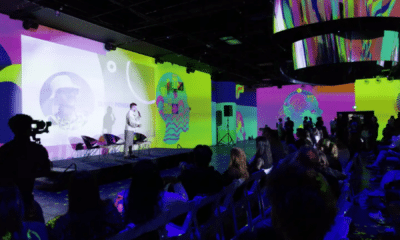
Photo: Mathew Micheli speaking at VidCon 2026
“Creators really don’t realize that brand deals are the most important content that they create,” he says. “Sometimes they see it as an afterthought, but they’re getting paid.”
He attributes the shortfall to a lack of business training across the industry rather than any shortage of creativity. “A lot of creators really lack good business acumen,” he says. “This is the most important content that you should create.”
When partnerships do work, Mathew notes, it comes down to brands giving up some control. “Trust is very important,” he says. “Brands have to allow creators to be able to adapt the branded content to something that fits their channel.”
He argues that heavily scripted campaigns, where brands dictate exactly what happens on camera, routinely underperform because they strip out the judgment creators have built with their own communities. “Creators are the best in the world for a reason,” he says. “They have to be allowed the flexibility to create things specifically for their audience, for what they know their audience will resonate with.”
Creative Blocks Are Universal. Quitting Is What Ends Careers
Representing hundreds of exclusive creators has given Mathew a clear view of which ones survive a career built on constant output, and which ones do not.
“The ones that last are ultimately the ones that have staying power, but also have the mental, emotional, and physical fortitude to push through hard times,” he says. He describes creative blocks as close to universal among the talent Viral Nation works with. “I’ve seen it happen to almost every single creator we’ve ever worked with,” he says. “They don’t know what to post, they’re not seeing value in it, they’re really having a hard time.”
The difference, in his telling, comes down to what happens next. Some creators treat the block as a turning point. Others simply stop posting, a decision Mathew considers close to fatal for a career built on audience attention.
“Followers will forget you very quickly, unfortunately,” he says. “That is probably one of the worst things creators can do.”
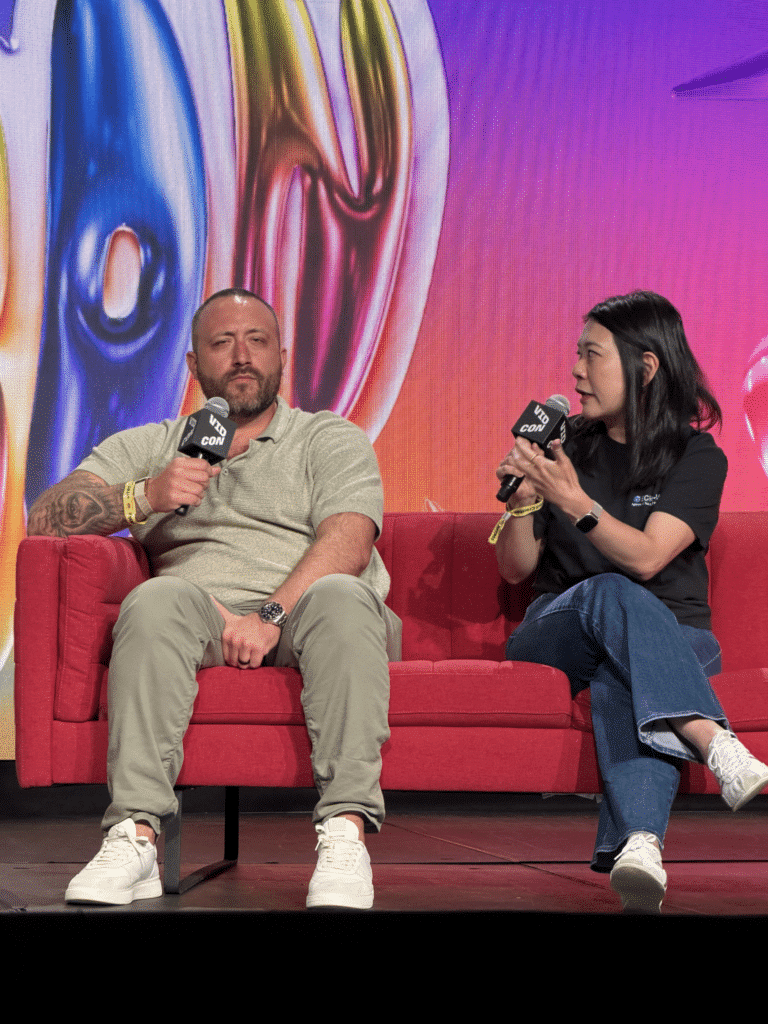
Photo: Mathew Micheli at VidCon 2026
Agencies, Platforms, and Brands Are Allies, Not Enemies
Viral Nation just turned 12 years old. VidCon, which Mathew attended in person for the first time this year, just marked its 15th edition. What he wants out of the visit isn’t a deal or a deadline. It’s a relationship problem he thinks the industry still hasn’t fixed.
“Creators should realize that the agency, the platforms, the brands, they’re your allies, they’re not your enemies,” Mathew says. “And I think that relationship is really the opposite in some cases now, where they view it as the enemy versus it’s their ultimate ally.”
It’s a framing that sits alongside everything else he describes: platforms that vanish overnight, brand deals creators undervalue, blocks that end careers when handled badly. In each case, the businesses meant to support a creator are also, in Mathew’s account, the most durable thing standing between a good year and a bad one.
For creators willing to treat those relationships as assets rather than obstacles, Mathew sees a clear payoff. “That’s how they’re going to eventually turn into the future MrBeast,” he says. “Those relationships, and being good stewards to your partners, are the best thing they can do, because they’re the ones that make you money.”
Subscribe to Our Newsletter
Check Out Our Podcast