






Agency
Clip Influence Bets Mass Clipping Can’t Fix a Weak Product, Only Amplify a Winning One

Clip Influence distributes brand content through hundreds or thousands of clipper-run pages on TikTok, Instagram Reels, and YouTube Shorts. The agency’s co-founders, Gabriel Fuentes and Adrian Santos, argue the model amplifies a product and message that already work. Each view, in their accounting, is worth only what the page and the product placement make it.
Gabriel and Adrian both worked as freelance clippers before launching the agency in late 2025, and Clip Influence now sells distribution to established brands that already post on social media and run ads. “If, as a brand, you don’t have something that’s winning already, you’re most likely not a good fit for clipping,” says Gabriel, the Miami-based founder and CEO. “Mass clipping specifically is distributing it and amplifying it.”
Most of those brands sell physical products. Clients include ZURU, the toy company behind the Fuggler plush line, and the agency also clips for long-form creators, though Gabriel says it passes on streamers because they sometimes lack the budget. He argues product brands suit the model because they are already tested, with their own growing social accounts and enough content to distribute. According to Clip Influence, most of its viewers are in the U.S., the UK, and Canada. The agency also reaches audiences in Latin America, primarily in Mexico. Its reported network includes more than 30,000 vetted clippers, and the team reviews participating pages for each campaign.
That network is coached by people who did the work. Adrian, the co-founder and Chief Operating Officer, ran his own clipping agency before partnering with Gabriel. “We know what it’s like in the eyes, in the shoes of a clipper,” Adrian says. The same experience shaped the conditions the founders now set for clients, starting with what a brand has to bring.

Clipping Amplifies Products Already Built to Win
The agency’s weakest results came from brands that arrived without those inputs. Its first campaign, a $2,000 budget in February 2026 for a solar-panel installer’s personal brand, lifted the client’s average YouTube views and his subscriber counts on YouTube, Instagram and TikTok, according to Adrian. Gabriel still ranks it among the agency’s worst results because of the small budget and limited content, and says the agency would not take that budget today.
The second was a game studio that wanted conversions for a title that had not yet launched, on a low budget. “They gave us zero content, and we had to create it ourselves,” Gabriel says.
Those early campaigns shaped how Gabriel now screens prospective clients. He looks for a library of footage, a message that already resonates with viewers, and enough budget to distribute the clips. Clip Influence’s minimum campaign budget is $5,000, with a separate management fee.
“If your product isn’t already good and you’re distributing it on the Internet, all it’s going to do is get more bad juju on you,” Gabriel says. Without a message behind them, he adds, the views “don’t really correlate to anything.” Of those conditions, content is the one a brand can start fixing before it signs.
The Content Library Comes Before the Campaign
A brand planning to add clipping next quarter should start by gathering footage in one place, such as a Google Drive or Dropbox folder, in Gabriel’s view. That library can hold UGC creator videos, social posts, and polished product content, provided the brand holds the rights. “Make sure to have the rights to it, so then you can run mass clipping with it,” he says. “That’s the legal way to do it.”
Polish matters less than product brands tend to expect. Gabriel says mass clipping needs everyday, organic-looking content that does not read as a sales pitch. “They have to look at this and be like, oh my gosh, this looks like somebody else posted it,” he says. He also asks brand managers for creative direction, because “they know what’s winning for their brand.”
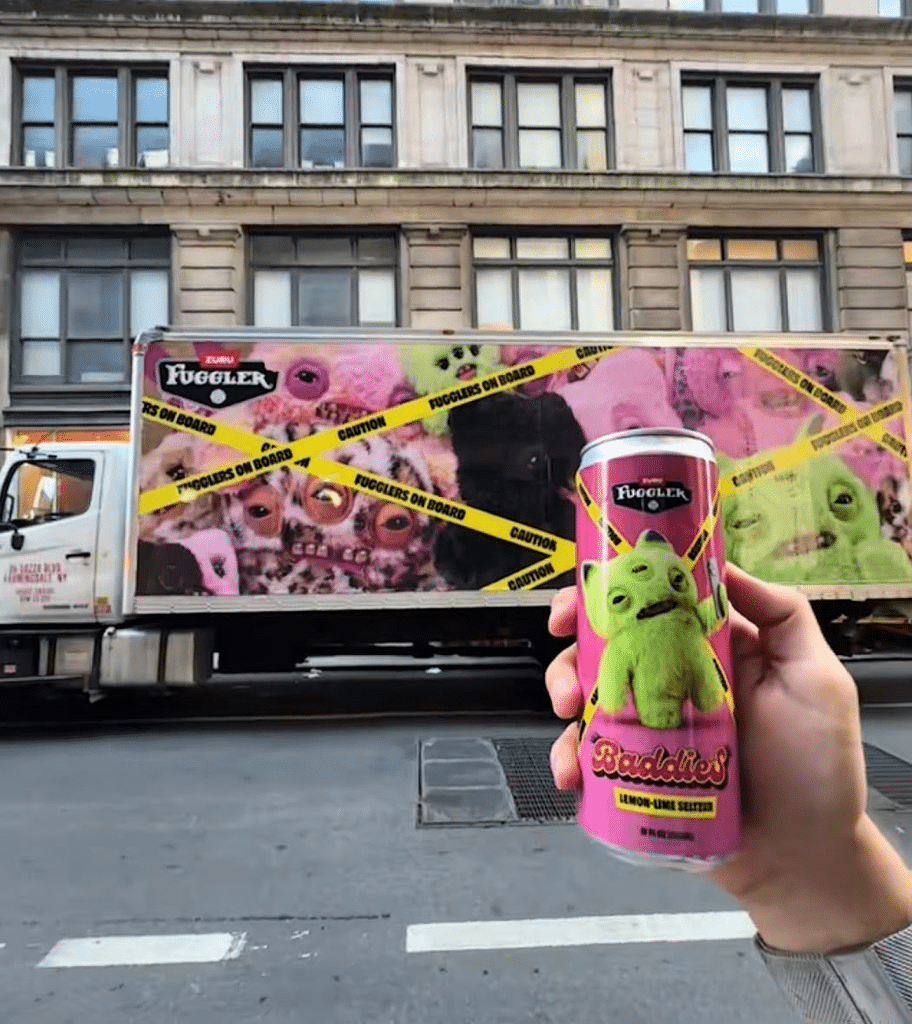
When footage for a specific moment does not exist, the agency can shoot it. In September ZURU asked the team to film the company’s Fuggler pop-up during New York Fashion Week in SoHo. Adrian, who lives in lower Manhattan, recorded the content, organized it in a drive, and fed it to the clippers. Gabriel says those angles generated more than 5 million views.
Unlike the pre-launch game studio, ZURU brought toys already on shelves at retailers such as Walmart. Once the footage exists, the agency decides what clippers make from it.
Proven Formats Transfer Between Competing Toys
Adrian’s method starts with formats, hooks, captions, and audio that have already gone viral, which clippers then rebuild within the client’s niche. For ZURU’s first campaign, on Fuggler, the team studied Labubu, a competing collectible plush whose content formats had already worked. “We coached our clippers to replicate it for the Fuggler brand,” Adrian says.
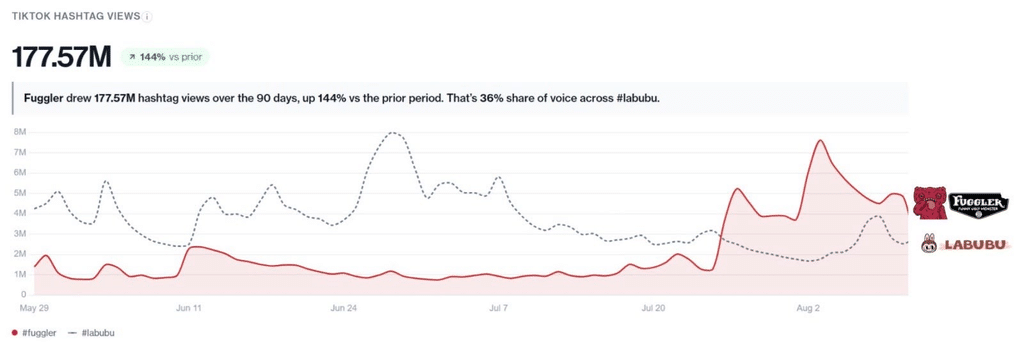
That campaign finished in about two weeks, by his account. Clip Influence completed a later ZURU campaign for Slime Mart in two days on a $10,000 budget. The agency’s dashboard recorded more than 27.1 million views at a campaign CPM of $0.34. The result Clip Influence reported was exposure, not attributed sales or retail lift. Two approaches stood out. Some clips suggested a boyfriend should buy the toy as a gift, while others urged shoppers to “run to Walmart, don’t walk.” Gabriel says the season also shapes what works: ahead of Christmas, shoppers are searching for holiday terms on TikTok and Instagram.
Replication at scale depends on the brief. “It’s very important, especially at a higher scale, that these campaigns have very detailed briefs,” Adrian says. He prefers video briefs to written documents, a lesson from his time as a UGC creator, because every interaction with clippers happens online.
Gabriel treats that operating knowledge as the agency’s bet against competitors. “A lot of clipping agency owners, they’ve never touched a clip in their life themselves,” he says. That knowledge explains how the agency produces views. His sharper argument concerns which views count.
Clip Influence Judges Views by Page and Placement
“I never was the type to think that every single view is a valuable view,” Gabriel says, arguing that many clipping agencies let clippers post on low-quality pages, which hurts brand pairing. His own test covers the accounts posting a clip and their niche, the CPM, and the content format.
Format decisions have led the agency to ban ASMR hooks. If seven seconds of ASMR lead into five seconds of product, Gabriel explains, many viewers leave before the brand appears. “You need to make sure that they’re gonna watch for the actual product, because that’s what the brands are actually paying for,” he says.
Clips also carry the route to purchase. Captions and bios tag the brand’s main accounts, and for products sold online, a link in bio points to the Walmart or Target listing. For in-store products, the agency relies on FOMO. On a campaign for ZURU’s oversized Fuggler line, “Chunky Fuggs,” the format that worked showed the toys in stores, and Gabriel says other formats would have drawn more views while giving the brand less value.
Clients follow results through dashboards covering engagement, full and partial watch time, and audience origin, and clips are reviewed manually, with some AI in the process. According to Gabriel, the agency’s dashboard recorded more than 56.4 million views at a $0.50 CPM for ZURU’s Fuggler Brand Line and more than 13.6 million views at a $0.74 CPM for My Mini Mom and Baby. These figures show what the campaign budget bought: the amount spent per thousand views across the campaign, not the rate offered to an individual clipper. Clip Influence bills its management fee separately, so that fee is not included in the reported CPMs.
Clipping Pays Off Through Repetition
Those checks protect a single campaign, and Gabriel says the return comes from running many. Timing depends on budget and on the CPM a brand pays clippers, he explains, because higher rates in an increasingly competitive market pull clippers toward a campaign for the long term. On a $10,000 budget, he estimates a brand would see clips go viral in the first week. One campaign might bring a couple million to 20 million views, and he tells every client that clipping is a long-term channel.
The founders also describe a loop with paid media. Gabriel says hooks and retention data from clipping can inform a brand’s ads, while angles tested in ads can feed back into clipping. He expects short-form video to stay the main organic route to consumers who are on their phones all day.
“What you want to do is build an ecosystem around your actual brand, where your consumers are seeing it 24/7,” Gabriel says. “That’s the real value behind clipping.”
Subscribe to Our Newsletter
Check Out Our Podcast