





Influencer
Uptin Saiidi On Selling UP10 Media And Choosing Focus Over Scale In The Creator Economy

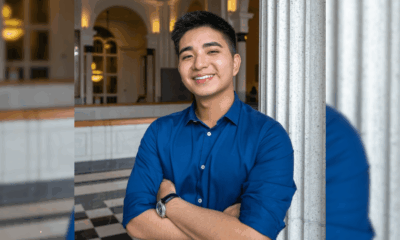
Uptin Saiidi has built his career by moving across media formats, platforms, and business models, often ahead of where the industry itself was headed. A former CNBC journalist turned creator and founder, Uptin now reaches more than 3 million followers across YouTube, TikTok, Instagram, and Facebook, generating more than a billion views through content focused on technology, money, and global culture.
In December 2025, he marked a turning point by selling his creator-led agency, UP10 Media, to UAE-based digital media company Augustus Media, closing the chapter on his first business exit and setting the stage for a renewed focus on storytelling as a solo creator. The acquisition folded UP10 Media into Augustus Media’s production arm, ODEUM, dissolving the UP10 brand while expanding the studio’s digital-first capabilities across the Middle East.
For Uptin, the deal was not about stepping back from ambition, but about realigning where his time and energy belonged after years of wearing “two hats” as both a creator and an agency founder.
From CNBC to His Own Agency
Before becoming a full-time creator and founder, Uptin spent more than six years inside traditional media at CNBC, working across New York, Singapore, and Hong Kong. His work included interviews with global business leaders, long-form documentaries that aired on international airlines, and half-hour specials distributed worldwide.
The experience gave Uptin a front-row view of how legacy media organizations operate at scale, but it also exposed a growing disconnect between institutional reach and audience trust. As individual creators began to outperform large media brands in engagement and distribution, the limits of traditional structures became harder to ignore. When pandemic-era layoffs hit in 2020, Uptin found himself at a crossroads. Rather than return to another newsroom, he decided to build something of his own.
He started his creator career in October 2020, publishing frequent short-form and long-form videos across YouTube, TikTok, Instagram, and Facebook. What followed was not a deliberate pivot into entrepreneurship, but an inbound opportunity that revealed a much larger business gap.
“Somebody messaged me, ‘Hey man, I’ve seen your videos. Can you produce 50 videos for our company’s YouTube?’” Uptin recalls. That single request forced a realization that extended beyond a one-off project. Brands understood they needed video, but many lacked the ability to create content that felt native to social platforms or credible to modern audiences.
Instead of delivering the work and moving on, Uptin began hiring a small team, developing case studies, and formalizing what became UP10 Media. The agency focused narrowly on user-generated content style, phone-shot, creator-fronted videos designed to perform across TikTok, Instagram Reels, and YouTube Shorts. It was a deliberate rejection of the full-service agency model.
“People would say, ‘You should do influencer marketing, SEO (Search Engine Optimization), web design, TV commercials,’ and I would always say no,” he says. “I just wanted to focus on this.”
By staying tightly niche, UP10 Media developed an identity that clients immediately understood and, later, one that made the company easier to integrate into a larger organization. What began as an accidental agency alongside Uptin’s creator career ultimately became a sellable business, laying the foundation for the next phase of his creator economy journey.
The Two-Hats Problem
As both Uptin’s personal channels and UP10 Media grew, the tension between creator and CEO became harder to ignore. The turning point came during a major agency contract that lasted roughly eight months.
“After the contract finished, I looked at my analytics as a creator, and I saw that during those exact eight months, my views were down like 25% to 30% across all my platforms,” he says. “Once the contract was finished, they were all back up at even higher than before.”
The charts were difficult to dismiss. While the agency was growing, his personal content was clearly absorbing the cost. “That was very revealing to me that I’m one person,” Uptin says. “I can only scale so much and do so well and so fast.”
Even after reducing his day-to-day involvement, the mental load of running an agency never fully disappeared. “It doesn’t mean that it’s not always on your mind,” he explains. “You wake up, you see the group chats, you see the conversations, you get stressed over things that are naturally going to stress out any agency owner.”
By early 2025, he began to question whether UP10 Media could reach its full potential under his leadership alone.
Why Sell, and Why Now?
Conversations about a sale began in the summer of 2025, with the deal officially announced in December. For Uptin, the timing was deeply personal rather than purely financial.
“I could keep hiring people and get more executives to quote-unquote replace me,” he says. “But it just wasn’t going to be the same.”
As Uptin notes, selling was less about exiting entrepreneurship than about giving the business a structure that allowed it to grow without competing directly with his creative output. “I felt like the agency actually deserved to be in the hands of a company that can help it scale,” he says. “One plus one equals three.”
Augustus Media stood out among potential partners because of its creator-first DNA. “They live and breathe storytelling like no other company that I have had conversations with,” Uptin says. The organization operates dozens of content channels with millions of followers, aligning closely with UP10 Media’s philosophy of prioritizing narrative and audience connection before marketing objectives.
Under the deal, UP10 Media’s team joined ODEUM, expanding its service offering beyond UGC into podcasts, polished advertising, and other formats Uptin had previously declined to pursue.
Lessons From Building a Sellable Creator Business
Looking back, Uptin credits focus as the key factor that made UP10 Media attractive to an acquirer. “If we did so many other things, oddly I think we wouldn’t have been as sellable,” he says. “It made it simpler for buyers.”
If he were starting again, however, he would invest earlier and more heavily in sales training. “Most of my time wasn’t going to be spent brainstorming cool video ideas,” he says. “It was going to be spent on sales and biz dev.”
That realization reshaped how he thinks about creator-led businesses more broadly. While creators are often encouraged to scale teams quickly, Uptin believes many misunderstand what growth actually requires. “I see a lot of creators use it as a flex to say, ‘I have a 10-person team,’” he says. “But more is not necessarily better.”
He points to examples where too many stakeholders dilute performance. “The more hands that touch a draft, the lower it’s likely to perform,” he says, citing clients who required more than a dozen revisions on short-form videos.
By contrast, he adds, some of the most effective content still comes from creators filming on their phones, alone, with minimal editing.
Rethinking Monetization and Sustainability
Uptin often frames creator income through what he calls three buckets: platform ad revenue, brand deals, and a third category that might include consulting, courses, merchandise, or businesses – like an agency. Early-stage creators, he argues, almost always need that third bucket to stabilize income.
“Ad revenue is not enough, and brand deals are very sporadic,” he says. “That’s quite scary for a new creator.”
At the same time, exiting UP10 Media allowed him to reassess his own position. “Removing my third bucket is something I’m very proud of,” he says. “It means I actually make more than enough from the first two.”
That clarity has influenced how he structures his time and output, emphasizing fewer obligations and deeper creative work rather than constant expansion.
The Next Chapter: Deeper Storytelling
With the agency behind him, Uptin plans to double down on long-form projects that were difficult to pursue while running a company. He points to earlier documentaries, including a 30-minute piece filmed in El Salvador, as examples of the kind of work he wants to do more often.
“I’m excited to do deeper dives where I can really dedicate my time,” he says.
He has also launched a podcast, “Uptin & Thomas,” built by reverse-engineering audience demand through short-form clips before releasing full episodes. The show focuses on tech, business, and money, with an emphasis on opinionated discussion rather than neutral headlines.
“There’s not really stuff like this on the market,” he says. “We say, ‘This is stupid, and here’s why.’”
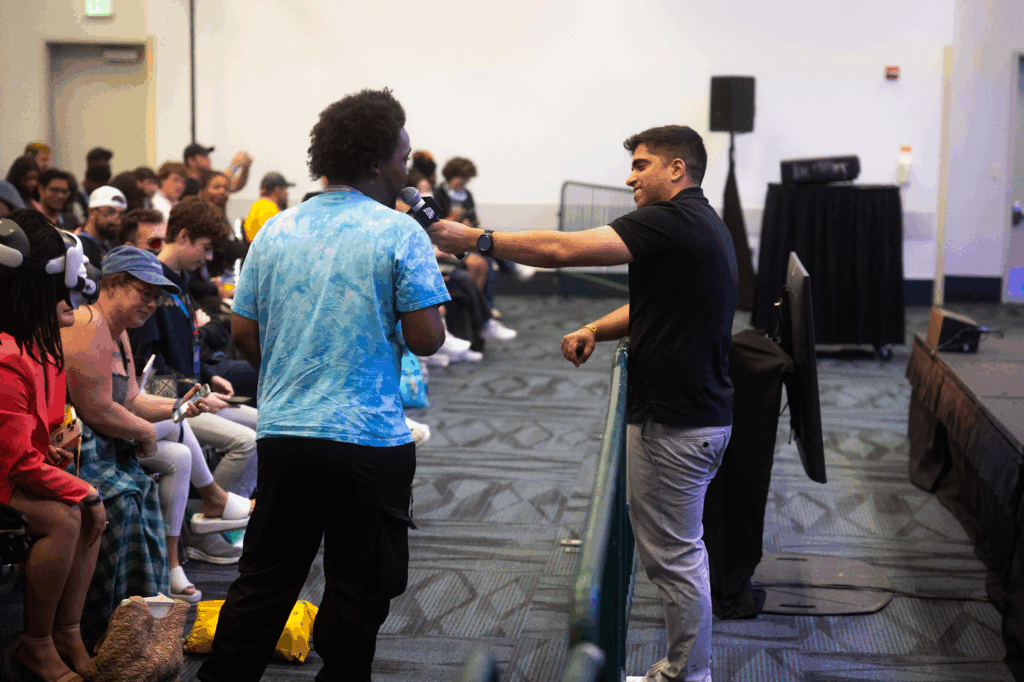
In light of the rise of platforms, AI tools, and media formats, Uptin sees in-person events and human connection becoming increasingly important. He points to creator programming at major conferences like CES (Consumer Electronics Show) and SXSW (South by Southwest) as signs that the creator economy is no longer operating at the margins of business and technology.
“If you’re going to run another company alongside content, you need clarity,” he says. “Write down your output goals. Decide what a typical day looks like.”
Without that structure, he warns, creators risk burnout and creative stagnation. “You can always make another video,” Uptin says. “That’s a blessing and a curse.”
As for Uptin, his focus is on staying human in a system that often rewards over-optimization. “Most people get big and then try to systemize everything,” he concludes. “But staying human is how you got big in the first place.”
Photo source: Up10Media
Checkout Our Latest Podcast