Customer Relationship Management (CRM) tools, long used by sales and account teams to track relationships, automate follow-ups, and centralize communication, are becoming a growing point of tension in the creator economy.
As influencer marketing expands, many managers and agencies are discovering that traditional CRMs built for linear deal pipelines often fail to capture the nuance of creator relationships, dynamic content workflows, and the fragmented platforms where collaboration actually happens.
That gap raises a broader industry question: What tools should be used to manage influencer contacts, outreach, and campaign communication?
To examine how practitioners approach these decisions, we collected insights from 24 leaders across agencies, talent firms, creator platforms, and brands. Their responses show a market in transition where spreadsheet-driven teams, all-in-one platforms, and fully custom tech stacks coexist, each reflecting different philosophies about what the next generation of creator-economy infrastructure should look like.
At NexTide™, we keep our creator CRM setup intentionally simple: a shared spreadsheet and a team that actually knows the people they work with. We’ve tested the polished platforms, but none of them reflect how creator relationships really operate. They’re built like traditional CRMs (rigid fields, artificial stages, automated touchpoints) when this world runs on nuance, timing, and context you only get from actually paying attention.
The spreadsheet forces clarity. It keeps us fast, scrappy, and focused on the only things that matter: who we’re talking to, what was promised, and how the relationship is growing. No system has ever outperformed that.
What’s missing today is any tool that understands creators as dynamic media entities, not “leads” in a pipeline. Until someone builds something that captures the intelligence behind audiences, behavior, and momentum, the simple approach honestly works better.
We don’t use creator-specific CRM software. We use Monday.com, which is highly effective for streamlining everything – from scouting talent to managing campaigns, delivery, QA, and contract tracking. Monday.com’s configurability is key. We’ve tailored it to track deals per creator, monitor campaign performance across platforms, and provide clear data on industry trends. It gives us the flexibility to build exactly what we need without being locked into creator-focused software that might not fit our workflow. What’s missing in the industry? Granular YouTube data. Most systems treat YouTube channels as one entity, but channels are becoming networks with multiple formats and series that perform differently. Brands need to evaluate specific formats and series performance, not just overall channel metrics. There’s no system that distinguishes viewership by format within a channel. That’s a gap the industry needs to address, especially as branded content shifts toward buying into specific series rather than channel-wide sponsorships. Until that exists, it’s still a manual process which needs to be streamlined.
Our team manages all creator outreach and communication through BrandMe, our proprietary platform built over more than a decade in the influencer-marketing space. Instead of stitching together CRMs, spreadsheets, and external outreach tools, we centralize everything: creator profiles, segmentation, workflow automation, briefing, approvals, and real-time reporting.
We chose this stack because off-the-shelf tools rarely understand the reality of high-volume creator operations. At BrandMe we’ve run campaigns with tens of thousands of nano and micro creators, so the system is designed for scale, transparency, and accuracy – not guesswork.
What’s still missing in the broader landscape? True AI-driven quality control. Most platforms talk about AI, but very few can actually evaluate content against brand guidelines, detect logo visibility issues, or flag do’s and don’ts before a post goes live. That’s where we’re pushing the next evolution.
Our team primarily relies on our influencer marketing platform capability that acts as a central CRM, allowing us to manage the full creator lifecycle, from discovery to payment. We employ a tiered, integrated stack to cover the entire spectrum of the creator economy. Webfluential, with its API (Application Programming Interface) integration into leading social media channels, handles our micro and macro-influencer collaborations, where scale and detailed performance data are key. Complementing this is theSALT, which focuses on highly authentic, consumer-generated content (CGC) and nano-influencer execution, leveraging deep trust at a community level.
We chose this integrated stack over siloed tools because it provides essential context, speed and efficiency. This holistic view, combining audience demographics, content performance, and communication history in one place, is vital to building long-term, authentic relationships that fuel the creator economy. This strategic deployment of macro and nano voices maximizes impact across the entire conversion funnel.
Comms channels in the creator economy are broken. Creators are overwhelmed across email, DMs, and proprietary apps – accelerated by social commerce – making cold outreach nearly impossible unless you can cut through the noise.
At 456 Growth, I lead our creator outreach, discovery, and business development teams. We deploy a wide mix of outbound channels to build new relationships, establish trust, and scale partnerships.
Our advantage is the managed-service trust we build with creators, then guiding them into our preferred communication ecosystem.
Every onboarded creator completes a dynamic survey, and we collect SMS for our Salesforce CRM. This allows us to automate opt-in SMS communication when email fails – protecting the last “sacred” channel while ensuring high responsiveness.
Our approach combines data-driven discovery, email automation, dynamic surveys, and community engagement. 456 Growth is one of the few full-stack influencer and social commerce agencies built fully on Salesforce as our core CRM.
We’ve tested nearly every tool on the market, and there’s still no single platform that supports creator-economy workflows end-to-end. We use CreatorIQ for search, creator intelligence, and its CRM, and Google Sheets for shortlists and status updates – not because we love juggling platforms, but because nothing today captures both the data and the relationship layer. We avoid automated outreach and contracting tools, because creators don’t always open system emails, and some auto-contracts bake in broad usage rights that smaller influencers may not fully read, which erodes trust. AI search is improving, but it’s still limited without cultural nuance and brand-fit context; a creator isn’t a datapoint, they’re a creative partner. The next evolution won’t be “more analytics,” it will be platforms that understand who the creator is, what it’s like to work with them, and how they show up for partners over time – including collaboration history, professionalism, alignment, and creativity.
We use a range of tools for different purposes across the influencer recruitment journey. My favourite tools are Modash (for influencer discovery), Instantly (for mass email outreach) and Superfiliate (all-in-one platform). In particular we use Superfiliate across our largest scale campaigns where the added efficiency and performance from some of the features (automations especially) is huge.
What’s missing: customisation. 2 years ago I would have asked you for a truly all-in-one platform. A few platforms have answered that call. That being said, we still use Google Sheets across every client campaign (in conjunction with other tools like those mentioned above) to ensure super granular reporting. Most platforms also still underindex on segmentation (regions, niches etc) to ensure we can collect and utilise learnings across the program on an ongoing basis. Typically still up to us to calculate and report on these metrics internally.
Our team uses Heylist as the central platform to manage the entire lifecycle of our nano influencer campaigns.
We chose Heylist over alternatives because it acts as a true “one-stop shop,” consolidating all essential steps: from searching and outreach to creators to contract management, simplified influencer payments, campaign results estimation, and detailed reporting. This comprehensive integration eliminates friction between disparate tools and ensures seamless, centralized communication.
Heylist’s core strength lies in its ability to quickly connect our brand with talented content creators, enabling the creation of impactful, engaging content that goes beyond ephemeral posts. This content makes a real difference in achieving our clients’ marketing objectives.
Opinion on the current gap: The current influencer landscape severely lacks a universal parameterization for measuring influence and clear rules to standardize agreements and contracts between influencers, agencies, and brands. Establishing this would create a more transparent and equitable environment for all stakeholders.
At Illuminate, we built our proprietary system, Spark, because the current tool landscape simply doesn’t meet the needs of talent managers. Spark centralizes everything from contracts and outreach to campaign tracking and deliverable updates, giving creators true transparency into their pipelines. It blends the strengths of the tools we currently rely on: Streak for Gmail-based CRM and Airtable’s flexible data views, into one streamlined hub designed specifically for relationship-driven creator management.
While Spark has become an incredible resource for our talent, we’re still actively building toward a fully consolidated backend that gives managers a true one-stop platform. The reality is that while there are strong solutions on the brand side, there remains a major gap for manager-focused tooling. No single system seamlessly integrates deal flow, communication, workflows, and performance insights. That’s why we built Spark and why we’re constantly evolving it to grow alongside our team, our creators, and the industry.
Our current workflow is a mix of standard software and a lot of custom AI that we have built because the existing tools in the space simply do not go far enough. We use Apollo for sequencing, HubSpot for deal tracking, Google Workspace for email, calendar and drive folders, and Slack for daily communication. The real engine is the custom AI layer we built at Prscnt. It handles creator outreach, rate guidance, negotiation support, contract analysis, and even pulls deal data into QuickBooks. We built these systems because nothing on the market supports creators or managers with the level of automation and intelligence required for the modern creator economy. We are taking that same infrastructure and turning it into creator direct tools so that creators can self manage at a professional agency level without needing to give twenty percent of everything they make forever.
We keep the stack tight because complexity slows campaigns down. Lark is our creator HQ. Every influencer we work with sits there with rates, GMV performance, engagement quality, red flags, and historic content. It’s fast, collaborative, and far easier to manage than a traditional CRM.
For outreach, we rely on Reacher to handle scalable inboxing and deliverability, then switch to manual personalised emails for creator conversion. Automation handles the volume. Humans handle the relationship.
Campaign communication runs through Slack, so decisions happen in real time. Each creator gets a Notion brief with assets, deadlines, payment terms, and shoot expectations, which eliminates repetitive questions. Brands get Monday.com dashboards that show who’s live, who’s converting, GMV (Gross Merchandise Value) generated, and what needs pushing.
We picked this stack because each tool excels at one thing. No clutter, no friction. Just a clean, fast workflow from discovery to outreach to activation to reporting.
Foam exists because talent representation has outgrown traditional CRMs. Modern talent managers and agencies aren’t just tracking contacts, they’re curating narratives, shaping demand, and building careers in real time. Foam gives managers a unified workspace to do that.
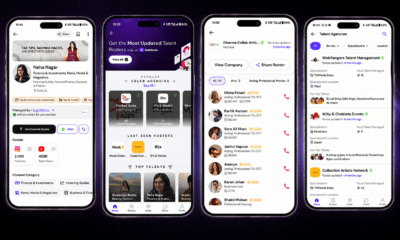
With Foam, managers organize and pitch talent to brands in one place, powered by storytelling formats built for today’s creator economy. The platform offers dynamic media kits, live-updating rosters, content feeds, and collaborative playlists that present talent in ways static files never could. Foam for Chrome brings this workflow directly into the environments where managers work, allowing them to capture and respond to opportunities instantly with trusted first-party data at their fingertips exactly when they need it.
We built Foam on the belief that great representation is an act of crafting, framing, and distribution, not just administration. When managers can tell sharper, data-informed stories and move faster, creators win, brands get more clarity, and the whole ecosystem becomes more efficient.
Our team uses a focused stack built around Boomerang for Gmail, Streak, Pipedrive, and Airtable. Boomerang handles email reminders, so follow-ups are automatic, and nothing falls through the cracks. Streak gives us mail merge tools and inbox-level contact history. Pipedrive is our home for deal and revenue tracking across the team. Airtable ties everything together, providing a client-facing look at open campaigns, deliverables, deadlines, and contract tracking. We chose this mix because it stays flexible as each manager builds their own workflow, but still gives leadership a unified view.
We’re also lucky to work closely with the team at Foam, the operating system for managing digital talent built by our parent company, Whalar Group. Foam pulls in real-time, certified metrics from Instagram, TikTok, YouTube, and Snap, gives managers AI-supported pitching and performance analysis, and surfaces the data needed to negotiate with confidence and match creators to opportunities. It replaces spreadsheets, screenshots, and decks.
Generally we are recommending Instantly for a simple GUI (Graphical User Interface) + inbox automation to prospect to thousand’s of contacts at a time + any platforms with a Meta suite integration are helpful for auto DM’s as well. Once recruited, generally Klaviyo comes in clutch for keeping folks on a sequence + on-going campaigns.
We keep our stack intentionally lean, because influencer marketing is fundamentally about people. We use Hubspot to store the CRM data, so our team can build long-term, relationship-driven partnerships. For discovery and mass outreach, we generally use Modash and Upfluence. Using a single system for discovery and outreach allows us to scale without losing personalization. Their biggest gap, in my view, is the lack of deeper CRM-style fields. Long-term relationship management needs more structure.
We use Zapier only for light automation. Campaign briefs and references are shared through personalized video walkthroughs or dedicated landing pages and Notion hubs, which significantly improves clarity and compliance.
For real-time communication, WhatsApp still performs best for quick takes, approvals, and fast feedback loops. It would be lovely to have a more mobile-friendly communication and content-approval tool built specifically for creators.
We use InfluenceFlow.io for managing creator contacts, outreach, and campaign communication. The biggest reason we got started was, honestly, because it’s free. We tested it out and liked the features we were using and grew from there.
Before that we were juggling Notion databases, scattered email threads, and spreadsheets to track who said what and when. The paid platforms didn’t feel like they improved upon those tools, so every time we tried to move over to one we always ended up going back.
We believe the biggest element missing in the space is pricing transparency. Too many tools hide costs behind “book a demo” walls and then quote huge fees and minimums. Brands and agencies need software that matches how we actually work – some months are heavy, some are light. The creator economy has grown up, but the tooling pricing models still assume everyone’s a Fortune 500 brand.
Notion and Google Sheets. For small teams, this combo is reliable, scalable, and familiar to many professionals, making it easier to onboard and train new collaborators. I love that Notion is a blank canvas adaptable to add value to almost any workflow, and its AI helps to jumpstart campaign and outreach copy without leaving the app.
For outreach, specifically, cold email tools like Smartlead or Instantly for volume, and LinkedIn for a quality personal touch. Cold email, however, is getting tougher every year. Inboxes are crowded, DIY setup and management are very technical and labor-intensive, agencies are expensive, and external variables can tank deliverability.
Hot take: AI-“personalized” outreach isn’t fooling anyone anymore (never did), and people are sick of AI slop. Having a presentable LinkedIn profile and enduring the grind of sliding into DMs manually, with a human touch, is the way to go for better results.
While most of the industry is obsessed with automation and identifying the perfect tool, we’re not. We’re still going against the tide from that point of view, and obsessing over relationships.
We work with influencer agencies to find the right people, but the real filter is chemistry and shared values. That’s what decides who we actually partner with, not a column in a dashboard or an influencer marketing tool.
What’s really missing right now is product-rooted authenticity. Too many collabs stay surface-level, because the creator has never actually lived with the product. Our approach at LearnWorlds is to identify influencers who are already our customers and invest in long-term brand ambassadors over one-off posts. If someone already uses LearnWorlds to power their business through elearning, I’d like to avoid handing them a script but rather turn up the volume on how they’re building their learning business.
We leverage platforms like Impact, Lefty, LTK, Klear, and Creator.co to help with the nitty-gritty of campaign execution (content submission and approval, contracting, payment deployment, form intakes for compliance), but an area we pride ourselves in is not getting locked into one particular platform and therefore not getting locked into the creators of one particular platform.
Creator discovery, when done only through platforms, has some drawbacks. Primarily, brands and clients miss out on fresh creators who are just connecting with audiences and the algorithm. Creators on platforms receive a plethora of invitations, increasing their cost and potentially decreasing their impact as audiences become fatigued by promotions.
In short, we recommend utilizing platforms for execution and potentially discovery, but not forgetting to search off-platform as well.
As a tech-driven creator business, we approached creator communication tools with very specific needs for timely and efficient communication, with the goal to reach creators where they are. This is why most of our tooling is internal and optimised for our own business experience and our own campaign needs. We looked around and didn’t find a strong, all-encompassing yet customisable tool that could effectively reach influencers via DMs and instant messages, so we went and built our own solution.
We currently use several tools to manage contacts, deal stages, and campaign communication.
We use a combination of Monday.com, Streak (CRM) and Airtable for all aspects. Monday for deal tracking. Streak is a Gmail plugin we use to our CRM. And for campaign tracking and account management, we build a custom Airtable with automations.
What’s lacking in the landscape? Many tools lack filtering by post to see brand partnerships and how those specific posts have performed.
There is opportunity to dive into more brand safety and filter by subject (religion, politics, hate speech) to see red flags and deal breakers.
Another opportunity to measure long-term brand equity through connecting brand channels to see the uplift in conversations and followers over time (We have to do this manually).
An ideal scenario would be for them to recommend you with influencers based on who you’ve worked with in the past and guide you around optimizations like channel and format mix. Iris is building a social intelligence tool that finally connects all organic and earned signals, eliminating reporting gaps and revealing what truly drives social performance.
What we use and what we look for? We recently switched to HypeAuditor because of their robust information on influencers and customer service.
What makes us want to choose a tool is the audience and engagement data. Seeing where the audience is and how they’re engaged to make sure we’re getting the best ROI (Return on Investment) with our target markets. The more specific this can be for interests and behaviors, the better.
The most important thing I can say after being in the creator economy for the last 20 years, is that the tools and tech stack needed for brands is different than that of agencies.
Given today’s economic climate, I am seeing many brands and agencies look for tech solutions that don’t require 12 month commitments.
For discovery and outreach needs – the AI agents within the partnrup.ai platform can be leveraged as a month-to-month option that is usage based and a more traditional SaaS (Software as a Service) model with 6 month licensing terms.
The biggest gap in the market that we believe we address, is having different tools for scaled “turnkey” micro campaigns and more elaborate project management and content collaboration tools for macro/mega campaigns that require a higher touch. Right now, we include this in all our AOR (Agency of Record) relationships – it saves time and ensures everyone is on the same page. Think about it like Monday.com for the creator economy.
What is missing? I’d say what is missing is an appreciation that there is a Tech Stack need and not a single tool that can do it all well. If the pricing is optimized for customers to be able to layer and integrate more technologies together, it would level up the work. Lets stop looking for unicorns and start thinking about systems. For instance, we let clients export data from partnrup.ai (audience insights, creator demographics and rates and other answers to recruitment questions) and then we import that into our project management suite called partnrup.co to manage project timelines, feedback and approvals and asset rights management.
We take a hybrid approach to creator discovery, combining our own proprietary technology with leading third-party platforms and deep talent relationships across management, agencies, and talent directly.
Standalone platforms are powerful, but the data they offer is typically limited to standardized metrics and they can’t capture cultural relevance or off-platform momentum.
By layering in first-party historical insights, deep understanding of culture and tastemakers and real-time feedback from our talent partners, we deliver smarter, more precise creator matchmaking for brands.
Cecilia Carloni, Interview Manager at Influence Weekly and writer for NetInfluencer. Coming from beautiful Argentina, Ceci has spent years chatting with big names in the influencer world, making friends and learning insider info along the way. When she’s not deep in interviews or writing, she's enjoying life with her two daughters. Ceci’s stories give a peek behind the curtain of influencer life, sharing the real and interesting tales from her many conversations with movers and shakers in the space.










Customer Relationship Management (CRM) tools, long used by sales and account teams to track relationships, automate follow-ups, and centralize communication, are becoming a growing point of tension in the creator economy.
As influencer marketing expands, many managers and agencies are discovering that traditional CRMs built for linear deal pipelines often fail to capture the nuance of creator relationships, dynamic content workflows, and the fragmented platforms where collaboration actually happens.
That gap raises a broader industry question: What tools should be used to manage influencer contacts, outreach, and campaign communication?
To examine how practitioners approach these decisions, we collected insights from 24 leaders across agencies, talent firms, creator platforms, and brands. Their responses show a market in transition where spreadsheet-driven teams, all-in-one platforms, and fully custom tech stacks coexist, each reflecting different philosophies about what the next generation of creator-economy infrastructure should look like.
Alexander Guerrero, Founder, NexTide
At NexTide™, we keep our creator CRM setup intentionally simple: a shared spreadsheet and a team that actually knows the people they work with. We’ve tested the polished platforms, but none of them reflect how creator relationships really operate. They’re built like traditional CRMs (rigid fields, artificial stages, automated touchpoints) when this world runs on nuance, timing, and context you only get from actually paying attention.
The spreadsheet forces clarity. It keeps us fast, scrappy, and focused on the only things that matter: who we’re talking to, what was promised, and how the relationship is growing. No system has ever outperformed that.
What’s missing today is any tool that understands creators as dynamic media entities, not “leads” in a pipeline. Until someone builds something that captures the intelligence behind audiences, behavior, and momentum, the simple approach honestly works better.
Chris J. Smith, Head of Agency, The Gold Studios
We don’t use creator-specific CRM software. We use Monday.com, which is highly effective for streamlining everything – from scouting talent to managing campaigns, delivery, QA, and contract tracking. Monday.com’s configurability is key. We’ve tailored it to track deals per creator, monitor campaign performance across platforms, and provide clear data on industry trends. It gives us the flexibility to build exactly what we need without being locked into creator-focused software that might not fit our workflow. What’s missing in the industry? Granular YouTube data. Most systems treat YouTube channels as one entity, but channels are becoming networks with multiple formats and series that perform differently. Brands need to evaluate specific formats and series performance, not just overall channel metrics. There’s no system that distinguishes viewership by format within a channel. That’s a gap the industry needs to address, especially as branded content shifts toward buying into specific series rather than channel-wide sponsorships. Until that exists, it’s still a manual process which needs to be streamlined.
Gerardo Sordo, CEO and Founder, BrandMe
Our team manages all creator outreach and communication through BrandMe, our proprietary platform built over more than a decade in the influencer-marketing space. Instead of stitching together CRMs, spreadsheets, and external outreach tools, we centralize everything: creator profiles, segmentation, workflow automation, briefing, approvals, and real-time reporting.
We chose this stack because off-the-shelf tools rarely understand the reality of high-volume creator operations. At BrandMe we’ve run campaigns with tens of thousands of nano and micro creators, so the system is designed for scale, transparency, and accuracy – not guesswork.
What’s still missing in the broader landscape? True AI-driven quality control. Most platforms talk about AI, but very few can actually evaluate content against brand guidelines, detect logo visibility issues, or flag do’s and don’ts before a post goes live. That’s where we’re pushing the next evolution.
Pieter Groenewald, CEO, Nfinity Influencer
Our team primarily relies on our influencer marketing platform capability that acts as a central CRM, allowing us to manage the full creator lifecycle, from discovery to payment. We employ a tiered, integrated stack to cover the entire spectrum of the creator economy. Webfluential, with its API (Application Programming Interface) integration into leading social media channels, handles our micro and macro-influencer collaborations, where scale and detailed performance data are key. Complementing this is theSALT, which focuses on highly authentic, consumer-generated content (CGC) and nano-influencer execution, leveraging deep trust at a community level.
We chose this integrated stack over siloed tools because it provides essential context, speed and efficiency. This holistic view, combining audience demographics, content performance, and communication history in one place, is vital to building long-term, authentic relationships that fuel the creator economy. This strategic deployment of macro and nano voices maximizes impact across the entire conversion funnel.
Jacob Albert, Director of Creator Network Division, 456 Growth Media
Comms channels in the creator economy are broken. Creators are overwhelmed across email, DMs, and proprietary apps – accelerated by social commerce – making cold outreach nearly impossible unless you can cut through the noise.
At 456 Growth, I lead our creator outreach, discovery, and business development teams. We deploy a wide mix of outbound channels to build new relationships, establish trust, and scale partnerships.
Our advantage is the managed-service trust we build with creators, then guiding them into our preferred communication ecosystem.
Every onboarded creator completes a dynamic survey, and we collect SMS for our Salesforce CRM. This allows us to automate opt-in SMS communication when email fails – protecting the last “sacred” channel while ensuring high responsiveness.
Our approach combines data-driven discovery, email automation, dynamic surveys, and community engagement. 456 Growth is one of the few full-stack influencer and social commerce agencies built fully on Salesforce as our core CRM.
Paula Bruno, CEO, Intuition Media Group
We’ve tested nearly every tool on the market, and there’s still no single platform that supports creator-economy workflows end-to-end. We use CreatorIQ for search, creator intelligence, and its CRM, and Google Sheets for shortlists and status updates – not because we love juggling platforms, but because nothing today captures both the data and the relationship layer. We avoid automated outreach and contracting tools, because creators don’t always open system emails, and some auto-contracts bake in broad usage rights that smaller influencers may not fully read, which erodes trust. AI search is improving, but it’s still limited without cultural nuance and brand-fit context; a creator isn’t a datapoint, they’re a creative partner. The next evolution won’t be “more analytics,” it will be platforms that understand who the creator is, what it’s like to work with them, and how they show up for partners over time – including collaboration history, professionalism, alignment, and creativity.
Sambhav Chadha, Co-Founder and Director, Augmentum Media
We use a range of tools for different purposes across the influencer recruitment journey. My favourite tools are Modash (for influencer discovery), Instantly (for mass email outreach) and Superfiliate (all-in-one platform). In particular we use Superfiliate across our largest scale campaigns where the added efficiency and performance from some of the features (automations especially) is huge.
What’s missing: customisation. 2 years ago I would have asked you for a truly all-in-one platform. A few platforms have answered that call. That being said, we still use Google Sheets across every client campaign (in conjunction with other tools like those mentioned above) to ensure super granular reporting. Most platforms also still underindex on segmentation (regions, niches etc) to ensure we can collect and utilise learnings across the program on an ongoing basis. Typically still up to us to calculate and report on these metrics internally.
Marc-André Dufresne, Content & Influencer Marketing Director, Partner, Substance
Our team uses Heylist as the central platform to manage the entire lifecycle of our nano influencer campaigns.
We chose Heylist over alternatives because it acts as a true “one-stop shop,” consolidating all essential steps: from searching and outreach to creators to contract management, simplified influencer payments, campaign results estimation, and detailed reporting. This comprehensive integration eliminates friction between disparate tools and ensures seamless, centralized communication.
Heylist’s core strength lies in its ability to quickly connect our brand with talented content creators, enabling the creation of impactful, engaging content that goes beyond ephemeral posts. This content makes a real difference in achieving our clients’ marketing objectives.
Opinion on the current gap: The current influencer landscape severely lacks a universal parameterization for measuring influence and clear rules to standardize agreements and contracts between influencers, agencies, and brands. Establishing this would create a more transparent and equitable environment for all stakeholders.
Becca Bahrke, CEO and Founder, Illuminate Social
At Illuminate, we built our proprietary system, Spark, because the current tool landscape simply doesn’t meet the needs of talent managers. Spark centralizes everything from contracts and outreach to campaign tracking and deliverable updates, giving creators true transparency into their pipelines. It blends the strengths of the tools we currently rely on: Streak for Gmail-based CRM and Airtable’s flexible data views, into one streamlined hub designed specifically for relationship-driven creator management.
While Spark has become an incredible resource for our talent, we’re still actively building toward a fully consolidated backend that gives managers a true one-stop platform. The reality is that while there are strong solutions on the brand side, there remains a major gap for manager-focused tooling. No single system seamlessly integrates deal flow, communication, workflows, and performance insights. That’s why we built Spark and why we’re constantly evolving it to grow alongside our team, our creators, and the industry.
Chris Alexander, Founder, prscnt
Our current workflow is a mix of standard software and a lot of custom AI that we have built because the existing tools in the space simply do not go far enough. We use Apollo for sequencing, HubSpot for deal tracking, Google Workspace for email, calendar and drive folders, and Slack for daily communication. The real engine is the custom AI layer we built at Prscnt. It handles creator outreach, rate guidance, negotiation support, contract analysis, and even pulls deal data into QuickBooks. We built these systems because nothing on the market supports creators or managers with the level of automation and intelligence required for the modern creator economy. We are taking that same infrastructure and turning it into creator direct tools so that creators can self manage at a professional agency level without needing to give twenty percent of everything they make forever.
Joe Yates, Founder, Somerce
We keep the stack tight because complexity slows campaigns down. Lark is our creator HQ. Every influencer we work with sits there with rates, GMV performance, engagement quality, red flags, and historic content. It’s fast, collaborative, and far easier to manage than a traditional CRM.
For outreach, we rely on Reacher to handle scalable inboxing and deliverability, then switch to manual personalised emails for creator conversion. Automation handles the volume. Humans handle the relationship.
Campaign communication runs through Slack, so decisions happen in real time. Each creator gets a Notion brief with assets, deadlines, payment terms, and shoot expectations, which eliminates repetitive questions. Brands get Monday.com dashboards that show who’s live, who’s converting, GMV (Gross Merchandise Value) generated, and what needs pushing.
We picked this stack because each tool excels at one thing. No clutter, no friction. Just a clean, fast workflow from discovery to outreach to activation to reporting.
Simon Moss, Chief Product Officer, Foam
Foam exists because talent representation has outgrown traditional CRMs. Modern talent managers and agencies aren’t just tracking contacts, they’re curating narratives, shaping demand, and building careers in real time. Foam gives managers a unified workspace to do that.
With Foam, managers organize and pitch talent to brands in one place, powered by storytelling formats built for today’s creator economy. The platform offers dynamic media kits, live-updating rosters, content feeds, and collaborative playlists that present talent in ways static files never could. Foam for Chrome brings this workflow directly into the environments where managers work, allowing them to capture and respond to opportunities instantly with trusted first-party data at their fingertips exactly when they need it.
We built Foam on the belief that great representation is an act of crafting, framing, and distribution, not just administration. When managers can tell sharper, data-informed stories and move faster, creators win, brands get more clarity, and the whole ecosystem becomes more efficient.
Megan Frantz, Partner, Sixteenth
Our team uses a focused stack built around Boomerang for Gmail, Streak, Pipedrive, and Airtable. Boomerang handles email reminders, so follow-ups are automatic, and nothing falls through the cracks. Streak gives us mail merge tools and inbox-level contact history. Pipedrive is our home for deal and revenue tracking across the team. Airtable ties everything together, providing a client-facing look at open campaigns, deliverables, deadlines, and contract tracking. We chose this mix because it stays flexible as each manager builds their own workflow, but still gives leadership a unified view.
We’re also lucky to work closely with the team at Foam, the operating system for managing digital talent built by our parent company, Whalar Group. Foam pulls in real-time, certified metrics from Instagram, TikTok, YouTube, and Snap, gives managers AI-supported pitching and performance analysis, and surfaces the data needed to negotiate with confidence and match creators to opportunities. It replaces spreadsheets, screenshots, and decks.
Kenyon Brown, Co-Founder and CEO, CreatorCommerce
Generally we are recommending Instantly for a simple GUI (Graphical User Interface) + inbox automation to prospect to thousand’s of contacts at a time + any platforms with a Meta suite integration are helpful for auto DM’s as well. Once recruited, generally Klaviyo comes in clutch for keeping folks on a sequence + on-going campaigns.
Olgu Uysal, Managing Partner, OH MEDYA
We keep our stack intentionally lean, because influencer marketing is fundamentally about people. We use Hubspot to store the CRM data, so our team can build long-term, relationship-driven partnerships. For discovery and mass outreach, we generally use Modash and Upfluence. Using a single system for discovery and outreach allows us to scale without losing personalization. Their biggest gap, in my view, is the lack of deeper CRM-style fields. Long-term relationship management needs more structure.
We use Zapier only for light automation. Campaign briefs and references are shared through personalized video walkthroughs or dedicated landing pages and Notion hubs, which significantly improves clarity and compliance.
For real-time communication, WhatsApp still performs best for quick takes, approvals, and fast feedback loops. It would be lovely to have a more mobile-friendly communication and content-approval tool built specifically for creators.
Seth Girsky, Founder, Word on the Block
We use InfluenceFlow.io for managing creator contacts, outreach, and campaign communication. The biggest reason we got started was, honestly, because it’s free. We tested it out and liked the features we were using and grew from there.
Before that we were juggling Notion databases, scattered email threads, and spreadsheets to track who said what and when. The paid platforms didn’t feel like they improved upon those tools, so every time we tried to move over to one we always ended up going back.
We believe the biggest element missing in the space is pricing transparency. Too many tools hide costs behind “book a demo” walls and then quote huge fees and minimums. Brands and agencies need software that matches how we actually work – some months are heavy, some are light. The creator economy has grown up, but the tooling pricing models still assume everyone’s a Fortune 500 brand.
Daniel Caldas, Founder, Caldas Ecom
Notion and Google Sheets. For small teams, this combo is reliable, scalable, and familiar to many professionals, making it easier to onboard and train new collaborators. I love that Notion is a blank canvas adaptable to add value to almost any workflow, and its AI helps to jumpstart campaign and outreach copy without leaving the app.
For outreach, specifically, cold email tools like Smartlead or Instantly for volume, and LinkedIn for a quality personal touch. Cold email, however, is getting tougher every year. Inboxes are crowded, DIY setup and management are very technical and labor-intensive, agencies are expensive, and external variables can tank deliverability.
Hot take: AI-“personalized” outreach isn’t fooling anyone anymore (never did), and people are sick of AI slop. Having a presentable LinkedIn profile and enduring the grind of sliding into DMs manually, with a human touch, is the way to go for better results.
Andreea-Aurora Constantin, Head of Brand Marketing & Communities, LearnWorlds
While most of the industry is obsessed with automation and identifying the perfect tool, we’re not. We’re still going against the tide from that point of view, and obsessing over relationships.
We work with influencer agencies to find the right people, but the real filter is chemistry and shared values. That’s what decides who we actually partner with, not a column in a dashboard or an influencer marketing tool.
What’s really missing right now is product-rooted authenticity. Too many collabs stay surface-level, because the creator has never actually lived with the product. Our approach at LearnWorlds is to identify influencers who are already our customers and invest in long-term brand ambassadors over one-off posts. If someone already uses LearnWorlds to power their business through elearning, I’d like to avoid handing them a script but rather turn up the volume on how they’re building their learning business.
Jason Yehuda Neuman, SVP of Influencer Marketing, PartnerCentric
We leverage platforms like Impact, Lefty, LTK, Klear, and Creator.co to help with the nitty-gritty of campaign execution (content submission and approval, contracting, payment deployment, form intakes for compliance), but an area we pride ourselves in is not getting locked into one particular platform and therefore not getting locked into the creators of one particular platform.
Creator discovery, when done only through platforms, has some drawbacks. Primarily, brands and clients miss out on fresh creators who are just connecting with audiences and the algorithm. Creators on platforms receive a plethora of invitations, increasing their cost and potentially decreasing their impact as audiences become fatigued by promotions.
In short, we recommend utilizing platforms for execution and potentially discovery, but not forgetting to search off-platform as well.
Victor Potrel, Executive, External Strategy, TheSoul Group
As a tech-driven creator business, we approached creator communication tools with very specific needs for timely and efficient communication, with the goal to reach creators where they are. This is why most of our tooling is internal and optimised for our own business experience and our own campaign needs. We looked around and didn’t find a strong, all-encompassing yet customisable tool that could effectively reach influencers via DMs and instant messages, so we went and built our own solution.
Evan Asano, Founder & President, CreatorX Agency
We currently use several tools to manage contacts, deal stages, and campaign communication.
We use a combination of Monday.com, Streak (CRM) and Airtable for all aspects. Monday for deal tracking. Streak is a Gmail plugin we use to our CRM. And for campaign tracking and account management, we build a custom Airtable with automations.
Amanda Sullivan, Associate Director of Social, Iris North America
What’s lacking in the landscape? Many tools lack filtering by post to see brand partnerships and how those specific posts have performed.
There is opportunity to dive into more brand safety and filter by subject (religion, politics, hate speech) to see red flags and deal breakers.
Another opportunity to measure long-term brand equity through connecting brand channels to see the uplift in conversations and followers over time (We have to do this manually).
An ideal scenario would be for them to recommend you with influencers based on who you’ve worked with in the past and guide you around optimizations like channel and format mix. Iris is building a social intelligence tool that finally connects all organic and earned signals, eliminating reporting gaps and revealing what truly drives social performance.
What we use and what we look for? We recently switched to HypeAuditor because of their robust information on influencers and customer service.
What makes us want to choose a tool is the audience and engagement data. Seeing where the audience is and how they’re engaged to make sure we’re getting the best ROI (Return on Investment) with our target markets. The more specific this can be for interests and behaviors, the better.
Jessica Thorpe, CEO, partnrUP
The most important thing I can say after being in the creator economy for the last 20 years, is that the tools and tech stack needed for brands is different than that of agencies.
Given today’s economic climate, I am seeing many brands and agencies look for tech solutions that don’t require 12 month commitments.
For discovery and outreach needs – the AI agents within the partnrup.ai platform can be leveraged as a month-to-month option that is usage based and a more traditional SaaS (Software as a Service) model with 6 month licensing terms.
The biggest gap in the market that we believe we address, is having different tools for scaled “turnkey” micro campaigns and more elaborate project management and content collaboration tools for macro/mega campaigns that require a higher touch. Right now, we include this in all our AOR (Agency of Record) relationships – it saves time and ensures everyone is on the same page. Think about it like Monday.com for the creator economy.
What is missing? I’d say what is missing is an appreciation that there is a Tech Stack need and not a single tool that can do it all well. If the pricing is optimized for customers to be able to layer and integrate more technologies together, it would level up the work. Lets stop looking for unicorns and start thinking about systems. For instance, we let clients export data from partnrup.ai (audience insights, creator demographics and rates and other answers to recruitment questions) and then we import that into our project management suite called partnrup.co to manage project timelines, feedback and approvals and asset rights management.
Melissa Wood, SVP, Brand Partnerships, Shorthand Studios
We take a hybrid approach to creator discovery, combining our own proprietary technology with leading third-party platforms and deep talent relationships across management, agencies, and talent directly.
Standalone platforms are powerful, but the data they offer is typically limited to standardized metrics and they can’t capture cultural relevance or off-platform momentum.
By layering in first-party historical insights, deep understanding of culture and tastemakers and real-time feedback from our talent partners, we deliver smarter, more precise creator matchmaking for brands.
Subscribe to Our Newsletter
Check Out Our Podcast