The Creator Economy talks about trust and fit. The market still pays for reach. A survey of 5,095 creators across 100 countries by Influencer Marketing operating system CreatorIQ shows the gap between what brands say they value and the metrics that actually correlate with creator income.
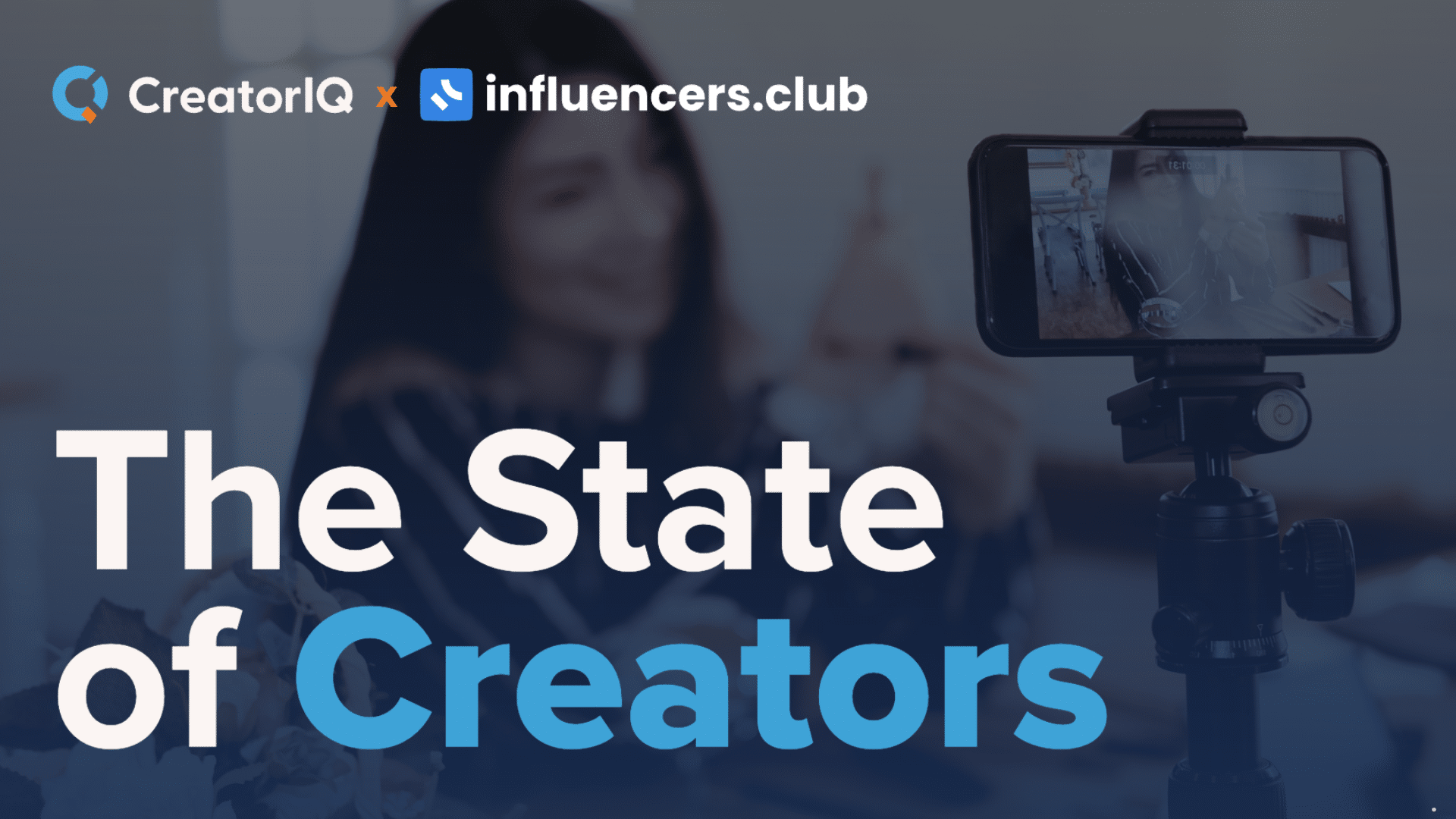
“The State of Creators,” published this month by CreatorIQ in partnership with Influencers.club, examines the Creator Economy from the creator’s side, covering income, platform choices, partnership preferences, and audience credibility.
Cherline Bazile, CreatorIQ’s Thought Leadership and Insights Lead and the report’s author, says that perspective has been systematically underrepresented. “If the Creator Economy centers creators, we should be keeping them in mind as we’re building strategies,” she says.
Jennifer Cho, CreatorIQ’s Chief Customer Officer, spent the months preceding the report’s release meeting with CreatorIQ customers across multiple markets. The company serves more than 1,300 brands and agencies globally. The pattern she encountered confirmed what the data would later show: brands wanted standardized creator pay guides and measurement playbooks. Jen’s response was consistent. “There is no playbook,” she says. “You’re dealing with human beings that are trying to build businesses all around the world at different maturity stages.”
Brands Say Fit Matters. The Market Still Pays for Follower Count.
When asked which factor matters most in selecting creator partners in CreatorIQ’s 2025-2026 “State of Creator Marketing” report, brands ranked fit first and follower count last. The State of Creators verified platform data tells a different story: follower and subscriber counts are the metrics most closely correlated with creator income across Instagram, YouTube, and TikTok.
Cherline has an explanation for why stated and revealed preferences diverge. Brand teams working with larger influencer budgets must justify spend to finance and strategy leadership in terms those leaders will accept without pushback. “Somebody who’s at the top and making large-scale strategy decisions may not understand, ‘Oh yeah, that’s good,’” she says of presenting engagement rate as a metric. Follower count requires less context and faces less internal resistance.
Jen frames the persistence of reach-based metrics as a maturation problem. Brands have cycled through measurement approaches, from likes and followers to clicks to conversions. With larger budgets now flowing into the channel and greater internal accountability attached, they need fit-for-purpose measurement frameworks that map to established media channels. “Follower counts are most visible, and therefore most defensible to the teams in charge of budgets,” she says. “So they haven’t evolved to really dig in and understand the nuance behind what measurement really looks like.”
The result is that Influencer Marketing managers negotiating creator pay with finance leadership default to the one number that needs the least explanation.
Brand Control Is Undermining the Value It Bought
Brands that bring larger budgets to Influencer Marketing tend to tighten creative briefs, a pattern Jen observes directly in client conversations. “Creators, in order to get those long-term deals or the larger paid activations, feel like they have to comply,” she says. “The whole reason that Influencer Marketing is working is also what some brands are trying to crush as they spend more money.”
A creator’s value rests on the trust built with a specific audience, and that trust depends on the creator’s voice remaining legible. Brands that over-brief get content that doesn’t perform the way they expect. The outliers that break this pattern are often smaller creators operating with fewer constraints. “I see an army of smaller creators having more viral content,” Jen says. “All of a sudden the CMO is asking: ‘Why did the mega-creator not really return?’ Because you overcontrolled that.”
Most Creators Still Earn Less Than $10,000
67% of creators surveyed earned under $10,000 in creator income in the past year. For 62%, content creation is not their primary income source. Those figures sit alongside a Creator Economy that industry estimates place at $250 billion globally.
A prior CreatorIQ study on creator compensation found income to creators grew 59% year over year, Cherline notes. Growth is happening, but it is not evenly distributed. The proportion of creators for whom content is their primary income has barely moved since 2022. “An industry that has been increasingly desired, but the proportion of people who can make it hasn’t really shifted,” she says.
Jen offers an explanation for where the headline growth numbers in Influencer Marketing spend are actually landing. “When we see these numbers – a 171% increase in Influencer Marketing budgets – what you’re not taking into account is that most marketing budgets are relatively finite for the large enterprise brand. The money has to come from somewhere.” Her reading: much of the growth reflects brands amplifying and repurposing creator content across paid media channels, not a proportional increase in direct creator compensation.
Creators Know What Builds Their Credibility. Brands Measure Something Else.
When the survey asked creators what signals trustworthiness in a fellow creator, the top response, cited by 25% of respondents, was a creator who acknowledges both the pros and cons of a product. Disclosing sponsored status landed near the bottom. Cherline says this reveals a dissonance in how trust is typically enforced in the industry. “A lot of laws about how creators can work with brands publicly rely on hashtag ad or different ad disclosures,” she says. “There’s a little bit of a dissonance where transparency isn’t necessarily the same thing as trustworthy from the creator’s point of view.”
What compliance requires and what credibility actually depends on are two different things, and that divergence echoes in how creator work is compensated. When asked in an open-text question what they most want brands to understand, creators’ top aggregated response was that creator content is real work. Jen connects this to how partnerships are typically structured. Brands rarely account for the editing time, audience expertise, and creative judgment that go into a piece of branded content, she says. “The pay doesn’t match up to that as it would in a more traditional job.”
The Brands That Invest in the Creator Middle Will Win More
Creators below that income threshold represent, in Jen’s framing, an underdeveloped partner pool. “If I help these creators go from $10,000 to a livable wage,” she says, “the hypothesis would be that they would be truly authentic partners to you. They would stay with you longer because they have a kind of appreciation for the fact that you’ve been able to support their transition.” She suggests brands look beyond one-off paid activations, incorporating smaller and mid-tier creators into product reviews, audience feedback sessions, and other forms of ongoing engagement.
Half of creators surveyed have launched or plan to launch their own brand. Cherline connects that ambition to a measurable shift in what creators want from brand relationships: financial compensation overtook growth opportunities as the top driver of partnership satisfaction, cited by 35% of respondents compared with 19% in the prior year. “We’re at an inflection point where even this pool of people who are motivated in theory by passion need real monetary value,” she says. “The money needs to speak in order for these creators to continue doing this job.”
Jen and Cherline expect the industry to adjust. Cherline argues it will happen out of necessity as brands discover they need a healthier, broader creator pipeline. Jen expects brands to learn through experience, watching content from smaller, less-constrained creators outperform more heavily managed activations. The recommendation both arrive at is treating creators as the small businesses they are, investing across maturity stages rather than concentrating spend on the most established names. “The more that you engage and invest in that dialogue with your creator community as a whole, across all levels,” Jen says, “the more winning your brand will be.”
Image source: CreatorIQ, Influencers.club The full report is available here
Cecilia Carloni, Interview Manager at Influence Weekly and writer for NetInfluencer. Coming from beautiful Argentina, Ceci has spent years chatting with big names in the influencer world, making friends and learning insider info along the way. When she’s not deep in interviews or writing, she's enjoying life with her two daughters. Ceci’s stories give a peek behind the curtain of influencer life, sharing the real and interesting tales from her many conversations with movers and shakers in the space.












The Creator Economy talks about trust and fit. The market still pays for reach. A survey of 5,095 creators across 100 countries by Influencer Marketing operating system CreatorIQ shows the gap between what brands say they value and the metrics that actually correlate with creator income.
“The State of Creators,” published this month by CreatorIQ in partnership with Influencers.club, examines the Creator Economy from the creator’s side, covering income, platform choices, partnership preferences, and audience credibility.
Cherline Bazile, CreatorIQ’s Thought Leadership and Insights Lead and the report’s author, says that perspective has been systematically underrepresented. “If the Creator Economy centers creators, we should be keeping them in mind as we’re building strategies,” she says.
Jennifer Cho, CreatorIQ’s Chief Customer Officer, spent the months preceding the report’s release meeting with CreatorIQ customers across multiple markets. The company serves more than 1,300 brands and agencies globally. The pattern she encountered confirmed what the data would later show: brands wanted standardized creator pay guides and measurement playbooks. Jen’s response was consistent. “There is no playbook,” she says. “You’re dealing with human beings that are trying to build businesses all around the world at different maturity stages.”
Brands Say Fit Matters. The Market Still Pays for Follower Count.
When asked which factor matters most in selecting creator partners in CreatorIQ’s 2025-2026 “State of Creator Marketing” report, brands ranked fit first and follower count last. The State of Creators verified platform data tells a different story: follower and subscriber counts are the metrics most closely correlated with creator income across Instagram, YouTube, and TikTok.
Cherline has an explanation for why stated and revealed preferences diverge. Brand teams working with larger influencer budgets must justify spend to finance and strategy leadership in terms those leaders will accept without pushback. “Somebody who’s at the top and making large-scale strategy decisions may not understand, ‘Oh yeah, that’s good,’” she says of presenting engagement rate as a metric. Follower count requires less context and faces less internal resistance.
Jen frames the persistence of reach-based metrics as a maturation problem. Brands have cycled through measurement approaches, from likes and followers to clicks to conversions. With larger budgets now flowing into the channel and greater internal accountability attached, they need fit-for-purpose measurement frameworks that map to established media channels. “Follower counts are most visible, and therefore most defensible to the teams in charge of budgets,” she says. “So they haven’t evolved to really dig in and understand the nuance behind what measurement really looks like.”
The result is that Influencer Marketing managers negotiating creator pay with finance leadership default to the one number that needs the least explanation.
Brand Control Is Undermining the Value It Bought
Brands that bring larger budgets to Influencer Marketing tend to tighten creative briefs, a pattern Jen observes directly in client conversations. “Creators, in order to get those long-term deals or the larger paid activations, feel like they have to comply,” she says. “The whole reason that Influencer Marketing is working is also what some brands are trying to crush as they spend more money.”
A creator’s value rests on the trust built with a specific audience, and that trust depends on the creator’s voice remaining legible. Brands that over-brief get content that doesn’t perform the way they expect. The outliers that break this pattern are often smaller creators operating with fewer constraints. “I see an army of smaller creators having more viral content,” Jen says. “All of a sudden the CMO is asking: ‘Why did the mega-creator not really return?’ Because you overcontrolled that.”
Most Creators Still Earn Less Than $10,000
67% of creators surveyed earned under $10,000 in creator income in the past year. For 62%, content creation is not their primary income source. Those figures sit alongside a Creator Economy that industry estimates place at $250 billion globally.
A prior CreatorIQ study on creator compensation found income to creators grew 59% year over year, Cherline notes. Growth is happening, but it is not evenly distributed. The proportion of creators for whom content is their primary income has barely moved since 2022. “An industry that has been increasingly desired, but the proportion of people who can make it hasn’t really shifted,” she says.
Jen offers an explanation for where the headline growth numbers in Influencer Marketing spend are actually landing. “When we see these numbers – a 171% increase in Influencer Marketing budgets – what you’re not taking into account is that most marketing budgets are relatively finite for the large enterprise brand. The money has to come from somewhere.” Her reading: much of the growth reflects brands amplifying and repurposing creator content across paid media channels, not a proportional increase in direct creator compensation.
Creators Know What Builds Their Credibility. Brands Measure Something Else.
When the survey asked creators what signals trustworthiness in a fellow creator, the top response, cited by 25% of respondents, was a creator who acknowledges both the pros and cons of a product. Disclosing sponsored status landed near the bottom. Cherline says this reveals a dissonance in how trust is typically enforced in the industry. “A lot of laws about how creators can work with brands publicly rely on hashtag ad or different ad disclosures,” she says. “There’s a little bit of a dissonance where transparency isn’t necessarily the same thing as trustworthy from the creator’s point of view.”
What compliance requires and what credibility actually depends on are two different things, and that divergence echoes in how creator work is compensated. When asked in an open-text question what they most want brands to understand, creators’ top aggregated response was that creator content is real work. Jen connects this to how partnerships are typically structured. Brands rarely account for the editing time, audience expertise, and creative judgment that go into a piece of branded content, she says. “The pay doesn’t match up to that as it would in a more traditional job.”
The Brands That Invest in the Creator Middle Will Win More
Creators below that income threshold represent, in Jen’s framing, an underdeveloped partner pool. “If I help these creators go from $10,000 to a livable wage,” she says, “the hypothesis would be that they would be truly authentic partners to you. They would stay with you longer because they have a kind of appreciation for the fact that you’ve been able to support their transition.” She suggests brands look beyond one-off paid activations, incorporating smaller and mid-tier creators into product reviews, audience feedback sessions, and other forms of ongoing engagement.
Half of creators surveyed have launched or plan to launch their own brand. Cherline connects that ambition to a measurable shift in what creators want from brand relationships: financial compensation overtook growth opportunities as the top driver of partnership satisfaction, cited by 35% of respondents compared with 19% in the prior year. “We’re at an inflection point where even this pool of people who are motivated in theory by passion need real monetary value,” she says. “The money needs to speak in order for these creators to continue doing this job.”
Jen and Cherline expect the industry to adjust. Cherline argues it will happen out of necessity as brands discover they need a healthier, broader creator pipeline. Jen expects brands to learn through experience, watching content from smaller, less-constrained creators outperform more heavily managed activations. The recommendation both arrive at is treating creators as the small businesses they are, investing across maturity stages rather than concentrating spend on the most established names. “The more that you engage and invest in that dialogue with your creator community as a whole, across all levels,” Jen says, “the more winning your brand will be.”
Image source: CreatorIQ, Influencers.club
The full report is available here
Subscribe to Our Newsletter
Check Out Our Podcast