




Influencer
The ‘Big Sister of the Internet’ on Why Saying the Quiet Part Out Loud Is Actually a Business Strategy

Midway through a pitch to the president of unscripted development at Hulu, Kelsey Darragh started coughing. Something had gone down her throat, right in the middle of the biggest pitch meeting of her career. Her eyes watered. Her makeup ran. “This is the worst thing that’s happened to me in my entire life,” she recalls thinking.
She got the meeting anyway. What saved it, she says, was the same thing that has driven 15 years of content, two books, a documentary, and a podcast: She was simply herself. She called out the awkward moment instead of trying to pretend it wasn’t happening.
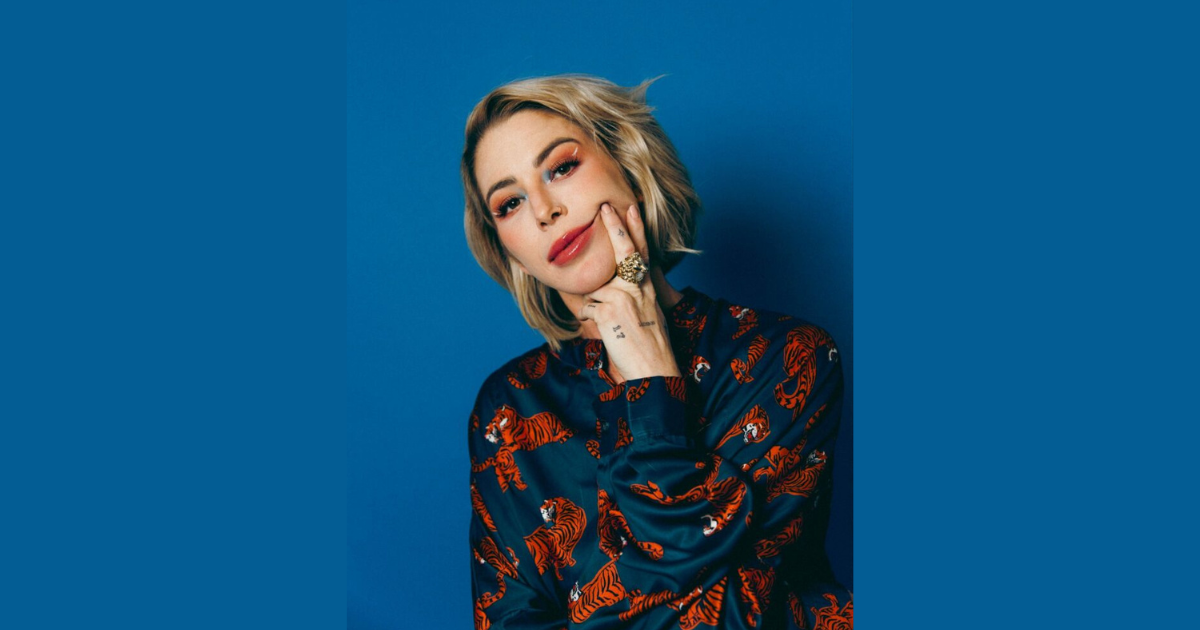
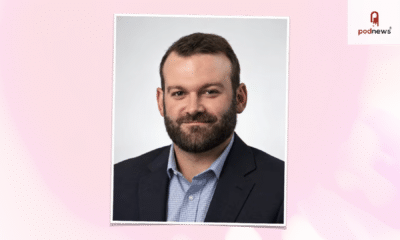
Kelsey is a Los Angeles-based creator, filmmaker, and author whose platform is built less on aspiration than admission. She describes her content identity as “sort of, like, big sister of the Internet. Been there, done that, here to live, to tell the tale.” Over 250 million people have watched her anxiety videos.
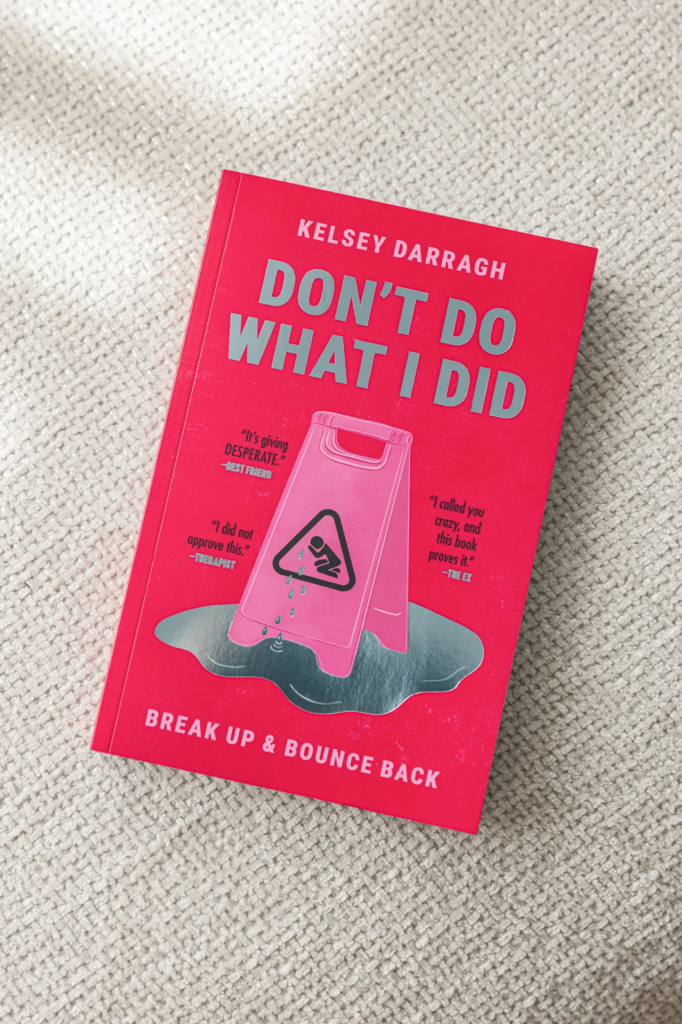
Her debut book, “Don’t F*cking Panic,” sold more than 50,000 copies and reached Amazon’s top ten mental health bestsellers. Her restorative justice documentary, “The Limits of Forgiveness,” took four years to complete. Her second book, “Don’t Do What I Did: Break Up & Bounce Back,” arrives this month.
With 800,000 followers on TikTok and 374,000 on Instagram, Kelsey attributes her growth to specificity. “I am not everyone’s cup of tea, and I know I’m not going to be,” she says. “If I tried to make brand-safe, brand-friendly content 24/7, I would be very poor.”
BuzzFeed and the Education of an Identity-Driven Creator
Before Kelsey had a personal brand, she had BuzzFeed. She joined in 2015 as a video fellow and spent six years there, eventually working as a development partner and producer. The practical skills she gained were secondary to something less quantifiable: the license to be unfiltered on camera.
“People used to joke that there was always a different identity,” she says of BuzzFeed’s editorial culture. “Like they checked every box. Feminist, Black, disabled, ADHD. I was a very loud, no filter feminist pro sex, pro-non-traditional relationships with a glaring, gaping wound of mental health struggles on my chest. And they really encouraged us to lean into that.”
For Kelsey, the timing was formative. BuzzFeed’s digital-first environment predated the niche categories that now sort the Creator Economy. “There weren’t really like TikTokers or pranksters like that. All of that was just starting,” she says. “We really got to choose our own adventure of what kind of creator we wanted to become.”
The result was an identity-driven practice she has never had to manufacture. “Identity content was something I learned very early that I think set me up for success because I was never trying to emulate somebody else, a different creator.”
The Book as a Content System, Not a Launch Moment
The mental health turn started with a top-down stop-motion video Kelsey made at BuzzFeed. She deliberately kept her face off camera. Audiences recognized her voice anyway. The video went viral. A book proposal followed, and almost simultaneously, an author at Thought Catalog sent a DM asking whether she had ever considered writing about mental health.
“It was like a total sign from the universe that it needed to happen,” she says.
“Don’t F*cking Panic,” published during the COVID-19 pandemic without a conventional PR rollout, sold over 50,000 copies largely through social media marketing, according to Kelsey. She chose Thought Catalog specifically because the publisher understood digital distribution. “They lean into a certain audience, and they know how to make digital content so well,” she says.
What followed was not just a book deal but a system. “How does my content supplement pushing the book? How does my book supplement me as a creator? It’s so all intertwined,” she says. After the first book was published, she tracked which chapters were generating the most direct messages and built subsequent content around those subjects.
With the new book, she reversed the approach: teasing adjacent stories online to drive readers toward the fuller version. “I always am like, ‘You won’t believe this.’ And then there are even more unbelievable things when you get the book.”
The retreats she launched off the first book applied the same logic, extending its framework into an in-person experience at a price point that required the value to be self-evident. “If we’re going to price it at a certain point, it has to be so frickin worth it to spend thousands of dollars,” she says.
The Year Brand Deals Disappeared
In 2024, Kelsey publicly discussed her abortion. Brand revenue dropped sharply within months. “I saw that in real time because my revenue stream tanked six months after,” she says. “I was like, ‘What are these brands doing? They say one thing, but they don’t actually support another.’”
Her response was not to recalibrate her voice. It was to fall back on what she had already built. Dog fostering content she had been producing independently filled the gap while brand interest recovered. “I didn’t really need the brand deals at that point, where I could just make the stuff I wanted to make until things got back to normal again,” she says. “That’s the game of being a content creator. Sometimes you’re living paycheck to paycheck, sometimes you’re sitting pretty.”
The episode sharpened her filter for future partnerships. The first question she now asks about any potential deal is whether she can actually sound like herself in it. Script control tight enough to change the way she writes her own captions is, by her standard, disqualifying. “Everyone’s gonna know this is an ad,” she says. “So let me be me.”
Her merchandise follows the same logic. A collaboration with designer Freddy Tyler Paul produced a shirt reading “don’t talk to me until I’ve had my Lexapro laced iced coffee.” A hoodie bundled with the new book is labeled “this is my crying hoodie.” The purpose is not aesthetics but belonging. “I could look at that shirt, and I’m like, ‘I want to be friends with that girl.’”
What Four Years of Rejection Built
While her content business scaled, Kelsey spent four years trying to get a documentary made that no studio wanted to finance. “The Limits of Forgiveness,” centered on a survivor of sexual assault who chose not to prosecute her attacker, began as a podcast conversation that reoriented how Kelsey thought about justice entirely.
“When I spoke to her an hour later, everything I had thought about what justice meant and the criminal justice system blew my mind,” she says.
Agents sent the pitch to networks. Rejections came back based on misreads of the premise. “They said, ‘We’re not getting good feedback because they think it’s just the story about a rapist getting away with rape,’” she says. “Like, you didn’t even read the whole point of this.” She made a short film, entered the festival circuit, won awards, and eventually secured funding from Patreon’s streaming platform for a feature. At one point, the project had been sold, but the distribution platform was cancelled.
The experience exposed a structural tension Kelsey encounters in every traditional media room she enters. Creators operate with real-time audience intelligence that studio-mandated systems are not built to process. “We can see trends coming way before they can, and we have this relationship and community that we’re already tapped into,” she says. “I do wish that there was a little bit more trust and that we were just seen as a little bit more valuable of an asset.”
The documentary has since premiered and is returning to the festival circuit. Kelsey believes its real reach will come through social. “I think social media has the power to change laws with this and spread information and change people’s lives,” she says.
Selling Community, Not a Cure
The mental health content space carries a specific commercial trap: it rewards relatability but does not always reward honesty about what content can actually deliver. Kelsey has watched others in the niche sell outcomes their platforms cannot produce. “It can get dangerous in the mental health space where people are selling a cure or just doing it for money,” she says. “There’s usually learning more about management.”
Her own business has been built around the opposite premise. After 15 years online, through viral moments and revenue crises and a documentary that took four years to reach an audience, the through line is consistent. She does not promise resolution. She builds a place for people to keep working through it.
The book that launched the business established that principle. The retreats, the merch, the podcast, and the film that followed have each extended it.
“I don’t have all the answers,” Kelsey says, “but I have a space where we can talk and try to figure out the answers.”
Subscribe to Our Newsletter
Check Out Our Podcast