




Platform
Spotify For Creators Is Quietly Rebuilding The YouTube Playbook For Podcasts

Spotify for Creators, the rebranded successor to Anchor and Spotify for Podcasters, is often framed as a free hosting and distribution tool for podcasters. In practice, the platform reflects a broader strategic shift: Spotify is no longer positioning podcasting as open infrastructure, but as a behavior-driven, platform-native media system increasingly modeled on YouTube’s creator flywheel.
The product offers free, unlimited hosting for both audio and video podcasts, integrated recording tools, native audience engagement features, and built-in monetization. Taken together, those capabilities signal that Spotify’s ambitions extend beyond simplifying podcast publishing.
The company is assembling a closed-loop creator environment designed to capture attention, engagement signals, and monetization activity directly inside its app.
From Hosting Tool to Creator Operating System
Spotify for Creators provides creators with unlimited hosting for audio and video episodes on Spotify’s infrastructure, with no upfront fees. Creators can launch new shows or migrate existing podcasts by redirecting RSS (Really Simple Syndication) feeds while retaining their back catalog and followers. Audio-only, video-only, or mixed formats can coexist within a single show.
The platform’s production workflow has shifted decisively toward desktop and web-based creation. Spotify has integrated Riverside (the company’s browser-based platform for recording, editing, and publishing podcasts) directly into the Spotify for Creators dashboard, enabling browser-based recording for up to 10 participants, with local audio and video capture, support for 4K video, and 48 kHz audio. Once recorded, episodes can be published directly back into Spotify for Creators without manual file transfers.
This approach removes much of the technical friction that historically pushed creators toward third-party tools. Episode drafts, scheduling, metadata management, chapters, transcripts, trailers, and previews are all handled within a single dashboard. While creators can still upload pre-recorded files, the default workflow increasingly encourages staying inside Spotify’s ecosystem from recording through publication.
The trajectory mirrors other major platforms. “YouTube spent 2007 to 2012 building the same infrastructure. Free hosting, native analytics, integrated monetization. Once creators depended on the platform for distribution and revenue, YouTube controlled discovery,” says Nii Ahene, Publisher of Net Influencer. “Spotify’s following that exact playbook. The RSS support is vestigial. Real growth happens inside their app now.”
Distribution Remains Open, With Caveats
Spotify for Creators automatically publishes hosted shows to Spotify, where they become eligible for discovery across the platform’s podcast surfaces. After a show’s first episode goes live, creators can enable RSS distribution to other listening platforms, including Apple Podcasts, from the same dashboard.
On paper, this preserves podcasting’s open distribution model. In practice, Spotify’s most meaningful discovery opportunities remain native. Episodes surface across Spotify’s Home recommendations, Following feed, search results, browse pages, and algorithmic recommendation units, though podcast discovery still competes with music and other audio formats inside Spotify’s broader recommendation system.
The company reports reaching more than 700 million users across over 180 markets, giving Spotify-hosted shows access to one of the largest global listening audiences.
“Podcasters have to decide whether they’re building for portability or for platform optimization. RSS distribution preserves independence but limits access to Spotify’s discovery tools and monetization. Going all-in on Spotify maximizes those features but creates platform dependency,” says Ahene. “Most creators will try to split the difference and end up optimizing for neither.”
Engagement Moves In-Feed
One of the clearest departures from traditional podcasting is Spotify’s emphasis on native engagement. Spotify for Creators enables comment threads directly on episode pages within the Spotify app. Creators can read, like, and reply to listener comments from the dashboard or mobile app, using emoji reactions to encourage participation.
Interactive features extend beyond comments. Creators can attach polls and Q&A prompts to episodes to invite real-time listener feedback. Chapters allow audiences to navigate episodes more easily, particularly for video content, while trailers and previews help contextualize shows and individual episodes.
These features pull community interaction back into the listening environment. Historically, podcasters relied on external platforms (Discord, Instagram, X, or YouTube) for audience engagement. Spotify’s approach centralizes those interactions, generating engagement signals that feed directly into recommendation and discovery systems.
Video as a Strategic Pivot
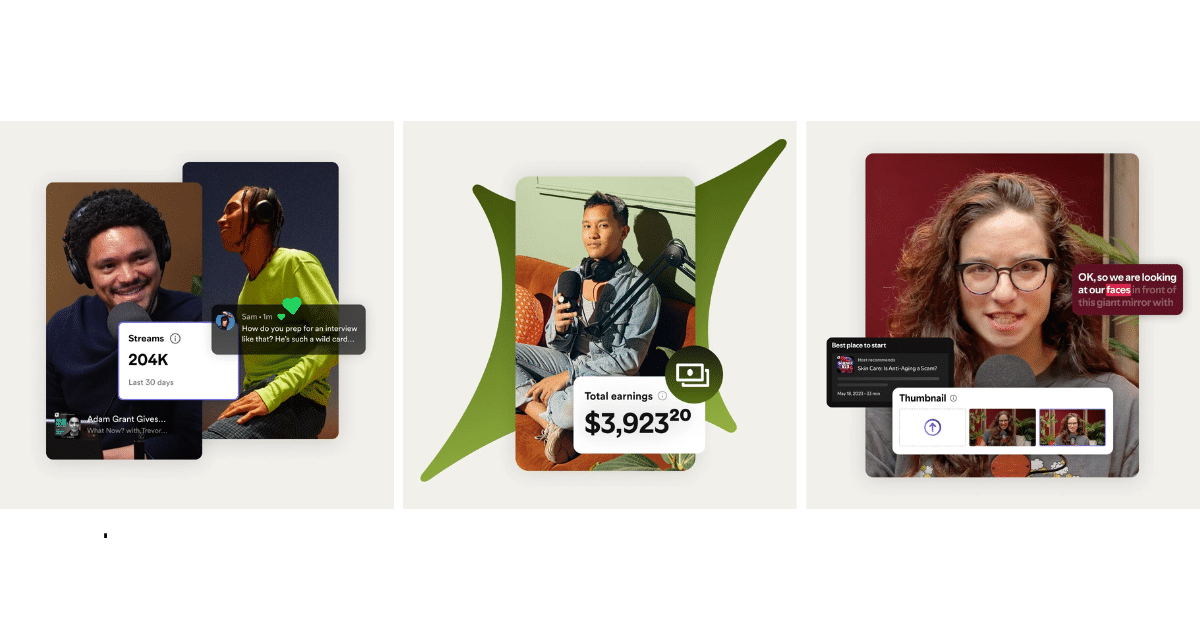
Spotify now supports full-length video podcasts with direct hosting handled by the platform. Video episodes are natively available in the app, with thumbnails, chapter markers, and navigation controls. Creators can also upload short-form video clips linked to full episodes, designed to promote content within Spotify’s interface.
This shift brings Spotify closer to YouTube’s hybrid long-form and short-form ecosystem. Video content produces richer engagement data and creates more opportunities for discovery and monetization. While Spotify continues to support audio-only formats, its product development increasingly treats video as a core pillar rather than a supplemental feature.
“Video hosting isn’t just feature parity with YouTube. It’s data acquisition. Video generates richer behavioral signals than audio. Watch time, skip patterns, thumbnail clicks, chapter navigation,” explains Ahene. “Spotify needs that data to compete in algorithmic recommendation. Audio-only podcasts get distributed, but video content gets the discovery investment.”
Analytics Designed for Behavior, Not Just Downloads
Spotify for Creators provides real-time analytics across shows and episodes, including streams, plays, listener counts, and follower growth. Retention metrics highlight listener drop-off patterns within episodes, offering insight into content performance beyond raw download totals.
Audience insights include demographic breakdowns by age, gender, and location. Discovery analytics show how listeners find episodes through search, browse, editorial playlists, algorithmic recommendations, or direct access. Episode-level impression data reveals where content surfaces inside the Spotify app.
The platform also sends notifications for trending episodes, chart entries, and spikes in fan engagement tied to comments and polls. These feedback loops encourage creators to optimize not just for audience size, but for sustained interaction.
Monetization as Eligibility, Not Entitlement
Spotify’s monetization stack reflects another shift away from traditional podcast economics. Through the Spotify Partner Program, eligible creators hosting on Spotify for Creators can earn revenue from advertising on audio and video podcasts, as well as from Premium subscriber consumption of ad-free video content.
Eligibility depends on factors such as audience size, geography, and hosting status, so it is not universally available. Paid podcast subscriptions allow creators to offer ad-free episodes or exclusive content directly within the Spotify app, with Spotify managing subscriber access and payouts. Listener support and donation features from the Anchor era remain available in some markets.
“Eligibility-based monetization shifts power from creators to platforms. You’re not selling ads against your audience anymore. You’re qualifying for platform revenue sharing based on criteria Spotify controls,” notes Nii Ahene, a creator economy analyst. “That’s fundamentally different from traditional podcast advertising where creators own sponsor relationships and set their own rates.”
Mobile Management and Platform Boundaries
Spotify for Creators’ mobile app for iOS and Android lets creators monitor performance, view analytics, manage comments, and receive notifications on the go. Multiple shows can be managed under a single account, with control over metadata, artwork, and presentation inside Spotify.
At the same time, Spotify maintains clear boundaries between creator types. Spotify for Creators operates separately from Spotify for Artists, which offers music-specific tools such as playlist pitching, Canvas, and Marquee. Feature availability varies by region and by whether shows are hosted directly on Spotify or only claimed via RSS.
Some earlier Anchor-era mobile recording and editing tools have been deprecated, signaling a strategic shift toward higher-quality production workflows centered on Riverside and desktop environments.
A Platform Strategy in Disguise
Spotify for Creators still supports RSS and cross-platform distribution, preserving the appearance of openness. But the platform increasingly rewards creators who adopt Spotify-native tools, formats, and engagement features.
Hosting, recording, engagement, analytics, discovery, and monetization now form a single system. The more creators participate in that system, the more data Spotify captures, and the more leverage it gains over discovery and revenue flows.
“Every major creator platform follows the same progression. Start with free tools and open distribution. Build creator dependency. Introduce eligibility-based monetization,” says Ahene. “YouTube did it with Partner Program requirements. TikTok’s doing it with Creator Fund restrictions. Spotify’s monetization criteria follow the same pattern. Once the platform controls discovery, they control who gets paid.”
For creators, agencies, and podcast networks, Spotify for Creators represents more than a free hosting solution. It reflects a broader realignment of podcasting toward platform-weighted performance, where in-app behavior matters as much as audience size.
What began as infrastructure now functions as an operating system, and Spotify appears intent on making itself the primary surface where podcast audiences are built, engaged, and monetized.
Checkout Our Latest Podcast