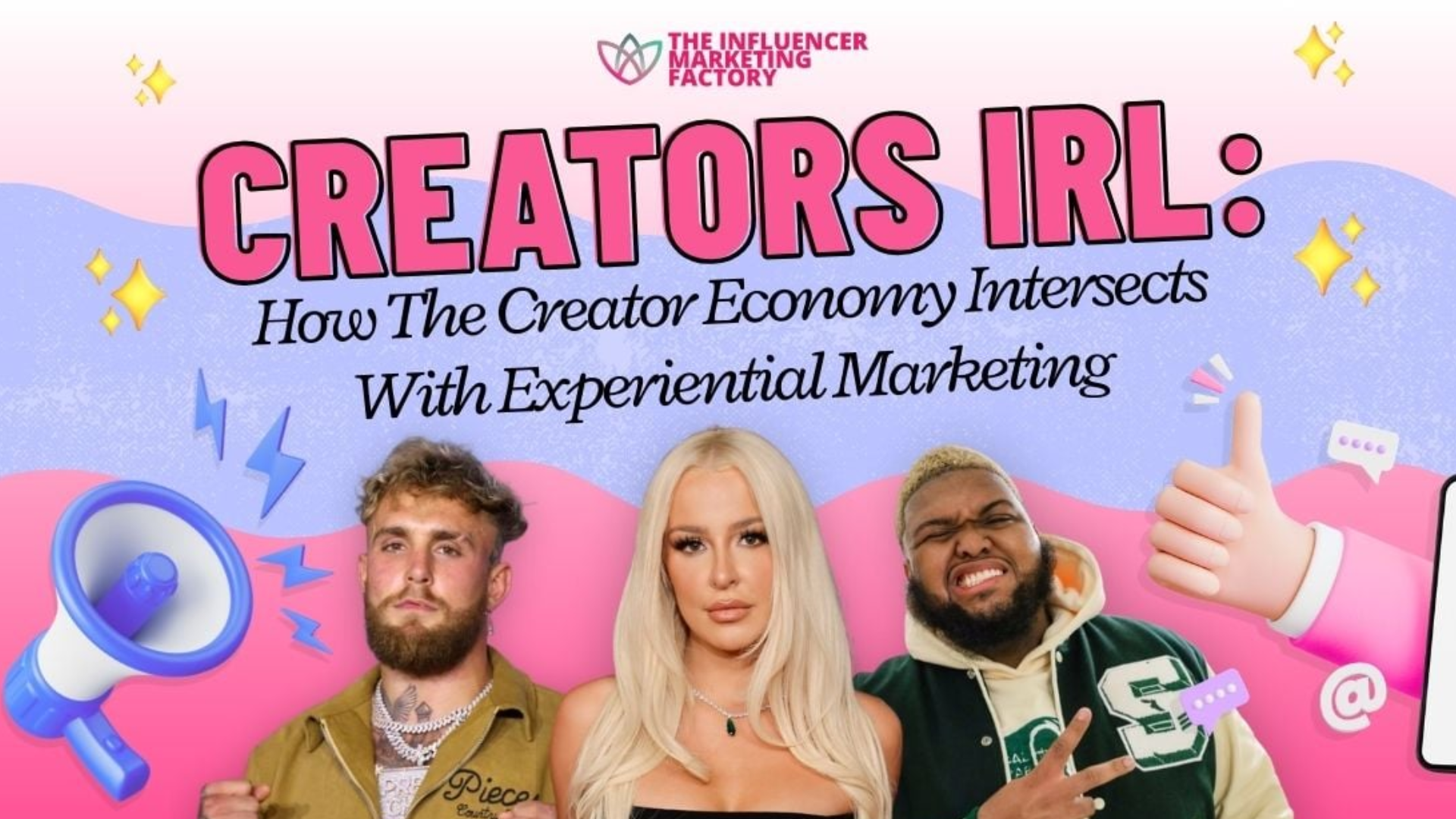
The creator economy continues its expansion beyond digital platforms into real-world experiences, according to a new report from The Influencer Marketing Factory.
StubHub data cited in the report indicates that influencers, podcasters, and authors collectively sold 500% more tickets for events in 2025 compared to 2024, with creator event tickets priced approximately 40% lower than those for traditional live entertainment. Meanwhile, the EventTrack 2025 Report reveals that more than 74% of Fortune 1000 marketers plan to increase their event budgets this year, signaling corporate recognition of the value of experiential marketing.
Consumer Demand Drives Trend
The Influencer Marketing Factory’s survey of 1,000 U.S. respondents ages 18-65 demonstrates substantial consumer interest in creator-led experiences:
41% of U.S. social media users report attending at least one in-person influencer event in the past year
Among non-attendees, 34% express definite interest in future events, while another 33% indicate potential interest
Meet-and-greets rank as the most desired format, followed by product launches and workshops
46% of respondents report excitement about creator IRL events
Most consumers consider $10-50 the appropriate price range for events such as sporting competitions, workshops, and meet-and-greets
Creator Event Categories Gaining Traction
The report identifies several categories of in-person creator events showing market traction:
Live Podcast Recordings: Podcast tours represent a growing trend in both the creator economy and live entertainment. Tana Mongeau’s Cancelled Live tour with Brooke Schofield delivered high returns through merchandise and ticket sales.
Nationwide and Global Tours: Creators expand their reach through touring events featuring live challenges, comedy shows, and performances. Comedian Druski’s international Coulda Fest Tour includes artists Soulja Boy, BigXthaPlug, Young M.A., and Snoop Dogg.
Community Pop-Up Events: Creators build relationships through localized gatherings. Examples include Lydia Keating’s Good Story Run Club, which combines fitness with storytelling; Colleen Yu’s Let’s Ripple creative hackathons, partnering with brands like Notion and BetterHelp; and artist Karo’s planned NYC gallery workshops.
Influencer-Founded Product Launches: Teen creator Salish Matter’s skincare line, Sincerely Yours, launched with a pop-up event at The American Dream Mall that attracted 87,000 fans, exceeding the venue’s 10,000-person capacity.
Creator Sporting Events: Jake Paul’s upcoming boxing match against Gervonta Davis will take place at Atlanta’s State Farm Arena, with the event streaming globally on Netflix. The Sidemen’s charity soccer match in March filled Wembley Stadium with 90,000 attendees while drawing 14 million YouTube viewers.
Value for Brands and Creators
The report identifies three primary benefits driving the trend:
Deeper Fan Engagement: The Influencer Marketing Hub reports community-building accounts for 46.9% of mentions in industry discussions, indicating a shift toward value-driven relationships. In-person experiences foster trust and a sense of belonging that extends beyond digital interactions.
Content Generation Pipeline: Events create opportunities for user-generated content (UGC), which extends reach. Katherine Miller, Director of Social Media at Hot Topic, tells Digiday that creator activations are a “growing focus” generating both metrics and user content that demonstrates impact.
Expanded Sponsorship Value: Live events offer unique promotional opportunities for brands. Dude Perfect CEO Andrew Yaffe explains to Digiday: “The repeated exposure and the depth of emotion you get at a live event is an asset that we’re lucky to have at our disposal.”
Best Practices for Implementation
The report outlines five recommended practices for brands implementing experiential influencer marketing:
Co-create with creators for authentic experiences that resonate with audiences
Design events for shareability with aesthetic displays and interactive stations
Create immersive, multi-sensory moments like OLIPOP’s Orange Cream Drive-Thru and Sol de Janeiro’s Coachella activation
Tap into niche communities through hyper-local events with micro-influencers
Develop omnichannel strategies that extend content lifecycle through livestreams, behind-the-scenes content, and recap media.
According to Forbes data cited in the report, more than 95% of Gen Z and Millennials express interest in transforming online interactions into real-world experiences, with 84% of event attendees forming new friendships and 45% reporting a strengthened “sense of self” through these experiences.
Image credit: The Influencer Marketing Factory Read the full report here
David Adler is an entrepreneur and freelance blog post writer who enjoys writing about business, entrepreneurship, travel and the influencer marketing space.









The creator economy continues its expansion beyond digital platforms into real-world experiences, according to a new report from The Influencer Marketing Factory.
StubHub data cited in the report indicates that influencers, podcasters, and authors collectively sold 500% more tickets for events in 2025 compared to 2024, with creator event tickets priced approximately 40% lower than those for traditional live entertainment. Meanwhile, the EventTrack 2025 Report reveals that more than 74% of Fortune 1000 marketers plan to increase their event budgets this year, signaling corporate recognition of the value of experiential marketing.
Consumer Demand Drives Trend
The Influencer Marketing Factory’s survey of 1,000 U.S. respondents ages 18-65 demonstrates substantial consumer interest in creator-led experiences:
Creator Event Categories Gaining Traction
The report identifies several categories of in-person creator events showing market traction:
Live Podcast Recordings: Podcast tours represent a growing trend in both the creator economy and live entertainment. Tana Mongeau’s Cancelled Live tour with Brooke Schofield delivered high returns through merchandise and ticket sales.
Nationwide and Global Tours: Creators expand their reach through touring events featuring live challenges, comedy shows, and performances. Comedian Druski’s international Coulda Fest Tour includes artists Soulja Boy, BigXthaPlug, Young M.A., and Snoop Dogg.
Community Pop-Up Events: Creators build relationships through localized gatherings. Examples include Lydia Keating’s Good Story Run Club, which combines fitness with storytelling; Colleen Yu’s Let’s Ripple creative hackathons, partnering with brands like Notion and BetterHelp; and artist Karo’s planned NYC gallery workshops.
Influencer-Founded Product Launches: Teen creator Salish Matter’s skincare line, Sincerely Yours, launched with a pop-up event at The American Dream Mall that attracted 87,000 fans, exceeding the venue’s 10,000-person capacity.
Creator Sporting Events: Jake Paul’s upcoming boxing match against Gervonta Davis will take place at Atlanta’s State Farm Arena, with the event streaming globally on Netflix. The Sidemen’s charity soccer match in March filled Wembley Stadium with 90,000 attendees while drawing 14 million YouTube viewers.
Value for Brands and Creators
The report identifies three primary benefits driving the trend:
Deeper Fan Engagement: The Influencer Marketing Hub reports community-building accounts for 46.9% of mentions in industry discussions, indicating a shift toward value-driven relationships. In-person experiences foster trust and a sense of belonging that extends beyond digital interactions.
Content Generation Pipeline: Events create opportunities for user-generated content (UGC), which extends reach. Katherine Miller, Director of Social Media at Hot Topic, tells Digiday that creator activations are a “growing focus” generating both metrics and user content that demonstrates impact.
Expanded Sponsorship Value: Live events offer unique promotional opportunities for brands. Dude Perfect CEO Andrew Yaffe explains to Digiday: “The repeated exposure and the depth of emotion you get at a live event is an asset that we’re lucky to have at our disposal.”
Best Practices for Implementation
The report outlines five recommended practices for brands implementing experiential influencer marketing:
According to Forbes data cited in the report, more than 95% of Gen Z and Millennials express interest in transforming online interactions into real-world experiences, with 84% of event attendees forming new friendships and 45% reporting a strengthened “sense of self” through these experiences.
Image credit: The Influencer Marketing Factory
Read the full report here