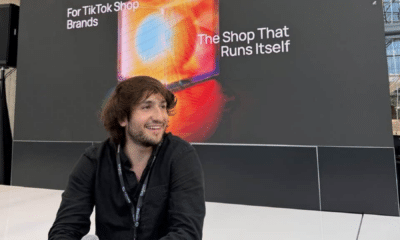
OfferLab is built on a wager that a direct-to-consumer brand can find new customers more cheaply through a complementary brand’s audience than through another Meta ad. The Los Angeles-based company lets two brands sell a co-curated bundle from their own storefronts and share the cost of every buyer they win.
The Meta comparison comes from Sean Gartland, OfferLab’s co-founder and Chief Product Officer. Before OfferLab, he ran product at ecommerce accelerator Demand.io, after product and design roles at Rotten Tomatoes and ESPN, and the problem he kept hitting was discovery. Shoppers take buying inspiration from social media, he explains, but a brand that wanted to be curated next to others had to join a marketplace such as Amazon, Etsy, or eBay and give up “basically all of your margin.”
OfferLab was his answer. “I always say that the best thing that brands ever do is collabs,” Sean says. “It’s the stuff that their audience loves; it’s the stuff that creators love.”
Collabs are also hard to execute. The company began by serving coaches and course sellers before shifting to D2C brands that sell physical products and the larger creators who promote them. Sean says those brands already invest millions of dollars in collaborations that can take 9 to 12 months of legal review, co-warehousing, and manufacturing work. OfferLab’s pitch is that the same partnership can launch as a bundle without that overhead.
Bundles Let Brands Sell a Routine They Don’t Make
A beauty brand specializing in lip products shows how that works. Cosmetics are part of a routine, Sean notes, so a customer buying a lip kit already uses skincare and coverage products from other brands. Rather than develop those products, the brand curated a bundle with a skincare-focused partner.
Sean’s goal for early collaborations was to hold conversion steady while raising average order value and lowering acquisition cost. Across those early collaborations, conversion rose about 5%, he says, while average order value rose about 115%. Because each brand reaches customers the other has already acquired, the acquisition cost is shared.
The brand also avoided entering an unfamiliar category, a risk Sean says brands rarely discuss. “You get to stay in your lane, double down into what you do, but you actually get to earn from that growth,” he says.
Each merchant owns the customers it wins through a collab and markets to them through its own channels afterward, which is where Sean expects subscriptions and repeat purchases to follow. The partner’s existing audience is one source of that traffic. Creators are the other.
Creators Promote Bundles They Curate Themselves
Brands can import their creator rosters into OfferLab to promote a collab, and Sean argues the setup lowers spend. Creators asked to make content exclusively for one product tend to push for upfront fees, he explains, because that work is costly and they worry about going stale in the algorithm.
Letting creators build their own bundles changes that. “As soon as the creator feels like it’s their thing, their makeup routine, their morning ritual, their yoga set, they own it,” Sean says. That ownership produces organic promotion the brand never paid for.
“Three standalone products and a bundle are entirely different things,” Sean says. A product sitting in several creator-curated collections appears next to other brands, in front of audiences its own channels would not reach.
Between brands, a returning customer costs the host almost nothing to reach, Sean notes, so the partner gaining access will pay a high commission for the placement. Commissions are the mechanism the platform runs on.
Each Brand Keeps Its Own Customer and Payout
On OfferLab, brands can connect Shopify, WooCommerce, or BigCommerce stores, and once two accept an invitation to collaborate, each can pull the other’s products into a bundle. Each brand sets its own commission per partner, from 1% to 100%, with an AI system recommending competitive rates and generating a bundle page in each store’s brand voice.
In a $100 bundle example Sean walks through, a creator who drives the sale earns a percentage-based commission from each brand in it. OfferLab calculates commissions and sales tax, sends each merchant its own shipping charge, and deducts its platform fee. Merchants are paid immediately, while creator commissions stay pending for 30 days against refunds and chargebacks. Commissions on subscriptions can pay out for the life of the customer.
“You own the customer, regardless of whose storefront surface it showed up on,” Sean says. Each brand is its own merchant of record and handles its own fulfillment updates and returns. OfferLab tracks return, cancellation, and refund rates, and will switch off collaborations when a partner exceeds thresholds for its category.
That monitoring protects a brand from a weak partner after launch. Choosing that partner before launch is where Sean spends most of his day, as a matchmaker for brand founders and large creators.
The First Partnership Has to Fit the Customer
“The first partnership that you roll out with really matters,” Sean says. “It has to be something that makes sense to your customer base that your creator audience would find valuable.”
The partnerships that last share a view of what each brand stands for and who its audience is, according to Sean, and both sides invest equally in strategy, events, and campaigns as well as ad spend. Some go evergreen, with brands adding a “shop our friends” page of bundles to their navigation. “It is a collaboration, and that means two partners of equal weight showing up,” he says.
Not everyone is ready. Brands with no partnerships that rely purely on ad spend see less immediate value, Sean says, as do micro-influencers doing pure-play affiliate work without direct brand relationships, a group he says OfferLab is building a separate product for.
Fit is half of a first collab. Traffic is the other half.
A Bundle Needs Traffic and the Right Storefront
“They just try to find anything that they can bundle up to sell, and they don’t have a real strategy for how they’re gonna drive traffic into it,” Sean says, describing a common first-time mistake. He recommends assigning a share of paid ad budget or top creators to the bundle, then split-testing traffic between a single product page and the bundle containing it.
The storefront choice matters too. Sean’s example is a brand whose customers buy $15 subscribe-and-save candy, paired with a partner selling a $200 home good. Those customers would not expect the pairing, so he would keep the candy brand’s direct traffic away, offer the partner a higher commission to host the bundle, and split the ad spend.
In that setup, the commission rate decides which audience sees the bundle. The trade only works if the brand judges the collab on more than the sale itself.
Collabs Should Be Measured Against Lifetime Value
For Sean, collabs are not only about direct sales. “They’re actually mostly about acquiring new customers,” he says. He points brand marketers to reach, visibility, and cost of acquisition, and notes that some successful collaborations do not produce high profits on the direct campaign.
The calculation he recommends is lifetime value against acquisition cost. A brand confident that its catalog can keep a new customer buying might give its entire margin to a partner, the top of the 100% commission range, because later purchases outweigh the first sale. “It’s really about getting in front of a high intent customer that you can nurture,” he says.
That math depends on what else the brand sells. Expanding the catalog into new categories is where Sean sees brands overreach.
Sean Sees Collabs Easing Pressure to Enter New Categories
Brands under pressure for growth launch into categories that do not fit them, without validation that customers want the product, Sean argues, and lose focus on their roadmaps. His thesis is that brands sell better together. “My belief is that there’s more than enough for everybody,” he says.
Further out, he expects some brands that sell together to co-make products or build companies together, with creators becoming partners or co-founders in the businesses they promote. Those relationships exist today only in limited pockets, he says, and his goal is for OfferLab to unlock them at scale.
“There’s going to be a world where brands can do a few things really well and actually thrive and continue to scale in that space through collaborations,” Sean says.
Cecilia Carloni, Senior Editor at NetInfluencer. Coming from beautiful Argentina, Ceci has spent years chatting with big names in the influencer world, making friends and learning insider info along the way. When she’s not deep in interviews or writing, she's enjoying life with her two daughters. Ceci’s stories give a peek behind the curtain of influencer life, sharing the real and interesting tales from her many conversations with movers and shakers in the space.