





Influencer
Lindsay Nikole Is Bringing Zoology To Millions By Turning Science Into Storytelling

Lindsay Nikole built an audience of more than five million followers by making the natural world feel immediate, approachable, and extraordinary. But her journey into zoology began long before her videos began circulating widely on TikTok and YouTube. She traces her origin as a science communicator back to a formative moment in school when her fascination with wildlife, particularly lions, began to take shape.
“My love for animals really started in high school when I became obsessed with lions,” Lindsay says. “During my senior year, I had the opportunity to volunteer at a big cat sanctuary in South Africa, and that experience really changed my life and made me realize how much I wanted to understand animals on a deeper level; their biology, their behavior, their history.”
That experience convinced her to pursue a zoology degree at Oregon State University, setting the foundation for what would later become her digital science platform.
Even before she entered the creator economy, Lindsay’s academic path was guided by a desire to understand how animals live, adapt, and survive. Her first real glimpse into conservation work came during an internship at the Cheetah Conservation Fund in Namibia. The days there were long and often emotionally challenging, but they also cemented her view of what meaningful conservation looks like.
“I was so fortunate to get to intern at The Cheetah Conservation Fund, which is one of the leading organizations working to prevent the extinction of cheetahs,” she says. “During my time there, I was not only working with cheetahs, but I also got to help rehabilitate and release other carnivores in the area.”
One moment stands out: assisting with the rehabilitation of a brown hyena named Brownie, who arrived with a broken leg. “Just being there to witness his healing journey and eventually watching him be set free was so impactful for me, and really reminded me why we need to care for the natural world.”
These early experiences shaped her understanding of what wildlife advocacy looks like on the ground. They also foreshadowed the type of online educator she would eventually become.
Turning Science Into Content
Lindsay’s entry into digital education was a moment defined by circumstance. After graduating during the pandemic, she faced a job market where most fieldwork and animal care roles were suddenly frozen. With opportunities on pause, she found herself sharing animal facts with the people around her … until someone suggested she take her knowledge to TikTok.
“I downloaded TikTok and started posting what I’d learned in school, and people were really responding to the content,” she says. That response was immediate enough to reveal something important: there was already enormous demand for accessible, honest science content. What audiences needed was clarity, personality, and a sense of connection.
She recalls one of the first videos that gained major traction. It spotlighted a small wildcat species that many viewers had never heard of before: tiny, charismatic, and powerful predators that she wanted people to understand in a conservation context. But the video also taught her a lesson about the stakes of communication online.
“I realized how easily a message can get lost online if it’s not communicated clearly or at the right moment,” Lindsay explains. “On social media, you’re often working with a seven-second attention span, so your message has to be correct, clear, and compelling all at once.”
That early breakthrough helped her refine a key philosophy she still uses today: storytelling must carry the science, not overshadow it.
Building a Digital Science Classroom for Millions
Today, Lindsay’s channels reach audiences across age groups, continents, and academic backgrounds. Her YouTube channel amassed more than 500 million views in just two years, and her TikTok content routinely introduces viewers to prehistoric species, animal behavior, conservation, and evolutionary history.
As her platform grew, so did her understanding of what it means to educate at scale. “When I first started making videos, I was really just doing it for fun, but as my audience grew, I realized I had to be even more intentional about how I communicate,” she says. “Every script is carefully researched and written to make sure I’m not just accurate, but also clear and engaging.”
She approaches her content development like a researcher and a storyteller. “Once I have an idea of what I want to make a video about, I do some initial research in peer-reviewed academic journals,” she explains. After cross-checking for accuracy, she writes a script, a step she calls “the longest part of my process” because it requires framing complex material in a way that feels understandable.
Lindsay attributes her success to a specific type of tone and presence: part educator, part peer, part enthusiastic guide. “Based on what my audience says about me, I’m kind of like a big sister teaching my audience about cool stuff,” she says. “I’m just telling a friend about the cool stuff that I learned in class the other day.”
In the broader field of edu-creators, where science communicators compete with entertainment-first content, Lindsay’s ability to combine academic rigor with a conversational voice gives her a distinctive advantage. But she also recognizes the risks that come with the format.
“There are people who might be teaching science in ways that might not be the most accurate, which can lead to a lot of misinformation,” she says. Her solution is simple: take the time to get it right. “I really believe it’s possible to make science content both entertaining and accurate. It just takes time and care.”
Conservation, Impact, and Success
With millions of followers, Lindsay now plays a visible role in shaping public curiosity about wildlife and conservation. But she does not measure her success only through analytics or views.
“One of the ways I see impact is by looking at my comments,” she says. “I have found an incredible community that is really loving and has told me things like my content inspired them to go back to school.” For her, the real measure of success is whether her content inspires curiosity and learning, whether viewers walk away with a new understanding of the world around them.
Her recent collaborations reflect this commitment to conservation advocacy. She continues to work with organizations like The Cheetah Conservation Fund (CCF) – a relationship that has followed her from fieldwork to content creation – and has partnered with Save The Elephants to highlight the realities facing these species.
“Working with the CCF again felt like a huge full-circle moment for me and was one of the proudest moments of my career,” she says.
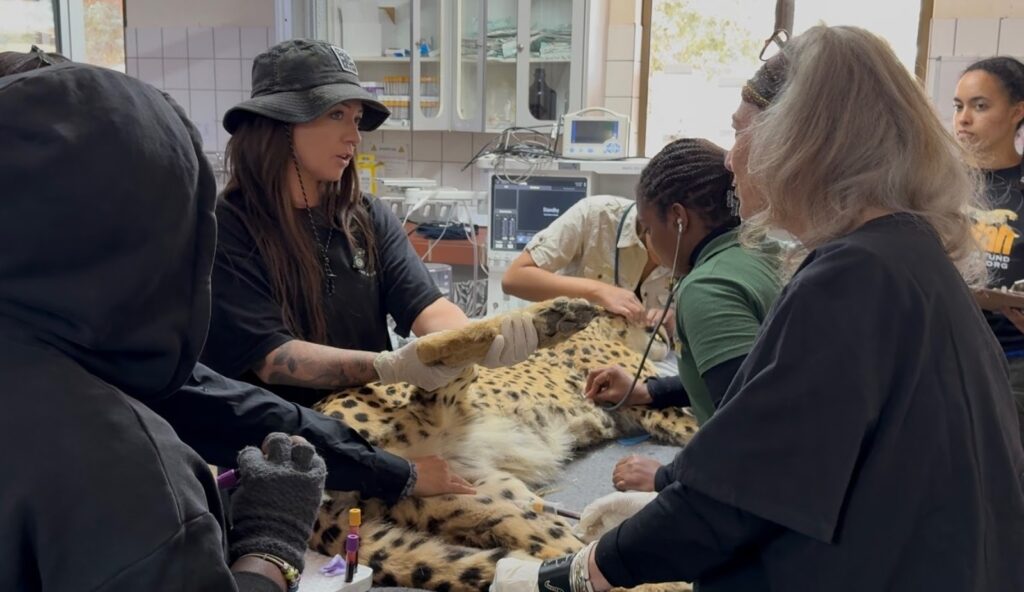
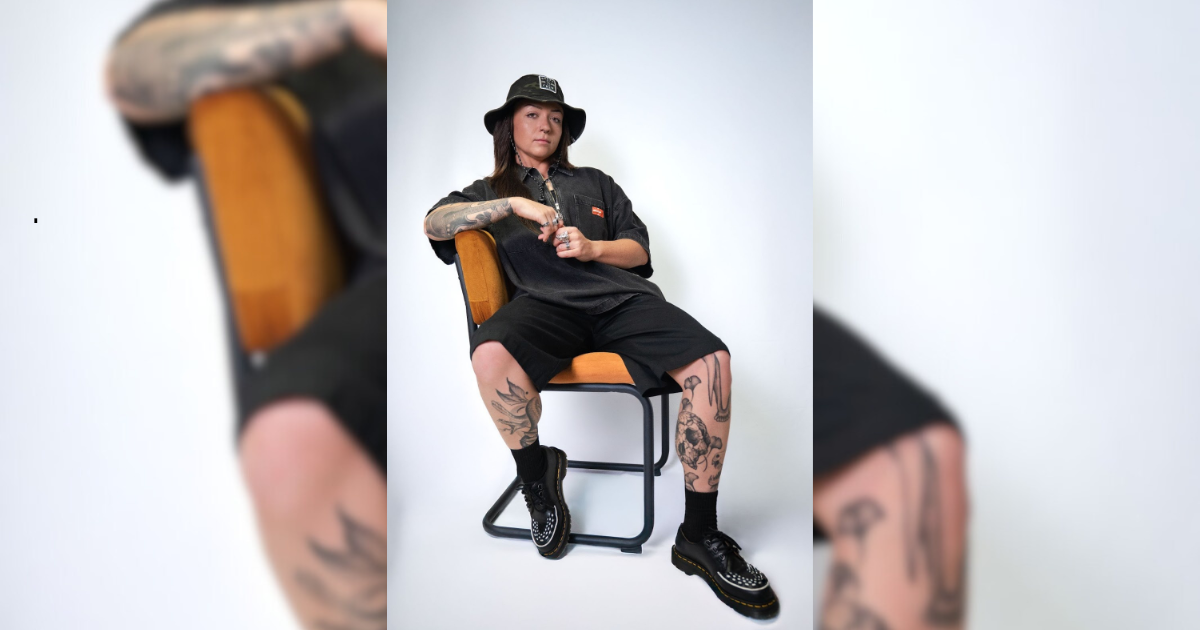
Photo credit: Gianfranco Botto
Epic Earth: Bringing 4.6 Billion Years to the Page
Lindsay’s newly released book, “Epic Earth: A Wild Ride Through the History of Life on Our Planet,” represents her biggest project yet. It takes everything she has learned as a digital educator and transforms it into long-form storytelling built for a global audience. The book condenses Earth’s entire 4.6-billion-year arc into a narrative, approachable format.

Image credit: Quarto
“I was inspired to write ‘Epic Earth’ from a video series I made called ‘The History of Life,’” she explains. “With this book, I wanted to create something that felt like one giant story, the story of life on Earth.”
She structured the book to feel like a conversation, mirroring the tone familiar to her online followers. “Similar to my online content, I wanted the book to feel conversational, like you were hearing about the history of Earth from a friend.”
“Epic Earth” was released internationally on November 11, bringing her signature storytelling to a new medium and new audience. “With this book, I wanted to create something that felt like one giant story,” she says. The book highlights bizarre prehistoric creatures, major evolutionary milestones, and the forces that have shaped life throughout Earth’s eras.