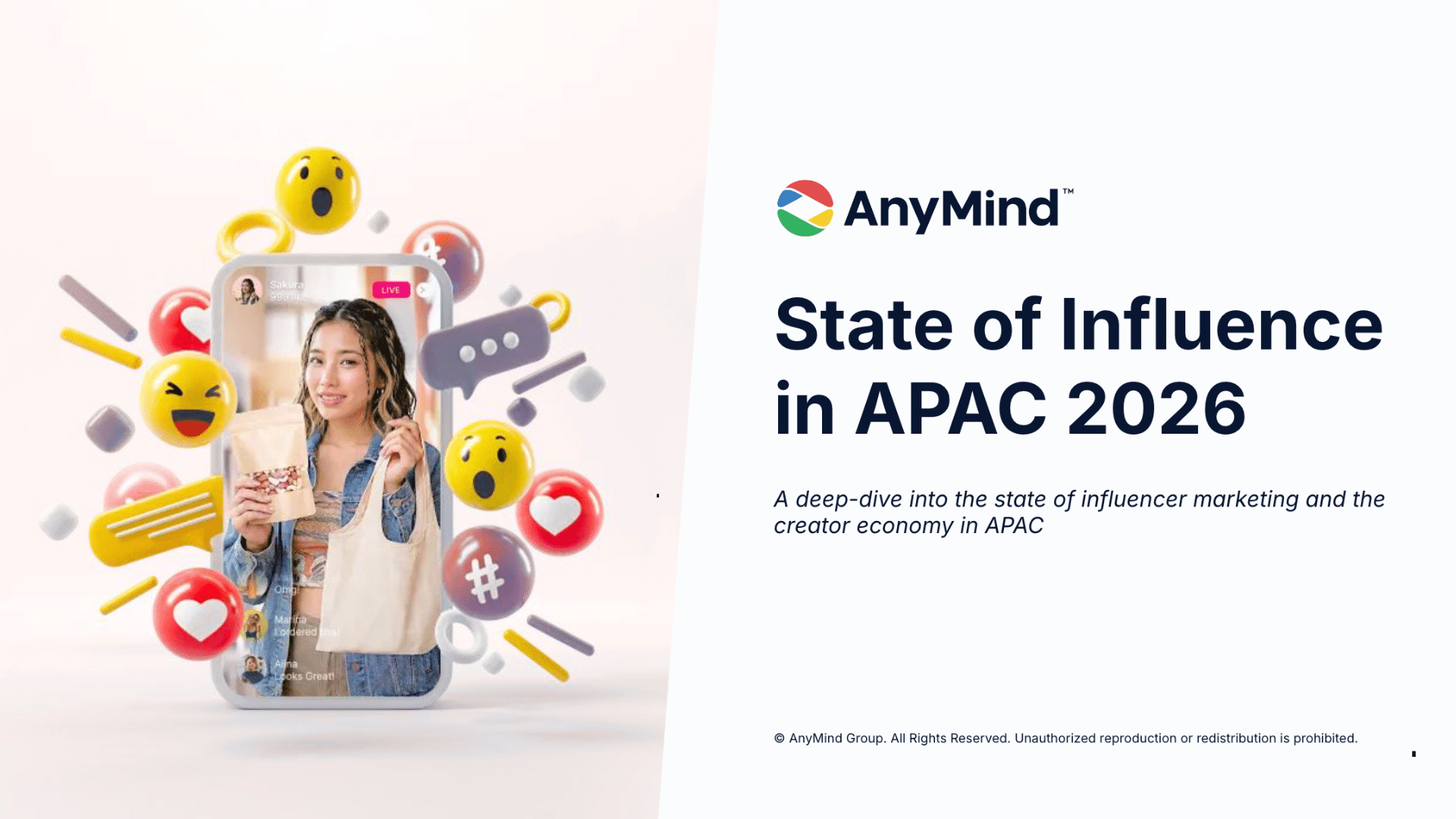
Instagram’s regional dominance is weakening in parts of Asia-Pacific (APAC) as brands redirect campaign activity toward short-form video platforms and performance-focused campaign models, according to AnyMind Group’s “State of Influence 2026 Report.” The data points to a regional shift in how creator marketing operates, with markets emphasizing measurable outcomes, while others remain centered on awareness.
Campaign share on Instagram dropped from 51% in 2023 to under 36% in 2025 across markets analyzed through AnyMind’s AnyTag platform, which tracked activity in Indonesia, Japan, Malaysia, Philippines, Singapore, Taiwan, Thailand, Vietnam, Hong Kong, and Cambodia.
TikTok now accounts for the largest share of influencer campaigns across much of Southeast Asia, indicating broader changes in platform strategy.
Short-Form Video Drives Platform Migration
The transition away from Instagram is most visible in Southeast Asia. In the Philippines, TikTok represented 64.3% of influencer campaigns compared with Instagram’s 24.6%, while Thailand recorded similar concentration levels, with TikTok responsible for nearly two-thirds of campaign usage. Vietnam’s market leaned heavily on TikTok and Facebook, which together accounted for more than 90% of campaigns.
“The distribution of campaigns is becoming more diverse, particularly favoring short-form video platforms,” the report states, noting growing interest in regional platforms such as Xiaohongshu.
Singapore remains an exception. Instagram captured 87.8% of influencer marketing campaign investment, although TikTok delivered higher engagement rates. Adoption of Xiaohongshu is also increasing across Hong Kong, Indonesia, Malaysia, and Singapore, signaling expanding platform diversification.
Performance Marketing Gains Ground in Mature Markets
Beyond platform shifts, the report identifies a widening divide in campaign objectives. Performance-driven campaigns (focused on measurable outcomes such as clicks or engagement) accounted for 73.89% of campaigns in Indonesia and 72.34% in Japan. Markets in Cambodia and Hong Kong recorded no performance-focused activity, remaining focused on awareness campaigns.
“Over the past three years, APAC has seen performance-driven campaigns grow steadily, signaling a strategic shift toward measurable outcomes,” the report notes.
The findings suggest influencer marketing maturity varies significantly across the region. In established markets, creator partnerships increasingly operate within full-funnel marketing strategies tied to attribution metrics. In emerging markets, influencer activity remains largely brand-building oriented.
Nano and Micro-Influencers Lead Engagement
Across markets, nano and micro-influencers account for the largest share of creators by volume and consistently deliver higher engagement rates than larger creators. AnyMind defined nano-influencers as those with 1,000 to 10,000 followers and micro-influencers as those with 10,000 to 100,000.
In Thailand, nano-influencers on TikTok achieved a median engagement rate of 6.77%, compared with 1.14% for macro-influencers. Singapore showed similar patterns, with TikTok nano-influencers achieving 4.72% engagement versus 1.32% for macro creators. Vietnam recorded particularly high engagement among Facebook nano-influencers at 9.24%, which the report attributes to closer community interaction.
“The sustained concentration in nano and micro tiers confirms the continuous, high strategic value placed on smaller, high-engagement communities,” the report states.
Category Investment Concentrates Around Lifestyle and Consumption
Fashion and beauty brands and food and beverage companies accounted for the highest volume of influencer campaigns across the markets analyzed. Japan led fashion and beauty activity, followed by Indonesia and Taiwan, while food and beverage campaigns were concentrated in Indonesia, Thailand, and Vietnam.
Content output remained centered on entertainment and hobbies, fashion and beauty, and lifestyle and home. While entertainment and fashion categories saw slight declines, food, drink, and lifestyle content showed steady growth, reflecting increasing focus on everyday consumption themes.
Market Strategies Reflect Regional Differences
The report outlines market-specific approaches aligned with local platform dynamics. In the Philippines, AnyMind recommends that brands use TikTok for awareness and trend participation, and rely on Instagram for product-focused conversion campaigns. Singapore recommendations emphasize a multi-platform mix combining Instagram for brand equity, TikTok for performance marketing, and Xiaohongshu for high-intent engagement.
Thailand’s strategy centers on TikTok for scale and engagement, supported by Instagram to reinforce trust and conversions. Across the region, platform selection is increasingly tied to campaign objectives rather than a single dominant channel.
The report concludes that APAC influencer marketing is becoming more segmented as platforms migrate toward short-form video and campaign maturity levels diverge. As performance-driven models expand in established markets and awareness-focused strategies persist elsewhere, brands and agencies are adjusting how creator partnerships fit within broader marketing frameworks.
Image source: AnyMind Group The full report is available here
Jonathan is a South African content creator, photographer and videographer with 25 years of experience in journalism and print media design. He is interested in new developments in AI content creation and covers a broad spectrum of topics within the creator economy.





















Instagram’s regional dominance is weakening in parts of Asia-Pacific (APAC) as brands redirect campaign activity toward short-form video platforms and performance-focused campaign models, according to AnyMind Group’s “State of Influence 2026 Report.” The data points to a regional shift in how creator marketing operates, with markets emphasizing measurable outcomes, while others remain centered on awareness.
Campaign share on Instagram dropped from 51% in 2023 to under 36% in 2025 across markets analyzed through AnyMind’s AnyTag platform, which tracked activity in Indonesia, Japan, Malaysia, Philippines, Singapore, Taiwan, Thailand, Vietnam, Hong Kong, and Cambodia.
TikTok now accounts for the largest share of influencer campaigns across much of Southeast Asia, indicating broader changes in platform strategy.
Short-Form Video Drives Platform Migration
The transition away from Instagram is most visible in Southeast Asia. In the Philippines, TikTok represented 64.3% of influencer campaigns compared with Instagram’s 24.6%, while Thailand recorded similar concentration levels, with TikTok responsible for nearly two-thirds of campaign usage. Vietnam’s market leaned heavily on TikTok and Facebook, which together accounted for more than 90% of campaigns.
“The distribution of campaigns is becoming more diverse, particularly favoring short-form video platforms,” the report states, noting growing interest in regional platforms such as Xiaohongshu.
Singapore remains an exception. Instagram captured 87.8% of influencer marketing campaign investment, although TikTok delivered higher engagement rates. Adoption of Xiaohongshu is also increasing across Hong Kong, Indonesia, Malaysia, and Singapore, signaling expanding platform diversification.
Performance Marketing Gains Ground in Mature Markets
Beyond platform shifts, the report identifies a widening divide in campaign objectives. Performance-driven campaigns (focused on measurable outcomes such as clicks or engagement) accounted for 73.89% of campaigns in Indonesia and 72.34% in Japan. Markets in Cambodia and Hong Kong recorded no performance-focused activity, remaining focused on awareness campaigns.
“Over the past three years, APAC has seen performance-driven campaigns grow steadily, signaling a strategic shift toward measurable outcomes,” the report notes.
The findings suggest influencer marketing maturity varies significantly across the region. In established markets, creator partnerships increasingly operate within full-funnel marketing strategies tied to attribution metrics. In emerging markets, influencer activity remains largely brand-building oriented.
Nano and Micro-Influencers Lead Engagement
Across markets, nano and micro-influencers account for the largest share of creators by volume and consistently deliver higher engagement rates than larger creators. AnyMind defined nano-influencers as those with 1,000 to 10,000 followers and micro-influencers as those with 10,000 to 100,000.
In Thailand, nano-influencers on TikTok achieved a median engagement rate of 6.77%, compared with 1.14% for macro-influencers. Singapore showed similar patterns, with TikTok nano-influencers achieving 4.72% engagement versus 1.32% for macro creators. Vietnam recorded particularly high engagement among Facebook nano-influencers at 9.24%, which the report attributes to closer community interaction.
“The sustained concentration in nano and micro tiers confirms the continuous, high strategic value placed on smaller, high-engagement communities,” the report states.
Category Investment Concentrates Around Lifestyle and Consumption
Fashion and beauty brands and food and beverage companies accounted for the highest volume of influencer campaigns across the markets analyzed. Japan led fashion and beauty activity, followed by Indonesia and Taiwan, while food and beverage campaigns were concentrated in Indonesia, Thailand, and Vietnam.
Content output remained centered on entertainment and hobbies, fashion and beauty, and lifestyle and home. While entertainment and fashion categories saw slight declines, food, drink, and lifestyle content showed steady growth, reflecting increasing focus on everyday consumption themes.
Market Strategies Reflect Regional Differences
The report outlines market-specific approaches aligned with local platform dynamics. In the Philippines, AnyMind recommends that brands use TikTok for awareness and trend participation, and rely on Instagram for product-focused conversion campaigns. Singapore recommendations emphasize a multi-platform mix combining Instagram for brand equity, TikTok for performance marketing, and Xiaohongshu for high-intent engagement.
Thailand’s strategy centers on TikTok for scale and engagement, supported by Instagram to reinforce trust and conversions. Across the region, platform selection is increasingly tied to campaign objectives rather than a single dominant channel.
The report concludes that APAC influencer marketing is becoming more segmented as platforms migrate toward short-form video and campaign maturity levels diverge. As performance-driven models expand in established markets and awareness-focused strategies persist elsewhere, brands and agencies are adjusting how creator partnerships fit within broader marketing frameworks.
Image source: AnyMind Group
The full report is available here
Checkout Our Latest Podcast