Tech
If Finding a Good Videographer Is Gold Dust, Then Content Jungle Is Building the Mine

Every Creator Economy platform promises to connect talent with opportunity. Most focus on creators. Content Jungle, a London-based marketplace launched in June 2025, is focused on the people behind the camera.
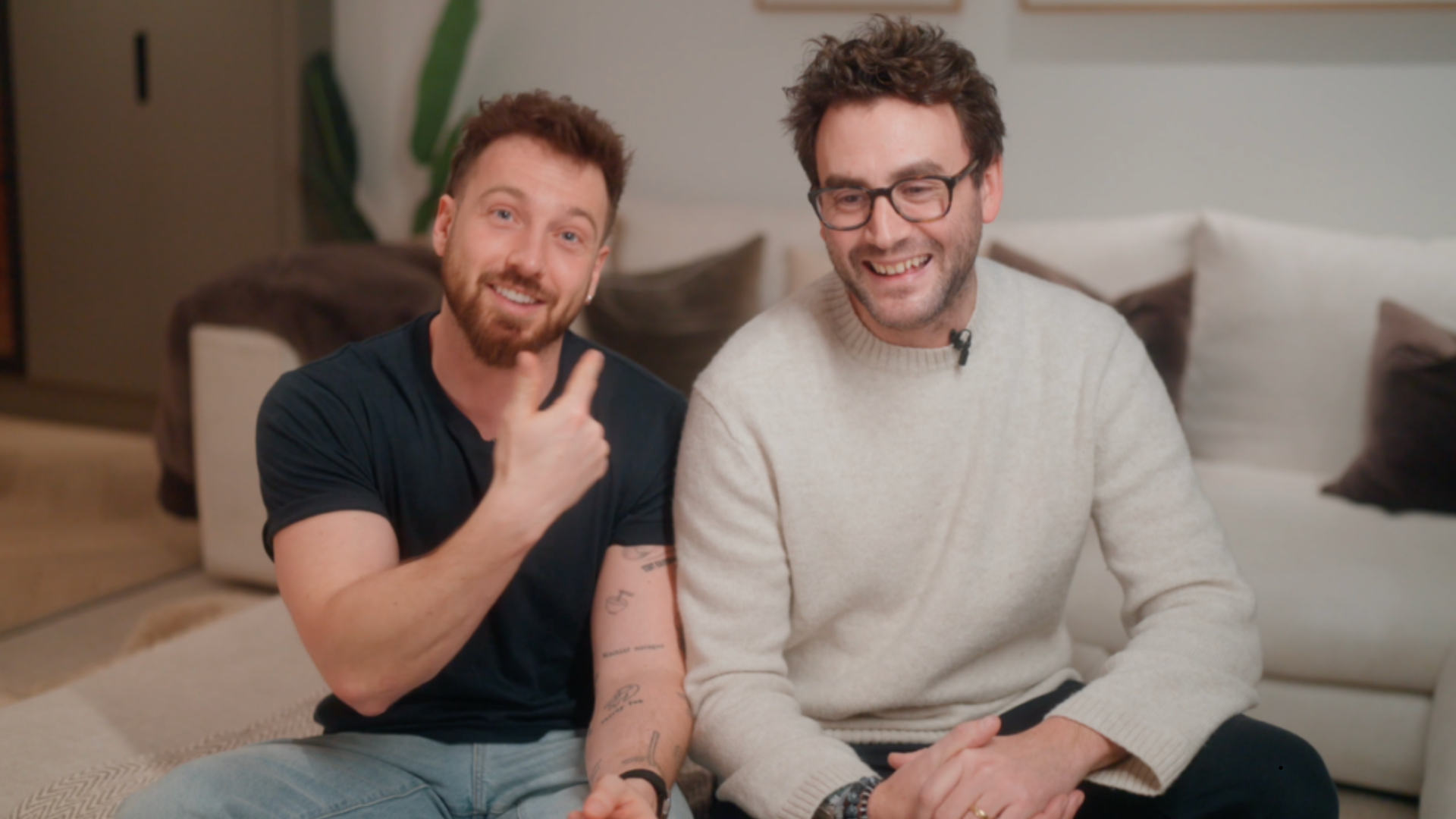
The premise is straightforward: finding a trustworthy videographer or editor is one of the most persistent operational problems for creators and brands producing content at scale. Co-founders Sam Thompson and Ben Hacker think that’s because no one has treated quality as a non-negotiable constraint.
“There’s no shortage of videographers, editors, photographers,” says Ben. “But there’s no single place where there’s a truly vetted marketplace.”
Sam is a British television personality best known for winning ITV’s “I’m A Celebrity … Get Me Out of Here!” in 2023, and for co-hosting the podcast “Staying Relevant,” which has accumulated more than 25 million downloads and hit number one on the UK podcast charts. Ben brings a decade of marketing and product experience across the ad industry, sports tech, and consumer apps, including a three-and-a-half-year stint as Head of Marketing at golf platform Hole19.
Together, they are building Content Jungle with a rigorous vetting process; of everyone who applies to join the platform as a videographer, photographer, or editor, only roughly one in seven is approved. Today, the platform hosts 150 vetted creatives.
“We will live and die by the talent that is on our platform,” Ben says. “My stress test is always: would Sam have a go at me if this person turns up at his house to shoot content?”
A Problem Hidden in Plain Sight
Sam’s path to co-founding Content Jungle did not begin with a market gap analysis. It began with a scheduling problem involving his longtime videographer, Ted.
“I was finding myself bound to Ted’s schedule more than I was to my own,” Sam explains. “Jobs would come in, but I needed to base them around when my videographer was here. I was like, this just doesn’t seem right.”
When Ted was unavailable, Sam had nowhere obvious to turn. Posting on Instagram Stories felt unprofessional and offered no way to verify quality. Informal referrals were inconsistent. “I don’t know if you just picked up your mum’s camera or whether you actually know what you’re doing,” he says.
Sam searched for an existing solution and found almost nothing. “There was absolutely nothing there. I looked far and wide, and I cannot believe this hasn’t been done before,” he recalls. That gap became the foundation for Content Jungle.
Ben, introduced through a mutual contact at his former ad agency, had the same reaction when the idea was first pitched to him. “My first thought was: surely this has already been done,” he says. “It seemed so obvious.” After researching the market, he found one or two comparable products in the U.S. and almost nothing in the UK.

How the Platform Works
Content Jungle operates as a two-sided marketplace. Creators, brands, and agencies sign up for free, complete a short onboarding form, and are verified against their social media profiles. Production talent (videographers, editors, and photographers) undergo a more rigorous process: submitting at least 3 work samples, providing references, and linking to their professional portfolios before being manually reviewed.
Once inside, brands and creators post briefs describing what they need: a videographer for an Instagram reel, a photographer for a PR event, dates, budget, and location. Talent then applies, and the hiring party selects based on portfolio. Payments are held in escrow until the work is approved, after which the creative is paid within 48 hours.
The escrow mechanic addresses a persistent pain point on the talent side. “One of the biggest things for production talent is they don’t have to go chasing invoices,” Ben says.
Content Jungle takes a 15% commission from the talent on completed jobs. Creators, brands, and agencies pay nothing to use the platform. Ben acknowledges the model is standard but says early data validates it: repeat bookings are already happening, and one of the platform’s top talent recently turned down a direct rebook from a major UK brand, asking them to go through the app instead. “He’s the one losing 15%,” Ben notes. “He’d rather go through us.”

Brands Are Learning to Value Quality
Ben says a recurring problem in the market is a mismatch between what brands expect to pay and what quality production actually costs. Briefs come in requesting ten Instagram Reels, 100 photos, and full usage rights for £200.
“The education that brands need is: you get what you pay for,” he says. “The people on Content Jungle have a high price tag because you will be satisfied with the work.”
Content Jungle vets briefs before they go live on the platform, rejecting or correcting those with unrealistic budgets. That friction, Ben argues, is a feature rather than a flaw: it protects the quality of the talent pool.
Early case studies suggest the model is resonating. Pizza Express, a major UK dining chain, joined the platform, booked a photographer for a PR activation, and returned within two weeks for a second booking. Author and podcast host Elizabeth Day used Content Jungle to film her book launch after her production company said it couldn’t source talent.
PerfectTed, a fast-growing UK matcha brand, signed on after struggling to find consistent video support, despite having investor Steven Bartlett in its corner. “If Steven Bartlett can’t solve it,” Ben says, “then we know the problem is real.”
Sam Thompson Has 3M Followers and Is Not Using Them
Content Jungle’s clearest marketing asset is Sam’s Instagram profile. Three million followers, a chart-topping podcast, years of brand partnerships with McDonald’s, Coca-Cola, and Sky. He is choosing not to use most of it.
“I’ve never wanted to be shouting it from the rooftops on my social media,” Sam says. “I want it to grow on its own two feet.”
His reasoning is partly philosophical. The audience following him is not doing so for business content. But it is also a statement of belief in the product. “I believe in this so much that I want the story to be: this is such a great idea that it grew purely because it’s a brilliant business,” he says.
What he does use his platform for is selective amplification: mentioning notable sign-ups on Instagram Stories. The distinction matters to him. Organic credibility, in his view, is more durable than a follower-driven launch spike.
Sam uses the platform himself. For his sold-out show at the O2 Arena in front of 16,000 people, the behind-the-scenes videographer came from Content Jungle. “That was such a beautiful full-circle moment,” he says.

Videographers as the Undervalued Layer
One of the more pointed arguments Sam makes about Content Jungle is not about market size or unit economics. It is about visibility.
“This app isn’t really for people like me,” he says. “It’s for people like my videographer. I want them to have a bit of spotlight.”
His contention is that the Creator Economy has consistently misattributed creative output. Videographers and editors, in his framing, are the second half of the creative brain behind most polished content. They brainstorm, shape the visual language, and drive execution. The creator faces the camera; the production talent makes the video what it actually is.
“Finding a good videographer is gold dust,” Sam says. “If you find someone you vibe with who can create good content with you, that’s like the cheat code. Imagine a place where you can find loads of rare Pokémon. That’s what we’re trying to build.”
Ben connects that argument to the platform’s quality floor. The supply side of Content Jungle is not meant to be a large pool of generalists. It is meant to be a recognized destination for elite production talent, where being listed carries its own signal value.
AI as Matchmaking Infrastructure, Not Creative Replacement
Both founders are skeptical of AI-generated content as a substitute for human production, but they are building AI directly into Content Jungle’s operational layer.
“People are going to get bored really quickly,” Sam says of AI video content. “They’re going to go, ‘I don’t feel like I’m seeing a human being doing any of this stuff.’ People are going to really respect video content created by humans.”
Ben is more precise about where AI belongs. The team is building a voice-agent brief interface: a creator, brand, or agency speaks their requirements, and the system generates matches within seconds, cross-referencing portfolio data, budget, timing, and brief details. A follow-on layer will enable the AI to review shortlisted portfolios and recommend the strongest fit. The entire brief-to-shortlist process, currently taking several minutes, is being engineered down to under 30 seconds.
“AI will make the matchmaking faster and more accurate,” Ben says. “At the end of the day, both sides get what they want, and they’ll have a better experience. But I’m very cautious about throwing AI in there just as a novelty.”
Scaling Without Losing the Quality Floor
Content Jungle recently shifted from a planned Crowdcube crowdfunding raise to pursue traditional angel investment after receiving interest from institutional investors who preferred conventional deal terms. The company is fielding interest from both the UK and the U.S.
Sam’s longer-term vision for the platform extends beyond a talent marketplace. He wants Content Jungle to become a production company entity in its own right and has discussed a charitable foundation to provide camera equipment to young people who lack the resources to enter the industry professionally. “It’s a very expensive vocation to get into,” he says.
For now, the focus is on scaling the supply side without diluting the quality signal that drives demand. Referral mechanics are being built to reward existing talent for bringing peers onto the platform, with incentives including reduced commission rates.
“If you want to produce the very best content, you work with the very best people,” Ben says. “There’s a difference between economy and first class. You get what you pay for.”
Photo source: Content Jungle
Subscribe to Our Newsletter
Check Out Our Podcast