



Tech
How Launchpoint Is Using AI to Turn College Campuses Into a Scalable Brand Channel

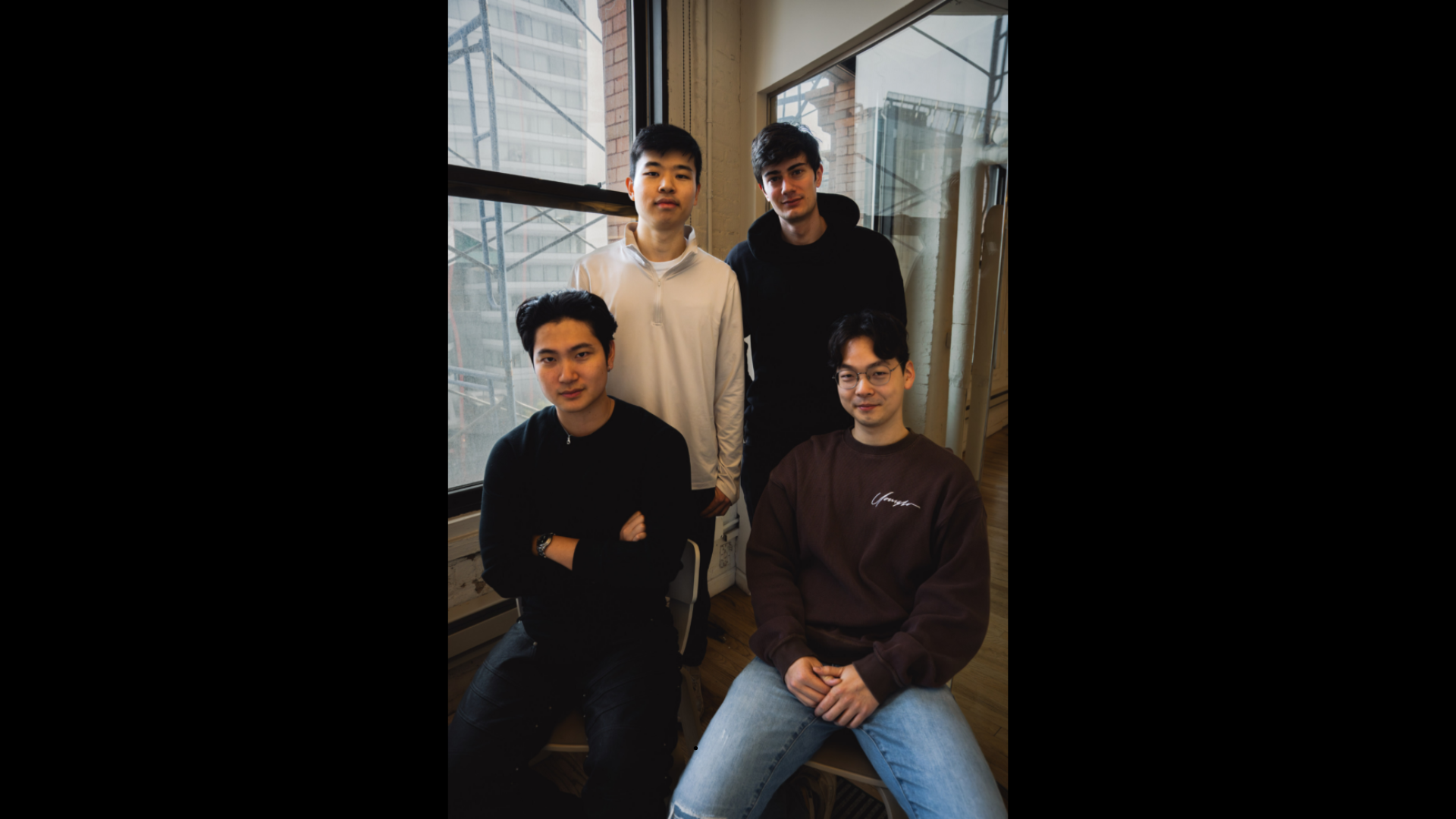
College campuses are among the most valuable and least efficiently reached consumer markets in the United States. Tristan Rhee, co-founder and CEO of Launchpoint, thinks he knows why and has built a platform to fix it.
Launchpoint, founded in January 2025 and based in New York, automates creator marketing campaigns with a particular focus on college communities. Starting as a name, image, and likeness (NIL) platform connecting brands with college athletes after the compensation framework was legalized in 2021, the company has expanded into a broader programmatic creator marketing system. It now processes roughly 1,000 creator deals per day for clients, including Keurig Dr. Pepper, C4 Energy, New Era Cap, and GoPuff, using AI to handle contracting, content review, and campaign reporting at a scale.
“The way to get attention on social media nowadays is building out a system of creators,” Tristan says. “Whether you’re working with college athletes or college students or moms or anyone who’s creating content, that’s the point of leverage brands need to be taking advantage of.”
Why College Campuses Require a Different Playbook
According to Tristan, most brands approaching college consumers default to one of two strategies: a single high-profile creator with a large following, or targeted paid advertising. He argues that both misread how brand awareness actually builds in a closed, high-density community.
The mistake, in his telling, is treating campuses like any other digital audience. Colleges are geographically contained, socially interconnected, and defined by shared experiences. Content that reaches one node of that network travels differently from content pushed at a general demographic.
“Colleges are small, enclosed communities,” Tristan says. “You can really take advantage of that. There are common things that all the college students know about, care about … shared experiences. You need to be flooding the feed, not relying on one person.” He cites data suggesting a consumer needs to encounter a brand at least 11 times before they are likely to make a purchase. For campus marketing, that argues for volume and repetition over a single high-visibility placement.
At one university alone, Launchpoint reports over 1,000 creators on the platform. A brand targeting that campus can deploy content simultaneously across a large portion of the student body, creating the saturation effect that Tristan says paid ads alone cannot replicate.
“When people are scrolling, and they’re seeing your brand over and over again,” he explains, “that’s when it comes time to convert them into a purchaser; they’re ready.”
The Algorithmic Shift That Made Small Creators Viable
The campus saturation model depends on a premise that runs counter to how many brands still allocate creator budgets: follower count no longer determines how far a post travels.
According to Tristan, TikTok’s For You Page restructured social media distribution to prioritize engagement signals over follower graphs. Instagram followed. “A hundred thousand followers, a thousand followers, same quality content, they have equal chances of going viral,” he says. “Follower count doesn’t determine distribution anymore.”
For campus marketing, Tristan notes that such a shift is especially significant. College students who are not professional creators but who make content natively for their peers can reach the communities brands want to penetrate, often more credibly than imported influencers. “This generation has had a phone since middle school,” he says. “They know how to make content that’s engaging for the people that follow them.”
The brands that constrain them with scripted briefs, he adds, tend to see worse results than those who give creators latitude. “The ones who say ‘just mention the product and make what you want’ do better.”
Despite the shift, Tristan says most brands have not updated their spending models. He estimates social media captures roughly 50% of human attention but accounts for only about 3% of total ad spend, a gap he expects to close significantly over the next few years. “A lot of brands and agencies are still dedicating 99% of their social media budget to people with really big followings,” he says. “It should be more like a 50-50 split.”
The Infrastructure Problem In Creator Marketing
The case for working with hundreds of smaller creators simultaneously is straightforward in theory. In practice, Tristan notes, it has historically been unworkable. Every creator deal requires outreach, negotiation, contracting, briefing, content review, and payment. That process does not compress below a certain amount of human time per creator.
“The max we’ve seen is one person managing maybe 100 creators, and that’s an insane amount of work,” Tristan says. “You’re just texting and DMing people back and forth all day.”
He adds that existing creator platforms address the discovery layer, but leave execution manual. “As soon as you identify a creator you want to work with, there’s a button to email them and a button to DM them,” he says. “That’s where the work really starts.”
Launchpoint is built around automating what comes after discovery. Brands set a budget, submit a brief of a few sentences, and select targeting parameters. The platform handles contracting, product fulfillment through a Shopify integration, AI-assisted content review, and performance reporting from a single dashboard. “We’re Meta ads, but for creator marketing,” Tristan says. “You set a budget, you click go, and you get high-quality videos back.”
Darwin and the Attribution Problem
Attribution has been creator marketing’s persistent liability. Brands could measure views and engagement, but struggled to connect creator activity to actual sales, which made it difficult to justify or grow budgets.
Launchpoint’s AI engine, called Darwin, is designed to address both sides of that gap: identifying what content to produce, and measuring whether it worked. Darwin analyzes campaign performance to surface which briefs, creator types, and content styles are driving results, enabling A/B testing across multiple creative directions simultaneously.
“You’re not going to know what types of content actually perform on the algorithm until you get it posted,” Tristan says. “Darwin figures out the best types of content for your company based on what’s worked before.”

On the attribution side, the platform runs incrementality tests and geographic holdout studies, comparing sales in markets running creator campaigns against control markets that are not. Retail sales data can be mapped against view data geographically. Each creator receives a unique trackable link, making direct conversion measurable at the individual level.
Brand safety is managed through layered approvals. An AI review pass checks every video against a brand’s specific guidelines before it reaches the human team. One enterprise client submitted 20 distinct guidelines, including logo visibility requirements and prohibited language, that the system checks against every submission.
“AI actually reviews that better than a human,” Tristan says. “It raises the floor on quality across the board.”
New Era’s 400% ROI: A Campus Model in Practice
New Era Cap, the exclusive headwear partner for the MLB, NFL, and NBA, came to Launchpoint with a creator gifting program that was generating content but no measurable return. Sourcing creators happened through direct messages. Shipping addresses were entered manually into Shopify. Performance was tracked in spreadsheets. The team had no reliable way to determine whether gifted product was driving sales.
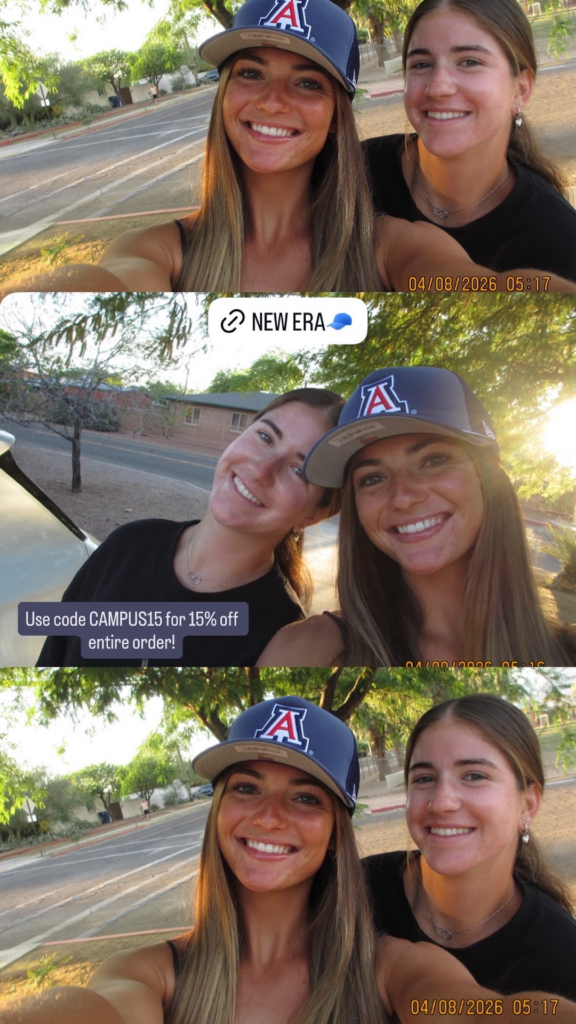
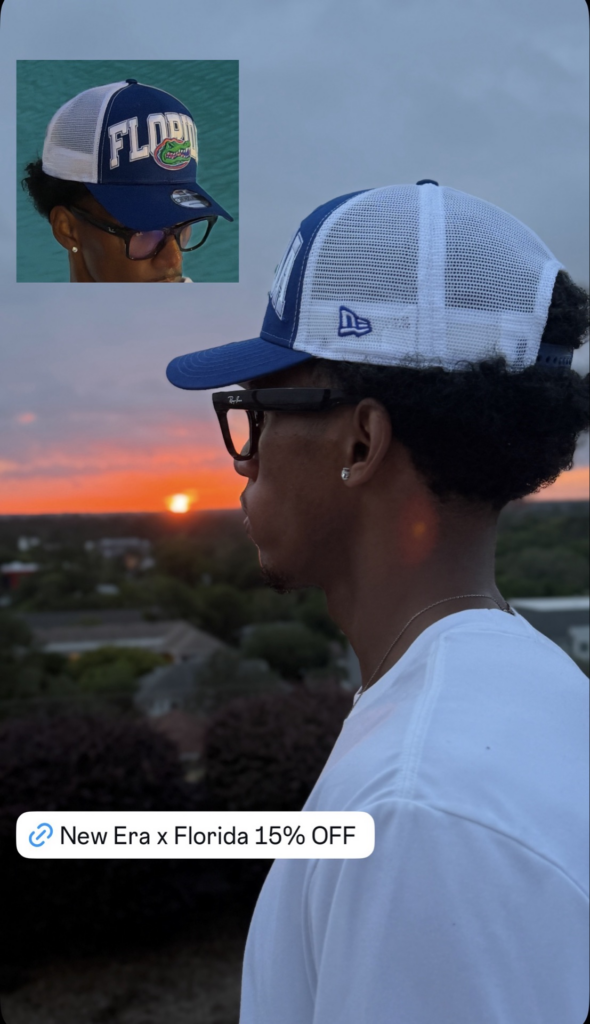
Launchpoint moved the entire gifting operation onto its platform. New Era ran school-specific campaigns targeting sports campuses, including UCLA, Ohio State, and the University of Florida. Creators selected their preferred hats through the app, triggering automated Shopify fulfillment directly from New Era’s store. Each creator received a unique trackable link, giving the brand per-creator attribution for the first time.
The results, according to Launchpoint’s case study: 400% total campaign ROI, 120% attributable ROI on organic posts alone, 444,000 total views, and 118 videos across four campaigns. Shipping time was reduced by 1,500% through automated fulfillment. Within the first week, athlete creators generated more than 55 tracked sales through their unique links.
“For the first time, New Era had undeniable proof that creator gifting wasn’t just brand awareness,” Tristan says. “It was a revenue channel.”
What Comes Next for Campus Marketing
Launchpoint is a team of 10 full-time employees in New York. For 2026, Tristan says the priorities are expanding the client base, improving the creator-facing app experience, and continuing to build the attribution infrastructure that lets brands make the programmatic case internally.
The adoption barrier, in his view, is not technological. It is that brands have not updated their mental models to match how social distribution actually works today. “A lot of companies haven’t caught on to the fact that social media has really changed in a radical way,” he says. “There’s a real opportunity for people who understand this and are ready to make the switch.”
He frames the company’s longer-term mission around that education gap as much as the platform itself.
“Creator marketing is entering a very big moment,” Tristan says. “The thing that matters most is the success of the creator, because the more success creators have, the better success brands will have. That’s the virtuous cycle we’re building for.”
Subscribe to Our Newsletter
Check Out Our Podcast