






Influencer
From ‘Plant Daddy’ to Plant Retailer: How Kossi Tchenawou Turned Social Media Influence Into a Community-Driven Business

Kossi Tchenawou did not plan to become the internet’s “Plant Daddy.”
At the time, he was working in corporate real estate consulting at RE/MAX World Headquarters in Denver, coaching franchise owners across multiple states on how to grow their businesses and refine their marketing strategies. Social media was simply an experiment, a place to test the digital brand frameworks he was recommending to clients.
“I always liked the security of corporate,” Kossi says. “I was kind of playing tug-of-war between two different identities.”
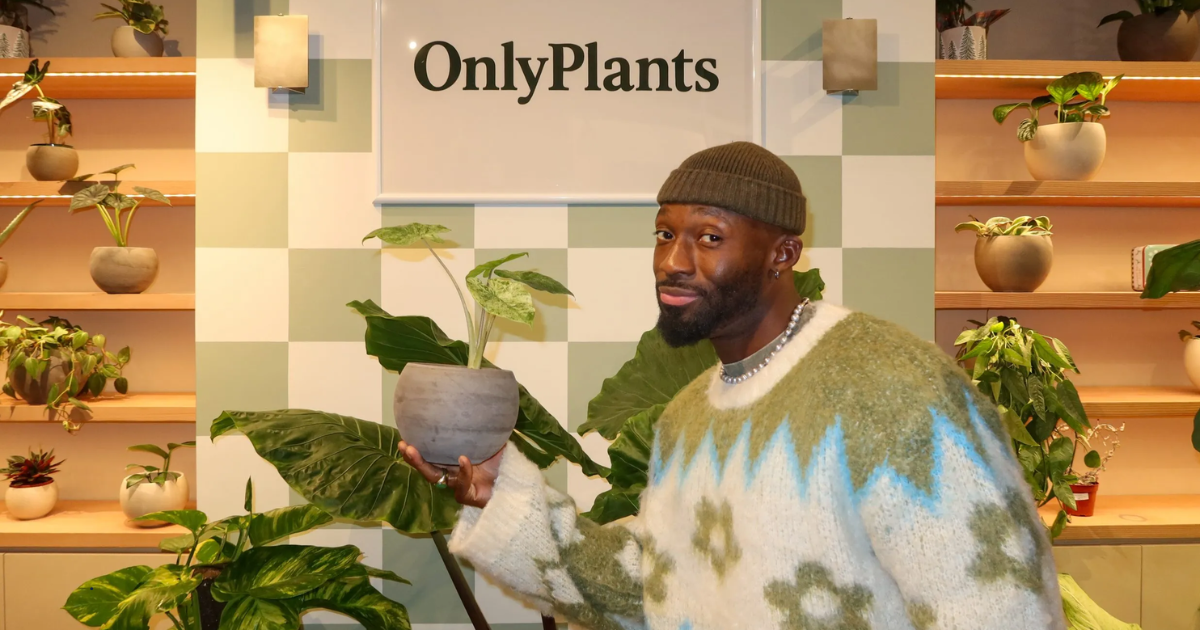
Today, that experiment has evolved into a creator career, a growing social media following, and a brick-and-mortar business. Known online as “Plant Daddy Kossi,” he has built an audience of more than 400,000 followers by blending plant education with humor, lifestyle content, and storytelling. More recently, he brought that online persona into the physical world with OnlyPlants, a Denver plant shop designed as both a retail space and a community hub.
The origin of his content traces back to his corporate job. At RE/MAX, Kossi advised franchise brokers in states including Wisconsin and Indiana, helping them expand market share, adjust marketing strategies, and train agents.
“I oversaw Wisconsin and Indiana RE/MAX franchises doing franchise consulting and business coaching,” he explains. “Taking the business owners and helping them gain more market share, change their marketing strategy, recruit better, and train their agents better. Anything having to do with growing their business.”
Because many of the business owners he advised were older and more experienced, Kossi wanted to prove that his digital strategies actually worked. He decided to apply them to his own social media account using a hobby he had recently picked up: houseplants.
“I needed more credibility because I was young when I started doing that,” he says. “So I chose a hobby of mine and implemented the same strategy. At the time, I had about 30 houseplants. Now I have over 300.”
His approach followed what he calls the “three E’s” framework: education, engagement, and entertainment.
“If I’m teaching somebody about houseplants, they can go away with something,” he says. “If I’m using humor or relatable plant content, it makes people smile. And sometimes it’s storytelling or emotion. That’s how people consume social media.”
Consistency helped the account grow quickly.
“The first 50,000 followers were really about consistency,” he says. “If people see your face every day, they start identifying you with a specific space.”
Turning Plant Care Into Lifestyle Content
Kossi believes his content stood out because it avoided overly technical plant advice. Instead of focusing on horticulture jargon, he translated plant care into everyday analogies and lifestyle commentary.
“I don’t like when people overcomplicate things,” he says. “You don’t need to talk about soil pH levels and technical terminology. Make it simple and relatable.”
The strategy allowed him to reach audiences outside traditional plant communities. Humor, pop culture references, and viral sounds often appear in his videos. “Sometimes I’ll say something like, ‘Here’s five houseplants you have to be a serial killer to unalive,’” he says. “Then I’ll purposely include a plant that’s actually difficult just to throw people off. It keeps people engaged.”
Another tactic that helped build his personal brand was repetition. For nearly a year, he introduced each video the same way. “What’s up, TikTok? It’s your favorite plant daddy, Plant Daddy Kossi.”
Eventually, the nickname stuck. “I’d be out in public, and people would say, ‘Hey, aren’t you the Plant Daddy?’ It was embarrassing at first, but it worked.”
A Leap From Corporate to Creator
Despite the growing audience, Kossi remained cautious about leaving his corporate career. The decision came after a moment of reflection while drafting his resignation letter.
“I asked myself, if I had a family and I was giving someone else advice, what would I tell them to do?” he says.
His answer was clear. “I can always go back to corporate,” he says. “But I may never be a public figure again. I may never be a creator again.”
So he took the leap.
The decision paid off. Kossi says his social media engagement and income increased significantly after committing to content creation full-time. “I left corporate, and I quadrupled my social media engagement,” he says. “I quadrupled my social media salary.”
Building OnlyPlants in 14 Days
The idea for OnlyPlants came unexpectedly. A Denver studio owner contacted Kossi about an available retail space in the Free Market at Dairy Block. At first, the creator had no plans to open a physical store.
“I had thought about opening a plant shop one day,” he says. “But I was never in a position to actually do it.”
After touring the space, he began considering the possibility. Then, a property manager asked if he could open a temporary plant pop-up during the holiday market season.
The timeline was tight. “I picked up my keys the next day,” Kossi says. “Fourteen days later, I was open.”
Those two weeks were intense. “We slept in that space for almost the whole month while we got everything together,” he recalls. “Painting, signage, logos, sourcing plants, figuring out logistics.”
His background as a business consultant helped him overcome the challenges. “Coming from a business coaching perspective, I know everything it takes to run a business,” he says. “But actually doing it is completely different.”
Community First, Retail Second
OnlyPlants is not designed as a traditional retail store. Instead, Kossi sees it as a community hub built around plant culture.
“I didn’t necessarily want a plant shop,” he says. “What I want is a community.” The store hosts events ranging from plant bingo and terrarium workshops to Pilates classes and social gatherings.
These events also function as marketing. “Who doesn’t love free plants and free wine?” he says. “People come, they mingle, they meet each other.”
The strategy aligns with Kossi’s belief that retail must offer experiences beyond transactions. “It doesn’t mean anything if people don’t enjoy being there,” he says. “It doesn’t mean anything if it doesn’t bring people together.”
Kossi notes that it has resonated with his online audience, with some followers traveling for hours to visit the store. “I had someone drive down from Wyoming just to buy plants and support the shop,” he says.
The Reality of Running a Brick-and-Mortar Business
Opening a physical store has also revealed challenges that many creators may underestimate.
“People think owning a business means you’re making a lot of money right away,” Kossi says. “You don’t.”
Plant retail comes with its own operational complexities. “You clean more than anything,” he says. “It’s messy. You’re dealing with soil, pests, damaged plants, and weather. It’s expensive.”
The business currently operates close to break-even. “I don’t eat from the plant shop,” he says. “I pay myself, but it goes right back into the business.”
Social media income still funds his personal lifestyle, but the store serves a longer-term purpose. “I just want it to sustain itself and create community,” he says.
Advice for Creators Considering Physical Businesses
Kossi believes creators should think carefully before launching brick-and-mortar ventures.
“I would say don’t do it if you don’t have the time or the ability to delegate,” he says.
Financial planning is essential. “Make sure you have enough capital. Make sure the brick-and-mortar makes sense financially. Read your contracts and negotiate them.”
For creators used to digital businesses, physical retail can be demanding. “A brick-and-mortar is like a newborn,” Kossi says. “It always needs something.”
Expanding the OnlyPlants Brand
In the next year, Kossi hopes to secure a larger permanent location for OnlyPlants and standardize the brand’s operations.
The goal is to eventually expand into multiple locations. “What I’m working on right now is figuring out how OnlyPlants could pop up anywhere,” he says.
He also envisions developing proprietary products, including soil, plant-care kits, and apparel. “I want OnlyPlants to become its own brand,” he says. “Something with its own aesthetic, its own feel.”
In the long term, the creator sees the company appearing in major retail chains or operating its own network of stores. “I could see OnlyPlants becoming something like its own plant brand,” he says. “You wake up and drive to OnlyPlants for everything plant-related.”
A Creator Economy Experiment
Kossi acknowledges that many creators prefer digital businesses because they are easier to scale.
He chose a different path intentionally. “I miss the pre-COVID vibes of things,” he says. “I like being able to experience things in person.”
Kossi sees OnlyPlants less as a pure profit engine and more as an extension of his personal values.
For now, that philosophy continues guiding the business.
“I think the biggest lesson I’ve learned is just start,” he says. “If there’s something you’re thinking about and you have the opportunity to take that leap of faith, take it.”