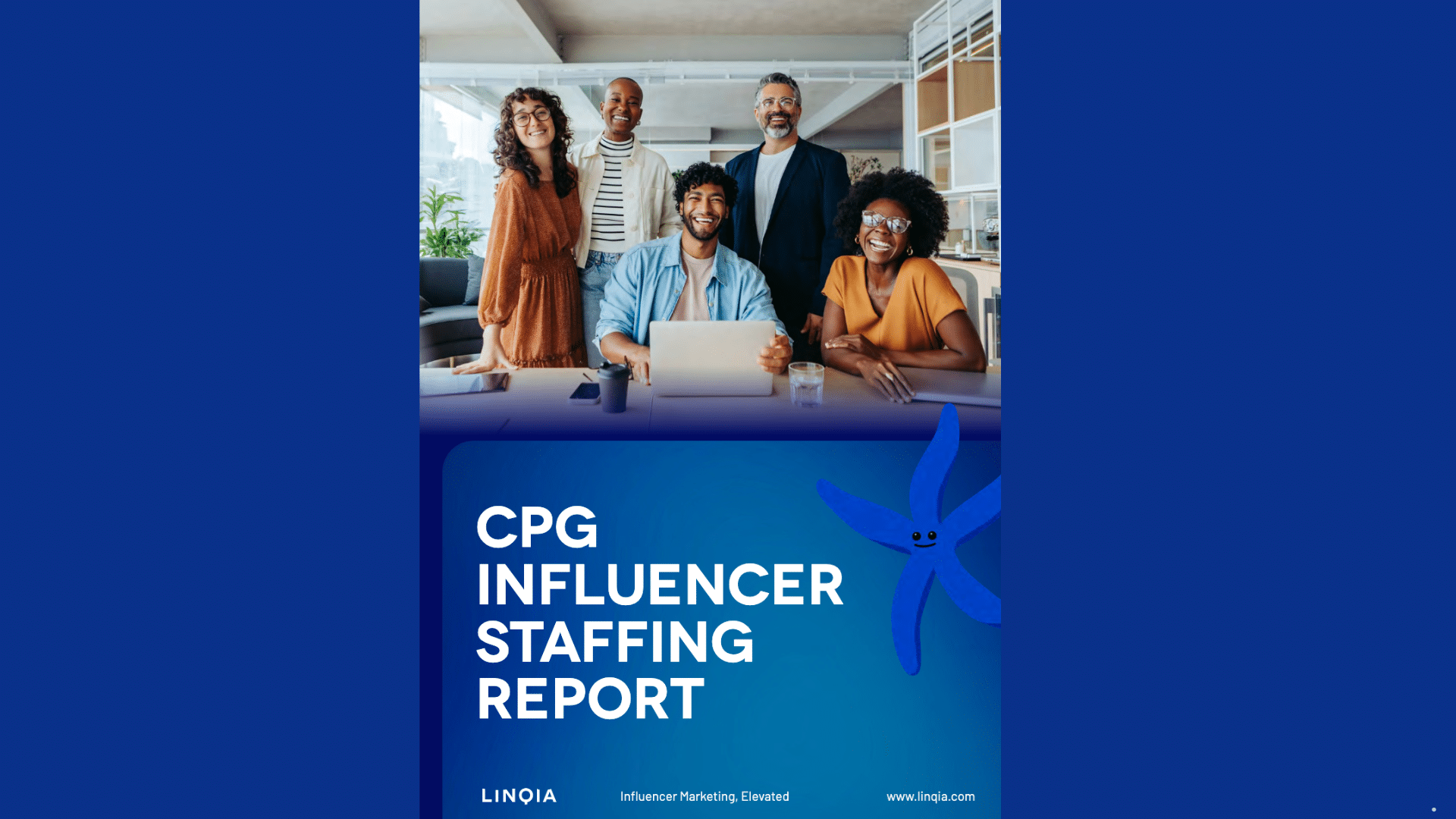
Consumer packaged goods companies have staffed Influencer Marketing as a standing function across the industry, but a new report from Linqia finds that function has almost no representation at the leadership level. Across the largest CPG companies, fewer than 1% of identified influencer-adjacent roles sit at the VP level, and another 1% carry a “Head Of” title.
The “CPG Influencer Staffing Report” describes itself as the first industry analysis of how major CPG brands structure their Influencer Marketing teams. Linqia built the dataset from a point-in-time LinkedIn snapshot in 2026, covering U.S.-based roles explicitly tied to influencer and creator responsibilities at companies representing more than 700 brands and over $20 billion in combined advertising spend. Social media titles were included only when paired with the word “influencer.”
The Numbers
Linqia identified 152 influencer-adjacent roles across the companies analyzed, an average of roughly 13 per company (12.7, by the report’s figure). But that average masks a wide spread: Unilever has the most dedicated roles in the U.S. at 32, while multiple companies in the dataset have fewer than five.
By seniority, the roles skew heavily toward the middle of the org chart. Manager-level positions make up 34% of the total, the largest single tier, followed by Associate at 14% and Director at 13%. Senior Manager and Specialist each account for 9%, Lead and Senior Director 7% each, and In-House Creator 5%. VP and Head Of roles each register at 1%.
Linqia frames the absence of senior ownership plainly: “Influencer has clearly not yet earned a consistent seat at the leadership table.”
In-House Creators Are Testing, Not Scaling
Half of the companies analyzed have established an in-house creator role, which Linqia says reflects growing recognition of internal talent for content creation and brand storytelling. But no company in the dataset has hired more than one. Linqia characterizes this as an early-stage trend still being tested rather than scaled, and notes that creator content at these companies remains predominantly purchased from outside talent rather than produced internally.
Job Titles Vary Widely Across the Category
The report also finds no standardized naming convention for influencer roles across the sector, which it says complicates benchmarking between companies. Titles identified in the dataset include PR & Influencer Marketing Lead, Brand Communications Manager, Social & Culture Director, and Social Media & Influencer Strategy Manager.
Of the companies analyzed, 42% use an explicit “influencer” title. Another 17% use “Communications” in the title, and a separate 17% use “Social & Culture” framing instead of a traditional influencer label. Another 8% blend influencer and communications responsibilities into a single title.
Women Make Up the Vast Majority of the Field
Of the 152 people identified across the analysis, 87% are women. Only 20 of the 152 roles are held by men.
Methodology: Linqia sourced the data from a 2026 LinkedIn snapshot of U.S.-based roles explicitly linked to influencer and creator responsibilities at the largest CPG companies, a set representing more than 700 brands and over $20 billion in advertising spend. Social media titles were excluded from the analysis unless paired with the word “influencer.”
Dragomir is a Serbian freelance blog writer and translator. He is passionate about covering insightful stories and exploring topics such as influencer marketing, the creator economy, technology, business, and cyber fraud.














Consumer packaged goods companies have staffed Influencer Marketing as a standing function across the industry, but a new report from Linqia finds that function has almost no representation at the leadership level. Across the largest CPG companies, fewer than 1% of identified influencer-adjacent roles sit at the VP level, and another 1% carry a “Head Of” title.
The “CPG Influencer Staffing Report” describes itself as the first industry analysis of how major CPG brands structure their Influencer Marketing teams. Linqia built the dataset from a point-in-time LinkedIn snapshot in 2026, covering U.S.-based roles explicitly tied to influencer and creator responsibilities at companies representing more than 700 brands and over $20 billion in combined advertising spend. Social media titles were included only when paired with the word “influencer.”
The Numbers
Linqia identified 152 influencer-adjacent roles across the companies analyzed, an average of roughly 13 per company (12.7, by the report’s figure). But that average masks a wide spread: Unilever has the most dedicated roles in the U.S. at 32, while multiple companies in the dataset have fewer than five.
By seniority, the roles skew heavily toward the middle of the org chart. Manager-level positions make up 34% of the total, the largest single tier, followed by Associate at 14% and Director at 13%. Senior Manager and Specialist each account for 9%, Lead and Senior Director 7% each, and In-House Creator 5%. VP and Head Of roles each register at 1%.
Linqia frames the absence of senior ownership plainly: “Influencer has clearly not yet earned a consistent seat at the leadership table.”
In-House Creators Are Testing, Not Scaling
Half of the companies analyzed have established an in-house creator role, which Linqia says reflects growing recognition of internal talent for content creation and brand storytelling. But no company in the dataset has hired more than one. Linqia characterizes this as an early-stage trend still being tested rather than scaled, and notes that creator content at these companies remains predominantly purchased from outside talent rather than produced internally.
Job Titles Vary Widely Across the Category
The report also finds no standardized naming convention for influencer roles across the sector, which it says complicates benchmarking between companies. Titles identified in the dataset include PR & Influencer Marketing Lead, Brand Communications Manager, Social & Culture Director, and Social Media & Influencer Strategy Manager.
Of the companies analyzed, 42% use an explicit “influencer” title. Another 17% use “Communications” in the title, and a separate 17% use “Social & Culture” framing instead of a traditional influencer label. Another 8% blend influencer and communications responsibilities into a single title.
Women Make Up the Vast Majority of the Field
Of the 152 people identified across the analysis, 87% are women. Only 20 of the 152 roles are held by men.
Methodology: Linqia sourced the data from a 2026 LinkedIn snapshot of U.S.-based roles explicitly linked to influencer and creator responsibilities at the largest CPG companies, a set representing more than 700 brands and over $20 billion in advertising spend. Social media titles were excluded from the analysis unless paired with the word “influencer.”
Image source: Linqia
Get the full report here
Subscribe to Our Newsletter
Check Out Our Podcast