





Influencer
Connor DeWolfe Built His Creator Career Inside a Single Niche and Never Looked Back

Twelve hours after a video about “ADHD superpowers” went viral, Connor DeWolfe‘s comment section was already placing an order. Hundreds of followers wanted the same thing: the phrase “Follow the Dopamine” on a shirt.
He opened Canva, sketched a design, found a print-on-demand website that handled shipping, and uploaded it. That was the beginning of a merch line. It was also the first sign that a niche built entirely around a single neurological condition could scale into something more than content.
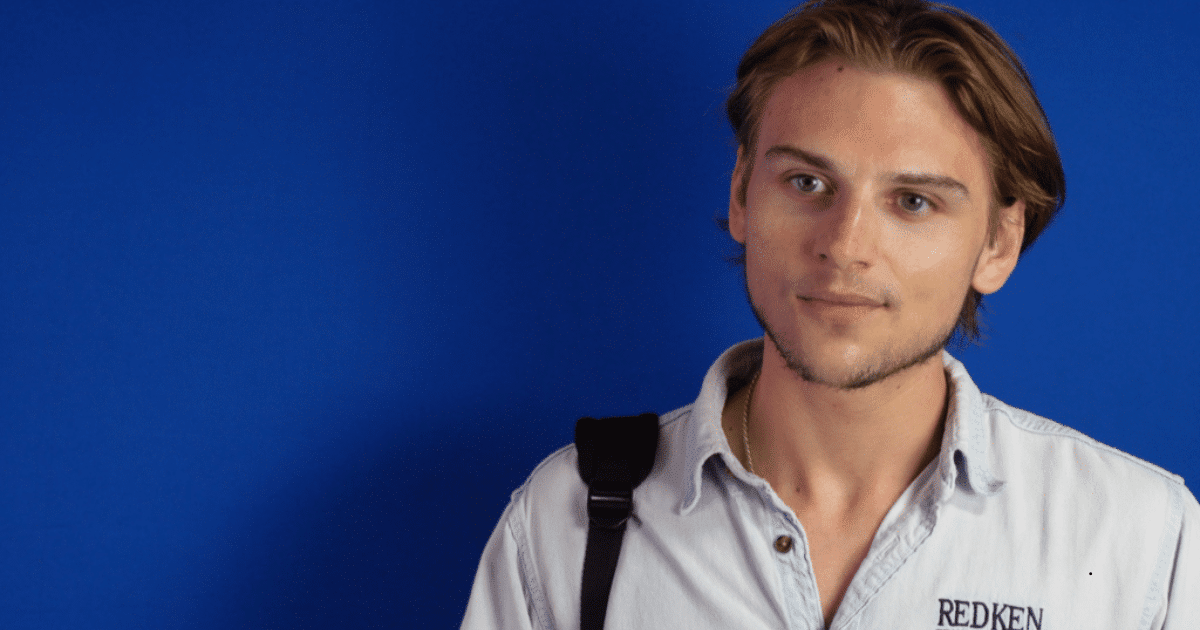
Connor is a U.S.-based actor and content creator whose short-form videos about attention deficit hyperactivity disorder helped him build a multi-million-follower audience across TikTok and Instagram. His “ADHD superpowers” video went viral in March 2021, drawing around 11 million views and helping establish his place in a space that has grown substantially. He has since expanded into acting, including a recurring role on Disney+’s “Mighty Ducks: Game Changers” and a feature film with Luke Hemsworth and Morgan Freeman, a professional speaking career through “Keppler Speakers,” a co-hosted podcast with his sister, and the 2025 Invisible Disabilities Association Neuro Invisible Award. None of it required him to pick a different subject.
“I think I have one of the coolest groups of people that I could have ever prayed for,” he says of the community he has built. For Connor, the niche was never a constraint. It was the strategy.
From Church Plays to a Viral Moment
Connor has been performing since age five, when he played a shepherd in a church production. Theater followed him into the University of Evansville in Southern Indiana, where he continued doing plays and musicals. When COVID-19 shut down live performance, the energy had nowhere to go.
“I had nowhere else to put that energy, and I guess it found its way onto TikTok,” he says. “I just fell into the ADHD space.”
The timing was not incidental. During the pandemic, people were isolated and searching for community. Connor, diagnosed with ADHD in his early teens, began making videos that drew on his acting background to translate shared neurological experiences into sketch-style content. The “ADHD superpowers” video tapped a demand that neither he nor most of the industry had anticipated.
The Comment Section as Infrastructure
For most creators, the comment section is a performance metric. For Connor, it functions more like a research department.
A recent video structured the full spectrum of intrusive thoughts, from minor to distressing, arguing that the same neural pathway underlies both. The comment section became a peer exchange, with followers sharing breathwork techniques, task-chaining strategies, and meditation practices. “Some things where you just use subconsciously, and you weren’t even aware you were doing it to cope with your mental illness, but someone’s pointed out, and you’re like, oh my goodness, I can actually use that more than I just subconsciously do,” he says.
That dynamic is a structural feature of how his content works. The videos create an entry point. The community deepens the engagement and extends the knowledge. “It’s all just become like, oh, well, this doesn’t work, but have you tried this?” he says. “Or oh, this doesn’t work for me. And oh, but here’s this other way of adapting it.”
The comment section draws on neuroscience, religious practice, cultural tradition, and lived experience, often within the same thread.
When Merch Became a Message
The first “Follow the Dopamine” shirt was a reaction, not a strategy. But the principle behind it has not changed.
The goal was practical and specific. “The idea of having something on your shirt that can not only spread awareness, but also make you feel seen,” he says, is what has kept the merchandise line going. The clearest evidence came at Christmas. Parents sent Connor videos of giving their children his holiday sweaters, and the moment made the mission concrete. “It was a moment where the parents were like, I see you. I see you for who you are,” he says.
His design process has been phrase-driven rather than performance-driven ever since. “Bees in My Head” came from a meme, not a breakout video. The “Dave University College” sweatshirt followed a video in which Connor renamed ADHD “Dave,” a reframe designed to separate identity from diagnosis. This fall, he is switching distributors to offer tagless, softer fabrics. “I want it to fit well and be comfortable for our brains,” he says. The product decision, like the line itself, mirrors the actual sensory needs of the people wearing it.
The Brand Deal He Had to Pull
Early in his career, before he had representation, a supplement company reached out directly. Connor promoted the product. Then comments surfaced about a chemical interaction between the supplement and SSRIs, a class of antidepressants that includes Zoloft. He was on one himself.
“That really scared me,” he says. He pulled the post, contacted the company, and absorbed the lesson. “It was a good reminder of the audience I am speaking to and the responsibility that comes with that.”
The incident also forced a reckoning with a question his work regularly invites: whether turning a health condition into a personal brand risks diminishing it. Connor is direct about where he lands. “The visibility overall is better than the opposite, where there’s no visibility and no awareness, and people are still just feeling like how I did as a kid,” he says. “Just like an alien in class, out of place, and you’re just confused.”
That experience now governs every deal he considers. He is wary of supplement deals because of potential interactions with psychiatric medication, and avoids quick-sales tactics that could exploit impulsive shopping.
“My biggest worry is taking advantage of the impulse shopping that I know I have,” he says. “I know how vulnerable my brain is, and so I just know that I wouldn’t want anyone else to feel that way.”
The brands he accepts are those whose missions align with his community’s actual needs. “It’s been really cool to work with some of these brands that are brand new and their mission is just to help people out,” he says.
Why Burnout Became His Most Important Business Decision
Managing content, merchandise, acting, and speaking engagements in parallel could mean building a team and scaling infrastructure. Connor’s approach is more elemental. He assigns each day to a single domain.
“I try to prioritize one thing a day. This is a social media day. This is an acting day. This is a merch day,” he says. “I think blocking it that way has really helped me stay consistent.”
The structure came out of burnout. During COVID, posting twice a day while managing merchandise left him depleted. “It left no room for life,” he says. Rest days are now built in.
Transitions between tasks are preceded by breathwork and nervous system regulation. The operating principle is one his own comment section helped him name: “The slowing down to speed up with ADHD,” he says. “No one really tells people with ADHD that they’re allowed to be chill. They’re told to be chill, but they’re not told they’re allowed to be chill.”
When the Niche Outgrows Social Media
Connor does not frame his future in follower counts or revenue targets. He frames it as a representation problem.
Television and film rarely name a character’s specific diagnosis, he argues, a choice that limits how accurately neurodivergent experiences can be shown on screen. More visibility, even imperfect visibility, is better than the alternative he knew as a child: the feeling of being out of place within his own brain, watching peers succeed while putting in the same effort and getting different results. The ADHD creator space has already shifted how broadly mental health gets discussed publicly. What comes next, in his view, is a larger stage.
“I think my biggest hope is just a good representation of neurodiversity and mental health on a larger scale,” he says. “If no one does it, I will do it.”
Subscribe to Our Newsletter
Check Out Our Podcast