Zach Yadegari, the 19-year-old co-founder of calorie-tracking app Cal AI, discussed how he scaled the app to 15 million downloads and $30 million in annual revenue before MyFitnessPal acquired it in December 2025, a deal announced the following March, speaking at TechCrunch Disrupt 2026. Yadegari, who left MyFitnessPal earlier this year to launch a new consumer AI startup called “Persona,” walked through the Influencer Marketing strategy that drove Cal AI’s growth and the mistakes that shaped it.
One $2,000 Influencer Post Brought in Cal AI’s First 1,000 Customers
Yadegari said Cal AI’s earliest traction came from paying an influencer who was documenting his weight loss journey to post a single story showing him scanning a meal with the app. The post, which Yadegari said cost roughly $2,000, drove about 1,000 downloads within two days, and roughly 100 of those users converted to paying customers. He attributed the result to the influencer’s following rather than the content itself, calling it a “cult-like” community that trusted his recommendations.
Influencer Marketing (Not UGC) Was the Primary Growth Driver
Yadegari distinguished between user-generated content (UGC), which he described as a “mass spray and pray strategy” relying on volume across many creators, and Influencer Marketing, which he called “a sniper approach.” He said he personally tried making UGC content early on but found it wasn’t his strength and shifted his focus to product. For Cal AI, Influencer Marketing was the method that “really took us off.”
Revenue Scaled From $30,000 to $1M/Month in Six Months
Once the first influencer post proved out, Yadegari said the team began recruiting influencers “as fast as we could.” Monthly revenue went from $30,000 in month one to more than $100,000 in month two, more than $300,000 in month three, $500,000 in month four, and $1 million by month six, which he described as a largely linear, predictable formula once the recruiting pace became exponential.
Views Mattered More Than Follower Counts When Picking Influencers
Yadegari said Cal AI looked for influencers with “very tight communities” rather than raw audience size, setting a minimum of roughly 50,000 followers but weighting views more heavily than that number. The goal was finding creators whose audiences “aspired to be like them” and would adopt products they endorsed, which he said was a better predictor of conversion than follower count alone.
Negotiating Flat Fees Against Required Views Cut Costs
Yadegari said many smaller creators initially quoted flat per-video rates that would have been unprofitable relative to their view counts. The team’s workaround was restructuring deals around outcomes, offering a creator’s asking price in exchange for a required view threshold or a set number of videos rather than a single post. He said creators were often indifferent to the format as long as they received the agreed payment, which brought costs down to profitable levels.
Paid Ads Required Separate Content From Organic Posts
Running influencer content directly as paid ads capped profitable Facebook spend at about $5,000 a day, according to Yadegari. He said the team found that content performing well organically did not translate to paid performance. Instead, recruiting creators specifically to produce ad-focused content, which he described as more direct and “salesy” than viral organic posts, allowed paid spend to scale Cal AI’s revenue from $2 million to $4 million a month.
Retention Was Treated as a Product Problem, Not a Marketing One
Asked how the team addressed churn, Yadegari said Cal AI did not run retention-specific marketing campaigns beyond email, instead improving the accuracy of its AI food-scanning pipeline. He said the company tracked an internal evaluation set for the scanner’s calorie and macro estimates and saw retention rise in direct correlation with accuracy improvements over time.
Earlier Failed Apps Shaped the Strategy Behind Cal AI
Before Cal AI, Yadegari and his co-founders launched six apps in roughly a year, including a social fitness app, a motivational alarm clock app called Grind Clock, a payment link tool, and a wallpaper app. He said Grind Clock initially ran on an ad-supported free model that generated little revenue, and switching it to a hard paywall multiplied revenue roughly tenfold, a lesson the team carried directly into Cal AI’s own subscription-first model. Persona, he said, will apply similar growth strategies going forward, with the company only now shifting its focus from product development to marketing after securing $10 million in funding.
Dragomir is a Serbian freelance blog writer and translator. He is passionate about covering insightful stories and exploring topics such as influencer marketing, the creator economy, technology, business, and cyber fraud.




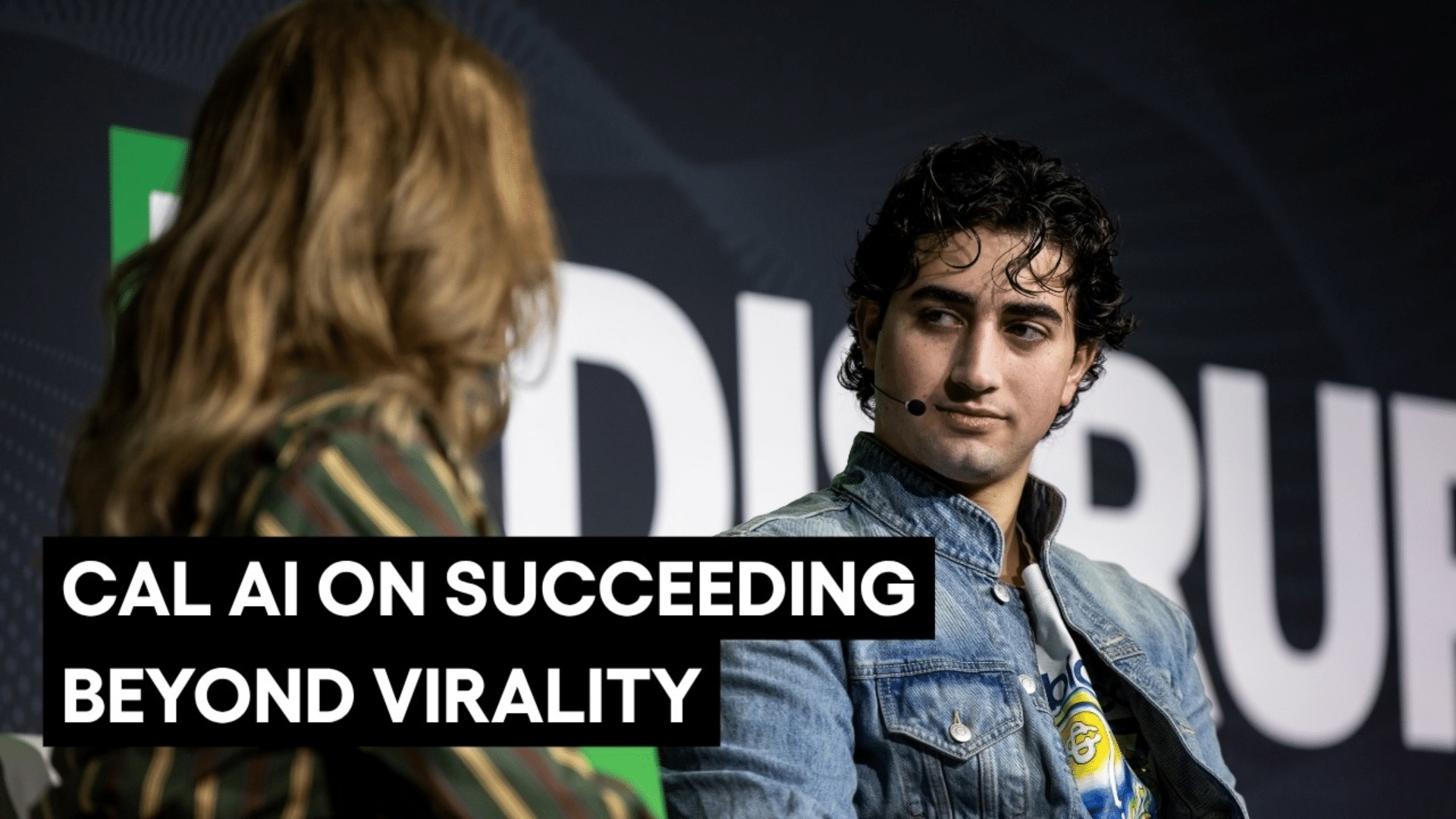












Zach Yadegari, the 19-year-old co-founder of calorie-tracking app Cal AI, discussed how he scaled the app to 15 million downloads and $30 million in annual revenue before MyFitnessPal acquired it in December 2025, a deal announced the following March, speaking at TechCrunch Disrupt 2026. Yadegari, who left MyFitnessPal earlier this year to launch a new consumer AI startup called “Persona,” walked through the Influencer Marketing strategy that drove Cal AI’s growth and the mistakes that shaped it.
One $2,000 Influencer Post Brought in Cal AI’s First 1,000 Customers
Yadegari said Cal AI’s earliest traction came from paying an influencer who was documenting his weight loss journey to post a single story showing him scanning a meal with the app. The post, which Yadegari said cost roughly $2,000, drove about 1,000 downloads within two days, and roughly 100 of those users converted to paying customers. He attributed the result to the influencer’s following rather than the content itself, calling it a “cult-like” community that trusted his recommendations.
Influencer Marketing (Not UGC) Was the Primary Growth Driver
Yadegari distinguished between user-generated content (UGC), which he described as a “mass spray and pray strategy” relying on volume across many creators, and Influencer Marketing, which he called “a sniper approach.” He said he personally tried making UGC content early on but found it wasn’t his strength and shifted his focus to product. For Cal AI, Influencer Marketing was the method that “really took us off.”
Revenue Scaled From $30,000 to $1M/Month in Six Months
Once the first influencer post proved out, Yadegari said the team began recruiting influencers “as fast as we could.” Monthly revenue went from $30,000 in month one to more than $100,000 in month two, more than $300,000 in month three, $500,000 in month four, and $1 million by month six, which he described as a largely linear, predictable formula once the recruiting pace became exponential.
Views Mattered More Than Follower Counts When Picking Influencers
Yadegari said Cal AI looked for influencers with “very tight communities” rather than raw audience size, setting a minimum of roughly 50,000 followers but weighting views more heavily than that number. The goal was finding creators whose audiences “aspired to be like them” and would adopt products they endorsed, which he said was a better predictor of conversion than follower count alone.
Negotiating Flat Fees Against Required Views Cut Costs
Yadegari said many smaller creators initially quoted flat per-video rates that would have been unprofitable relative to their view counts. The team’s workaround was restructuring deals around outcomes, offering a creator’s asking price in exchange for a required view threshold or a set number of videos rather than a single post. He said creators were often indifferent to the format as long as they received the agreed payment, which brought costs down to profitable levels.
Paid Ads Required Separate Content From Organic Posts
Running influencer content directly as paid ads capped profitable Facebook spend at about $5,000 a day, according to Yadegari. He said the team found that content performing well organically did not translate to paid performance. Instead, recruiting creators specifically to produce ad-focused content, which he described as more direct and “salesy” than viral organic posts, allowed paid spend to scale Cal AI’s revenue from $2 million to $4 million a month.
Retention Was Treated as a Product Problem, Not a Marketing One
Asked how the team addressed churn, Yadegari said Cal AI did not run retention-specific marketing campaigns beyond email, instead improving the accuracy of its AI food-scanning pipeline. He said the company tracked an internal evaluation set for the scanner’s calorie and macro estimates and saw retention rise in direct correlation with accuracy improvements over time.
Earlier Failed Apps Shaped the Strategy Behind Cal AI
Before Cal AI, Yadegari and his co-founders launched six apps in roughly a year, including a social fitness app, a motivational alarm clock app called Grind Clock, a payment link tool, and a wallpaper app. He said Grind Clock initially ran on an ad-supported free model that generated little revenue, and switching it to a hard paywall multiplied revenue roughly tenfold, a lesson the team carried directly into Cal AI’s own subscription-first model. Persona, he said, will apply similar growth strategies going forward, with the company only now shifting its focus from product development to marketing after securing $10 million in funding.
Subscribe to Our Newsletter
Check Out Our Podcast