






Strategy
BBB National Programs’ Jennifer Santos on EU Creator Rules: Treat Gifts Like Paid Deals, Fix the Brief, Run One Playbook

Europe’s proposed Digital Fairness Act would require creators to label sponsored content with specific words, “advertisement” or “commercial collaboration,” visible from start to finish. It would also hold brands responsible for disclosure when the only exchange is a free product. Jennifer Santos of BBB National Programs’ Center for Industry Self-Regulation’s Institute Responsible Influence reads the proposal as a more detailed version of rules U.S. brands already face, and her advice to companies operating in both markets is to build one playbook to the stricter standard.
Those U.S. rules rest on Federal Trade Commission guidance, which Jennifer applied for four years as an attorney at BBB National Programs’ National Advertising Division (NAD), evaluating whether national ad campaigns were truthful. “Honestly, I think in practice both approaches, the U.S. approach and the European approach, lead to the same place,” she says.
Reaching that place is where creators struggle, in her experience. At NAD, she found the problem was often that creators did not know the rules existed. “I think knowing the rules is very different than knowing how to apply them,” Jennifer explains. She joined the Center for Industry Self-Regulation in July 2025 as program development manager to launch the Institute for Responsible Influence (IRI), a New York-based program that trains and certifies creators and also serves brands.
The goal is to make disclosure routine in everyday content production, and IRI monitors certified creators afterward so it can flag a missed disclosure. Certification opened in April 2026. Europe’s proposal now tests her view that the two systems converge.

Europe Adds Detail to the FTC’s Principle
Under FTC guidance, a material connection between a creator and a brand must be disclosed clearly and conspicuously. “Consumers deserve to know when they’re looking at advertising,” Jennifer says. Europe keeps that principle and adds specifics. “This proposal spells out the actual words that a creator should use,” she notes.
The frameworks also differ on platform tools. Europe’s draft would require creators to use a platform’s built-in disclosure tool, while the FTC has cautioned that those tools may not be enough on their own. “They really stop short of saying they aren’t enough because in some circumstances they could be,” Jennifer explains. On some platforms, the label sits on a low-contrast background or flips to show what music is playing.
Her practical advice covers both regimes. Creators should switch on the built-in tool and put a clear label in the content itself. “I think platforms bear some responsibility here in making sure that creators know the tools that are available to them and that they are very clear and conspicuous,” she adds. The label is the creator’s final step, but the proposal also reaches back to the company that hired the creator.
Gifting Programs Need the Same Standard as Paid Deals
Brands would answer for creator compliance under the proposal even without a contract, as when they send free product. “In my opinion, brands and agencies shape the partnership with creators,” Jennifer says. They choose the creator, set the incentives, write the brief and supply the product, so responsibility, in her words, “can’t really stop with the person holding the phone.”
The U.S. already applies that principle. The FTC has said advertisers and intermediaries, including agencies and even influencer platforms, can be held responsible, Jennifer notes. Europe adds clarity on arrangements without a formal contract, such as PR packages and event invitations, and limits what a contract clause can do. “This new proposal indicates that those clauses in a brand contract are not enough for them to push liability to the creator,” she says.
Her steps are to write disclosure terms into agreements and send disclosure guidance with every gift. “I really think it’s just about holding the gifting programs to the same standard as the paid programs,” Jennifer says. Those instructions need a home, and for her, it is the creator brief.
The Creator Brief Carries the Compliance Load
Jennifer returns to the brief in three separate answers, on agency work, cross-border campaigns and her first fix for brand marketers. “I think also being very clear in your brand briefs about what you’re requiring from your creators, how they should be disclosing, is all very important,” she says.
The process she outlines starts with sourcing creators who are already trained and continues after the post goes live. Contracts can still assign disclosure to creators, but brands also need monitoring, a remediation plan, and a way for creators to raise questions. “The FTC says that brands should have a way to monitor, have a way to remediate, have a way to make sure that you are educating creators on what needs to be done,” Jennifer explains.
Agencies, which can share responsibility under both frameworks, can source certified creators and spell out disclosure in their own creative briefs. Jennifer pitches IRI as a complement that lets brands show they are educating creators, monitoring them, and keeping a channel open. The practical steps, she argues, are the same in any market.
Brands in Both Markets Should Run One Playbook
“Don’t run two playbooks,” Jennifer says. Brands and agencies working in the U.S. and Europe should build to the higher standard and make sure every creator brief states exactly where the disclosure goes.
She compares it to AI regulation, where rules are starting to fragment across U.S. states and companies aim for the highest standard. She applies the same reasoning to the proposal’s provisions on marketing aimed at children and teens, where transparency matters regardless of audience.
On whether the U.S. will follow Europe, Jennifer points to existing FTC guidance. “I think we’re already halfway there,” she says. She is unsure the U.S. will ever match Europe’s level of prescription, and she credits current guidance with letting creators keep their own voice as long as they disclose. Either system depends on creators being willing to do that.
Trust Data Challenges Creators’ Fear of Disclosing
Many creators believe a disclosed post will lose viewership or be held back by the algorithm, a belief Jennifer calls misinformation. BBB National Programs’ 2025 Influencer Trust Index, a survey of more than 3,700 consumers, found that about 58% have made purchases because of influencer endorsements, yet only 5% completely trust them.
According to the index, 71% said transparency about brand partnerships drives their trust, and about 64% cite undisclosed partnerships as a driver of distrust. Seven in 10 would feel deceived to learn a creator had not disclosed one. In her reading, disclosure only adds to the trust audiences place in creators they already follow.
She also wants platforms to make sure properly disclosed content is not penalized by the algorithm. “I think the more research we can do about that would really help creators to not be scared of disclosure,” Jennifer says. Research and education are also where she sees self-regulation earning a place next to the law.
Europe Shows Self-Regulation Working Beside the Law
Europe arrived at its proposal with creator training already in place. The European Advertising Standards Alliance (EASA) offers a training and certification template that self-regulatory organizations can adopt, and that education predates the legislation, Jennifer explains. “I really think it’s a great example of how self-regulation can work alongside regulation and really also can help inform it,” she says.
IRI is pursuing that model in the U.S. “We also have brands that are purchasing seats in bulk and requiring certification in order to work with them for certain creator campaigns,” Jennifer says. Individual creators sign up on their own, and Syracuse University’s Center for the Creator Economy has made certification mandatory for students in its Introduction to the Creator Economy class.
Brands are the more natural channel, since many Fortune 500 companies are BBB National Programs partners. “Trying to get the word out to creators is definitely a different avenue for us and one where we’re sort of learning,” Jennifer notes.
Jennifer Wants Certification to Be a Hiring Baseline
“Five years from now I’d like responsible influence to be the default, not the differentiator,” Jennifer says. She expects questions about AI-generated content, virtual influencers, new formats and platforms that do not exist yet, which is why IRI built monitoring and ongoing resources into the program. Its training already tells creators not to use AI to change a product’s results, look, or performance.
Her reading of Europe’s proposal and her pitch for IRI rest on one premise. Both frameworks require clear disclosure, and the work lies in applying it through the brief, the gift, and the post.
She wants brands to treat certification like professional credentials elsewhere in marketing. “That means certification becomes something brands and agencies expect to see when they choose a creator,” she says.
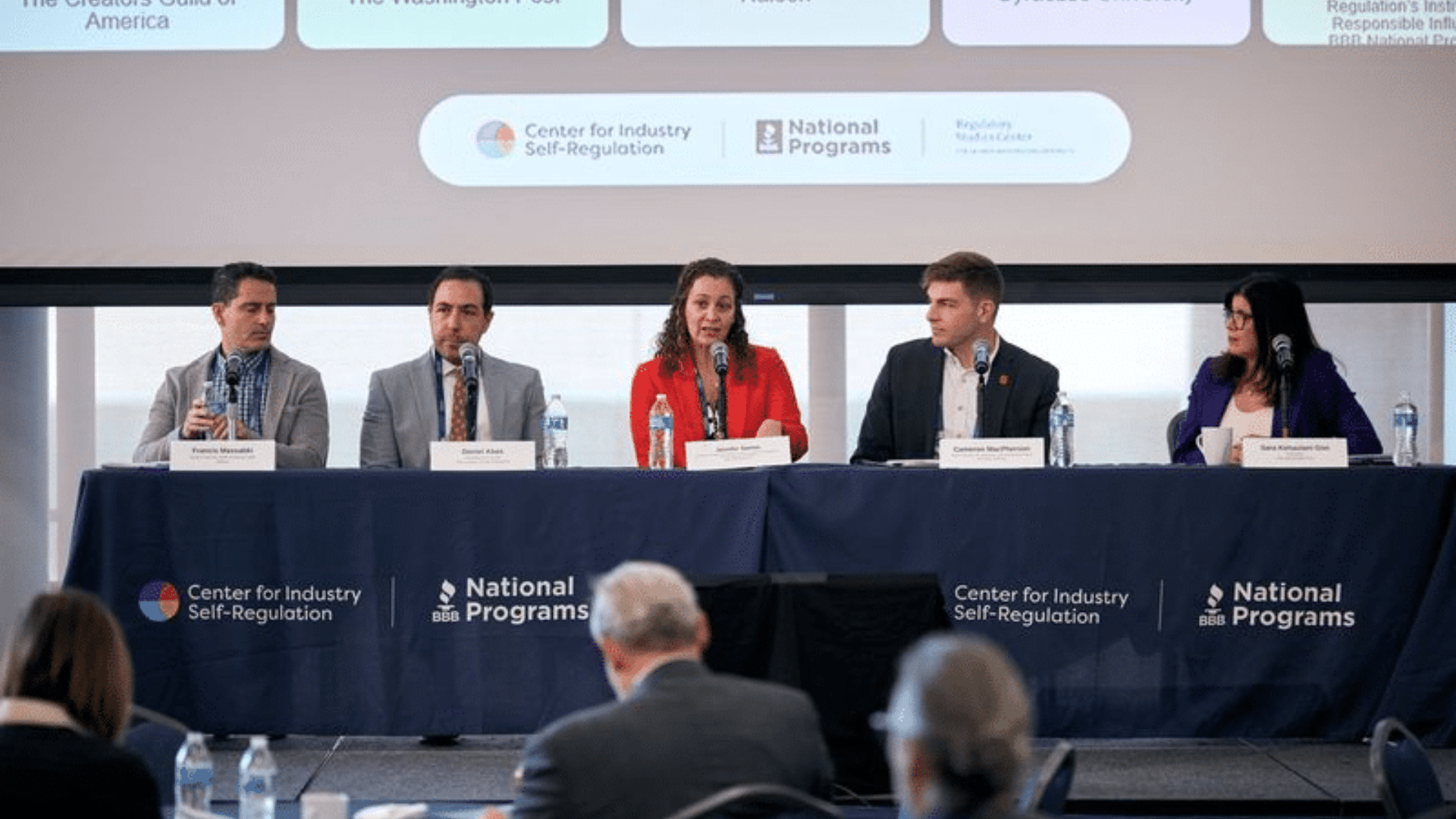
Cover photo: Jennifer Santos speaking at the Creator Economy Panel at the Annual Soft Law Summit 2026
Subscribe to Our Newsletter
Check Out Our Podcast