




Influencer
How a Coffee Pot and a Growing Gen Z Audience Pushed ‘Volksgeist’ From Music Into History and Politics

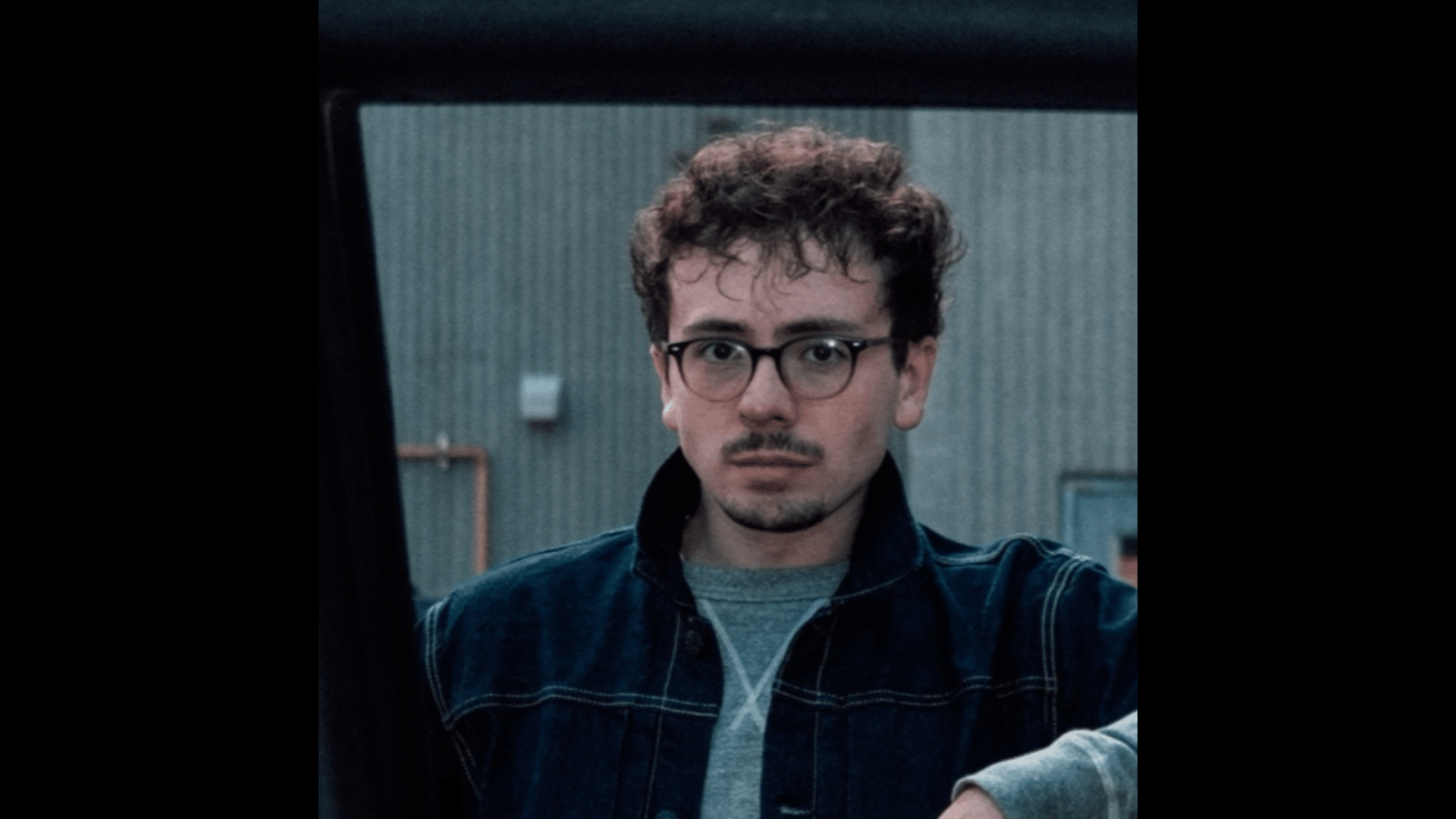
In the first couple of years of “Volksgeist,” Philip Damico drank coffee every workday from a $5 pot and remembers thinking, “When I’m 30 years old, I don’t want to be still drinking the worst coffee that ever existed.” He is now approaching 30, and so is the Gen Z audience that started watching his music documentaries when he and many of them were 18. He has rebuilt his channel around that fact, keeping the long-form documentary format and changing what it covers as his viewers’ concerns change.
That rebuild has taken “Volksgeist,” the channel he founded in 2018, past 900,000 subscribers, and as of 2026, Philip says he has pivoted away from music. Philip describes the work in generational terms. “I make documentaries about really big topics through the lens of people my age,” he says.
That lens is also a forecast. “I see the first signs of the fact that I will soon be older than the average cultural consumer and so will my audience,” he says. Acting on it meant leaving a music audience that would have resented brand deals, and what he is still working out is how to pay for long-form storytelling without depending on the algorithm.
Three Flat Years After 300,000 Subscribers
“Volksgeist’s” early growth came fast and then stopped. Philip went from zero to 300,000 subscribers in a year or two, then spent about three years adding a few hundred a month, sometimes none.
He traces the stall partly to himself. “I had low confidence, and so I was not really always willing to try new things,” he says. He was also still learning how to make great videos and run a company.
The audience compounded the problem. Philip says music fans tend to resist anything that feels commercial, and that “the audience for music would be very hostile if I took a brand deal.” He does not blame them, noting that many of his loudest critics were teenagers.
By 23 or 24, he had concluded that music media was a ceiling. “This is such an uncommercialized world that I’ve already kind of reached the peak,” he says. He rejects the idea that leaving was about greed. “I had a lot of passion for it, but it wasn’t viable for the future that I want to have.”
An André 3000 Documentary Showed The Craft Could Travel
The music years still gave him his method. Philip credits them with teaching him to make a young audience see itself in an artist’s rise. “I learned how to tell stories in a way that made people see their own life or their own journey in a very successful person’s journey,” he says.
About two years ago, Philip had lost his passion for YouTube and was weighing whether to quit, feeling he had “run through my entire career by the age of 23, 24.”
Then “Volksgeist” released a documentary on André 3000 and his journey with hip-hop group OutKast. “I just got to a new level with storytelling, where suddenly the videos, instead of only getting a hundred thousand views, could now get millions of views,” Philip says. He read the result as proof that the craft was portable and that he would not have to stay boxed into one subject.
Growing Up Alongside A Gen Z Audience
The new subjects follow where his audience has gone. His peers still love the artists of their youth, Philip argues, but they are no longer looking for new ones. “I am now more concerned about what is going to happen to the world and so is the audience,” he says. Viewers have told him as much in person, saying the rapper videos were great in college, but the history videos are better now.
He cites Philip DeFranco and Hank Green as creators who have lasted nearly two decades by growing with their audiences. “I’m gonna grow up in the content as well, and so will the audience,” Philip says.
He continues, “It’s hard, and it’s a little bit scary to change what you do, to change what makes you money. But it’s also kind of hard and scary to imagine being a pathetic loser who does the same thing over and over forever.”
Paying For The Pivot With Diddy And Young Thug
Philip designed the pivot to draw attention no matter what. “I realized that I could harness and take advantage of people’s interest in negativity,” he says. “Volksgeist” began covering Sean “Diddy” Combs and court cases.
One series drew what he estimates at six or seven million views. For the first time, he had savings, and with them, room to test what worked.
He still moved one step at a time. His first break from biography was a Young Thug video focused on the rapper’s legal case, built to look like the artist profiles his audience knew. It has about a million views. “You can look at the different elements of the video and you can kind of shift one element at a time,” he says.
That is his advice to creators weighing a change. Keep the format and move the subject, because swinging too far “is how people kind of kill their channels, probably.” More experienced YouTuber friends warned him off pivoting, yet Philip found it “wasn’t that hard and it wasn’t that scary” and calls it “probably the best decision I ever made in my life.”
Building The Story From The Files
Topic-led films force a choice about which narrative a video aligns with, so Philip’s team maps the history of a problem first. The obesity video began as a film about Ozempic until the team decided a miracle drug made for about five minutes of story. It became an account of why the epidemic happened.
A section on the body positivity movement frustrated some viewers. “I think people sometimes just want to hear what they already believe,” he says. “And I think it’s probably somewhat my job to knock that down sometimes.” Upcoming topics will challenge viewers further, he adds, and he is “a little worried about it.”
The same discipline governs his conspiracy-adjacent work. His Jeffrey Epstein videos total about 14 million views and are, he says, the most profitable thing he has made, built from the files, biographies, interviews and magazine reporting. He dismisses creators who claim YouTube shadow bans them, arguing their videos are usually weaker or unfounded.
AdSense Pays For Now, Owned Products Come Next
Volksgeist runs primarily on YouTube AdSense. “YouTube has made my career,” Philip says, arguing that no other video platform comes close on pay per view.
He took no sponsorships from 2025 until about March 2026, betting that a bigger channel would command a higher baseline rate. Night Media has handled brand deals for about six months. Spotify pays well enough to justify uploading there; Patreon goes unpromoted until he can offer subscribers more, and Nebula, he says, probably brings in the least revenue of any stream.
He does not want AdSense to be permanent, because optimizing for it means “selling out to the algorithm all the time.” He ties that to turning 30 as well. “When I’m in my 30s, and I’m a dad or something, I’m not going to want to be acting silly all the time,” he says. For 2027, he plans a book, a magazine and a return to clothing, products meant for a smaller base of customers.
Short-form sits outside that plan. “Volksgeist” has never built a TikTok or Instagram audience, and Philip says Instagram is welcome to license his catalog for at least $50,000 to $60,000. “I’m not going to use my employees’ time to set up an Instagram page that’s going to make no money,” he says.
Aiming To Be The Anthony Bourdain Of Gen Z
Philip’s ambitions now reach past the channel. “I want to be like the Anthony Bourdain of Gen Z,” he says. “And that’s my honest dream.” He wants to get better on camera, admitting he is “kind of okay, but I’m not that good.”
He has avoided internet drama to keep what he calls a clean slate for something bigger. That includes a plan, which he says may run as a post-ironic bit, to try to enter Congress in two years. His stated targets are 5 million subscribers and a large team of creatives.
He wants other creators to aim as high. “I think everyone should have a big dream,” he says. Held the right way, a dream “makes you feel like you can do anything because you can do anything.”
Subscribe to Our Newsletter
Check Out Our Podcast