Brands no longer have to guess which creator video deserves the media budget. They can put content in market first and let audience response decide where paid spend goes.
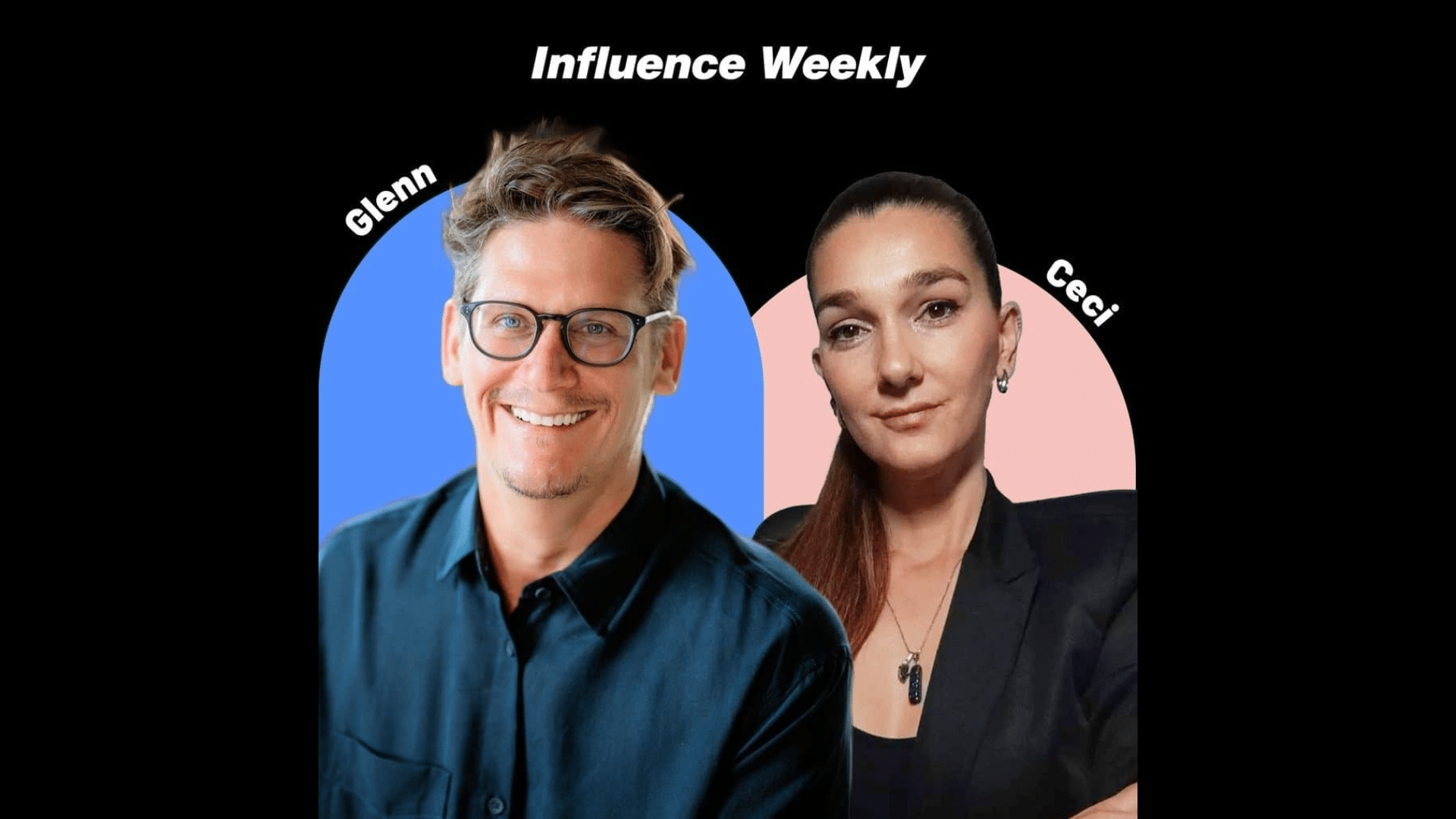
Glenn Ginsburg, President of QYOU Media, runs that model for major entertainment, gaming, and consumer brands. He came to creator marketing from television, with sales and digital roles at The Walt Disney Company, MTV Networks, USA Networks, and Marvel before joining QYOU in 2015.
He sat down with Net Influencer Senior Editor Ceci Carloni to break down what creator ad testing costs, how regulated brands make it work, and why tests still fail when brands pick the wrong talent.
1. The Audience Now Picks Which Ads Get Paid Media
The engine runs on volume. Brands commission creators to try different ideas or, increasingly, license videos people already make about the brand.
“You’re letting the audience now tell you which content deserves your media dollars instead of guessing in a conference room,” Glenn said.
Organic performance gives the first signal. Paid media then goes behind the strongest pieces, and winners get scaled against the communities that matter most. “It’s a dynamic where the money follows the winners,” he explained.
Creative has to prove itself before the budget commits. That sequence only works with a steady flow of approved content.
2. Regulated Brands Run It Through Approval Lanes
Approval volume is the test for large brands with legal teams and set guidelines. Glenn’s example is Molson Coors, which he said is moving away from investing heavily in a single creative idea and loosening guidelines so its agencies can bring in more UGC for testing.
“Alcohol is probably as regulated as it gets,” he said. The company sorts content into three approval lanes, according to Glenn: fast track, needs a conversation, or hard no.
“The creators know the boundaries up front. So legal isn’t reviewing every post from scratch,” he noted. Brand, legal, creative, and media teams agree on claims, restrictions, and usage rights before content gets made.
If the alcohol category can clear creator content at volume, legal review becomes a process other brands can design. That matters to QYOU, whose premise, in Glenn’s telling, came from television. The scaled audiences TV once reached were moving to social platforms, so the model serves brands chasing reach, with direct-to-consumer clicks as one use.
Usage rights, the last item on that list, also shape what each test costs.
3. Define the Win Before Pricing the Test
Glenn won’t price a winning ad until the brand defines winning. A video meant to explain a new game feature gets tested differently than one built for view-through or purchase. “Each objective really decides on what you’re gonna test and really what you’re willing to pay,” he said.
His hypothetical starts with six licensed videos at a couple hundred to a couple thousand dollars each, depending on the creator’s reach. A $15,000 to $25,000 test campaign then gives a reliable read against target communities, in his estimate.
Rights set the rest of the price. A week or a month of amplification is built into the original talent negotiation. “If the brand is saying, I really want to be able to leverage this for six months or longer or have full rights, the price goes up,” Glenn said.
That structure means a creator whose video wins does not earn more for it. “For the most part it’s not really structured that way currently,” he said.
4. Community Size Sets the Budget and the Shelf Life
For a narrow pilot, Glenn recommends one community, one platform, and maybe one objective, with three to six creators covering a few approaches.
“Between creators and media, we’re trying to at least hit 25% to 45% of that community that we’re targeting,” he said. Past that, efficiency drops. “When you’re saying, I’m gonna try and reach 100%, you’re gonna really get a lot of diminishing returns,” Glenn argued.
A small community can be tested for about $25,000, according to Glenn, and the number scales with reach.
Size also governs how long a winner lasts. “If you’re going super niche and it’s a very tight community, the content’s only gonna last so long,” he said. For a broad community, such as men 18 to 34 who like sports, he advises putting out as much content as possible and trading in new creative once efficiency dips.
Every winner has a shelf life, so the testing never really stops. That puts the budget conversation in front of the CMO again and again.
5. The CMO Is Funding a Pipeline
Ceci asked how marketers defend budgets when 95 of every 100 videos are expected to miss. Glenn rejected the premise. “The ones that don’t lead aren’t necessarily failures,” he said.
QYOU does strategy work up front on communities, creators, and formats, then optimizes toward what performs. In one example split, Glenn put about 80% of budget against a brand’s key communities and 20% toward new communities and formats. “They’re really funding a pipeline for what’s next,” he said of CMOs who back that structure.
The pitch no longer belongs to one department. At QYOU’s enterprise partners, Glenn sees influencer, social, media, and PR teams working together. “It’s not one team anymore,” he said.
Cross-team buy-in protects the budget. It cannot fix a bad creator match.
6. The Wrong Creator Kills a Good Idea
Creator selection is where Glenn sees pilots fail even when the idea is right. Either the creator doesn’t speak to the target community, or the format clashes with what the creator is known for. That mismatch draws the most audience pushback, in his experience.
He described a recent campaign for a TV product aimed at parents. The creator sat her child in front of a TV and praised the show. “Literally the post before that, she’s talking to her audience about how she doesn’t let her children watch television,” Glenn said. The audience turned sharply negative.
“You gotta really do the heavy lifting of picking the right talent to speak to the right communities,” he said. His advice for avoiding that starts before a brief is written.
7. Study the Creator Before Writing the Brief
The one thing Glenn tells brands to stop is deciding what content should look like before understanding why people watch a creator. “In TV, you script it, you polish it, you’re approving it, every frame,” he said.
That means time in the creator’s videos and comments, learning how they tell stories and relate to their audience. “That’s what, at the end of the day, you’re going to actually pay for,” Glenn explained.
Full creative freedom carries its own risk. Send one brief to hundreds of creators, and each comes back with a slightly different take. Without control, Glenn warned, the brand starts to lose its weight. “It’s death by a thousand nicks,” he said.
QYOU’s answer is a professional creative layer between brand and creator that keeps content on message while making sure it still speaks to the creator’s audience. Glenn’s target sits somewhere between fully scripted and 100% creative control.
Glenn’s playbook runs in two directions. Rules get set early, through approval lanes, defined objectives, and negotiated rights. Creative stays loose inside those rules, and the audience decides what gets funded.
Glenn has watched creator marketing move from experiment to core marketing function for many brands. A core function gets judged like one, on results and accountability.
Dragomir is a Serbian freelance blog writer and translator. He is passionate about covering insightful stories and exploring topics such as influencer marketing, the creator economy, technology, business, and cyber fraud.













Brands no longer have to guess which creator video deserves the media budget. They can put content in market first and let audience response decide where paid spend goes.
Glenn Ginsburg, President of QYOU Media, runs that model for major entertainment, gaming, and consumer brands. He came to creator marketing from television, with sales and digital roles at The Walt Disney Company, MTV Networks, USA Networks, and Marvel before joining QYOU in 2015.
He sat down with Net Influencer Senior Editor Ceci Carloni to break down what creator ad testing costs, how regulated brands make it work, and why tests still fail when brands pick the wrong talent.
1. The Audience Now Picks Which Ads Get Paid Media
The engine runs on volume. Brands commission creators to try different ideas or, increasingly, license videos people already make about the brand.
“You’re letting the audience now tell you which content deserves your media dollars instead of guessing in a conference room,” Glenn said.
Organic performance gives the first signal. Paid media then goes behind the strongest pieces, and winners get scaled against the communities that matter most. “It’s a dynamic where the money follows the winners,” he explained.
Creative has to prove itself before the budget commits. That sequence only works with a steady flow of approved content.
2. Regulated Brands Run It Through Approval Lanes
Approval volume is the test for large brands with legal teams and set guidelines. Glenn’s example is Molson Coors, which he said is moving away from investing heavily in a single creative idea and loosening guidelines so its agencies can bring in more UGC for testing.
“Alcohol is probably as regulated as it gets,” he said. The company sorts content into three approval lanes, according to Glenn: fast track, needs a conversation, or hard no.
“The creators know the boundaries up front. So legal isn’t reviewing every post from scratch,” he noted. Brand, legal, creative, and media teams agree on claims, restrictions, and usage rights before content gets made.
If the alcohol category can clear creator content at volume, legal review becomes a process other brands can design. That matters to QYOU, whose premise, in Glenn’s telling, came from television. The scaled audiences TV once reached were moving to social platforms, so the model serves brands chasing reach, with direct-to-consumer clicks as one use.
Usage rights, the last item on that list, also shape what each test costs.
3. Define the Win Before Pricing the Test
Glenn won’t price a winning ad until the brand defines winning. A video meant to explain a new game feature gets tested differently than one built for view-through or purchase. “Each objective really decides on what you’re gonna test and really what you’re willing to pay,” he said.
His hypothetical starts with six licensed videos at a couple hundred to a couple thousand dollars each, depending on the creator’s reach. A $15,000 to $25,000 test campaign then gives a reliable read against target communities, in his estimate.
Rights set the rest of the price. A week or a month of amplification is built into the original talent negotiation. “If the brand is saying, I really want to be able to leverage this for six months or longer or have full rights, the price goes up,” Glenn said.
That structure means a creator whose video wins does not earn more for it. “For the most part it’s not really structured that way currently,” he said.
4. Community Size Sets the Budget and the Shelf Life
For a narrow pilot, Glenn recommends one community, one platform, and maybe one objective, with three to six creators covering a few approaches.
“Between creators and media, we’re trying to at least hit 25% to 45% of that community that we’re targeting,” he said. Past that, efficiency drops. “When you’re saying, I’m gonna try and reach 100%, you’re gonna really get a lot of diminishing returns,” Glenn argued.
A small community can be tested for about $25,000, according to Glenn, and the number scales with reach.
Size also governs how long a winner lasts. “If you’re going super niche and it’s a very tight community, the content’s only gonna last so long,” he said. For a broad community, such as men 18 to 34 who like sports, he advises putting out as much content as possible and trading in new creative once efficiency dips.
Every winner has a shelf life, so the testing never really stops. That puts the budget conversation in front of the CMO again and again.
5. The CMO Is Funding a Pipeline
Ceci asked how marketers defend budgets when 95 of every 100 videos are expected to miss. Glenn rejected the premise. “The ones that don’t lead aren’t necessarily failures,” he said.
QYOU does strategy work up front on communities, creators, and formats, then optimizes toward what performs. In one example split, Glenn put about 80% of budget against a brand’s key communities and 20% toward new communities and formats. “They’re really funding a pipeline for what’s next,” he said of CMOs who back that structure.
The pitch no longer belongs to one department. At QYOU’s enterprise partners, Glenn sees influencer, social, media, and PR teams working together. “It’s not one team anymore,” he said.
Cross-team buy-in protects the budget. It cannot fix a bad creator match.
6. The Wrong Creator Kills a Good Idea
Creator selection is where Glenn sees pilots fail even when the idea is right. Either the creator doesn’t speak to the target community, or the format clashes with what the creator is known for. That mismatch draws the most audience pushback, in his experience.
He described a recent campaign for a TV product aimed at parents. The creator sat her child in front of a TV and praised the show. “Literally the post before that, she’s talking to her audience about how she doesn’t let her children watch television,” Glenn said. The audience turned sharply negative.
“You gotta really do the heavy lifting of picking the right talent to speak to the right communities,” he said. His advice for avoiding that starts before a brief is written.
7. Study the Creator Before Writing the Brief
The one thing Glenn tells brands to stop is deciding what content should look like before understanding why people watch a creator. “In TV, you script it, you polish it, you’re approving it, every frame,” he said.
That means time in the creator’s videos and comments, learning how they tell stories and relate to their audience. “That’s what, at the end of the day, you’re going to actually pay for,” Glenn explained.
Full creative freedom carries its own risk. Send one brief to hundreds of creators, and each comes back with a slightly different take. Without control, Glenn warned, the brand starts to lose its weight. “It’s death by a thousand nicks,” he said.
QYOU’s answer is a professional creative layer between brand and creator that keeps content on message while making sure it still speaks to the creator’s audience. Glenn’s target sits somewhere between fully scripted and 100% creative control.
Glenn’s playbook runs in two directions. Rules get set early, through approval lanes, defined objectives, and negotiated rights. Creative stays loose inside those rules, and the audience decides what gets funded.
Glenn has watched creator marketing move from experiment to core marketing function for many brands. A core function gets judged like one, on results and accountability.
Listen to the full conversation on “The Big Three” podcast.
Subscribe to Our Newsletter
Check Out Our Podcast