






Talent Collectives
Lost Co-Founds Media Companies With Athletes and Targets Television Budgets on YouTube

YouTube channels built around elite athletes are beginning to generate media company valuations, but production capacity, sales expertise, strategy, and capital rarely come bundled with a management deal.
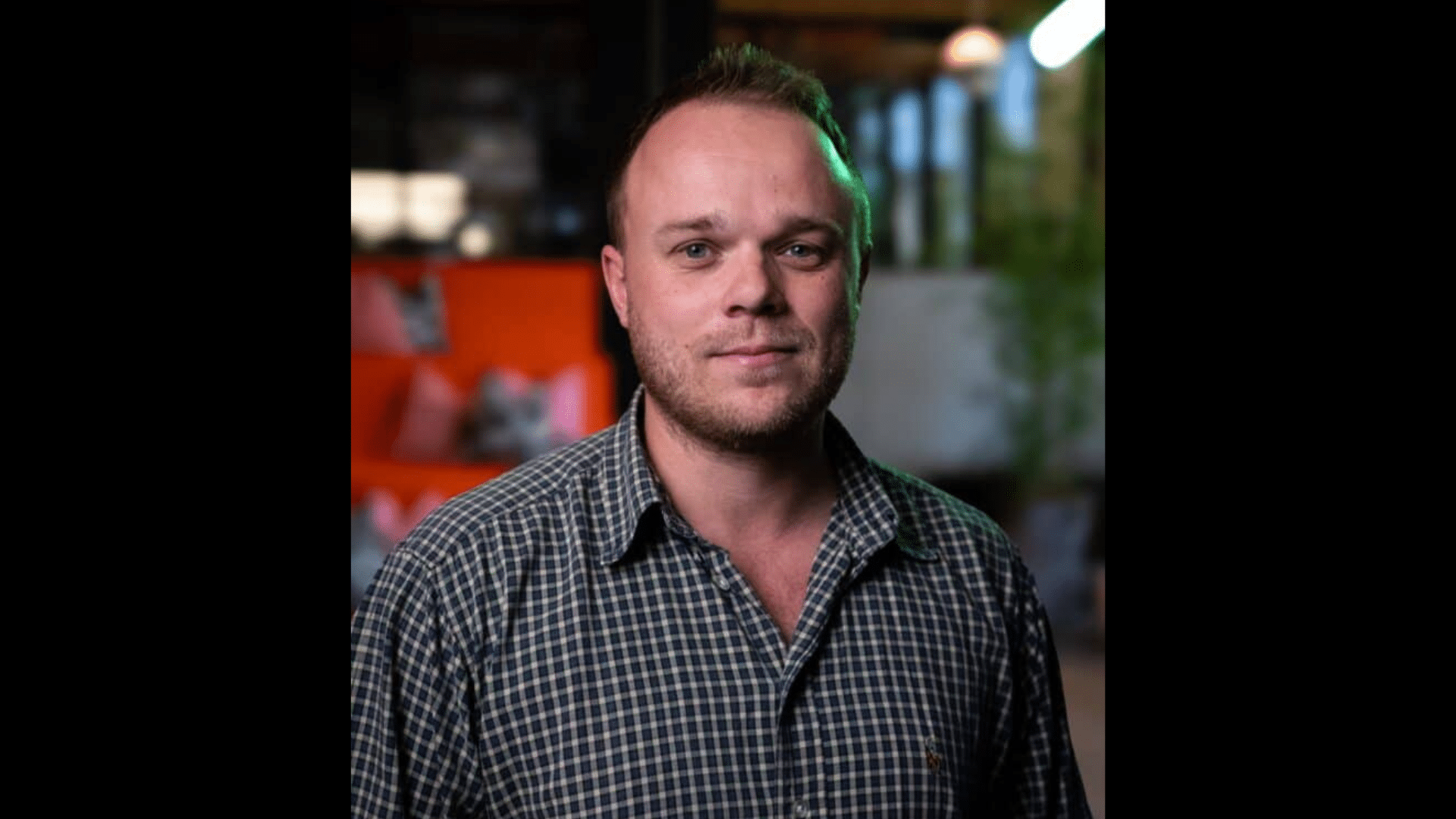
Tristan Heiner founded Lost in January 2026 to provide that infrastructure, co-building YouTube-first entertainment companies with athletes and celebrity creators and taking equity stakes in each venture rather than billing for services.
The Sydney-based studio closed an AUD $1.4 million (~$975K) seed round in early 2026 and operates with a team of six, including a YouTube strategist based in Sweden. Lost does not charge creators for its work. Instead, it co-founds a company with each partner, takes an ownership stake, fronts all production and operating costs, and recovers those expenses through initial revenue before splitting profits. The creator contributes no capital.
Tristan arrived at the idea through an indirect route. A lawyer by training, he spent six years at the University of Queensland before practicing corporate law, then joined a fintech startup as Head of Operations. A three-and-a-half-year break followed, during which he traveled through Latin America, India, Nepal, and Pakistan and made documentary films.
“Lost was born out of my own desperate attempts to start my own YouTube channel,” he says. “I realized what I really need is an operational infrastructure partner.”
The company is in active conversation with some of Australia’s top athletes, music artists and comedians to help them begin their journeys on YouTube. Tristan is looking to partner with creators and athletes who already possess what institutional investors are beginning to treat as a distinct asset class: fandom.
Fandom Is the Asset Institutional Capital Is Chasing
The thesis behind Lost turns on a distinction between an audience and a fandom. Tristan argues the difference is measurable. “If you want to know if you’ve actually got influence,” he says, “try and see if you can assemble people in a real-life experiential fashion. They don’t just watch you. They’ll fill a stadium for you.”
Athletes and music artists already clear that bar in ways most digital creators do not, and institutional investors have taken note. Slow Ventures is writing $2 to $3 million checks for creators with hyper-dedicated communities, including those in niches as specialized as woodworking. Steven Bartlett raised an eight-figure investment round for his creator holding company Steven.com in late 2025. The Chernin Group took a stake in Night Media, the U.S. talent company that co-launched Feastables with MrBeast and that has since acquired Experiential Supply Co., an activation firm, to add in-person event capability to its management offering.
Tristan points to The Sidemen, the UK creator collective, as a working model for what fandom-to-enterprise conversion looks like at scale. The group has sold out Wembley Stadium annually for its charity match since 2025. On the athlete side, golfer Bryson DeChambeau built a YouTube channel. Soccer player Erling Haaland used the FIFA World Cup to extend his YouTube presence through Sidemen collaborations and content calibrated to Gen Z audiences.
“Fandom creates purchasing power and distribution leverage,” Tristan says. “That’s the underwritable asset.” The commercial progression Lost envisions for each studio partner follows the same logic: YouTube channel first, then subscription businesses, consumer product ventures, and experiential activations built on top of the community the channel creates.
Equity Instead of Retainers: Why Lost Co-Founds Instead of Manages
The co-founding structure is the element of Lost that most directly separates it from talent management companies. A manager earns commission on brand deals negotiated on behalf of a client. Lost invests its own capital, builds the channel, and owns a portion of what results.
“If we were just a services agency, the talent would just be a client on our roster,” Tristan says. “Because we’re investing our own money and time, what it purchases is obsession. It’s Friday night at 10 p.m., and my team will be thinking about how we can build your entertainment company.”
A talent manager has limited motivation to stay invested when a creator’s cultural moment passes, Tristan argues, precisely because no capital was committed. “A talent management company will enjoy monetizing them while they’re culturally hot,” he says. “The minute the going gets tough, they’d be more than happy to drop that client.”
Joining Tristan at Lost is Head of Content Tom Rohr, a former Warner Bros. executive producer and showrunner with 16 years in Australian television experience, as well as its Head of Commercial Leilani Vakaahi, a former Head of Sales at Urban List. Additionally, an in-house YouTube strategist handles channel strategy. A livestream creative producer, recruited from Kick, is already on staff, and Tristan expects to build out that discipline further as the company’s livestreaming thesis matures. Talent management companies, he notes, do not typically employ specialists in channel architecture or live production, which is precisely where Lost is investing.
Lost Is Going After TV Advertising Budgets
One of the more specific elements of Lost’s commercial model involves which part of a brand’s media budget it targets.
“We’re not aiming for the influencer budgets; we’re aiming for the television budgets,” Tristan says. “Those are leading to some really fascinating conversations.”
The distinction turns on a performance threshold he attributes to Spotter, a U.S.-based Creator Economy firm, and Arcade Media in the UK. A creator television instrument, as they define it, produces content over 20 minutes long, publishes at a weekly or fortnightly cadence, draws a recurring viewership above 100,000, and reaches that audience predominantly on connected TV. By Tristan’s accounting, roughly 0.02% of all social video qualify.
Channels that clear that bar can be positioned as television inventory rather than social placements, targeting television media budgets rather than influencer line items. Large brands’ media budgets contain multiple discrete categories, Tristan notes, including influencer spend, branded content, and television buying. Lost’s pitch is that a YouTube channel built around a prominent athlete belongs in the third column, not the first.
To pursue those conversations, Tristan has hired traditional media salespeople with a background in brand media buying rather than Influencer Marketing. Athletes’ existing agents, whose work centers on endorsements and appearance fees, do not hold that skill set.
Lost Isn’t Looking for the Best Athlete
Selecting a studio partner at Lost is structured more like choosing a co-founder than signing a client, according to Tristan.
“We’re looking for not necessarily the best athlete in their sport, but the one who is culturally magnetic and really grabs people’s attention,” he says.
Beyond personality, Lost evaluates whether a prospective partner has a founder’s mindset, sufficient ambition, and the disposition to act in good faith over a multi-year business relationship. Where athletes are involved, the existing management relationship becomes part of the equation as well. “If they come with a pre-existing manager, now we’ve got another relationship in the marriage,” he says. “Is this someone we can harmoniously work with over 10 to 15 years?”
Lost goes deep with each studio rather than spreading its capital and attention across a large client list. Australia is behind the U.S. in YouTube and Creator Economy infrastructure, a fact Tristan views as competitive breathing room rather than a structural limitation. “That is a very frustrating thing, but it’s also an incredible opportunity for us as a company.”
Livestreaming, Experiential, and the Push to America
The near-term plan is five to six studio relationships in Australia to establish proof of concept and proof of revenue, then move the operation to the U.S. But beyond that sequence, Tristan sees two shifts reshaping the industry over the next five years: the mainstreaming of livestreaming and the commercial monetization of fandom through in-person experiences.
“If I had to bet my house on something, it would be that livestreaming will go mainstream,” he says. The gaming community built the format’s early audience. Streamers like iShowSpeed have helped move it toward commercially viable territory. Tristan expects every organization with a content strategy to include livestreaming as a core component within five years.
The Night Media/Experiential Supply Co. acquisition reads to him as a leading indicator of where the most sophisticated players in creator talent are already positioning. Lost intends to build that capability in-house, through an acquisition or by recruiting executives with event-marketing backgrounds similar to Red Bull’s. “I think the smart money already knows that experiential activation is going to be a big business in the next 10 years,” he says.
The broader conviction underlying all of it is that fandom, once properly cultivated and given full commercial infrastructure, is an enterprise asset that has barely been priced. Athletes and celebrity creators are the clearest holders of it. Lost’s bet is that most of them have not yet figured out how to cash it in.
“We want to turn athletes into YouTube-first entertainment companies where they’ve got more ownership, more creative control, more brand control,” Tristan says.
Subscribe to Our Newsletter
Check Out Our Podcast