





Strategy
Forbes’ Matt Craig on What the Top Podcast Earnings List Reveals About Power and Pay

When Netflix placed podcast shows alongside its biggest films in January 2026, it forced a question that Forbes had been circling for years: how much are the top podcasters actually making? The answer, Matt Craig found, was movie-star money, with a structural advantage no movie star has.
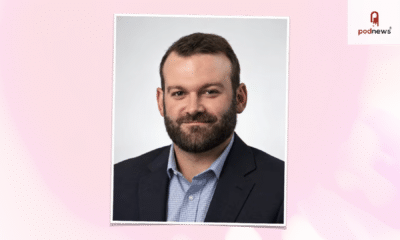
Matt, Forbes’ lead entertainment reporter based in Los Angeles, published the outlet’s “Highest-Paid Podcasters of 2026” list, the first-ever, this summer, estimating podcast-specific earnings from June 2025 to June 2026 through background conversations with dozens of agents, lawyers, managers, and executives.
“When Netflix is putting Jay Shetty right next to their biggest movies, it felt like this is as relevant and mainstream as any other form of entertainment we cover,” Matt says.
The list’s premise is entrepreneurship as much as earnings. Unlike film and television talent, podcasters in almost all cases retain ownership of their show’s intellectual property, meaning networks and platforms pay licensing fees rather than acquiring shows outright. That distinction is what makes podcasting structurally different from other entertainment categories. The asset stays with the creator, and so does the leverage.
Building the First Podcast Earnings Record Required Starting From Scratch
Podcast earnings had no objective, trusted public record before this list. Unlike acting, where decades of reporting have built a baseline of industry knowledge, the podcast business entered 2026 without anyone having systematically tracked what the top shows were actually making. Matt started without a single source in the space.
“It started the way that anyone would do it,” he says, “sending a ton of cold emails, trying to make whatever contact you could.” He asked sources to explain the revenue model from the beginning. “Walk me through it like I’m a fifth grader.”
The industry resisted initially, and once it became clear the project was moving forward, more insiders opened up. “We have no perfect information on anyone,” Matt says, “but a large amount of imperfect information that, hopefully, in the aggregate gets to fairly accurate earnings estimates.” That modeling was possible because the revenue structure is predictable: most shows monetize through host-read advertisements on a CPM basis, with the largest earners adding guaranteed advances from distribution platforms.
Establishing the list’s scope required exclusions. Live syndicated radio shows, such as “The Howard Stern Show,” were classified as radio even when released as episodes afterward, and YouTube-only creators were treated as internet creators rather than podcasters. “When you click on a list that says highest paid podcasters, it should be a fair representation of power and influence within the podcast industry,” he explains. Money is the objective measure, and the list was designed to reflect who the actual winners of the podcast industry are, not who earns most adjacent to it.
Joe Rogan’s $82M Lead Is a Volume Story
Joe Rogan tops the list at $82 million. The nearest competitor in recurring earnings is Steven Bartlett at $45 million. The apparent second-place entry, John Coogan and Jordi Hays of “TBPN” at $70 million, reflects a lump-sum payment from OpenAI’s acquisition of their show rather than ongoing earnings. “Without that deal,” Matt says, “they may not have been on the list at all.”
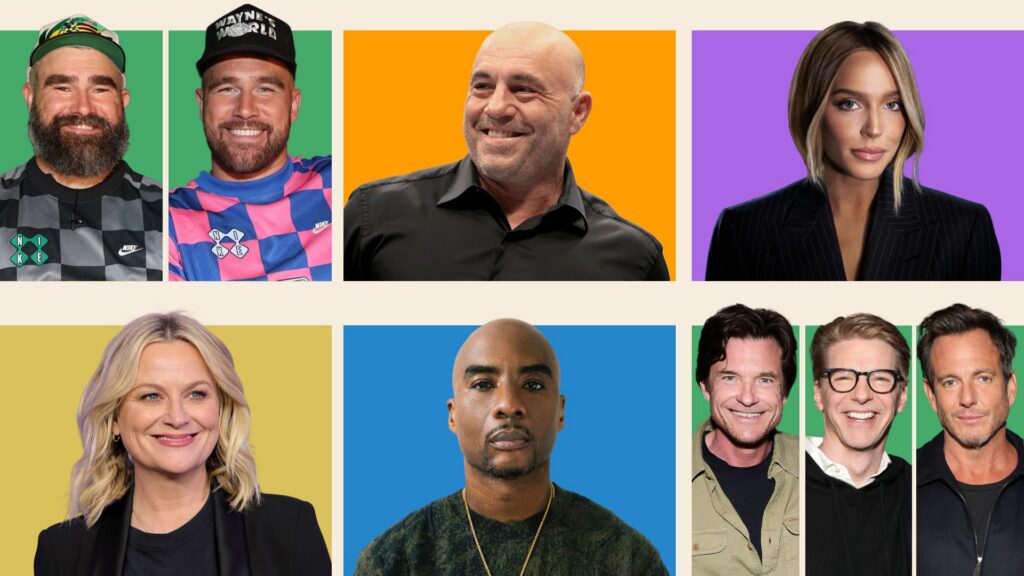
Credits (from top left): Matt Winkelmeyer/Wondery/Getty Images, Christian Petersen/Getty Images, Courtesy Charlamagne Tha God, Cody Pickens for Forbes, Dia Dipasupil/Getty Images, Emma McIntyre/Rodin Eckenroth/SiriusXM/Getty Images.
The gap comes down to output. Rogan publishes between 15 and 17 episodes per month, each running roughly two and a half hours, and with advertising priced on a CPM basis, that volume compounds directly into revenue. “He is an absolute workhorse when it comes to pumping out content,” Matt says. “None of the people below him, Bartlett or Ashley Flowers, do a lot, probably eight to ten episodes, but not at that volume.”
Genre clustering explains much of the broader distribution. True crime, sports, self-help, and politics each produced multiple high-earning shows, with advertisers willing to pay premiums to reach those specific audiences. “There’s a specific audience for self-help, and maybe the top three to five people are competing for that,” Matt says. “There is demand from advertisers in that category, and it was driving up the earnings.”
Why Platforms Pay Premiums for Podcasts
Podcast IP ownership is not a contractual footnote. It is the structural fact that determines who holds leverage when platforms compete for shows.
When Netflix began building its podcast catalog in 2026, Matt explains, it could not acquire the content like other properties, because the IP stays with the creator. The best it could do was pay a premium for a time-limited right to distribute, and talent that built its audience on YouTube had to be compensated for the viewers it loses by going behind a paywall. Initial offers in the $1 to $2 million range were rejected. Deals of $10 million or more per year eventually attracted marquee shows, almost all structured as one- to two-year trials.
The Spotify experience between 2020 and 2022 established the precedent. Spotify pursued audio exclusivity aggressively, pulling several shows off YouTube entirely, before eventually reversing course with shows returning to multi-platform distribution and their IP intact. “There was a push for exclusivity in audio five or six years ago, and it did not work at all,” Matt says. “So it is interesting to see that come back around with video.”
What the list captures, in part, is a market in which platforms need the shows more than the shows need any specific platform. “They’re splashing out a lot of money,” Matt says. “If they were to sign five more people from my list this year, those would be in excess of $10 million a year.”
Host-Read Ads Reward Fit Over Scale
The money at the top still runs predominantly on host-read advertisements, a format that rewards specific alignment between a brand and an audience rather than raw reach.
Matt points to Andrew Huberman and AG1 as the clearest example. “That’s just such a perfect fit,” he says. “I can only imagine he has sold a lot of supplements because of the fit with his show.” For brands entering the market, Matt adds, identifying that fit is the challenge. A show with several hundred hour-long episodes in its archive represents a cultural ecosystem that is almost impossible to audit from the outside.
The concentration of earnings at the top also means mid-tier podcasts face a harder market for those partnerships. “It’s not the best time to be a mid-tier podcast,” Matt says, noting that the window for mid-tier monetization peaked roughly five years ago during the broad podcasting investment boom. Platform guarantees and premium advertiser rates now flow increasingly toward established shows already at the top of the charts.
The Second Edition Will Know More Than the First
Matt predicts “more than 10 of the people on this year’s list” will reappear on the 2027 list, carried by multi-year deals already in place. He is also aware of at least two large agreements set to close before next year’s reporting, both expected to place new names in the top ten.
The list will get sharper as sources grow more comfortable and the methodology deepens, Matt notes. “I’ll be able to get a lot better information in year two,” he says.
What the first edition established is the structural picture: podcasters own their shows, platforms pay to license them, and the leverage flows accordingly. That power arrangement, more than any single earnings figure, is what makes podcasting a different kind of media industry. “It is really a great time to be a top-50 podcast,” Matt says. “The money will continue going up for those.”
Subscribe to Our Newsletter
Check Out Our Podcast