




Agency
Inside Delka Talents’ Rise As A YouTube-First Agency In Influencer Marketing

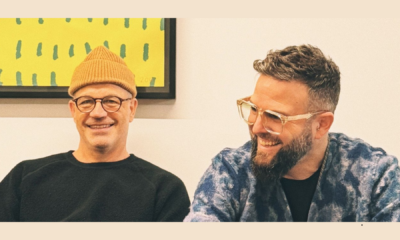
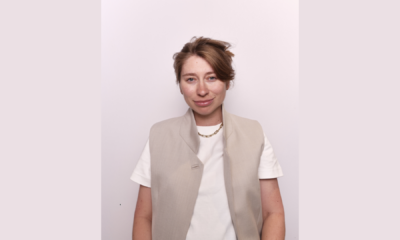
Gidon Rotteveel is the co-founder of Delka Talents, a YouTube-focused influencer marketing agency operating in the United States. His company manages more than 100 macro-creators (most averaging over 1 million views per video) and brokers campaigns for clients such as Google, Amazon, Paramount, and ByteDance’s CapCut team. The agency’s focus is precise: long-term, ROI-driven (Return on Investment) partnerships that allow creators to turn online influence into a stable, full-time income.
Gidon’s path to that position began years ago, long before YouTube sponsorships matured into a global advertising channel. Leaving Amsterdam at 17 to study abroad without financial support, he experimented with small businesses while seeking a scalable model. The turning point came when his father sent him a YouTube video that sparked a simple question: why were creators generating millions of views with so few brand deals attached?
“I couldn’t believe there were so many views on YouTube and not many brand deals,” Gidon says. “It was an insane opportunity.”
That early insight led him to direct outreach to creators and, eventually, to the work that became Delka Talents. He began messaging YouTubers and TikTokers under his own name, later formalizing the agency as brand interest slowly increased. His first major break came when ByteDance approached him to support U.S. marketing campaigns, which led him to Hong Kong and early collaborations with companies like Tencent, Temu, Anker, and ByteDance itself. “Right place, right time,” he recalls. “I always tried certain businesses out, but I knew I couldn’t work for any company.”
With the foundation of Delka Talents taking shape, Gidon and his co-founder and lifelong friend, Tal Levi, focused on what he considered the most important piece of the creator-brand equation: securing top creators before building out the brand pipeline.
A Business Built on Persistence
Much of Delka Talents’ early momentum came from Gidon’s willingness to travel anywhere for a meeting. When he identified a major travel creator based in Hong Kong whom he believed would be difficult to access, he flew there and pretended to be in the city for a separate business engagement, ultimately securing the conversation he wanted.
“I did literally everything,” he points out. His mindset was straightforward: the best creators would attract the strongest brands, and his job was to secure them before competitors did.
This philosophy shaped Delka Talents’ operating model. The agency now employs a team whose sole focus is identifying creators who show promising growth signals. Gidon refers to them as “golden tickets.” They are often creators with relatively modest subscriber counts but unusually high viewership, indicating strong audience retention and momentum. Delka invests in these creators early, sometimes providing financial support before their channels have fully taken off. “We invest in the ones we believe are the next big creators,” he explains.
On the brand side, Delka Talents maintains a separate team dedicated to outreach and partnership development. Gidon is emphatic that the agency does far more than manage incoming communications on behalf of creators. Instead, Delka actively seeks out brands and helps structure year-long partnerships that provide creators with consistent income and brands with reliable performance data. “Most agencies say, ‘Here’s a brand, here’s a brand, here’s a brand,’” he notes. “We say, ‘Let’s give you a year-long partnership with a certain brand.’”
A Model That Favors Stability Over Volume
From the company’s perspective, long-term agreements are more effective than single-video integrations. Gidon believes creators benefit most when they commit to partnerships that allow them to maintain authenticity while still generating steady revenue. According to him, a creator who makes $150,000 or $200,000 annually from a single brand gains financial stability that is difficult to achieve with frequent, inconsistent deals. “We give those YouTubers the fixed high income they’re looking for,” he says.
Delka Talents deliberately represents macro-creators who have demonstrated sustainable performance over time. While many agencies spotlight the advantages of micro-influencers, Gidon sees it differently.
He believes macro-creators are more reliable for long-term ROI because they have already proven their ability to build and retain an audience. “Most micro creators are micro for a reason,” he says. The Dutch entrepreneur also emphasizes the difference between fleeting virality and sustainable growth, noting that a creator who suddenly reaches 50 million subscribers after one year might not sustain momentum, whereas long-standing creators with consistent viewership offer more predictable performance for brands.
He prefers to work with English-speaking creators who appear on camera and post regularly, regardless of whether they are based in the United States, the United Kingdom, Canada, or the Netherlands. What matters, he says, is engagement and the creator’s understanding of how to integrate a product effectively into their storytelling. “If there’s no return done, it’s not going to work,” he explains.
Gidon encourages creators to avoid overvaluing themselves and to negotiate in ways that support measurable outcomes. A partnership will always be stronger, he adds, when both sides fully understand what the other side wants.
The Anatomy of an Effective Collaboration
To Gidon, a durable creator-brand relationship is not fundamentally different from a relationship between two people. Each side must understand the other’s goals, expectations, and boundaries. “Every relationship is transactional,” he says. “You just need to make it healthy.”
According to him, a creator who accepts every sponsorship opportunity dilutes trust with their audience. A brand that pushes too hard for short-term performance undermines the authenticity that makes creator partnerships valuable in the first place.
These considerations shape Delka’s approach to matching creators with advertisers, particularly when campaigns extend over many months. Gidon often advises creators to structure deals that allow for multiple touchpoints, believing that multi-video partnerships deliver stronger performance and more natural integrations.
These principles underpin many of Delka Talents’ most successful campaigns. Gidon points to a CapCut collaboration involving Mike Majlak and KSI, which he believes performed well because Majlak edits his own videos and was already aligned with the product. He also recalls a GeoGuessr integration with Jay Foreman (“Jay and Mark”) that generated strong engagement. “Communication and us being involved 24/7,” he says, is what allows these campaigns to succeed.
He maintains active WhatsApp groups with every creator and brand, staying available at any hour. “If something goes wrong on the weekend, I’m working on it,” he says. “This is my little baby.”
Industry Shifts and Competitive Pressures
The creator economy Delka Talents now operates in is significantly more crowded than the one Gidon entered in 2020. TikTok, in particular, has enabled millions of creators to build large followings without necessarily building sustainable businesses. “There are so many creators with millions of subscribers who don’t make any money,” he says.
Gidon believes YouTube’s algorithm is placing more emphasis on new creators, making it harder for established channels to retain dominance. In his view, many influencers today may find it difficult to maintain full-time careers over the long term, a shift he describes as “disappointing.”
On the technology front, he acknowledges the growing discussion around AI agents and AI-generated creators. He does not dismiss the possibility that AI could play a major role in the future, though he remains confident that certain human qualities are not easily replicated. “I always think a manager could be replaced,” he says. “But someone who can really negotiate for creators is important.” Gidon uses AI for contracts, content support, and creator discovery, but reserves more strategic functions for human judgment.
New Platforms and Long-Term Growth
Gidon believes that shorter formats will become increasingly important as younger audiences shift away from traditional long-form entertainment. “The new generation has a lower attention span,” he says. “That can be really profitable if you do it the correct way.”
While YouTube remains the company’s core focus, Delka is exploring opportunities to expand into Twitch, Snapchat, and other verticals. Gidon still views YouTube as the most reliable platform for brand performance, but he wants the agency to diversify thoughtfully, following the same measured, data-driven approach that shaped its early growth.
“YouTube is where my platform is,” he says. “It’s the highest ROI for clients.”
Over the next three to five years, he expects Delka Talents to move from its current position as one of the top ten YouTube marketing agencies in the U.S. into the top five. He notes that the agency already manages more than a billion views across its roster and continues to attract creators formerly represented by larger agencies.
“We are really establishing ourselves as one of the leading agencies in the U.S. market,” he says.
A Founder Focused on Longevity
After nearly a decade in and around the creator economy, Gidon has become more deliberate about balancing ambition with personal well-being. He has seen the industry’s intensity up close and believes founders must separate their sense of self from their business performance. “If you have a bad day at work, it doesn’t mean you have a bad day in life,” he says.
Traveling, learning languages, and small daily rituals keep him grounded. Drinking a simple coffee in a quiet café, he says, can reset his entire day.
He ends on a reflection that captures the ethos he brings to the company he co-founded. “Life goes quick,” he says. “There’s always a way to make more money. But at the end of the day, you want to have a good life.”