FT Strategies and WAN-IFRA, with support from the Google News Initiative, published a study that categorizes “news creators,” sets out a three-part credibility framework, and delivers a diagnostic tool designed to assess financial sustainability for individual creators and small teams. The research draws on interviews with more than 15 creators and about 25 advisory-board experts and produces three practical resources: a segmentation taxonomy, information guidelines and a financial diagnostic.
Three Roles and a Tagging System
The study groups creators into three primary roles: Investigators, Explainers and Commentators, recommending tagging creators by topic, geography, sourcing method and the degree of commentary in their work.
Investigators conduct original reporting and rely on primary sources of information.
Explainers synthesize existing reporting for clarity.
Commentators layer interpretation and perspective onto factual material. The report notes that creators often play multiple roles and can shift between them over time.
The authors specify tags that help marketers and platforms identify creators’ output and sourcing approach. For example: Politics, Climate, or Technology for topic; Field-based, Data Analysis or News Aggregation for sourcing; and Commentary, Analysis or No Commentary for tone.
The report frames tagging as a practical tool to improve discovery, peer collaboration and matchmakers’ ability to target creators for partnerships.
Principles for Credibility
The study advances a set of information guidelines organized around Accuracy, Integrity and Transparency.
Under Accuracy, creators should check names, dates and figures and prioritize primary or independently verified secondary sources.
Under Integrity, creators should distinguish fact from opinion and credit sources.
Under Transparency, creators should disclose ownership, funding, and potential conflicts, and invite audience feedback. The report pairs each principle with checklists and examples drawn from creators’ current practice.
The study presents concrete examples of how guidelines operate in practice. It cites creators who place corrections prominently, separate “my take” sections from factual reporting, link sources in video descriptions, or maintain dedicated funding and transparency pages. The report frames these practices as signals that creators can use to communicate credibility to both audiences and commercial partners.
A Sustainability Framework and Diagnostic
The study adapts a publisher-level sustainability framework for the creator context, setting four dimensions for assessment: Financial Resilience, Product & Audience, Monetization, and Foundations. It states that the report team built a 30-plus-question diagnostic that weights those dimensions to produce a readiness assessment creators can use to identify gaps and priorities. The diagnostic is intended both to steer creators toward more predictable revenue models and to serve as a signal to funders and partners.
The report contrasts the realities of publishers and creators. It notes that creators typically operate with “scrappier” monetization methods (such as donations, platform revenue, brand deals, and merchandise) and rely on frequent output and a personal voice, while publishers emphasize institutional structures, diversified ad and subscription revenues, and formal operations. The study highlights revenue predictability, cost management, and personal well-being as key areas where creators differ from traditional publishers.
Platform Dynamics, AI, and Burnout
The research documents creators’ dependence on platform algorithms and the operational constraints that follow. It reports that creators describe algorithms as unpredictable and, in some accounts, biased toward repetitive or sensational formats that can penalize nuance.
The study also records creator and expert concerns about the accelerated use of AI: while AI can lower production costs and speed workflows, it introduces risks (including hallucination, synthetic media, and reduced transparency) that creators and platforms must manage.
The study flags burnout as a structural issue. It notes that many creators shoulder editorial, commercial, and administrative responsibilities without institutional support, creating pressure to publish continuously and front-load operational work that others in newsrooms typically share. The report documents the creation of accounts for income volatility and the mental health burdens associated with constant visibility and revenue unpredictability.
Recommendations for Industry Actors
The study sets out six actionable recommendations aimed at platforms, funders, news organizations and support groups. These include:
Modular training in ethics, verification and AI risks.
Recognition schemes and badges to surface credible creator journalism.
Platform features and algorithmic signals that elevate original reporting and allow explicit source links or correction overlays.
Structured support programmes such as accelerators and mentorship.
Funding pathways that treat creators as small independent news businesses.
Localized support for creators in restricted or low-income markets.
Each recommendation pairs rationale and potential delivery mechanisms. The report frames segmentation and tagging as immediate tools for marketers and agencies to refine brand-safety assessments and partner selection by clarifying creator roles and sourcing practices. It also positions adherence to the Accuracy-Integrity-Transparency checklist as a credential that could facilitate sponsorships and platform support. The diagnostic, the study argues, may provide funders and sponsors with standardized signals of financial and operational readiness that go beyond raw follower counts.
For marketing agencies and creator-economy professionals, the study supplies a taxonomy, operational checklists and a diagnostic instrument that link editorial practice to commercial eligibility and risk management. The report confines its findings to the documented interviews, review of standards and the materials it produces, and it positions these outputs as practical instruments for matching creators to partners, designing capacity-building programmes and shaping platform features that change how creator content is discovered and monetized.
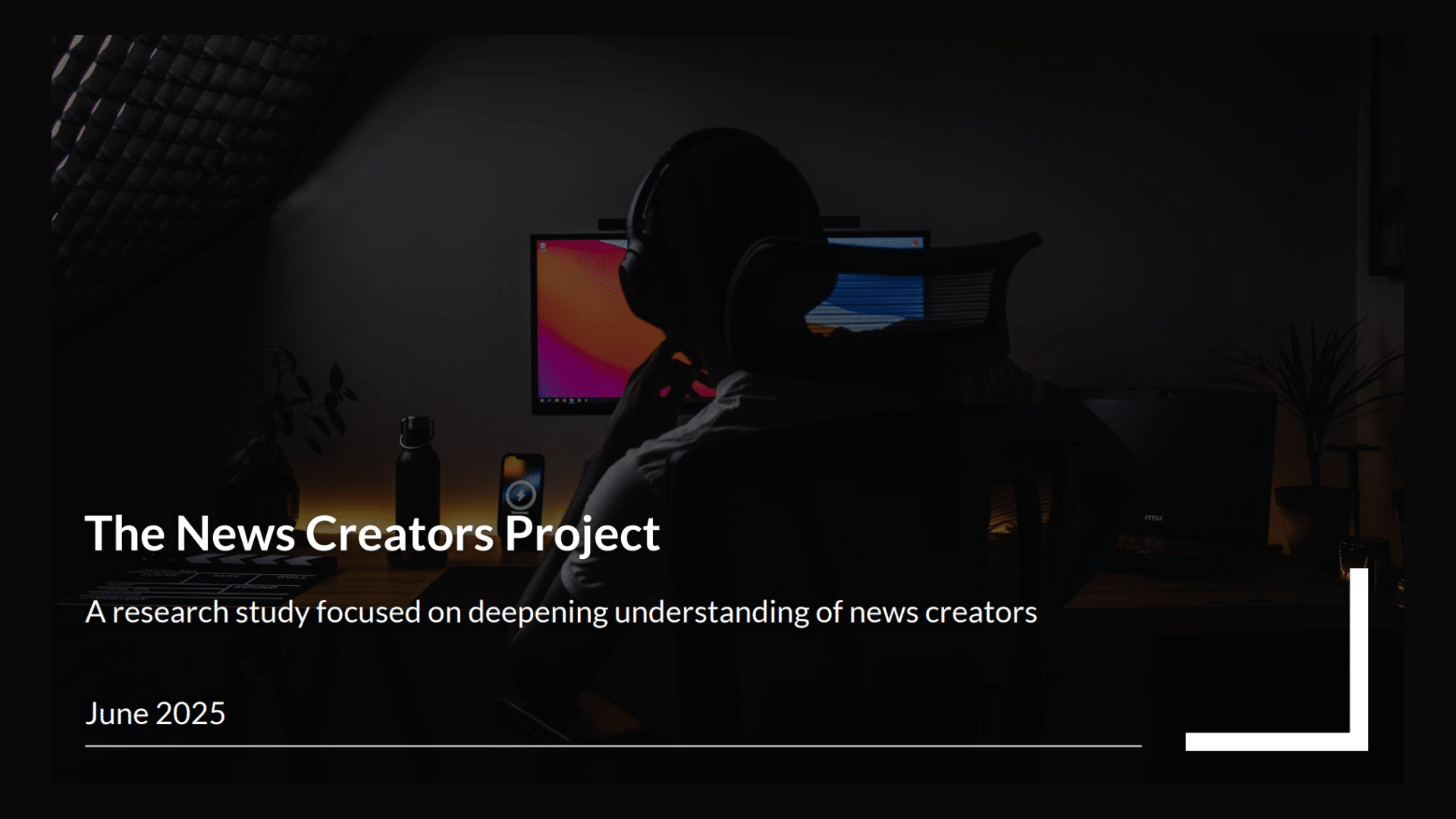
Image source: “The News Creators Project” The full study is available here
Dragomir is a Serbian freelance blog writer and translator. He is passionate about covering insightful stories and exploring topics such as influencer marketing, the creator economy, technology, business, and cyber fraud.

















FT Strategies and WAN-IFRA, with support from the Google News Initiative, published a study that categorizes “news creators,” sets out a three-part credibility framework, and delivers a diagnostic tool designed to assess financial sustainability for individual creators and small teams. The research draws on interviews with more than 15 creators and about 25 advisory-board experts and produces three practical resources: a segmentation taxonomy, information guidelines and a financial diagnostic.
Three Roles and a Tagging System
The study groups creators into three primary roles: Investigators, Explainers and Commentators, recommending tagging creators by topic, geography, sourcing method and the degree of commentary in their work.
Investigators conduct original reporting and rely on primary sources of information.
Explainers synthesize existing reporting for clarity.
Commentators layer interpretation and perspective onto factual material. The report notes that creators often play multiple roles and can shift between them over time.
The authors specify tags that help marketers and platforms identify creators’ output and sourcing approach. For example: Politics, Climate, or Technology for topic; Field-based, Data Analysis or News Aggregation for sourcing; and Commentary, Analysis or No Commentary for tone.
The report frames tagging as a practical tool to improve discovery, peer collaboration and matchmakers’ ability to target creators for partnerships.
Principles for Credibility
The study advances a set of information guidelines organized around Accuracy, Integrity and Transparency.
Under Accuracy, creators should check names, dates and figures and prioritize primary or independently verified secondary sources.
Under Integrity, creators should distinguish fact from opinion and credit sources.
Under Transparency, creators should disclose ownership, funding, and potential conflicts, and invite audience feedback. The report pairs each principle with checklists and examples drawn from creators’ current practice.
The study presents concrete examples of how guidelines operate in practice. It cites creators who place corrections prominently, separate “my take” sections from factual reporting, link sources in video descriptions, or maintain dedicated funding and transparency pages. The report frames these practices as signals that creators can use to communicate credibility to both audiences and commercial partners.
A Sustainability Framework and Diagnostic
The study adapts a publisher-level sustainability framework for the creator context, setting four dimensions for assessment: Financial Resilience, Product & Audience, Monetization, and Foundations. It states that the report team built a 30-plus-question diagnostic that weights those dimensions to produce a readiness assessment creators can use to identify gaps and priorities. The diagnostic is intended both to steer creators toward more predictable revenue models and to serve as a signal to funders and partners.
The report contrasts the realities of publishers and creators. It notes that creators typically operate with “scrappier” monetization methods (such as donations, platform revenue, brand deals, and merchandise) and rely on frequent output and a personal voice, while publishers emphasize institutional structures, diversified ad and subscription revenues, and formal operations. The study highlights revenue predictability, cost management, and personal well-being as key areas where creators differ from traditional publishers.
Platform Dynamics, AI, and Burnout
The research documents creators’ dependence on platform algorithms and the operational constraints that follow. It reports that creators describe algorithms as unpredictable and, in some accounts, biased toward repetitive or sensational formats that can penalize nuance.
The study also records creator and expert concerns about the accelerated use of AI: while AI can lower production costs and speed workflows, it introduces risks (including hallucination, synthetic media, and reduced transparency) that creators and platforms must manage.
The study flags burnout as a structural issue. It notes that many creators shoulder editorial, commercial, and administrative responsibilities without institutional support, creating pressure to publish continuously and front-load operational work that others in newsrooms typically share. The report documents the creation of accounts for income volatility and the mental health burdens associated with constant visibility and revenue unpredictability.
Recommendations for Industry Actors
The study sets out six actionable recommendations aimed at platforms, funders, news organizations and support groups. These include:
Each recommendation pairs rationale and potential delivery mechanisms. The report frames segmentation and tagging as immediate tools for marketers and agencies to refine brand-safety assessments and partner selection by clarifying creator roles and sourcing practices. It also positions adherence to the Accuracy-Integrity-Transparency checklist as a credential that could facilitate sponsorships and platform support. The diagnostic, the study argues, may provide funders and sponsors with standardized signals of financial and operational readiness that go beyond raw follower counts.
For marketing agencies and creator-economy professionals, the study supplies a taxonomy, operational checklists and a diagnostic instrument that link editorial practice to commercial eligibility and risk management. The report confines its findings to the documented interviews, review of standards and the materials it produces, and it positions these outputs as practical instruments for matching creators to partners, designing capacity-building programmes and shaping platform features that change how creator content is discovered and monetized.
Image source: “The News Creators Project”
The full study is available here
Subscribe to Our Newsletter
Check Out Our Podcast