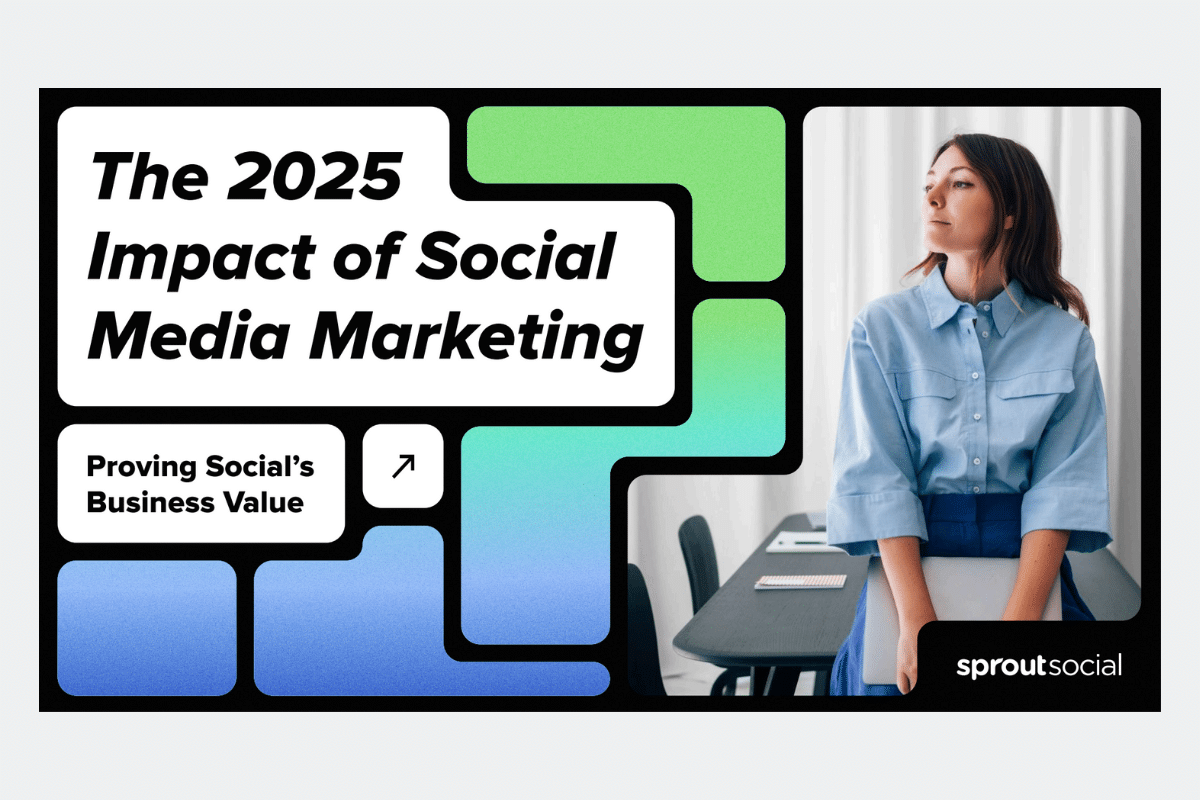
Marketing leaders recognize that social media drives business results but struggle to prove it with metrics, according to a new report from Sprout Social. The “2025 Impact of Social Media Marketing” report, which surveyed 1,200 marketing leaders globally, reveals that while leaders believe in social media’s impact across the entire customer journey, many teams lack the infrastructure to demonstrate its full business value.
More than two-thirds (67%) of marketing leaders are confident that social media generates brand awareness. Beyond this top-of-funnel metric, leaders also believe social drives customer acquisition (60%), customer loyalty (58%), revenue (56%), and research and development/decision making (54%).
“There’s an instinctual understanding that social drives more than brand awareness—and that awareness alone doesn’t generate ROI—but teams don’t have the infrastructure to prove it,” the report states.
Metrics Gap Creates Pressure on Social Teams
Despite confidence in social’s impact, less than half (44%) of marketing leaders rate their social team at the expert level when it comes to measuring the business impact of social media. This creates significant pressure on social media marketers to close attribution gaps and deliver more compelling data stories.
Teams define social ROI primarily through engagement (68%), conversion (65%), and revenue (57%) metrics. However, marketing leaders indicate they want to see more competitor and audience insights, performance data contextualized with innovative brands, and intelligence on the latest network updates.
The report identifies that integration issues between social media management tools and broader marketing technology stacks represent the primary obstacle to understanding social’s business impact, with over half of leaders citing this as their top challenge.
Expert Teams Focus on Revenue and Efficiency
The survey identifies three key characteristics that separate expert teams from others:
ROI Measurement: Expert teams are significantly more likely to use revenue and efficiency metrics to measure ROI.
Technology Adoption: 58% of expert teams use social media management software, more than emerging or evolving teams. They also rely more heavily on link tracking and marketing automation systems.
Business Impact Confidence: 72% of leaders whose teams excel at measuring social media’s impact say their teams are also experts at understanding how to drive more business impact.
Social Data Remains Siloed
Currently, digital marketing teams are most likely to use social data to inform their decisions, but leaders want this data to reach beyond marketing. The report finds that leaders want customer experience and success teams (58%), customer care and support (49%), business development (49%), and sales (44%) to leverage social insights.
“For that to happen, teams need to democratize access to social and share reports that go beyond engagements and conversions,” the report recommends.
Platform Preferences Vary by Business Type
When it comes to generating ROI, marketing leaders say Facebook (70%), YouTube (68%), and TikTok (64%) drive the most business impact overall. However, this varies by business type:
Furthermore, 85% of marketing leaders agree their brand needs to be present on more networks to maximize social’s influence on business goals. The report notes that over half of consumers plan to spend time on community-driven and emerging networks like Reddit, Substack, Patreon, Bluesky, and Threads.
Quality vs. Quantity Debate
A significant disconnect exists between leadership and practitioners regarding publishing frequency. While 71% of Marketing Directors and 69% of CMOs believe their teams must increase social media publishing volumes to increase impact, only half of social media managers agree.
Industry benchmarks support the managers’ perspective. Despite the publishing volume decreasing from 2023 to 2024, engagement increased by almost 20%, suggesting that “consumers want more originality, authenticity and community—not brands posting just to post.”
Interestingly, VPs appear more aligned with practitioners, with 46% saying they look to their teams to recommend posting frequency, compared to just 13% of C-suite executives and 12% of directors.
Social Media Investments Increasing
The survey reveals a significant shift in marketing budget allocation, with 80% of marketing leaders planning to reallocate funds from other channels to social media. Specifically:
87% anticipate increasing their paid social spend
80% will increase investment in influencer marketing and organic social
81% are reallocating funds from traditional SEO to organic and paid social
These shifts reflect social media’s growing importance as “a measurable driver of revenue, loyalty and decision-making—demanding investment that reflects its full-funnel impact.”
Specialized Roles Gaining Priority
Three-quarters of marketing leaders anticipate increasing headcount for their social teams in the next year, though this decreases to half for B2B leaders. The top five roles they plan to hire for are:
Social Media Search Optimization (SOSEO)
Social Customer Service & Support
Paid Social
Influencer Marketing
Social Listening & Social Analytics
Notably, content creation ranks below these specialized functions, despite the emphasis many leaders place on increasing publishing volume.
Regional Differences
The report highlights several regional differences in social media approach:
Australian marketing leaders are setting the curve, with the highest percentage (54%) rating their teams as experts in measuring social’s business impact and developing content strategies aligned with business objectives.
UK marketing teams rely more heavily on TikTok, with 66% of leaders citing it as their top platform for business impact, compared to Facebook globally. UK leaders also define social ROI more through conversion metrics than engagement or revenue.
U.S. marketing leaders are the most likely to be underwhelmed with social reporting, with more saying their teams’ abilities are emerging or evolving (57%) compared to experts.
Professional Perspectives
The report includes insights from social media professionals at brands including Canva, Talkdesk, and Wild, who share their approaches to proving social ROI:
“We define ROI with the ratio of opportunities created to pipeline generation. We track leads and UTMs on all social content. If a lead engages with social media content, we see that in Salesforce. Through the magic of attribution, we can see the entire journey, all the way from interacting with social content at the top of the funnel to becoming a customer,” explains Jordan Tennenbaum, Head of Social at Talkdesk.
At Canva, Shirley Tat, Global Head of Social, describes how they integrate social data into the larger marketing mix: “We are analyzing community conversations on social to learn more about what our audience needs from our product. By tracking all of these conversations in Sprout, we’re able to tag thousands of incoming messages, and eventually close the loop with our community and show them we listened.”
Path Forward
The report concludes that social media is “no longer just an awareness lever” but requires better attribution models and technology integrations that connect social insights with the broader marketing ecosystem. It suggests that teams can begin building executive trust by reframing reporting to align with business impact and demonstrating what they could achieve with improved data infrastructure.
“The future belongs to businesses that lead with social. Not only in how you connect with audiences externally, but the priority you place on social data internally,” the report states.
All images are credited to Sprout Social. Get the full report here.
Cecilia Carloni, Interview Manager at Influence Weekly and writer for NetInfluencer. Coming from beautiful Argentina, Ceci has spent years chatting with big names in the influencer world, making friends and learning insider info along the way. When she’s not deep in interviews or writing, she's enjoying life with her two daughters. Ceci’s stories give a peek behind the curtain of influencer life, sharing the real and interesting tales from her many conversations with movers and shakers in the space.


















Marketing leaders recognize that social media drives business results but struggle to prove it with metrics, according to a new report from Sprout Social. The “2025 Impact of Social Media Marketing” report, which surveyed 1,200 marketing leaders globally, reveals that while leaders believe in social media’s impact across the entire customer journey, many teams lack the infrastructure to demonstrate its full business value.
More than two-thirds (67%) of marketing leaders are confident that social media generates brand awareness. Beyond this top-of-funnel metric, leaders also believe social drives customer acquisition (60%), customer loyalty (58%), revenue (56%), and research and development/decision making (54%).
“There’s an instinctual understanding that social drives more than brand awareness—and that awareness alone doesn’t generate ROI—but teams don’t have the infrastructure to prove it,” the report states.
Metrics Gap Creates Pressure on Social Teams
Despite confidence in social’s impact, less than half (44%) of marketing leaders rate their social team at the expert level when it comes to measuring the business impact of social media. This creates significant pressure on social media marketers to close attribution gaps and deliver more compelling data stories.
Teams define social ROI primarily through engagement (68%), conversion (65%), and revenue (57%) metrics. However, marketing leaders indicate they want to see more competitor and audience insights, performance data contextualized with innovative brands, and intelligence on the latest network updates.
The report identifies that integration issues between social media management tools and broader marketing technology stacks represent the primary obstacle to understanding social’s business impact, with over half of leaders citing this as their top challenge.
Expert Teams Focus on Revenue and Efficiency
The survey identifies three key characteristics that separate expert teams from others:
Social Data Remains Siloed
Currently, digital marketing teams are most likely to use social data to inform their decisions, but leaders want this data to reach beyond marketing. The report finds that leaders want customer experience and success teams (58%), customer care and support (49%), business development (49%), and sales (44%) to leverage social insights.
“For that to happen, teams need to democratize access to social and share reports that go beyond engagements and conversions,” the report recommends.
Platform Preferences Vary by Business Type
When it comes to generating ROI, marketing leaders say Facebook (70%), YouTube (68%), and TikTok (64%) drive the most business impact overall. However, this varies by business type:
Furthermore, 85% of marketing leaders agree their brand needs to be present on more networks to maximize social’s influence on business goals. The report notes that over half of consumers plan to spend time on community-driven and emerging networks like Reddit, Substack, Patreon, Bluesky, and Threads.
Quality vs. Quantity Debate
A significant disconnect exists between leadership and practitioners regarding publishing frequency. While 71% of Marketing Directors and 69% of CMOs believe their teams must increase social media publishing volumes to increase impact, only half of social media managers agree.
Industry benchmarks support the managers’ perspective. Despite the publishing volume decreasing from 2023 to 2024, engagement increased by almost 20%, suggesting that “consumers want more originality, authenticity and community—not brands posting just to post.”
Interestingly, VPs appear more aligned with practitioners, with 46% saying they look to their teams to recommend posting frequency, compared to just 13% of C-suite executives and 12% of directors.
Social Media Investments Increasing
The survey reveals a significant shift in marketing budget allocation, with 80% of marketing leaders planning to reallocate funds from other channels to social media. Specifically:
These shifts reflect social media’s growing importance as “a measurable driver of revenue, loyalty and decision-making—demanding investment that reflects its full-funnel impact.”
Specialized Roles Gaining Priority
Three-quarters of marketing leaders anticipate increasing headcount for their social teams in the next year, though this decreases to half for B2B leaders. The top five roles they plan to hire for are:
Notably, content creation ranks below these specialized functions, despite the emphasis many leaders place on increasing publishing volume.
Regional Differences
The report highlights several regional differences in social media approach:
Professional Perspectives
The report includes insights from social media professionals at brands including Canva, Talkdesk, and Wild, who share their approaches to proving social ROI:
“We define ROI with the ratio of opportunities created to pipeline generation. We track leads and UTMs on all social content. If a lead engages with social media content, we see that in Salesforce. Through the magic of attribution, we can see the entire journey, all the way from interacting with social content at the top of the funnel to becoming a customer,” explains Jordan Tennenbaum, Head of Social at Talkdesk.
At Canva, Shirley Tat, Global Head of Social, describes how they integrate social data into the larger marketing mix: “We are analyzing community conversations on social to learn more about what our audience needs from our product. By tracking all of these conversations in Sprout, we’re able to tag thousands of incoming messages, and eventually close the loop with our community and show them we listened.”
Path Forward
The report concludes that social media is “no longer just an awareness lever” but requires better attribution models and technology integrations that connect social insights with the broader marketing ecosystem. It suggests that teams can begin building executive trust by reframing reporting to align with business impact and demonstrating what they could achieve with improved data infrastructure.
“The future belongs to businesses that lead with social. Not only in how you connect with audiences externally, but the priority you place on social data internally,” the report states.
All images are credited to Sprout Social.
Get the full report here.