Influencer
YouTuber’s DIY Plant Cloning Community Disrupts Collector Market

A YouTube creator specializing in plant tissue culture has built a community of over 6,000 home practitioners, contributing to price collapses in the rare-plant-collector market through accessible cloning methods.
Laur, who operates the “Plants in Jars” channel with 144,000 subscribers, demonstrated the technique’s efficiency by turning a $125 Begonia pink urchin into 50 clones over 60 days with approximately two hours of hands-on work, representing over $6,000 in plant value.
Plant tissue culture, a cloning process that Laur describes as “simple enough to do at home in your kitchen,” enables rapid multiplication of plants that previously commanded premium prices due to limited availability. The creator sells supplies through her shop, with a starter kit that provides access to a protocol library containing “cookbook-style recipes for cloning all sorts of different types of plants.”
However, Reddit users noted that tissue culture has been standard practice at major retailers like Costa Farms for years, with hobbyists in major cities already operating their own cloning setups. “The ‘bubble’ has been burst for a while now,” wrote one plant community member, noting that local plant market sellers are “50% TC acclimators/cloners and 50% home growers/enthusiasts.”
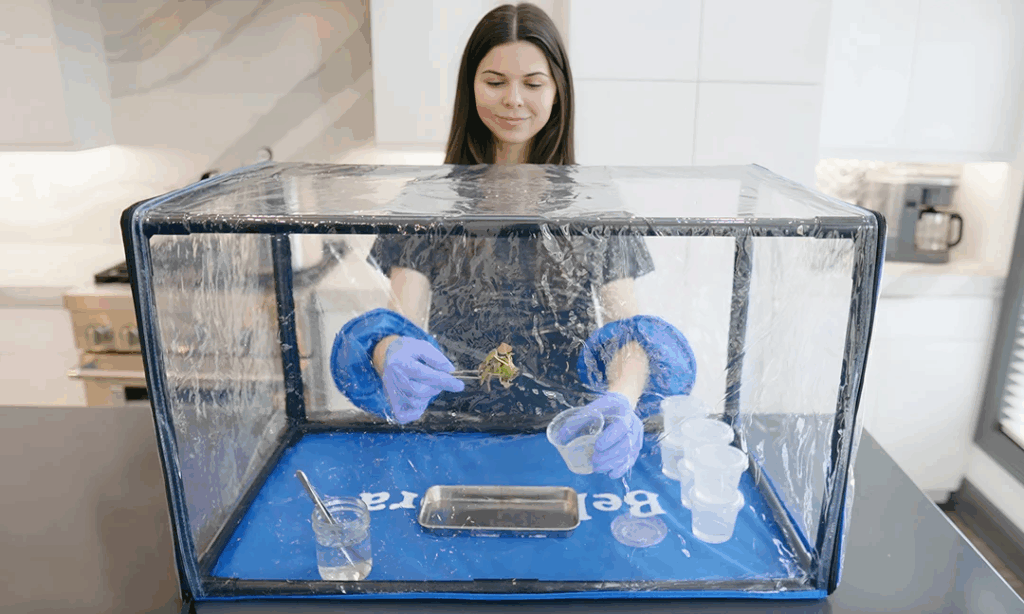
The practice targets what Laur identifies as “artificial scarcity,” or plants that are “very easy to grow and they could easily be mass-produced with tissue culture, but they just aren’t yet.”
This category covers most plants gaining popularity on Instagram, TikTok, and YouTube, where social media creates demand faster than supply chains respond.
Price Erosion
Laur reports purchasing a Monstera electrolyte from a Thai laboratory for $500 in July 2024; the same plant sold for $250 four months later.
“There’s a chance that this Monstera cultivar will never get popular enough to become commercially available, but I would bet that you can probably get one for under 50 bucks in the next 12 to 24 months,” Laur said.
The creator distinguishes between “natural scarcity” (plants difficult to cultivate, such as the corpse flower or elephant’s foot) and “artificial scarcity” (maintained by limited distribution or slow commercial adoption).
Reddit community members noted that price drops may benefit conservation efforts by reducing poaching pressure on endangered species. One collector cited the Philodendron spiritus sancti, extinct in the wild, where “cloning efforts have slowed down since market demand dropped,” potentially reducing incentives for illegal harvesting.
Community Scale and Technical Barriers
Laur’s Discord server hosts over 6,000 practitioners working on “tons of different types of plants all over the world.”
The creator acknowledges that even failed attempts yield results: an experiment with 15 jars containing 5-10 explants each saw only one explant survive, yet produced 50 plants that “could easily be turned into dozens of more plants each” through continued multiplication.
Technical challenges remain significant. Practitioners report that variegated plants with chimeric mutations don’t always clone true to form, and that tissue culture can sometimes produce plants with altered variegation patterns. “When you harvest cells from the donor plant, you don’t know which cells have defective plastids,” one hobbyist explained on Reddit. Equipment costs, contamination risks, and the need for frequent transfers present barriers to consistent success.

Commercial tissue culture labs in Thailand and China typically require one to two years between a plant gaining social media popularity and clones reaching the market, creating temporary price windows. “Laboratories have to acquire the plant, clean it, successfully get it into tissue culture, successfully multiply it, and then get them ready to sell,” Laur explained.
The creator noted that collector awareness of tissue culture potential has changed purchasing behavior: “Once collectors know which plants could easily be mass-produced with TC, they stop paying rare plant prices for those particular plants.”
Laur characterized the shift as definitive: “I think that the era of gatekeeping rare plants is over.”
Subscribe to Our Newsletter
Check Out Our Podcast