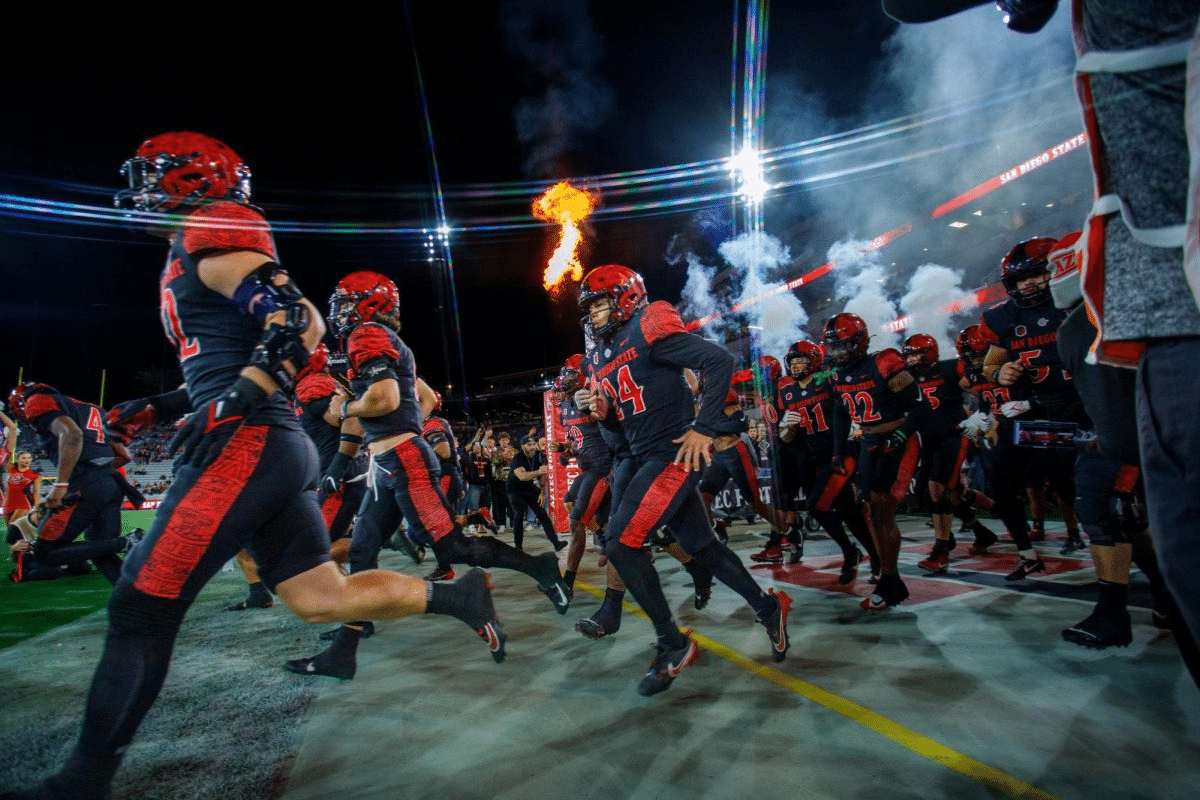
San Diego State University (SDSU) announced the launch of its Student-Athlete Recruitment and Retention Fund mere hours after a federal judge granted final approval of the House v. NCAA settlement on June 6, which ended the prohibition on schools paying athletes directly.
The 10-year agreement allows universities to share up to $20.5 million annually with athletes beginning in the 2025-26 academic year. This figure represents 22% of school revenue from media rights, ticket sales, and sponsorships. The NCAA and Power Five conferences will pay $2.8 billion in back compensation to Division I athletes who were denied name, image, and likeness opportunities dating back to 2016.
Schools now can pay athletes directly for NIL deals, while third-party collectives remain operational. The settlement consolidates three major antitrust cases filed by former Arizona State swimmer Grant House, former Oregon basketball player Sedona Prince, and others challenging NCAA compensation restrictions.
San Diego State Director of Athletics John David Wicker announced the fund as preparation for the university’s transition into the Pac-12 Conference in 2026. The initiative operates in conjunction with existing NIL organizations, including the MESA Foundation and Aztec Link, which continue to maintain business partnerships and community engagement programs.
The university positions contributions to the fund as tax-deductible and encourages support through donations, pledges, season ticket purchases, and continued NIL contributions through established collectives.
Enforcement Shifts to Conference Level
A newly formed College Sports Commission, staffed by executives including those from Major League Baseball, will oversee compliance and monitor third-party NIL deals exceeding $600 through a clearinghouse system.
NCAA President Charlie Baker has stated the organization will shift its focus from financial rule enforcement to academic standards, athlete well-being, and eligibility.
“This is an exciting moment for everyone involved in college sports,” Baker said in a letter. “Student-athletes will benefit from the rich opportunities they enjoy now, plus far more scholarship opportunities, landmark financial benefits, and a streamlined NCAA to support them.”
The settlement includes replacing scholarship limits with roster limits, potentially doubling the athletics scholarships available to women.
Top quarterbacks reportedly receive approximately $2 million annually, consuming roughly 10% of a typical school’s NIL budget. Football and men’s basketball players are expected to receive the majority of direct payments as primary revenue drivers, though Title IX equity considerations remain under evaluation.
Schools implement various funding mechanisms, including “talent fees,” increased concession prices, and athletic fees added to tuition costs to generate the required revenue for athlete compensation.
Dragomir is a Serbian freelance blog writer and translator. He is passionate about covering insightful stories and exploring topics such as influencer marketing, the creator economy, technology, business, and cyber fraud.













San Diego State University (SDSU) announced the launch of its Student-Athlete Recruitment and Retention Fund mere hours after a federal judge granted final approval of the House v. NCAA settlement on June 6, which ended the prohibition on schools paying athletes directly.
The 10-year agreement allows universities to share up to $20.5 million annually with athletes beginning in the 2025-26 academic year. This figure represents 22% of school revenue from media rights, ticket sales, and sponsorships. The NCAA and Power Five conferences will pay $2.8 billion in back compensation to Division I athletes who were denied name, image, and likeness opportunities dating back to 2016.
Schools now can pay athletes directly for NIL deals, while third-party collectives remain operational. The settlement consolidates three major antitrust cases filed by former Arizona State swimmer Grant House, former Oregon basketball player Sedona Prince, and others challenging NCAA compensation restrictions.
San Diego State Director of Athletics John David Wicker announced the fund as preparation for the university’s transition into the Pac-12 Conference in 2026. The initiative operates in conjunction with existing NIL organizations, including the MESA Foundation and Aztec Link, which continue to maintain business partnerships and community engagement programs.
The university positions contributions to the fund as tax-deductible and encourages support through donations, pledges, season ticket purchases, and continued NIL contributions through established collectives.
Enforcement Shifts to Conference Level
A newly formed College Sports Commission, staffed by executives including those from Major League Baseball, will oversee compliance and monitor third-party NIL deals exceeding $600 through a clearinghouse system.
NCAA President Charlie Baker has stated the organization will shift its focus from financial rule enforcement to academic standards, athlete well-being, and eligibility.
“This is an exciting moment for everyone involved in college sports,” Baker said in a letter. “Student-athletes will benefit from the rich opportunities they enjoy now, plus far more scholarship opportunities, landmark financial benefits, and a streamlined NCAA to support them.”
The settlement includes replacing scholarship limits with roster limits, potentially doubling the athletics scholarships available to women.
Top quarterbacks reportedly receive approximately $2 million annually, consuming roughly 10% of a typical school’s NIL budget. Football and men’s basketball players are expected to receive the majority of direct payments as primary revenue drivers, though Title IX equity considerations remain under evaluation.
Schools implement various funding mechanisms, including “talent fees,” increased concession prices, and athletic fees added to tuition costs to generate the required revenue for athlete compensation.
Subscribe to Our Newsletter
Check Out Our Podcast