






Tech
Loox Launches New Product Sampling Platform to Bridge Consumer Reviews and Creator Content

Loox, the visual reviews platform serving more than 130,000 Shopify brands, launched Reviewers.com in June 2026 as a standalone Shopify app. The product connects brands with a vetted community of everyday consumers who try products and return video reviews in exchange. Co-founder Yoni Elbaz, who has built Loox as a bootstrapped company since 2015 without raising institutional capital, says the model is designed around a conversion problem that creator content does not solve.
Loox has long tracked how merchants use the reviews it collects: 23% of them include photos, and only 2% include video, and quality in that 2% is often too low for marketing use. “There are very authentic customer reviews, and there are these highly polished creator videos,” Yoni says. “But the gap between them, which is high-quality, authentic video reviews, is the gap that Reviewers.com is here to solve.”
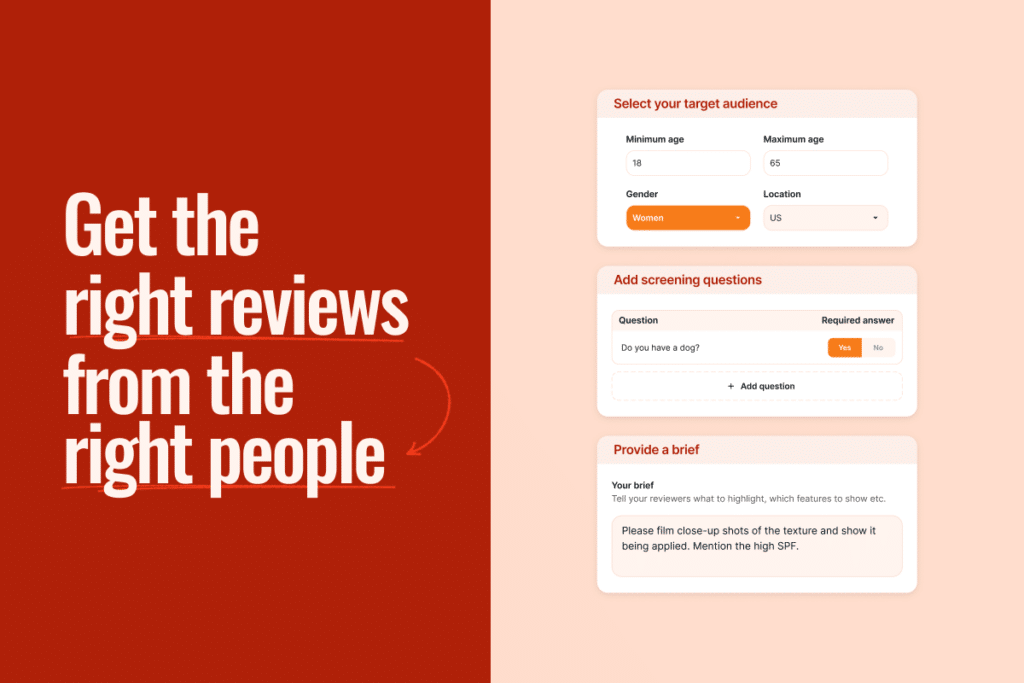
Reviewers.com is currently available to U.S.-based Shopify brands and operates as a separate app compatible with any reviews platform, including Loox competitors. Brands define their audience, set screening questions, and write a brief; reviewers place orders using full-discount codes and submit video content in return. No social media presence is required, and the platform scores reviewers on production quality and credibility, not reach.

Influencer Videos Build Awareness. Product Pages Need Something Else.
Yoni’s critique is specific to the conversion moment, not creator marketing broadly. “When a consumer is deciding whether a product is right for them, they would not be looking at influencer content on a product page and taking that as reassurance,” he says, “because they know that content is paid for and scripted.”
He sees influencer content as an extension of that, comparing it to television advertising. “They are intended to create content with reach that creates awareness, consideration, and drives traffic to a business.”
On creator platforms, Yoni notes, financial compensation per asset delivered is the primary incentive, which means production output can diverge from genuine product interest. On Reviewers.com, he adds, the only incentive is access to products reviewers elect to try.
A Three-Step Workflow, Managed End-to-End
Brands create a Reviewers.com campaign by selecting a product, specifying how many units to gift (up to 10 per campaign), defining audience criteria and screening questions, and writing a brief suggesting a format such as an unboxing or before-and-after, without requiring reviewers to follow it. From there, the platform takes over.
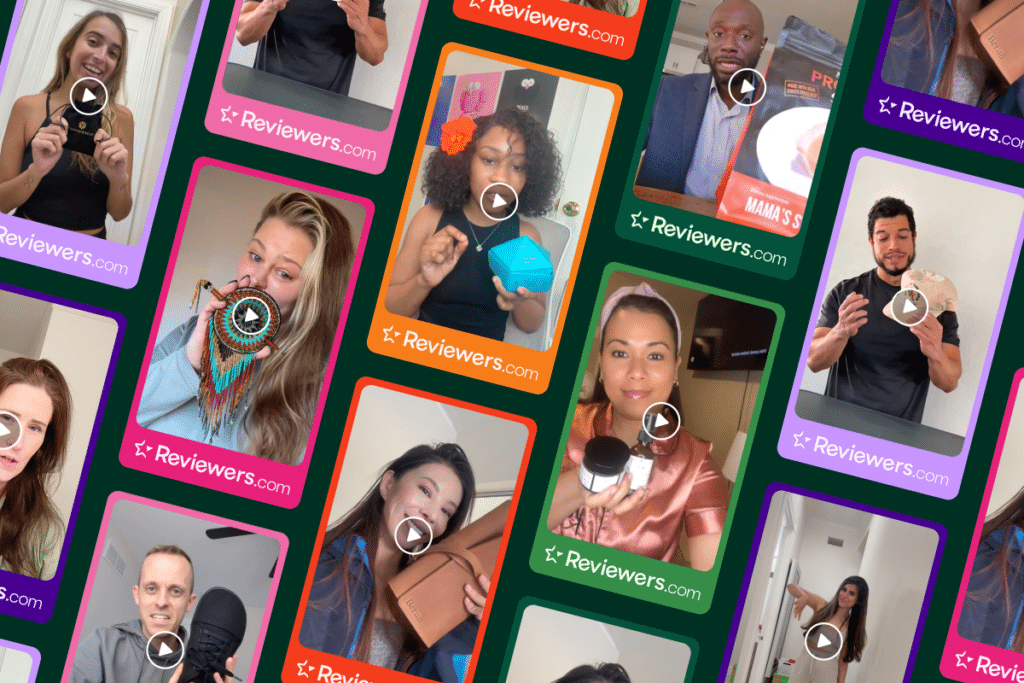
Reviewers.com distributes the offer to community members who match the audience profile. Those who pass the screening questions receive a full-discount code and place a standard order in the brand’s store. “It adds no overhead of logistics for the merchant,” Yoni says. “They basically just fulfill the order as any other order.” The platform handles all communication with reviewers, runs each submitted video through an AI quality check for lighting, audio, angle, and camera presence, and delivers approved content to the merchant’s admin dashboard.
Every Reviewers.com video carries full usage rights. Brands can run the content in ads, on product pages, and across social media without additional licensing fees. Yoni notes that FTC compliance is built into the product architecture: no reward flows to reviewers for positive sentiment, and disclosure that a reviewer received a free product is applied automatically for brands using Loox’s review widgets, with labeling available for other platforms as well.
The Community Is Scored Continuously, Not Vetted Once
The 80% to 90% video completion rate Reviewers.com reports, measured across more than 1,000 campaigns, including 500 run during the pre-launch phase through Loox, depends on one enforcement rule: reviewers who do not deliver are removed.
“In order to continue to participate in additional campaigns, they must provide a high-quality video review,” Yoni says. “We do not check for sentiment. A review doesn’t have to be positive; it needs to be authentic.” The AI quality screen assesses each submission against the platform’s production standards. Content that falls short triggers a resubmit request with guided feedback. Reviewers who continue to fail to meet the platform’s quality requirements can lose access to future campaigns.
Scoring updates continuously rather than being assessed once at onboarding. Brands score the content they receive, with tone and credibility factors feeding back into each reviewer’s standing. A reviewer who begins producing polished, scripted-sounding content sees their score fall and loses priority access to new campaigns. Reviewers who remain consistent on both production quality and candor receive earlier access to campaign offers. The mechanism is designed to prevent the community from drifting toward the professional creator aesthetic the product is built to contrast with.
A 5.0 Rating Can Work Against a Product Page
The fact that Reviewers.com does not filter for sentiment is something Yoni frames as a design choice that is commercially justified rather than merely principled. “When a consumer lands on a product page and sees a 5.0 star rating, that usually raises more suspicions than it creates credibility,” he says.
Yoni notes that consumers actively look for limitations when reading reviews. A critical review that identifies a specific shortcoming helps other shoppers determine whether that limitation applies to them, and when it does not, it can function as a reason to buy. Allowing negative content also maintains the platform’s compliance structure: a community that penalized critical reviews would produce a skewed record, regardless of how disclosures are worded. Brands can reply to reviews submitted through the platform.
Yoni cites research suggesting products rated 4.2 to 4.6 stars convert better than those rated 5.0.
Priced Against Creator Production Costs
Each Reviewers.com campaign costs $150 and covers up to 10 gifted products. At the platform’s reported completion rate, that produces eight or nine usable videos per campaign. Yoni’s comparison is direct: a single creator video “can cost hundreds of dollars, not necessarily with usage rights.”
He explains that the model is designed for brands running ongoing content needs rather than one-off productions. One campaign per month is included in the base subscription; additional campaigns run at $150 each. The platform handles everything from talent negotiation, scripting, or brand deal management. The cost covers community access, infrastructure, and AI quality screening.
Trust as a Product Category
Yoni connects Reviewers.com to a shift he sees accelerating across online commerce: AI is expanding both the number of touchpoints where consumers discover products and the volume of synthetic content those consumers must evaluate. “AI is bringing both sides of the equation,” he says. “It’s enabling new experiences and opening new doors. And at the same time it’s also flooding the Internet with synthetic content and eroding consumer trust.”
The platform is currently limited to U.S.-based Shopify merchants, with plans for geographic expansion and, eventually, a move beyond e-commerce. “I believe that Reviewers.com is a concept that can and should enable any type of business in the world, create the credibility that they need in order to build trust and drive sales,” he says. The longer bet is that consumer skepticism settles on formats that signal credibility rather than production value.
“We want Reviewers.com to be the place where every business can show the world that their products are great,” he says, “through a community of trusted, vetted reviewers who are credible, honest, and create content that people can use to make the purchase decision that is right for them.”
Subscribe to Our Newsletter
Check Out Our Podcast